

Outdoors & Fitness
The Best Pickleball Paddles: 4 Compared (and One to Skip)
We compared four current pickleball paddles on power, spin, control, forgiveness, and durability using each maker's published specifications.
The short version
The JOOLA Perseus Pro V 16mm is our top pick: a carbon friction surface built for spin, and its flexing-frame design delivers big power that stays controllable. The Selkirk LUXX Control Air Invikta is the clear runner-up - the best pure control paddle of this group, with a plush 19mm core that makes resets and drops feel automatic, backed by a lifetime warranty. The Paddletek Bantam TKO-C 12.7mm is a conditional buy: monstrous power and heavy spin, but its lively face punishes anyone without a developed soft game. Skip the ONIX Graphite Z5 - its huge sweet spot made it a beginner legend, but the smooth, low-spin graphite face and older nomex core have been lapped by modern budget carbon paddles. Best for: intermediate and advancing players who want one paddle that does everything - get the Perseus Pro V; touch players should take the LUXX instead.
Our picks at a glance
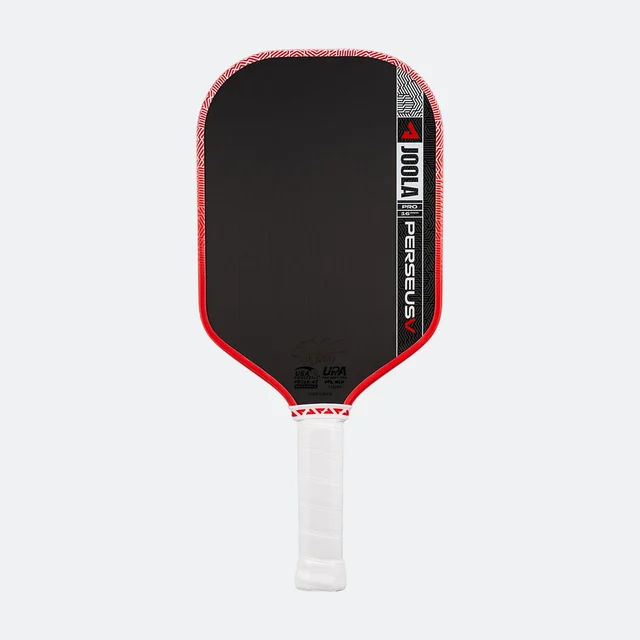
- JOOLA Perseus Pro V 16mm - Buy. The current benchmark all-court paddle: elite spin and easy power with enough control to stay honest.
- Selkirk LUXX Control Air Invikta - Buy. The control paddle to beat: a thick, plush face that soaks up pace and drops the ball wherever you point it.
- Paddletek Bantam TKO-C 12.7mm - It depends. One of the hardest-hitting paddles you can buy - thrilling if you can handle it, chaotic if you can't.
- ONIX Graphite Z5 - Skip. A beloved beginner classic whose dated graphite-and-nomex design has finally been lapped by modern budget paddles.
The verdict in 30 seconds
What mattered most
- Play style
- Face & core
- Shape & reach
- Power
- Spin
- Forgiveness
Pickleball paddles have evolved fast: thermoformed carbon faces, foam-injected edges, and flexing frames have made two-year-old designs feel ancient. We compared each maker's published specifications across four current, widely available paddles - JOOLA's flagship all-rounder, Selkirk's control specialist, Paddletek's power monster, and the classic ONIX budget widebody. Two earn a clear buy, one depends entirely on your play style, and one venerable name is finally worth skipping.
The current benchmark all-court paddle: elite spin and easy power with enough control to stay honest.
Best for: Intermediate-to-advanced players (roughly 3.5+) who want one paddle that attacks, spins, and still resets
- Carbon friction surface that JOOLA builds for long-lasting spin
- KineticFrame throat stores and releases energy, so big power comes without a wild, launchy feel
- Elongated shape with rounded corners keeps the sweet spot centered while extending reach
- Sweet spot is tighter than widebody paddles, punishing off-center contact from newer players
- Flagship pricing with a 12-month warranty, and thermoformed paddles can lose pop after months of heavy play
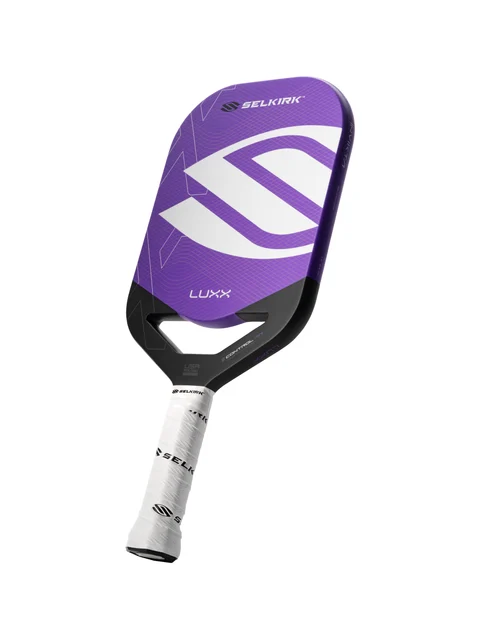
The control paddle to beat: a thick, plush face that soaks up pace and drops the ball wherever you point it.
Best for: Finesse and strategy players who win with placement, patience, and soft-game precision
- Extra-thick 19mm X7 honeycomb core absorbs opponents' pace, making resets, dinks, and drops easier
- Edgeless aerodynamic build stays fast in hand battles despite the control-first design
- Backed by a limited lifetime warranty against workmanship and manufacturer defects
- Generates little free power - you must supply your own pace on drives and put-aways
- Bangers and power-first players will find it frustratingly muted
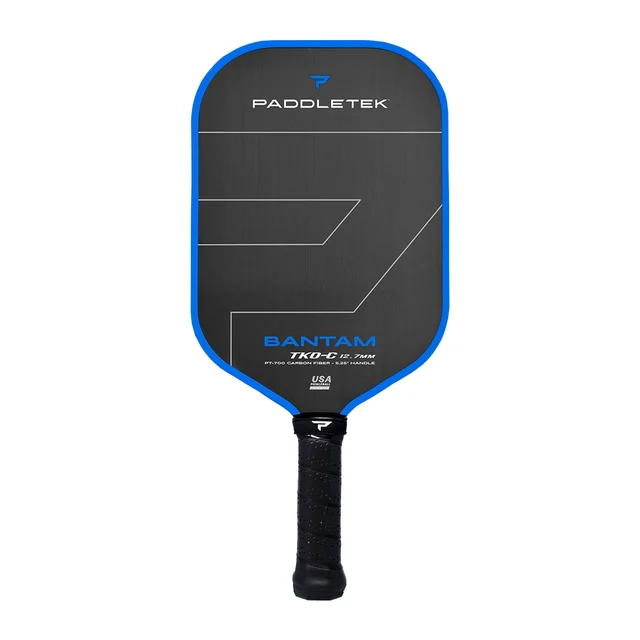
One of the hardest-hitting paddles you can buy - thrilling if you can handle it, chaotic if you can't.
Best for: Aggressive singles players and former tennis or racquetball players who prioritize putting balls away
- Built, in Paddletek's words, for max power and spin, with a 16.5 by 7.5 inch elongated face
- Raw carbon face grips the ball for heavy spin to help keep all that power in the court
- Also sold in a 14.3mm core for players who want a little more control
- The lively face can feel unpredictable on soft shots, especially straight out of the box
- Easy to overhit - players with developing control will send balls long
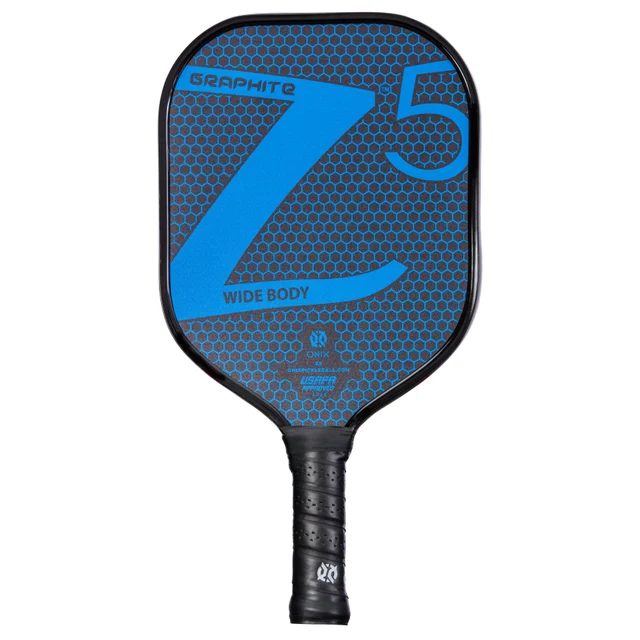
A beloved beginner classic whose dated graphite-and-nomex design has finally been lapped by modern budget paddles.
Best for: Only someone who wants the absolute cheapest recognizable name - most beginners are better served by a modern budget carbon paddle
- Huge widebody sweet spot that forgives the mishits every beginner makes
- Inexpensive next to the flagships here, and available almost everywhere
- Smooth graphite face generates minimal spin compared with modern textured carbon budget paddles
- An older nomex honeycomb core design that modern polymer-core paddles have moved past
| Criteria | JOOLA Perseus Pro V 16mm Top pick Buy it Buy | Selkirk LUXX Control Air Invikta Buy it Buy | Paddletek Bantam TKO-C 12.7mm It depends Buy | ONIX Graphite Z5 Skip it Buy |
|---|---|---|---|---|
| Best for | Intermediate-to-advanced players (roughly 3.5+) who want one paddle that attacks, spins, and still resets | Finesse and strategy players who win with placement, patience, and soft-game precision | Aggressive singles players and former tennis or racquetball players who prioritize putting balls away | Only someone who wants the absolute cheapest recognizable name - most beginners are better served by a modern budget carbon paddle |
| Price tier | $$$$ · flagship | $$$ · premium | $$$ · premium | $ · budget |
| Play style | All-court, spin-heavy attacker | Control and soft game | Maximum power | Basic recreational |
| Face & core | Carbon face, 16mm core with flexing KineticFrame throat | Florek carbon fiber face, 19mm X7 honeycomb core | Raw carbon face, thin 12.7mm power core | Smooth graphite face, nomex honeycomb core |
| Shape & reach | Elongated with rounded corners | Elongated (Invikta), edgeless | Elongated | Widebody, shorter reach |
| Power | High, with easy access | Low - you supply the pace | Very high, among the hardest-hitting | Modest, pop without depth |
| Spin | Elite, near top of market | Good, aided by gritty face texture | Heavy, close to the best | Minimal - smooth face |
| Forgiveness | Moderate - tighter sweet spot | High for an edgeless paddle thanks to 19mm core | Good for a power paddle, but lively response | Very high sweet spot, harsh feel |
| Durability & support | Solid build; core can soften under heavy hitting | Excellent, limited lifetime warranty | Warranty terms not stated on the product page | USA Pickleball approved, warranty terms not stated |
| Price tier | $$$$ · flagship | $$$ · premium | $$$ · premium | $ · budget |
Which one is right for you?
- Intermediate-to-advanced players (roughly 3.5+) who want one paddle that attacks, spins, and still resets Buy it JOOLA Perseus Pro V 16mm
- Finesse and strategy players who win with placement, patience, and soft-game precision Buy it Selkirk LUXX Control Air Invikta
- Aggressive singles players and former tennis or racquetball players who prioritize putting balls away It depends Paddletek Bantam TKO-C 12.7mm
- Only someone who wants the absolute cheapest recognizable name - most beginners are better served by a modern budget carbon paddle Skip it ONIX Graphite Z5
How we judged the field
We don’t run a paddle lab. Instead, we compared each maker’s published construction, core thickness, shape and warranty against what each design is known to do on court. Five criteria mattered most: spin (the dominant weapon in the modern game), power and how usable it is, control on resets and the soft game, forgiveness on off-center hits, and durability, including how each maker stands behind its product. We also insisted every paddle be current and buyable today, not a discontinued model coasting on old reviews.
JOOLA Perseus Pro V 16mm
Buy itThe Perseus Pro V is the latest generation of one of the best-known paddle lines in pickleball, offered in 16mm and 14mm cores. Spin is the headline - JOOLA builds it on a carbon friction surface, which means topspin drives dip in and aggressive dinks stay down. The flexing KineticFrame throat is the clever part: it stores energy on impact and releases it into the ball, so you get genuine put-away power without the trampoline wildness that plagued earlier big-power designs. The elongated shape with rounded top corners keeps the sweet spot centered while adding reach at the non-volley zone.
The caveats: that sweet spot is tighter than a widebody’s, so players still developing clean contact will feel mishits, and the warranty is 12 months. It also costs flagship money. But if you have the fundamentals, this is the most complete paddle in the group.
Selkirk LUXX Control Air Invikta
Buy itThe LUXX Control Air takes the opposite bet: instead of chasing power, it uses an extra-thick 19mm X7 honeycomb core behind a Florek carbon fiber face with InfiniGrit texture to absorb pace and give the ball back gently. The ball sits on the face a beat longer, and drops, dinks, and resets land where you aimed. The edgeless, aerodynamic build keeps it quick in hand battles, and Selkirk adds a FlexFoam perimeter to enlarge the sweet spot. Forgiveness is high for this style of paddle.
The trade-off is unavoidable physics. This paddle generates very little power of its own - drives and speed-ups are entirely on your swing. Bangers will hate it. But for the player who wins by placement and patience, this is one of the most control-focused paddles here, and Selkirk’s limited lifetime warranty sweetens the premium price.
Paddletek Bantam TKO-C 12.7mm
It dependsDeveloped with pro Christian Alshon, the Bantam TKO-C 12.7mm is built, in Paddletek’s words, for max power and spin. The thin core and 16.5 inch elongated shape deliver effortless drive power, and the raw Toray 700 carbon face adds heavy spin that helps drag those missiles back into the court. Paddletek also sells it with a 14.3mm core.
So why “it depends”? Because all that pop cuts both ways. A thin, lively core can feel unpredictable on shots where you’re not trying to hit hard, and players without a mature soft game will overhit. If you’re an attacking player - a singles specialist, a former tennis or racquetball player with fast hands - this paddle is a legitimate weapon and arguably the most fun paddle here. If your game is built on the kitchen battle, it will amplify your errors as readily as your winners.
ONIX Graphite Z5
Skip itThis is the hardest verdict in the review, because the Graphite Z5 taught an entire generation to play. Its widebody shape delivers a huge, forgiving sweet spot, it’s sturdy, and it costs far less than the flagships here. If pickleball paddles had a hall of fame, it would be in the first class.
But the market moved. The Z5’s smooth graphite face generates minimal spin at a time when even budget paddles have adopted textured carbon surfaces that grip the ball. Its 12mm nomex honeycomb core is an older design than the polymer cores most modern paddles use - a paddle you’ll outgrow within months if you play regularly. The problem isn’t that the Z5 got worse; it’s that modern budget carbon paddles at comparable prices now beat it at nearly everything except sweet-spot size. Buy one only if you want the cheapest recognizable name for casual backyard games. For anyone who plans to keep playing, it’s a skip.
JOOLA Perseus Pro V 16mm vs Selkirk LUXX Control Air Invikta: which should you buy?
This comes down to how you win points. The Perseus Pro V is the more complete paddle: elite spin, real power on demand, and enough control to hang in dink rallies. It rewards players who attack when the ball sits up and want their paddle to convert those chances. The LUXX Control Air Invikta refuses that bargain - it mutes pace instead of adding it, making the soft game feel almost automatic while leaving power generation entirely to you.
The split is clean: the JOOLA leads on offense, while the Selkirk wins on touch, absorption, and forgiveness - plus a lifetime warranty the JOOLA can’t match. If you’re an aggressive or all-court player, buy the Perseus Pro V. If you’re a counterpuncher who would rather force the fifth error than hit the third winner, buy the LUXX and never look back.
What to look for
- Face material: Textured or raw carbon fiber is the modern standard - it grips the ball for spin. Smooth graphite or fiberglass faces are a generation behind.
- Core thickness: Thicker (16-20mm) means more control and forgiveness; thinner (under 14mm) means more pop and more risk. When in doubt, go thicker.
- Shape: Elongated paddles add reach and leverage but shrink the sweet spot; widebody shapes are more forgiving but shorter. Elongated suits attackers; widebody suits beginners.
- Weight and balance: Head-heavy paddles add plow-through power but slow your hands. If you can, demo before committing.
- Durability and warranty: Thermoformed power paddles have had breakage and core-softening issues industry-wide. A maker’s warranty and track record matter more than they used to.
- Approval status: If you’ll ever play sanctioned events, confirm the paddle is on the current approved list - standards have tightened recently.
Our final take
The modern paddle market has specialized, and this field shows the whole map. The JOOLA Perseus Pro V 16mm is our top pick because it specializes the least - elite spin, accessible power, and a soft game that doesn’t collapse, which is the closest thing to a paddle for every situation. The Selkirk LUXX Control Air Invikta is the runner-up and the outright winner for touch players, with the best warranty in the group behind it. The Paddletek Bantam TKO-C 12.7mm is a genuinely great paddle for a genuinely narrow player: if you have the hands and the discipline, nothing here hits harder. And the ONIX Graphite Z5, after years of honorable service, is the one to skip - not because it broke, but because the sport outgrew it.
Questions, answered
What paddle thickness should I choose?
Thicker cores (16-20mm) absorb pace and add control and forgiveness, which is why the control-oriented Selkirk LUXX uses a 19mm core. Thinner cores (under 14mm), like the Paddletek Bantam TKO-C's, rebound the ball faster for more pop but demand better technique. Most improving players are happiest between 14mm and 16mm.
Is an expensive paddle actually worth it over a budget one?
Up to a point, yes. The biggest jumps come from moving off dated designs - like the smooth graphite ONIX Z5 - to a textured carbon face, which transforms spin. Beyond the mid-range, gains get smaller: flagships like the Perseus Pro V add refinement and a better power-to-control blend, not a different sport.
Which of these paddles is best for a beginner?
Ironically, not the budget ONIX Z5 - its smooth face teaches you to play without spin. A forgiving mid-thickness carbon paddle is the better start. Of this group, the Selkirk LUXX Control Air Invikta is the most beginner-friendly thanks to its stable 19mm core, though a newer player may want to learn on something cheaper before committing to a premium paddle.
Are these paddles legal for tournament play?
ONIX states the Z5 is approved by USA Pickleball, and the other three makers do not state approval on their product pages. If you compete, check the current approved-equipment list before an event, since paddle rules and testing standards have tightened over the past few seasons.
How long does a pickleball paddle last?
Modern thermoformed paddles can lose liveliness with heavy regular play, so how long one lasts depends on how hard and how often you hit. JOOLA covers the Perseus Pro V for 12 months, and Selkirk's limited lifetime warranty is the best ownership safety net of this group.
Deciding between the top two? See our head-to-head: JOOLA Perseus Pro V 16mm vs Selkirk LUXX Control Air Invikta.
More in Outdoors & Fitness
Pickleball Paddles, Explained Plain-English guide → JOOLA Perseus Pro V 16mm vs Selkirk LUXX Control Air Invikta Head-to-head →  The Best Pocket Knives: 4 Compared (and One to Skip)
  The Best Polarized Sport Sunglasses: 4 Compared (and One to Skip)
  The Best Pole Saws: 4 Compared (and One to Skip)
  The Best Putting Mats: 4 Compared (and One to Skip)