Explained
Mouse Traps, Explained
After reading, you'll understand the main mouse control methods, what the CDC recommends, and how to place traps so they work.
In this guide
Mouse control products range from wooden snap traps to electronic boxes and plug-in gadgets. Packaging makes every one sound effective, but public health guidance is more specific. Where and how you place traps matters as much as which trap you buy. A little background makes the whole job faster.
The 30-second version
- Snap traps are the CDC's recommendation, because they are fast and effective.
- Glue and live traps are discouraged, since frightened rodents can spread germs.
- Placement beats bait, so set traps against walls where mice travel.
- Several traps work better than one, because mice rarely come alone.
- Ultrasonic repellers have poor evidence, and the FTC has challenged the category.
The products this guide is about
Our verdict on each, with the full reasoning on the companion review.
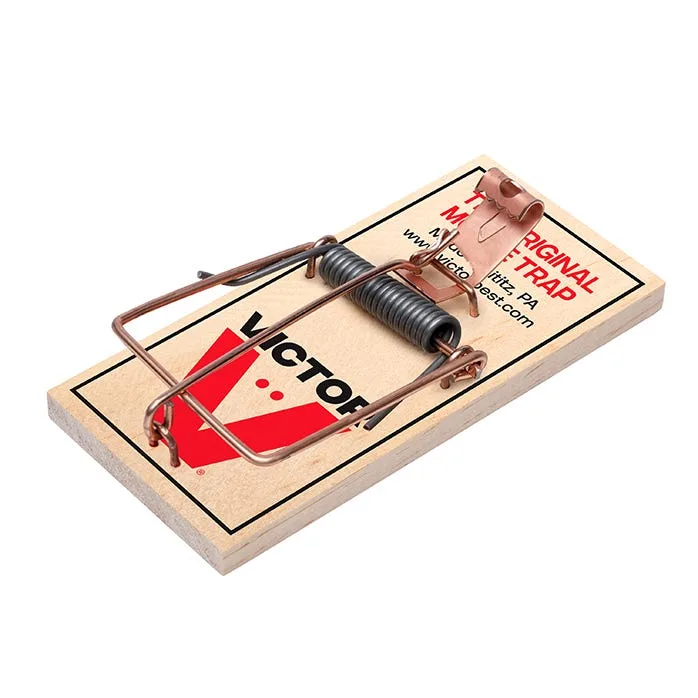
- Buy Victor Metal Pedal Mouse Trap The classic wooden snap trap: cheap, fast and the type of trap the CDC recommends.
- Buy Tomcat Press 'N Set Mouse Trap A plastic snap trap that sets with one press and lets you dispose of mice without touching them.
- It depends Victor Electronic Mouse Trap (M250B) A battery-powered tunnel trap that kills with a high-voltage shock and hides the catch.
- Skip Victor PestChaser PRO Ultrasonic Rodent Repeller (M792) A plug-in ultrasonic repeller, a product type the FTC has repeatedly challenged.
What actually matters
- Kill method - Snap and electronic traps kill quickly. Repellers and live traps do not remove the problem the same way.
- Placement - Mice run along walls. Traps placed perpendicular to a wall catch far more.
- Number of traps - Setting many at once shortens the job. One trap rarely keeps up.
- Setting ease - Easy-set traps get used. Hard-to-set traps sit in a drawer.
- Disposal - No-touch designs make cleanup easier. Some people pay more for them.
- Safety - Keep traps away from children and pets or use enclosed designs.
- Prevention - Sealing entry points stops new mice after trapping.
The specs, in plain English
Green flags vs red flags
Green flags
- A trap that kills quickly
- Easy, one-step setting
- No-touch disposal
- Enclosed designs for homes with children or pets
- Clear placement instructions
Red flags
- Promises to repel mice with sound alone
- Glue boards for household use
- Live traps that leave you with a live mouse
- Claims of whole-house coverage from one plug-in
- No guidance on placement
Who's who: the brands
- Victor - Long-standing mouse trap maker known for the wooden snap trap and electronic traps.
- Tomcat - Pest control brand from ScottsMiracle-Gro, known for easy-set plastic snap traps.
How to read a listing without getting fooled
Start by identifying the method: kill trap, live trap, glue trap or repeller. For traps, check how they set and how you dispose of the catch. For electronic traps, check battery type and whether batteries are included. Be skeptical of any product that promises to clear mice with sound or scent alone, however confident the packaging.
How much should you spend?
Snap traps are the budget tier and cost little enough to set many at once. Easy-set plastic traps cost a little more per trap. Electronic traps and ultrasonic repellers sit in the mid-range, but only the traps are backed by a proven kill method.
Questions, answered
What is the best bait for mouse traps?
A small amount of peanut butter is a common choice because it is sticky and appealing. Use only a pea-sized dab so mice must touch the trigger. Some makers recommend specific baits for their traps.
Why are my traps not catching anything?
Placement is the usual problem. Move traps against walls and near droppings or gnaw marks. Adding more traps also helps.
How do I keep mice out for good?
Seal gaps and holes around pipes, vents and foundations, and keep food in sealed containers. Remove clutter where mice nest. Trapping solves today's problem; sealing prevents the next one.
Are snap traps safe around pets?
Snap traps can injure curious pets. Place them behind appliances or inside cabinets, or use an enclosed trap. Check traps regularly.
Or jump to the head-to-head: Victor Metal Pedal Mouse Trap vs Tomcat Press 'N Set Mouse Trap.