Explained
Countertop Microwaves, Explained
After reading, you'll understand which microwave specs actually change your daily reheating and which are just numbers on a box.
In this guide
A countertop microwave looks like a commodity, so most people grab whatever fits the counter and the budget. But two units at the same price can feel very different in daily use: one reheats leftovers evenly, the other leaves a molten edge and a frozen middle. What trips buyers up is that the specs that matter most, like how the unit delivers power and whether it can sense when food is hot, are the ones marketing talks about least.
The 30-second version
- Even heating beats raw power. A microwave that spreads energy evenly matters far more day to day than one with a slightly higher wattage number on the box.
- Inverter is the one upgrade you feel. An inverter holds a true low power level instead of pulsing full-blast on and off, which is why inverter models reheat and defrost more gently.
- A humidity sensor removes guesswork. Sensor cooking detects the steam from your food and stops when it's actually hot, so you stop punching in random times.
- Size the cavity to a dinner plate. A mid-size cavity fits a full plate and most casserole dishes; compact units save counter space but can cramp real meals.
- The keypad and door fail first. Owner reports across brands flag touch panels and doors as the most common long-term complaints, so build quality there is worth checking.
The products this guide is about
Our verdict on each, with the full reasoning on the companion review.
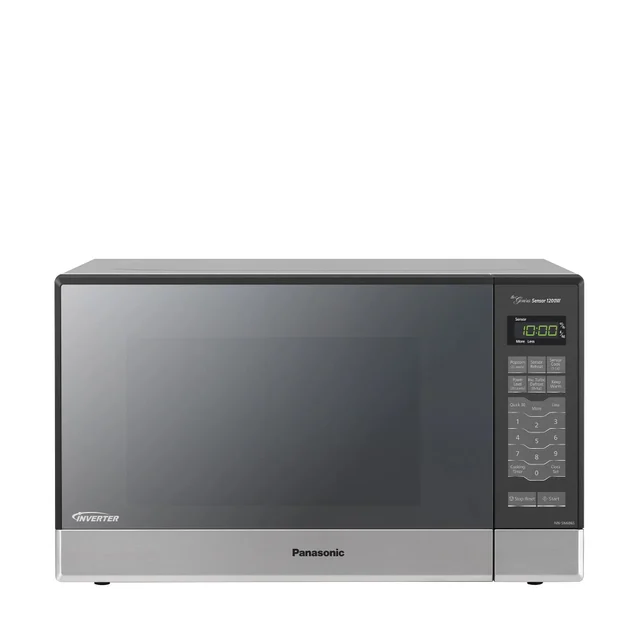
- Buy Panasonic NN-SN686SR Inverter Microwave The most consistent heater of the group, thanks to genuine inverter power and a reliable sensor. Amazon
- Buy Toshiba EM131A5C-BS The value pick: a well-sized sensor microwave that does the basics well for budget money. Amazon
- It depends Breville the Smooth Wave (BMO850) A beautifully built, quiet inverter microwave that costs a lot for a plain microwave. Amazon
- Skip GE JES1145SHSS A trusted badge on a compact, dated unit that heats unevenly and asks mid-range money. Amazon
What actually matters
- Heating evenness is the single biggest differentiator between microwaves, and it's what you notice most: even reheats mean no rubbery edges around a cold center.
- Inverter vs. standard magnetron determines how low-power settings actually work. Inverter units hold a genuine reduced power; standard ones pulse full power on and off to fake it.
- Sensor cooking uses a humidity sensor to judge doneness instead of a fixed timer, which makes reheats and popcorn close to one-button affairs.
- Capacity and footprint decide whether a dinner plate fits without a fight and whether the unit dominates your counter; these two pull against each other.
- Controls, display, and noise are the small daily friction points, from readable keypads to whether you can mute the beeps.
- Reliability signals from owner reports, especially around keypads and doors, tell you whether the unit will still work well in a couple of years.
The specs, in plain English
Green flags vs red flags
Green flags
- Genuine inverter power, not just a high wattage claim, if you care about even reheating and defrosting.
- A humidity sensor for reheat and popcorn, so you're not guessing at times.
- A cavity big enough for a full dinner plate, checked against the stated capacity.
- A true mute option if beeping bothers your household.
- An easy-clean, removable interior and a turntable sized to your dishes.
- Strong owner sentiment on long-term reliability, especially keypads and doors.
Red flags
- A trusted brand badge paired with only 'fair' heat-evenness in independent testing.
- No real sensor cooking, only time and weight programs, on a mid-priced unit.
- Mid-range money asked for a compact cavity and a thin feature set.
- Frequent owner complaints about unresponsive touch panels or clock drift.
- A loud door or a dim, hard-to-read display mentioned repeatedly by owners.
- Marketing that leans on wattage while staying quiet about how power is delivered.
Who's who: the brands
- Panasonic - Known for its inverter technology and Genius humidity sensor; a frequent pick for even, everyday heating.
- Toshiba - Value player offering sensor cooking and useful presets at budget prices.
- Breville - Premium build and design, with power-smoothing inverters and quiet operation, at a price to match.
- GE - A familiar badge, though some models coast more on the name than the performance.
How to read a listing without getting fooled
Start by ignoring the biggest number on the box. Wattage grabs attention, but two units at similar wattage can heat very differently. Look instead for the word 'inverter', which tells you low-power settings are genuinely low rather than pulsed; if a listing only touts wattage and stays silent on power delivery, assume a standard magnetron. Next, confirm whether 'sensor cooking' means a real humidity sensor or just weight-and-time presets dressed up in menu names. Check the cavity in cubic feet against the plates you actually use, not the exterior size. Finally, treat the fine print on noise and mute seriously, and skim owner reports for the two parts that fail most, the keypad and the door. A spec sheet that's proud of inverter power and a humidity sensor, and honest about capacity, is usually telling you the truth; one that buries those details behind a big wattage headline is steering your eye.
How much should you spend?
You don't need to spend at the top of the market to get the things that matter. The value sweet spot sits with a mid-sized unit that pairs an inverter with a humidity sensor, because those two features do the real work of even, hands-off reheating. Budget units can still be smart buys if they include a sensor and honest defrost performance; the compromise is usually a standard magnetron and slightly less even heating, which many households happily accept to spend less. Premium money mostly buys quiet operation, nicer materials, and design polish rather than dramatically better cooking, so it's worth it only if silence and build quality genuinely matter to you. The purchase to avoid is the opposite trap: paying mid-range prices for a compact unit with no real sensor cooking, where you're buying a badge rather than performance.
Questions, answered
Is an inverter microwave actually worth it?
For even reheating and gentle defrosting, yes. A standard microwave pulses full power on and off to imitate lower settings, which can overcook edges while centers stay cold. An inverter holds a genuine lower power level, and independent testing repeatedly finds inverter models heat more evenly, especially on delicate foods and defrost. If you mostly reheat leftovers and thaw food, it's a real, noticeable upgrade.
What capacity and wattage should I look for?
For a main-kitchen microwave, a mid-size cavity comfortably fits dinner plates and most casserole dishes, while compact units can feel tight. On wattage, higher generally means faster, but most countertop units are quick enough for popcorn and reheats; even heating and a good sensor matter more day to day than chasing the highest wattage number.
Does sensor cooking really work?
Yes, when it's a genuine humidity sensor. It detects the steam released as food heats and stops the cycle when the food is hot, rather than running a fixed time. Reviewers and owners generally find it convenient for reheating and popcorn. Watch out for units that call weight-and-time presets 'sensor' cooking; that's not the same thing.
How do I keep a countertop microwave working for years?
Never run it empty, avoid metal and non-microwave-safe containers, and wipe up spills so splatter doesn't bake onto the door seal. Owner reports suggest keypad and door issues are the most common long-term complaints across brands, so treat the touch panel gently and let the door close rather than slamming it. This is general product guidance; always follow the manual that ships with your unit.
Why do some microwaves cost so much more for the same job?
Above a certain point, extra money mostly buys quiet operation, premium materials, soft-close doors, and design polish rather than meaningfully better cooking. Independent testing often finds some mid-priced inverter units heat nearly as evenly as premium ones. Spend up only if silence, looks, and build quality genuinely matter to you; otherwise a value pick will cook well.
Or jump to the head-to-head: Panasonic NN-SN686SR Inverter Microwave vs Toshiba EM131A5C-BS.