Explained
Merino Base Layers, Explained
After reading, you'll know how to match a merino base layer's weight to your activity, read the actual wool percentage, and avoid overpaying for a top that's mostly synthetic.
In this guide
A base layer is the thin shirt worn directly against your skin under everything else, and merino wool is the fabric people pay up for because it fights odor and stays warm even when damp. The two numbers that decide whether you're happy a year later, fabric weight and the real wool percentage, are usually the two the marketing buries. Buyers get tripped up by buying a top that's too warm for how they move, or by paying a wool price for a 'blend' that's mostly polyester.
The 30-second version
- Match the weight to your output. A lighter knit around 150 gsm is for active use and layering; a heavier 200-250 gsm knit is for cold, low-output warmth. Buy the wrong one and no amount of good wool will feel right.
- Read the actual wool percentage, not just the word 'merino' on the label. A top that's 80-plus percent merino behaves like wool; one that's half polyester behaves like a synthetic, no matter what it's called.
- Merino and synthetic each trade something. Merino resists odor and feels soft but pure wool wears out faster and costs more; synthetic is cheap and tough but starts to smell fast.
- A merino-nylon blend is the practical middle. Wrapping or blending wool with a little nylon gives up a touch of odor resistance for a big gain in durability, which is why blends are the everyday sweet spot.
- A base layer is only the first layer. It manages sweat and warmth against your skin, but it needs a mid-layer for insulation and a shell for wind and rain over the top.
The products this guide is about
Our verdict on each, with the full reasoning on the companion review.
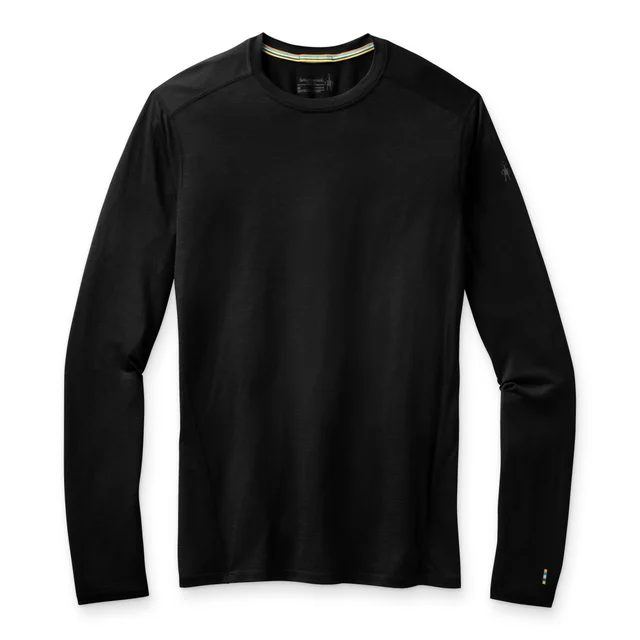
- Buy Smartwool Classic All-Season Merino Base Layer Crew A light ~150 gsm top with a nylon-core-spun yarn that keeps merino's odor resistance while surviving real-world abuse.
- Buy Ridge Merino Aspect Midweight Crew A midweight ~230 gsm merino-nylon blend that trades a little odor resistance for durability and undercuts the big names on price.
- It depends Ibex Woolies 250 Crew Plush 100% merino at a true 250 gsm; wonderfully warm and odor-proof, but softer, pricier and less durable than the blends.
- Skip Smartwool Intraknit Thermal Merino Base Layer Crew A well-engineered body-mapped top, but it's only 53% merino at a flagship price — you're paying top dollar for a mostly-synthetic knit.
What actually matters
- Fabric weight (gsm) decides comfort more than anything else: a knit that's too heavy for your effort makes you overheat and sweat out, while one that's too thin leaves you cold when you stop moving.
- Wool percentage is the single number that drives odor resistance, warmth-when-damp, durability and price all at once, so it deserves more attention than the brand name.
- Merino vs synthetic is an honest trade-off, not a clear winner: pick merino for odor control and softness, synthetic for toughness and price, and a blend when you want most of both.
- Next-to-skin fit matters because a base layer has to lightly touch your skin to wick sweat and trap warmth; a baggy one can't do either job well.
- Seam construction affects all-day comfort: flat, low-profile seams sit smoothly under pack straps and other layers instead of digging in and chafing.
- Care requirements are real running costs with wool, since pure merino especially rewards gentle washing and punishes hot water, softeners and hot dryers.
- Honest value counts because merino carries a premium, and some tops charge the most while delivering the least actual wool.
The specs, in plain English
Green flags vs red flags
Green flags
- The fabric weight in gsm is stated clearly and matches how you'll use it, active and mild versus cold and static.
- The exact wool percentage is listed and it's merino-dominant, roughly 80% or more, if you're buying for wool's benefits.
- A merino-nylon blend or core-spun construction is called out, signaling the maker prioritized durability alongside odor resistance.
- Flatlock and/or offset shoulder seams are mentioned, showing the top is built to layer comfortably under straps.
- The fit is described as next-to-skin, athletic or slim, meaning it's cut to actually wick and insulate.
- Care instructions are reasonable and clearly stated, so you know what you're signing up for before you buy.
Red flags
- The listing hides the fabric weight, so you can't tell if it's an active-weight or a cold-weather top.
- It says 'merino blend' but never states the percentage, which often means the wool content is low.
- It's sold at a premium merino price but is actually mostly polyester once you read the fine print.
- It's pure merino that owners report pilling, thinning or developing holes within a single season.
- The cut is loose or boxy, so it can't sit against your skin to wick sweat or trap warmth.
- Reviews mention it smelling quickly, a sign the real wool content is lower than the marketing implies.
Who's who: the brands
- Smartwool - A major merino specialist known for core-spun yarns that add nylon durability to wool; spans versatile active-weight tops up to pricier flagship pieces.
- Ridge Merino - A smaller value-focused brand offering durable merino-nylon blends that undercut the big names on price, though harder to find in stores.
- Ibex - Known for plush, higher-weight pure-merino pieces that prioritize warmth and softness over the toughness of a blend.
- Icebreaker - A well-established merino brand covering a wide range of weights and blends, from everyday to technical outdoor use.
- Minus33 - A value-oriented merino maker offering a broad weight range, popular with buyers who want real wool without a flagship price.
How to read a listing without getting fooled
Start with two numbers and don't let the marketing distract you from them. First, find the fabric weight in gsm: if the listing doesn't state it, that's a small red flag, but 'lightweight/active' usually means around 150 and 'midweight/heavyweight' means roughly 200-250. Match that to how you'll actually move, not to how cold you imagine it being. Second, find the exact fiber breakdown, something like '88% merino / 12% nylon.' The word 'merino' alone tells you almost nothing; the percentage tells you everything. A merino-dominant number (80% and up) means you're getting wool's odor resistance and warmth, and any nylon in the mix is buying you durability. A top that's only around half merino is really a synthetic shirt with some wool in it, and it should be priced like one. Then scan for construction cues, flatlock and offset shoulder seams, a next-to-skin or athletic fit, and a clear care label. If a product leads with buzzwords but won't give you the weight and the percentage, treat that silence as the answer.
How much should you spend?
Merino always costs more than a plain synthetic, so decide what you're paying for. The value sweet spot for most people is a merino-dominant nylon blend or core-spun top: you get the odor resistance and comfort people buy wool for, plus durability that makes the higher price pay off over seasons of wear. Spending more for a heavier, pure-merino piece is worth it only if warmth and softness for cold, static days matter more to you than longevity, since pure wool wears out faster and needs gentler care. The place to stop spending is a flagship-priced top that turns out to be only about half merino: you're paying the most for the least wool, and a more merino-rich top usually costs less and delivers more of what you wanted. Below the mid-range, be wary of very cheap 'merino blends' that are mostly polyester, they can be fine synthetics but shouldn't command a wool price. In short, pay up for the blend and the seams, not for the logo, and let the wool percentage, not the price tag, tell you what you're getting.
Questions, answered
Merino or synthetic base layer, which should I buy?
It depends on what you value. Merino resists odor for days, feels soft and stays warm-ish even when damp, but pure merino pills and wears out faster and costs more. Synthetic is cheaper and tougher but starts to smell quickly. If you want most of both, a merino-nylon blend or core-spun fabric splits the difference: a little less odor resistance in exchange for real durability. That's why blends tend to be the practical everyday choice.
What fabric weight (gsm) should I choose?
Match it to your effort, not just the temperature. Around 150 gsm is the versatile sweet spot for active use, mild cold, or as a thin layer under other clothing. Roughly 200-250 gsm is for cold, lower-output or static situations like winter camping or sitting on a ski lift. A common mistake is buying a heavy 250 gsm top and then overheating and sweating out on an aerobic hike, so if you move a lot and you're unsure, go lighter.
Is a 'merino blend' as good as 100% merino?
It depends entirely on the ratio, so always read the percentage. A merino-dominant blend, say 80% or more wool with some nylon, keeps most of the odor resistance and adds durability, which is usually a win. But many tops labeled 'merino blend' are mostly polyester with a minority of wool, and some are still sold at merino prices. The word 'blend' by itself tells you nothing; the number does.
How should a merino base layer fit?
Next-to-skin and snug, not baggy. A base layer needs light contact with your skin to wick moisture and trap warmth; if it's loose it can't do either well. Look for flatlock and offset shoulder seams to avoid chafe under pack straps. Note that some brands cut athletic and slim, so check the fit notes and size up if you specifically want room to layer over the top.
Do I still need other layers over a base layer?
Yes. A base layer only manages sweat and adds a little warmth against your skin; it isn't your insulation or your weather protection. For cold or wet conditions you layer a warm mid-layer over it and a wind- and waterproof shell over that. Even a heavy 250 gsm merino top is meant to be part of that system, not a standalone jacket.
How do I stop merino from pilling or getting holes?
Pure merino is delicate by nature, so wash it inside out on a cool, gentle or wool cycle, skip the fabric softener, and either lay it flat to dry or tumble dry low only if the label allows, never on high heat. Avoid rough backpack-strap friction on bare wool where you can. If longevity matters more to you than the last bit of softness, a nylon-blend or core-spun merino will simply survive more seasons than 100% wool.
Or jump to the head-to-head: Smartwool Classic All-Season Merino Base Layer Crew vs Ridge Merino Aspect Midweight Crew.