Explained
Night Vision Monoculars, Explained
After reading, you'll understand the digital and analog fork, what tube generation and lp/mm describe, and how to match magnification to what you are doing.
In this guide
Night vision listings mix two unrelated technologies and a lot of military-sounding vocabulary. The single most useful thing you can learn is which of the two a product is, because it determines the price, the weight, whether it records and whether you can wear it. After that, three or four specifications cover everything that matters.
The 30-second version
- Digital records and costs hundreds, analog is light and wearable and costs thousands.
- 1x is for moving, and 4x to 6x is for watching one place from a fixed position.
- Tube generation needs a resolution figure, because lp/mm varies widely within the same generation.
- Analog is damaged by bright light, and digital is not, which decides whether it can live in a bag.
- A stated range means little without its conditions, so treat a detection range and a recognition range as different claims.
The products this guide is about
Our verdict on each, with the full reasoning on the companion review.
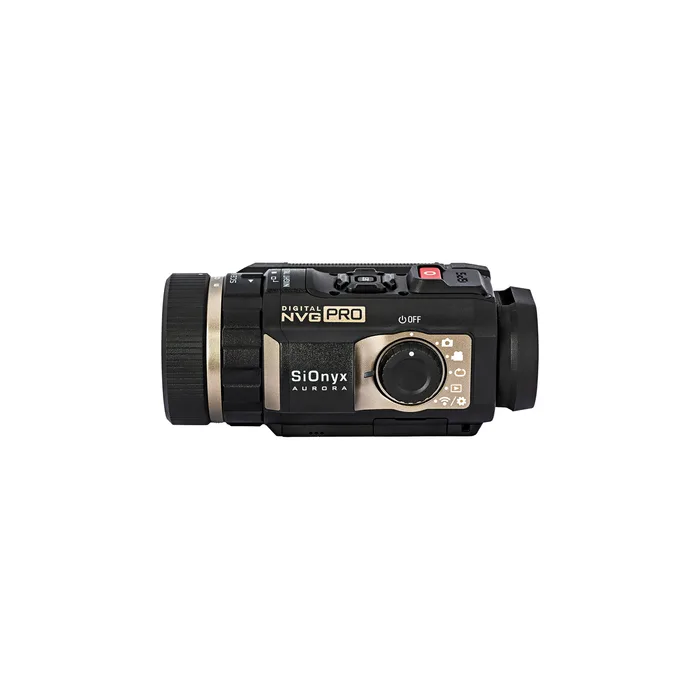
- Buy SIONYX Aurora PRO Digital night vision that produces a colour image, and records and streams it.
- Buy Bushnell Equinox X650 Digital Night Vision The sensible first night vision device, with a real published range and a memory card slot.
- It depends AGM Global Vision PVS-14E Night Vision Monocular The analog standard, updated: 10.2 ounces, helmet mountable, and nothing to record with.
- Skip ATN NVM14-2G A Gen 2+ tube at 1x with no display, no recording and an export control notice attached.
What actually matters
- Digital or analog - digital uses a light-sensitive sensor and a screen; analog uses an image intensifier tube you look through. It determines recording, weight, price and whether daylight will destroy it.
- Magnification - 1x on analog units like the PVS-14E and the NVM14, 5x on the Bushnell Equinox X650. Higher magnification narrows the field of view and makes handheld shake worse.
- Stated range - how far the maker claims you can see. Bushnell states 650 feet for the X650, and many pages state nothing at all, which tells you something on its own.
- Tube resolution - on analog devices, line pairs per millimetre. ATN states 58-60 lp/mm for its Gen 2+ tube, and it describes image quality far better than the generation number alone.
- Weight - the whole argument for analog. The AGM PVS-14E is 10.2 ounces and the Bushnell is 13.8, and the difference matters enormously once it is strapped to your head.
- Recording - whether there is a memory card slot or streaming. It is the main reason most people buy night vision and the thing analog devices cannot do.
- Infrared illuminator - a built-in IR light that provides illumination the camera or tube can see and your eyes cannot. It is what makes a device work in genuinely sealed darkness.
The specs, in plain English
Green flags vs red flags
Green flags
- The technology is named as digital or image intensifier rather than implied.
- A range figure is published with the conditions it applies to.
- Analog devices list a tube resolution in lp/mm alongside the generation.
- Weight is published, particularly on anything sold as head or helmet mountable.
- The battery type and expected life are stated.
Red flags
- Night vision claimed with no statement of whether it is digital or analog.
- A generation number with no resolution figure.
- Marketing copy that describes a different model from the specification table on the same page.
- No range figure anywhere in the listing.
- Digital zoom quoted as though it were magnification.
Who's who: the brands
- SIONYX - Built its business on a low-light sensor of its own design, producing the rare colour digital night vision in the Aurora line.
- Bushnell - Mainstream optics brand whose Equinox series covers the affordable end of digital night vision with published ranges and recording.
- AGM Global Vision - Builds the PVS-14 pattern analog monocular along with thermal and digital devices, aimed at professional and enthusiast users.
- ATN - Long-running American brand spanning digital day and night scopes, thermal imaging and analog NVM14 monoculars.
- Pulsar - European maker known for digital and thermal monoculars and riflescopes at the premium end of the consumer market.
How to read a listing without getting fooled
Establish digital or analog in the first ten seconds, because everything else follows from it. If the page mentions a screen, a memory card or video recording, it is digital. If it mentions a tube generation, a photocathode or export control, it is analog. Then look for a range with a stated condition, and treat a bare number with suspicion since detection, recognition and identification ranges differ by a factor of several. On analog devices demand a resolution in lp/mm to go with the generation. Check magnification against your use: 1x for walking, higher for watching. Then check the weight if it is going anywhere near your head. Finally, read the specification table rather than the paragraph above it, because in this category they do not always agree, and the table is the one the product was built to.
How much should you spend?
This category has two price worlds. Digital monoculars run from mid-range to flagship, and the mid-range genuinely works: a device with a published range, real magnification and a memory card slot does what most buyers want for a few hundred. The flagship end of digital buys colour imaging and better sensors, which is a meaningful upgrade if identification rather than detection is the job. Analog night vision starts where digital ends and climbs steeply, and the money buys weight, latency and wearability rather than a better picture on a screen. If you will not be moving in the dark hands-free, you almost certainly should not be shopping the analog tier at all. Budget separately for an IR illuminator if your use case has no ambient light.
Questions, answered
Can I use a night vision monocular with a rifle?
Some are designed for it and most are not, and the rules vary enormously by jurisdiction. A PVS-14 pattern device can be used behind a red dot or mounted forward of a magnified optic with the right hardware, which is part of why the design persists. A handheld digital monocular with a screen generally cannot. Before buying for that purpose, check both the maker's mounting options and your local hunting and firearms regulations, which frequently treat night vision on a firearm differently from night vision on its own.
Why does my digital night vision look worse than the photos on the website?
Usually because of ambient light and because product photography is done under favourable conditions. Digital sensors need more light than an intensifier tube, so a night that looks equally dark to your eyes can produce very different results depending on cloud cover and moon phase. Turning on the IR illuminator helps at short range and does nothing at long range. If the image is noisy rather than dark, you are at the sensor's limit rather than the lens's.
Will night vision see through windows or fog?
Through glass, yes, though reflections from your own IR illuminator will spoil it, so turn the illuminator off when looking through a window. Through fog, no. Both digital and analog night vision amplify visible and near-infrared light, and fog scatters both. Thermal imaging is the technology that sees through fog and smoke, because it detects emitted heat rather than reflected light, and it is a different product category with different strengths.
How long do image intensifier tubes last?
Manufacturers usually quote tube life in thousands of hours of operation, and in practice most civilian devices are limited by damage rather than hours. Exposure to bright light degrades a tube permanently, which is why bright light cut-off circuits exist and why you never point one at a lamp. Digital devices have no equivalent wear mechanism, so their life is the life of any electronic device. That difference is part of why the analog price premium is harder to justify for occasional use.
Or jump to the head-to-head: SIONYX Aurora PRO vs Bushnell Equinox X650 Digital Night Vision.