

Outdoors & Fitness
The Best Night Vision Monoculars: 4 Compared (and One to Skip)
We compared four night vision monoculars on digital against analog intensifier technology, published range, magnification, recording and weight.
The short version
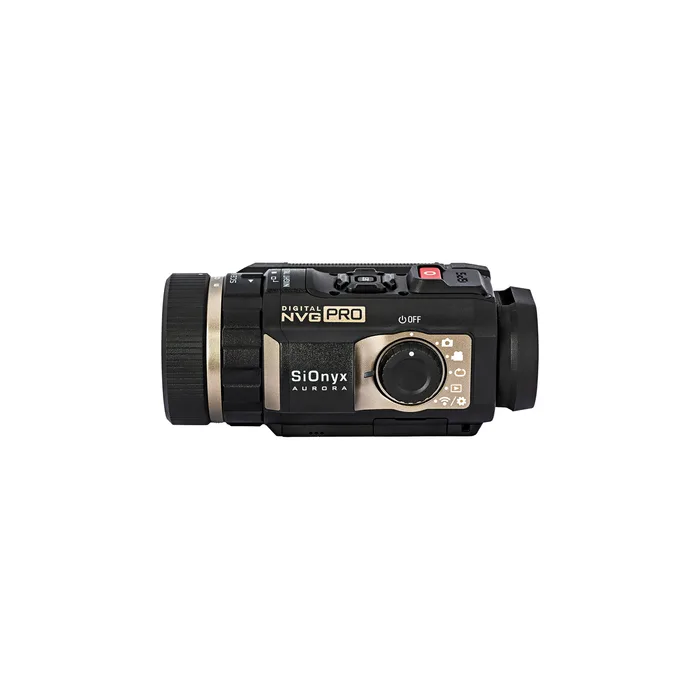
The SIONYX Aurora PRO is the one to buy for most people: a digital monocular built around a sensor designed for low light that produces a full-colour image rather than the usual green or grey, with built-in video recording and streaming. The Bushnell Equinox X650 is the value pick and the sensible first night vision device, with 5x magnification on a 32mm objective, a stated 650 foot range, video recording to a micro SD card and 13.8 ounces on three AA batteries. The AGM PVS-14E is the analog answer for anyone who needs to move in the dark rather than watch from a chair: 10.2 ounces, head harness included, helmet mountable, running on either AA or CR123 cells, with no screen and no recording at all. The ATN NVM14-2G is the one to skip for a general buyer: a Gen 2+ tube at 1x magnification with no display and no recording, subject to US export control, at a price where digital units do far more. Best for: anyone who has wondered what is setting off the motion light.
Our picks at a glance
- SIONYX Aurora PRO - Buy. Digital night vision that produces a colour image, and records and streams it.
- Bushnell Equinox X650 Digital Night Vision - Buy. The sensible first night vision device, with a real published range and a memory card slot.
- AGM Global Vision PVS-14E Night Vision Monocular - It depends. The analog standard, updated: 10.2 ounces, helmet mountable, and nothing to record with.
- ATN NVM14-2G - Skip. A Gen 2+ tube at 1x with no display, no recording and an export control notice attached.
The verdict in 30 seconds
What mattered most
- Technology
- Image colour
- Magnification
- Stated range
- Records video
- Published weight
Night vision splits into two technologies that share a name and almost nothing else. Digital units use a light-sensitive sensor and a small screen, so they record video, show you an image on a display and cost a few hundred. Analog units use an image intensifier tube, weigh a fraction as much, mount on a helmet and cost several thousand, and they cannot record anything. Buying the wrong one is the expensive mistake in this category, and the product pages do not always make the difference obvious. The numbers that matter are the technology, the stated viewing range, the magnification and the weight.
Digital night vision that produces a colour image, and records and streams it.
Best for: Anyone who needs to identify what they are seeing after dark and wants a recording of it.
- Full-colour night vision rather than the green or grey image every other technology here produces, which makes identifying what you are looking at far easier.
- Built-in video recording and streaming, so what you see can be saved or sent rather than just watched.
- SIONYX builds it around its own low-light sensor design rather than a generic CMOS, and rates it for extreme environments.
- SIONYX does not publish a detection or viewing range on the product page.
- No magnification, weight or battery life figures are given either.
- It is a digital device with a screen, so it is heavier on the head than an intensifier tube and it glows.
- It costs several times the Bushnell for a difference that matters most when identification, not detection, is the job.
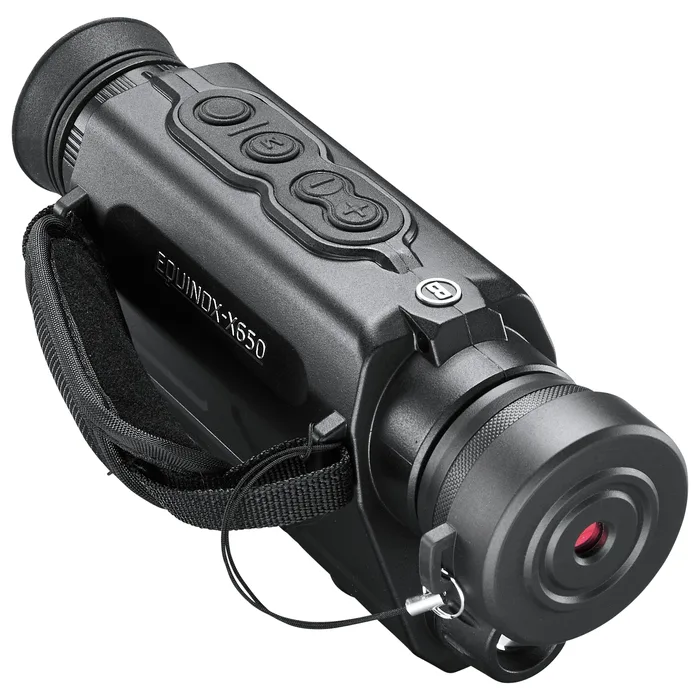
The sensible first night vision device, with a real published range and a memory card slot.
Best for: A first night vision purchase for wildlife watching, property checks or working out what the dog is barking at.
- Bushnell publishes the specification properly: 5x magnification, 32mm objective, 650 foot range, 13.8 ounces.
- Records video to a micro SD card, so a night's watching can be reviewed in daylight.
- Runs on three AA batteries, included, which means no proprietary pack to charge or replace.
- The spec table states no 1080p, no Wi-Fi and no app, so it is a viewer and recorder rather than a connected device.
- Bushnell's own marketing copy on this product page describes the Equinox Z2 with Wi-Fi and app streaming, which the spec table on the same page contradicts.
- 650 feet is a modest range next to what the analog units here can resolve.
- At 13.8 ounces with a screen, it is a handheld device rather than something you wear.
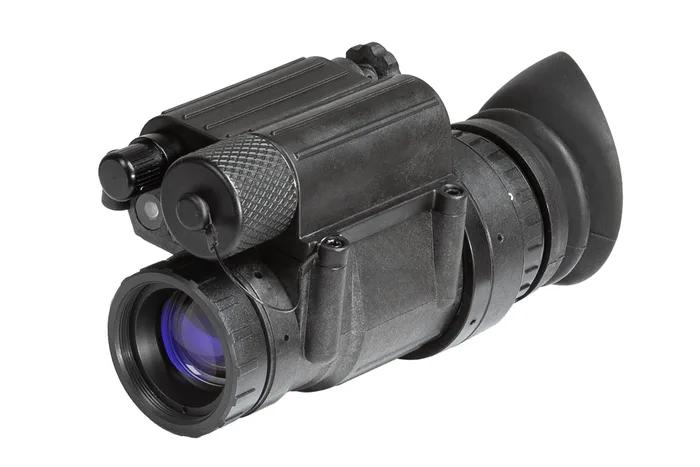
The analog standard, updated: 10.2 ounces, helmet mountable, and nothing to record with.
Best for: Anyone who needs to walk, ride or work in the dark hands-free rather than observe from one spot.
- 10.2 ounces total, light enough to wear on a head harness or a helmet for hours, which no digital unit here manages.
- Runs on either AA or CR123 batteries, so you are not dependent on one cell type being available.
- An advanced auto shut-off that powers down when the unit is articulated away and back on when it returns, plus electronic polarity switching.
- There is no screen and no recording of any kind, because an intensifier tube produces an optical image rather than a digital one.
- It is a flagship-priced device where digital units cost a few hundred.
- The image is monochrome green, which is harder to identify detail in than the Aurora's colour.
- Image intensifier devices are damaged by bright light and are export controlled, which complicates resale and travel.
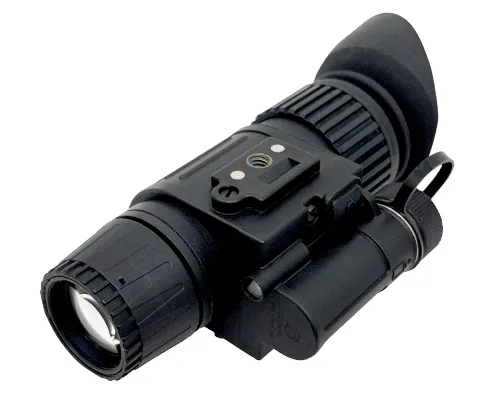
A Gen 2+ tube at 1x with no display, no recording and an export control notice attached.
Best for: A specific professional or hobbyist case where a helmet-mountable analog tube is required and recording is not.
- ATN publishes a full specification: Gen 2+ green phosphor, 58-60 lp/mm, f/1.2 27mm lens, 40 degree field of view.
- Genuinely rugged, complying with MIL-STD-810, waterproof, and rated from -40C to 50C.
- 0.62 pounds with 50 to 60 hours from a single CR123A cell, and a three year warranty.
- 1x magnification with no display and no recording, so it cannot do the two things most buyers want from a monocular.
- 58-60 lp/mm is a Gen 2+ resolution figure, and it sits at a price where digital units offer colour, recording and streaming.
- ATN states the product is subject to US export control, which restricts who may buy it and where it may go.
- The only way to use it as a camera is to buy an adapter and mount something else behind it.
| Criteria | Aurora PRO Top pick | Equinox X650 Digital Night Vision | PVS-14E Night Vision Monocular | NVM14-2G |
|---|---|---|---|---|
| Verdict | Buy it | Buy it | It depends | Skip it |
| Best for | Anyone who needs to identify what they are seeing after dark and wants a recording of it. | A first night vision purchase for wildlife watching, property checks or working out what the dog is barking at. | Anyone who needs to walk, ride or work in the dark hands-free rather than observe from one spot. | A specific professional or hobbyist case where a helmet-mountable analog tube is required and recording is not. |
| Price tier | $$ · flagship | $ · mid-range | $$ · flagship | $$ · flagship |
| Technology | Digital, colour sensor | Digital sensor and screen | Analog image intensifier | Analog image intensifier, Gen 2+ |
| Image colour | Full colour | Monochrome | Green phosphor | Green phosphor |
| Magnification | Not published | 5x | 1x | 1x |
| Stated range | Not published | 650 ft | Not published | Focus 0.25 yd to infinity |
| Records video | Yes, plus streaming | Yes, to micro SD | No | No |
| Published weight | Not published | 13.8 oz | 10.2 oz | 0.62 lb / 0.28 kg |
| Power | Not published | 3 x AA, included | AA or CR123 | 1 x CR123A, 50-60 hrs |
| Head or helmet mounting | Not published | Not published | Head harness included, helmet mountable | Helmet mount available |
Which one is right for you?
- Anyone who needs to identify what they are seeing after dark and wants a recording of it. Buy it SIONYX Aurora PRO
- A first night vision purchase for wildlife watching, property checks or working out what the dog is barking at. Buy it Bushnell Equinox X650 Digital Night Vision
- Anyone who needs to walk, ride or work in the dark hands-free rather than observe from one spot. It depends AGM Global Vision PVS-14E Night Vision Monocular
- A specific professional or hobbyist case where a helmet-mountable analog tube is required and recording is not. Skip it ATN NVM14-2G
How we judged the field
Five things decide which night vision monocular is right, and the first outranks the rest. Digital or analog is not a preference, it is a fork in what the device can do: digital gives you a screen, a recording and a price in the hundreds, and analog gives you a few ounces on a helmet, no lag and a price in the thousands. The second is what the maker publishes as a range, since a detection range and a viewing range are not the same claim and many pages give neither. The third is magnification, which sounds like a straightforward good and is not: 1x is what you want if you are walking, and 5x is what you want if you are watching from one spot. The fourth is weight, which is the whole argument for analog and the reason digital units live in hands rather than on heads. The fifth is whether it records, because a great many people buy night vision specifically to find out what has been visiting.
The field sorts naturally. Consumer digital monoculars sit at a few hundred and do the job most buyers actually have. Above them sit the colour digital devices, a small category that SIONYX effectively created, which solve the identification problem that monochrome night vision has always had. Then there is the analog PVS-14 pattern, an American military design now built by several companies, which is what you buy when you need to move. We took one from each of those, plus a second analog unit at a lower tube grade, because the gap between what analog costs and what it does for a civilian buyer is where most of the regret in this category lives.
The Aurora PRO is the most interesting device here because it fixes the complaint everyone has about night vision: that everything is the same colour. SIONYX builds it around a sensor of its own design rather than an off-the-shelf CMOS, and the result is a full-colour image in near-darkness, which changes night vision from detecting that something is there to identifying what it is. A brown deer and a black dog look different, and a red jacket looks red. It records video and streams it, so what you saw can be reviewed or sent, and SIONYX rates the housing for extreme environments. What SIONYX does not publish is a detection range, a magnification, a weight or a battery figure, which for a flagship-priced device is a real gap and makes it hard to compare on paper with anything else. It is also a screen-based device, so it is heavier on the head than a tube and it produces light of its own. For identification work after dark, it is still the one to buy.
The Equinox X650 is the sensible answer to the question most people are actually asking, which is what is in the garden at two in the morning. Bushnell publishes the specification properly: 5x magnification on a 32mm objective, a stated 650 foot range, 13.8 ounces, three AA batteries included, and video recording to a micro SD card. The spec table is also honest about what it is not, listing no 1080p, no Wi-Fi and no app, so this is a viewer and a recorder rather than a connected device. One warning worth repeating because it is on Bushnell’s own page: the marketing copy above the spec table describes the Equinox Z2, complete with built-in Wi-Fi and app streaming, and the spec table for the X650 directly below it says Wifi Enabled: No and App Enabled: No. Read the table, not the paragraph. Taken as what the table describes, this is a well-specified first night vision device at a fraction of everything else here.
The PVS-14E is AGM’s 2024 update to the design that defines the analog category. The changes are the ones that matter to someone wearing it: a more compact lens and eyepiece bring the whole unit to 10.2 ounces, and the power system now takes either AA or CR123 cells so you are not tied to one battery that a shop may not stock. It can be used handheld, on the included head harness or on a standard ballistic helmet mount, and it has an advanced auto shut-off that powers down when you articulate the unit away from your eye and comes back on when you swing it back. Electronic polarity switching is there too. All of that is in service of one thing: being able to move in the dark with both hands free and no screen between you and the world. What it cannot do is record, display, magnify or be pointed at a bright light, and it costs several times any digital unit. If your use case is movement, none of that matters. If it is observation, all of it does.
The NVM14-2G is the device that shows how badly the analog category can fit a civilian buyer, and ATN publishes enough detail to see why. It is a Gen 2+ green phosphor tube resolving 58-60 line pairs per millimetre, behind an f/1.2 27mm lens with a 40 degree field of view, focusing from a quarter of a yard to infinity. The build is serious: waterproof, MIL-STD-810 compliant, rated from -40C to 50C, 120 by 49 by 69mm, 0.62 pounds, 50 to 60 hours from one CR123A cell, three year warranty, with a built-in IR illuminator and a bright light cut-off. The problem is the match to what people want. It is 1x, so it does not bring anything closer. It has no screen and no recording, so nothing you see can be kept. And ATN states it is subject to US export control, which limits who can buy it and complicates taking it anywhere. At its price, a digital monocular gives you colour, magnification, a recording and a memory card. Unless you specifically need a helmet-mounted tube, this is the wrong shape of product.
SIONYX Aurora PRO vs Bushnell Equinox X650 Digital Night Vision: which should you buy?
The Aurora PRO and the Equinox X650 are both digital and they separate on what you need to do with the image. The Bushnell detects: 5x magnification and a stated 650 feet mean you can see that something is moving at the end of a field, and the micro SD slot means you can prove it in the morning. It runs on AA cells, which is the right decision for a device that lives in a drawer between uses. At its price it is close to an impulse purchase.
The Aurora PRO identifies. A colour image is a different kind of information from a brighter monochrome one, and for telling a fox from a cat, or reading a number plate, or deciding whether the shape at the fence line is a person, it does something no amount of magnification achieves. It records and streams too. The price gap is large and the specification gap runs the other way, since SIONYX publishes almost nothing you can compare. Buy the Bushnell first if you are not sure night vision will get used, because most people who buy one find out quickly whether it is a novelty or a tool. Buy the Aurora PRO if you already know the answer and the thing you keep failing to do is work out what you are looking at.
What to look for
- Digital or analog, stated plainly: digital has a screen and records, analog has a tube and cannot, and the price difference between them is an order of magnitude.
- A published range with its units: Bushnell’s 650 feet is checkable, and a page with no range figure at all is asking you to guess.
- Magnification matched to use: 1x for moving around, 4x to 6x for watching one spot, and more magnification always costs you field of view.
- Tube resolution on analog devices: ATN’s 58-60 lp/mm is the figure that actually describes the image, and a generation number on its own does not.
- Weight, if it goes on your head: 10.2 ounces on a harness is comfortable for hours and a 13.8 ounce screen device is not.
- Whether it records, and to what: a micro SD slot is the difference between seeing something and being able to show someone.
Our final take
Night vision is two categories wearing the same name, and getting that right is most of the decision. The SIONYX Aurora PRO is the pick for anyone whose problem is identifying what is out there, because a colour image tells you things a brighter green one never will, and it records what it sees. The Bushnell Equinox X650 is the right first purchase for almost everyone else: a published 5x, a published 650 feet, a memory card slot and AA batteries, at a price that does not hurt if it turns out to be a novelty. The AGM PVS-14E is what you buy when you need to walk in the dark with both hands free, and it is worth every bit of its price for that and nothing else. And a 1x analog tube with no screen and no recording is the wrong shape of product for almost anyone shopping this category.
Questions, answered
Digital or analog: which should I buy?
Digital, unless you need to move around in the dark. A digital monocular uses a sensor and a screen, so it can record video, show you a magnified image and cost a few hundred rather than several thousand. An analog image intensifier produces an optical image you look through directly, which is why it is lighter, has no lag and can be worn on a helmet for hours, and why it cannot record anything. If you are watching wildlife from a stand or checking a garden, buy digital. If you are walking, riding or working hands-free in the dark, that is what analog is for.
What does generation mean on an analog device?
It describes the image intensifier tube technology, and the useful companion number is resolution in line pairs per millimetre. ATN states Gen 2+ green phosphor at 58-60 lp/mm for the NVM14-2G, which is a specific and checkable figure. Higher generations resolve more detail and work in less light, and the price climbs steeply with each step. Be careful with listings that state a generation and not a resolution, because within a generation the spread in tube quality is very wide.
Does a night vision monocular work in total darkness?
Analog intensifiers amplify whatever light exists, so in genuinely total darkness, such as inside a sealed building, they need an infrared illuminator, which is why the ATN has one built in with a flood lens. Digital units are the same in principle but their sensors are generally less sensitive, so they lean on the IR illuminator sooner. Outdoors on a clear night there is far more starlight and skyglow than your eyes suggest, and both technologies work without help. The practical test is whether your use case has any ambient light at all.
Can I use night vision during the day?
Digital units generally yes, analog units no. An image intensifier is damaged by bright light, which is why devices like the ATN include a bright light cut-off and why you do not point one at a street lamp. Digital monoculars have no such vulnerability and several double as daytime viewers. It is one of the practical arguments for digital if the device is going to live in a bag and get picked up without thinking.
Why is analog night vision so much more expensive?
Because an image intensifier tube is a hand-built vacuum device with a photocathode, a microchannel plate and a phosphor screen, made in small volumes and subject to export control. ATN notes explicitly that its NVM14 is controlled under US export regulations. Digital night vision uses a sensor made in the same factories as phone cameras, which is why a capable digital monocular costs a few hundred and a comparable analog device costs several thousand. You are paying for weight, latency and the ability to wear it, not for a better picture on a screen.
Deciding between the top two? See our head-to-head: SIONYX Aurora PRO vs Bushnell Equinox X650 Digital Night Vision.
More Outdoors & Fitness reviews
 The Best Pickleball Paddles: 4 Compared (and One to Skip)
  The Best Pocket Knives: 4 Compared (and One to Skip)
  The Best Pole Saws: 4 Compared (and One to Skip)
  The Best Pull-Up Bars: 4 Compared (and One to Skip)
  The Best Rain Jackets: 4 Compared (and One to Skip)
  The Best Resistance Bands Sets: 4 Compared (and One to Skip)