Explained
Packable Blankets, Explained
After reading, you'll know whether you need insulation or a ground sheet, how to read fill ratings, and which specifications actually matter.
In this guide
A packable blanket is either an insulated quilt that stuffs into a sack, or a thin coated nylon sheet that folds into a pocket. The first keeps you warm and the second keeps you dry, they cost very different amounts, and both are marketed with the same photographs of people on hillsides.
The 30-second version
- Insulated and pocket blankets are different products, and only one of them keeps you warm.
- Down is warmer per gram and fails when wet, which matters more for a blanket than a jacket.
- Fill power is not fill weight, so a high rating alone does not mean a warm blanket.
- Synthetic shells melt rather than char, so spark resistance is worth looking for near fires.
- Packed size and weight are the travel decision, and many makers publish only one.
The products this guide is about
Our verdict on each, with the full reasoning on the companion review.
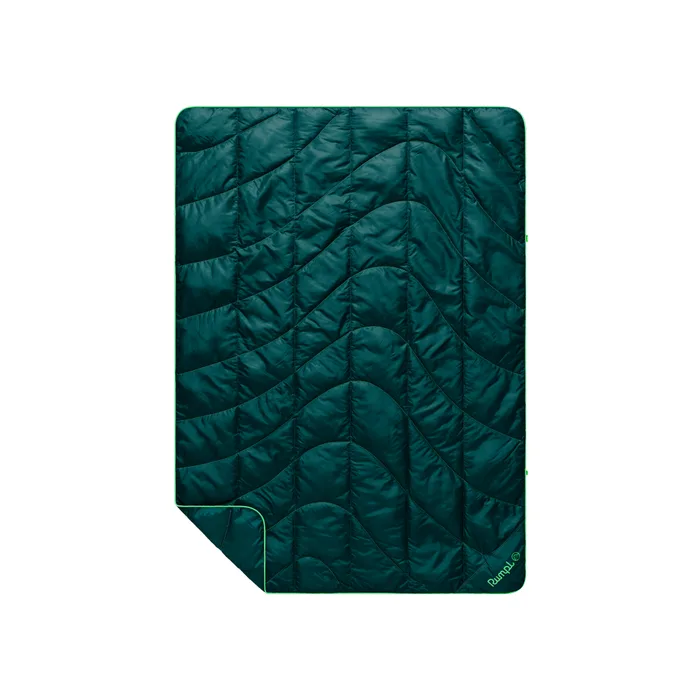
- Buy Rumpl Travel Puffy Blanket 0.7 pounds, packs to the size of a water bottle, and every figure published.
- Buy VOITED CloudTouch Indoor/Outdoor Camping Blanket A blanket that becomes a sleeping bag, a cape and its own pillow.
- It depends Cotopaxi Fuego Down Blanket, Single 600-fill down and a head slit, so the blanket becomes a poncho around the fire.
- Skip Matador Pocket Blanket An excellent ground sheet that will not keep you warm for a second.
What actually matters
- Insulation type - down, synthetic fill, or none. This determines warmth, packed size, wet-weather behaviour and price.
- Fill power and fill weight - fill power describes the loft of the down per ounce; fill weight says how much is in the product. You need both.
- Flat dimensions - typically around 38 by 52 inches for a single insulated blanket, and larger for ground sheets.
- Packed size and weight - the two figures that decide whether the blanket travels with you or stays in the car.
- Shell fabric and denier - 20D nylon is very light and easily punctured; heavier ripstop is tougher and bulkier.
- Water repellency - a DWR finish, ideally stated as PFAS-free or fluorine-free, which keeps dew and light rain off the fill.
- Extra functions - built-in pillow pouches, poncho slits, snap fastenings and corner weights, all of which change how the blanket is used.
The specs, in plain English
Green flags vs red flags
Green flags
- Flat size, packed size and weight all published.
- Fill type named, with both fill power and fill weight for down.
- A stated water repellent finish, ideally PFAS-free.
- Spark or ember resistance mentioned for a campfire blanket.
- Clear washing and drying instructions.
Red flags
- Blanket sold for warmth with no insulation named.
- Fill power quoted with no fill weight.
- No packed size on a product sold as packable.
- No weight anywhere on the page.
- No washing guidance on a fleece or down product.
Who's who: the brands
- Rumpl - Built the category around stuffable puffy blankets, publishing flat size, packed size and weight, with recycled shells and PFAS-free finishes.
- VOITED - German brand whose PillowBlanket designs convert into sleeping bags, capes and pillows, using recycled ripstop and fleece faces.
- Cotopaxi - Colourful outdoor brand offering down blankets with water-resistant shells and poncho slits, alongside its packs and apparel.
- Matador - Ultralight travel specialist whose Pocket Blanket is a fully specified 20D nylon ground sheet rather than an insulated blanket.
- Kelty - Long-standing camping brand offering insulated and fleece-lined blankets sized for two, generally at lower prices than the specialists.
How to read a listing without getting fooled
Work out first whether the product has any insulation in it, because packable blanket covers both quilts and ground sheets and the pictures look identical. If it is insulated, find the fill type: down for warmth per gram, synthetic for wet resistance and lower cost. For down, look for both a fill power and a fill weight, and treat a page giving only the first as having told you half the story. Then look for flat size, packed size and weight, and note that most makers give you two of the three at best. Read what the shell is and whether the water repellent finish is described as PFAS-free or fluorine-free. If the blanket will be near a fire, look specifically for a spark or ember claim, because a synthetic shell melts. Finally read the care instructions, since fleece blankets often cannot be tumble dried and down must be, which is the opposite requirement.
How much should you spend?
The price range here reflects two different products rather than two levels of quality. A pocket ground sheet sits in the mid-range and is excellent value for what it is, provided you know it is a ground sheet. Insulated blankets are premium items, and within that tier the money buys published specifications, a fill chosen for rebound rather than just loft, a recycled shell with a modern water repellent finish, and features like spark resistance or a convertible design. Down blankets cost similar money and buy warmth per gram instead. If you camp or sit outside regularly, owning both a thin ground sheet and one insulated blanket is a better use of the same budget than owning two of either, because they solve different halves of the same evening.
Questions, answered
Can I use one as a sleeping bag replacement?
Only in mild conditions, and only some of them. A blanket has no hood, no draught collar and no underside insulation, and it is the underside that matters most because your body weight compresses whatever is beneath you until it stops insulating. VOITED's design addresses part of this by snapping into a sleeping bag shape, which at least stops the blanket sliding off. For genuinely cold nights a quilt or a bag with a sleeping pad underneath is a different class of product.
How do I stop a down blanket clumping?
Dry it properly, which takes far longer than people expect. After washing with a down-specific detergent, tumble dry on low with a few dryer balls or clean tennis balls for several cycles, taking it out periodically to break up clumps by hand. Down that is put away damp mats permanently and never regains its loft. Never dry clean it, never use fabric softener, and store it loosely rather than compressed in its stuff sack between trips.
Are the recycled fabrics any less durable?
In practice no, and every insulated blanket here uses them. Recycled polyester made from bottles is chemically very similar to virgin polyester, and the durability comes from the weave and the denier rather than the source of the yarn. Rumpl uses a 100 percent post-consumer recycled shell and liner, and VOITED uses recycled ripstop REPREVE on one face. What does affect durability is fabric weight: a 20D shell of any origin is easier to snag than a 30D one.
What size should I buy?
Single sizes around 38 by 52 inches suit one person sitting or lying under a blanket, which is what most travel versions are. Larger sizes exist for sharing and for actually covering a sleeping adult, and they weigh and pack accordingly. Ground sheets work differently: the Matador is 63 by 44 inches precisely because two people need to sit on it. If in doubt, buy the insulated blanket for yourself and the ground sheet large.
Or jump to the head-to-head: Rumpl Travel Puffy Blanket vs VOITED CloudTouch Indoor/Outdoor Camping Blanket.