Explained
Kids Bikes, Explained
After reading, you'll understand how to size a kids bike by inseam, how its brakes differ and why weight matters.
In this guide
First-time buyers usually shop by age and wheel size and discover later that the bike is too tall or too heavy. Age ranges overlap between makers, and wheel size alone does not decide fit. Brake names also confuse people, because coaster, V-brake and disc brakes all feel different to a small hand. This guide explains the terms so you can compare bikes on what the maker actually publishes.
The 30-second version
- Size by inseam, not age, and start near the bike's minimum seat height.
- Weight is worth comparing, and some makers do not publish it at all.
- Brakes differ by design, so check the lever reach and how the system works.
- Gears are optional on a first pedal bike, and a simpler bike can be easier to learn on.
- Read the owner's manual, since the bike page does not replace it.
The products this guide is about
Our verdict on each, with the full reasoning on the companion review.
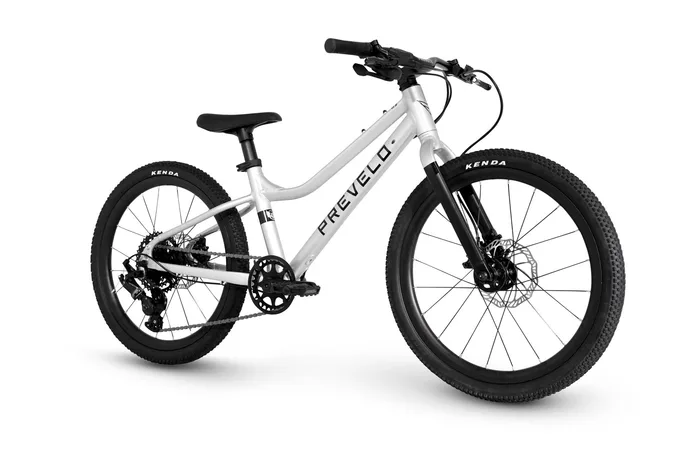
- Buy Prevelo Alpha Three A 20 inch aluminum bike with 8 speeds and hydraulic disc brakes, listed by Prevelo at 16.9 pounds without pedals.
- Buy Guardian Bikes Guardian 20 Inch Small Bike A steel 20 inch bike for ages 5 to 8 built around Guardian's single-lever SureStop brake and a kickstand in the box.
- Buy woom GO 4 A 17.2 pound aluminum 20 inch bike with 7 gears, two independent hand brakes and a stated 155 pound weight limit. Amazon
- It depends Batch KB.20 Kids 20 Inch Bike A 6061 aluminum 20 inch bike with both a coaster brake and a rear hand brake, plus a kickstand and handlebar pad.
- It depends Huffy Stone Mountain 20 Inch A steel 20 inch mountain-style bike with 6 Shimano speeds, a front suspension fork, front and rear brakes and a kickstand. Amazon
- Skip Schwinn Koen 20 Inch A single-speed steel 20 inch bike that Schwinn lists at 25.83 pounds, with a coaster brake and a rear hand brake.
What actually matters
- Wheel size - Measured as tire diameter, such as 20 inches. It is a rough guide, since two 20 inch bikes can fit different children.
- Inseam - The leg length from crotch to floor. Compare it with the bike's minimum and maximum seat height, not just the age label.
- Weight - A lighter bike is easier for a child to steer, stop and lift. Check whether the maker's figure includes pedals.
- Brake type - Coaster, linear-pull V-brakes and hydraulic discs all work differently. Check that a child can reach and squeeze the lever.
- Gearing - Gears help with hills and add learning. A single speed bike is simpler and has fewer parts to adjust.
- Frame and fork - Aluminum and steel frames differ in weight, and some bikes add a suspension fork. Check what the maker lists.
- What is in the box - Kickstands, reflectors and tools are included on some bikes and extra on others.
The specs, in plain English
Green flags vs red flags
Green flags
- The maker publishes weight, age range and inseam or height.
- A stated maximum rider weight appears on the page.
- The seat range and minimum saddle height are listed.
- Brake type is named and explained.
- Assembly guides and the owner's manual are available.
Red flags
- No weight or sizing data on the product page.
- Age labels with no inseam or height range.
- Vague brake descriptions.
- A heavy listed weight for a small child.
- No manual or assembly guide offered.
Who's who: the brands
- woom - Austrian maker known for lightweight aluminum kids bikes and a published sizing chart.
- Prevelo - Kids-only maker that publishes detailed measurements, with geared bikes and hydraulic disc brakes.
- Guardian Bikes - Known for its single-lever SureStop brake system and a sizing guide built around seat height.
- Batch - Sells aluminum kids bikes shipped mostly assembled for a local dealer to finish.
- Huffy - A long-running budget brand that sells kids bikes by age and wheel size.
How to read a listing without getting fooled
Start with the inseam or height range and compare it with the seat range, then look for a weight and note whether pedals are included. Next read the brake description and whether levers are adjustable, then count the gears. A listing that gives only an age label and a wheel size is hiding the numbers that matter. If a spec is missing, treat it as unknown, not as good.
How much should you spend?
Kids bikes fall into budget, mid-range and premium tiers. Budget bikes, such as the Huffy and Schwinn here, tend to be steel and heavier or to omit weight. Mid-range bikes add aluminum or a purpose-built brake system. Premium bikes like the woom and Prevelo publish detailed sizing and weights, and a premium bike can keep value if a younger sibling inherits it. Pay for weight and fit before extras.
Questions, answered
Should I buy a bigger bike for my child to grow into?
Maker guidance points the other way. Guardian's sizing guide recommends setting the seat near the minimum height when a child first rides, then raising it as they grow. A bike that is too large can make starting and stopping harder. Choose by inseam and keep the seat low.
What is the difference between a 20 inch small and large bike?
Guardian offers both. It lists the small for ages 5 to 8 and the large for ages 6 to 9, with a smaller frame on the small so it fits a smaller child for longer. Check the maker's height and inseam range rather than the age label.
Do kids bikes come assembled?
Not fully. Batch says its bikes ship 85 percent assembled for a local dealer to finish, and Huffy says its bikes can be ready in about 15 minutes with the tools included. Prevelo, woom and Guardian publish assembly guides. Recheck brakes and seat height after assembly.
When should my child move from a balance bike to a pedal bike?
Makers frame it by skill and size, not a single age. Guardian lists its balance bike for ages 1.5 to 4 and its 14 inch bike for ages 3 to 5. Our balance bikes review covers the earlier stage. Move up when your child can glide with feet up and the inseam fits a pedal bike's seat range.
Or jump to the head-to-head: Prevelo Alpha Three vs Guardian Bikes Guardian 20 Inch Small Bike.