Explained
Kids Ride-On Cars, Explained
After reading, you will understand what voltage, speed settings, weight limits and remote controls mean and what a good listing should state.
In this guide
First-time buyers often compare cars by looks and licensed brand, then find out the age range, weight limit or speed does not suit their child. A battery ride-on is a motorised toy, so the figures on the maker page matter more than the paint job. Voltage is only one of them, and not every listing publishes the rest. This guide covers what each term means and what to look for before buying.
The 30-second version
- Read the age range and weight limit first, because both are set by the maker and the child must fit both.
- Voltage is a rough tier, not a speed, so compare the maker's stated mph as well.
- A parental remote is listed on some models only, so check the exact model page.
- Seat belt and harness mentions vary, and absence from a listing is worth noticing.
- The maker's manual has the final say, on use, charging and limits.
The products this guide is about
Our verdict on each, with the full reasoning on the companion review.
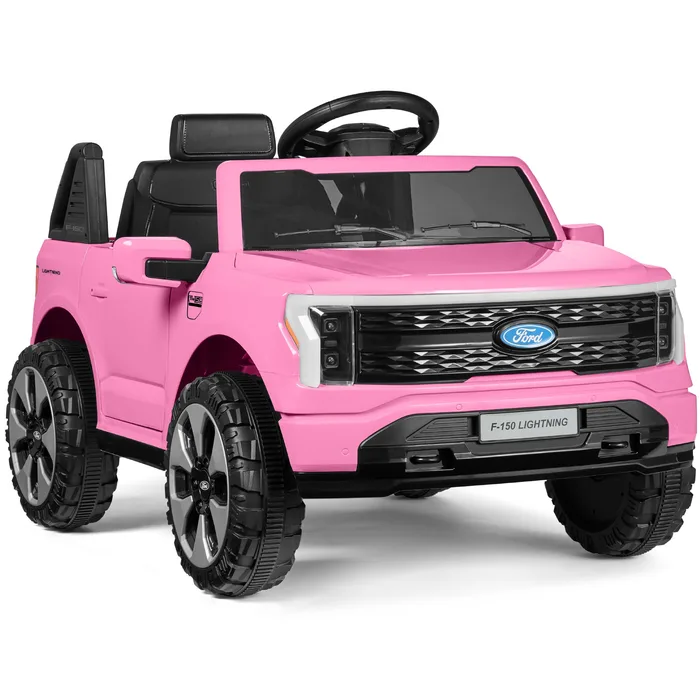
- Buy Best Choice Products 12V Ford F-150 Lightning Ride-On Truck A licensed 12V truck whose maker page lists every number a parent needs: two speeds, a 66 lb limit, ages 3 to 6, a harness and a remote. Amazon
- Buy Costzon 12V Kids Ride on Car with 2.4G Remote A low-cost 12V sports-style car with manual and 2.4G parental remote modes and a complete spec table.
- Buy Huffy 12V Disney x Formula 1 Mickey Car Ride-On A single-speed 12V Mickey Mouse racer from a bike maker, with a parent remote and a lower top speed. Amazon
- Buy TOBBI 12V Licensed Land Rover Ride-On Car A 12V 7Ah SUV with a 2.4G three-speed remote and the fullest spec table of the group. Amazon
- It depends Kid Trax 12V Ford Bronco, 2 Riders The two-seat pick: a 12V Bronco with a 130 lb limit and a 5 mph top speed, but no remote on its listing. Amazon
- Skip Dynacraft BMW 6V i8 Coupe A good-looking 6V BMW coupe whose maker page gives no speed, age range, weight limit or battery capacity.
What actually matters
- Age range - It is the maker's guidance for who the car is built for. In this group it runs from 3 to 5 up to 3 to 7.
- Weight limit - The maximum load the maker states. Here it ranges from 55 lb to 130 lb, and the child must be under it.
- Top speed - The maker's stated mph. Cars here list from 1.5 to 5 mph, and a low setting helps a first-time driver.
- Speed settings - Some cars have one speed and others have two or three. More settings let you start slow.
- Parental remote - A remote lets an adult take over. It is listed on some models and absent from others.
- Battery and charging - Voltage, amp-hours, run time and charge time. Publication varies by maker.
- Seat belt or harness - Whether the maker's page lists one. Check the model page and the manual.
The specs, in plain English
Green flags vs red flags
Green flags
- The maker lists age range, weight limit and top speed.
- A stated run time and charge time.
- A parental remote that is named on the product page.
- A seat belt or harness mentioned in the listing.
- ASTM and CPSIA certifications listed.
Red flags
- No speed, age or weight figures on the maker page.
- No battery capacity or run time anywhere.
- A product page with unfilled placeholder text.
- A remote or belt feature stated only in a marketing image, not the spec text.
- A weight limit that is close to your child's weight.
Who's who: the brands
- Best Choice Products - A brand whose ride-on listings state speeds, weight capacity and run time in the page text.
- Costzon - A budget-tier brand with licensed and unlicensed 12V and 24V ride-ons and a spec table on its pages.
- Huffy - Best known for bikes and the Green Machine line, it also sells licensed 6V and 12V ride-on cars.
- Kid Trax - Sells 6V and 12V ride-ons, including CAT loaders and a two-rider Ford Bronco.
- Peg Perego - Sells 6, 12 and 24 volt ride-ons on its US site, many styled as tractors and offroad vehicles.
How to read a listing without getting fooled
Start with the maker's own page and look for four things in text, not images: the age range, the weight limit, the top speed in mph and the run time. Then check whether a parental remote and a seat belt are named. A good listing states all of them and lists certifications. A thin listing gives only a theme and a voltage. If a figure is missing, look in the printed manual or ask the maker before you buy, and follow the manual for use and charging.
How much should you spend?
Prices cluster in a budget tier and a mid-range tier, and price tracks seat count, battery size and licensing more than safety features. A budget car can include a remote and a full spec table, while a mid-range listing can leave figures out. Pay for what the maker documents: stated speeds, a bigger battery, a second seat or a three-speed remote. Replacement batteries and chargers are a separate cost, and some makers sell them.
Questions, answered
Can a ride-on car go on grass and pavement?
It depends on the model and the maker's instructions. Kid Trax lists rubber traction-strip tires and describes all-terrain use, while Costzon lists spring suspension for wood, brick and asphalt. Check the model page and manual for the surfaces the maker names.
What does a licensed ride-on mean?
It means the maker has a license to use a real brand's name or design, such as Ford, Land Rover or Disney. It tells you about styling, not about speed or safety. Judge the car by the stated specs.
Why does the same car come in several colors with different listings?
Makers often sell one body in pink, black, white and more as variants of one product page. The specs usually apply across colors but confirm on the page. Best Choice Products lists the Ford Lightning in five colors.
Do ride-on cars need assembly?
Many ship in a box and need some assembly, and the maker's manual describes the steps. TOBBI states that minimal assembly is required and a manual is included. Allow time for assembly and an initial charge.
Or jump to the head-to-head: Best Choice Products 12V Ford F-150 Lightning Ride-On Truck vs Costzon 12V Kids Ride on Car with 2.4G Remote.