Explained
Kids' Bike Helmets, Explained
After reading, you'll understand what the label inside a kids' helmet is actually certifying, which specs change how well it protects a specific child, and which ones are marketing.
In this guide
First-time buyers usually assume that some kids' helmets are safe and others are not, and shop accordingly. That is not how the market works: every bicycle helmet legally sold in the US meets the same federal impact requirements, and the differences that matter are about which age category the helmet was tested for, how precisely it can be adjusted to one particular head, and whether it is comfortable enough to be worn every time. The confusion is understandable, because helmet packaging leads with the things that do not vary and buries the things that do. This guide is about reading the label rather than the marketing.
The 30-second version
- Fit outranks features, so a correctly sized helmet with a working dial beats a better-specced helmet that sits crooked.
- There are two CPSC categories, and children under about five belong in the one labeled for persons age 1 and older with extended head coverage.
- MIPS is a bonus and not a baseline, because rotational-impact systems sit outside the federal test rather than replacing any part of it.
- Vents and weight are safety features in disguise, since the helmet a child refuses to wear protects nothing at all.
- Any impact means replacement, because the foam can be crushed past usefulness without showing a single visible mark.
The products this guide is about
Our verdict on each, with the full reasoning on the companion review.
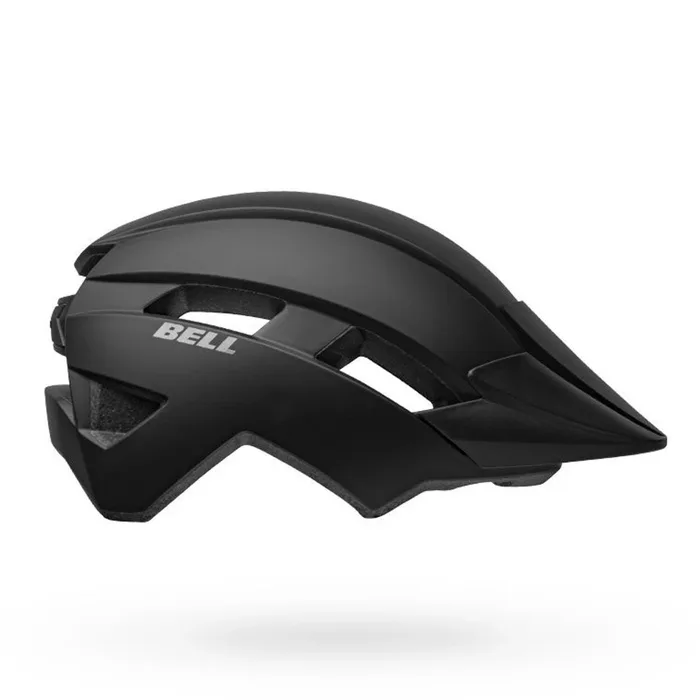
- Buy Bell Sidetrack II Mips The default school-age helmet: Mips Evolve, an easy one-handed dial, and two universal shell sizes for school-age kids. Amazon
- Buy Joovy Noodle Kids Bike Helmet A budget-tier helmet that still does the two things that matter most: extended head coverage certification and a real adjustment dial. Amazon
- It depends Bern Nino DVRT Bike Helmet A low-profile skate-style lid with Bern's sliding DVRT pads, right for the kid who refuses to wear anything that looks like a mushroom.
- Skip Thousand Jr. Kids Helmet A beautiful object that is also the heaviest, least ventilated and narrowest-fitting helmet in this group. Amazon
What actually matters
- CPSC certification - This is the federal floor, not a premium feature, and every bicycle helmet sold in the US carries it on a durable label inside. What varies is which of the two age categories the helmet was tested to.
- Extended head coverage - Helmets labeled for persons age 1 and older are tested to a lower impact line that covers more of the back and sides of the head. For a toddler or preschooler this is the single most important line on the label.
- Dial fit system - A rear dial lets you tighten or loosen the cradle in seconds without unbuckling anything, which is how a helmet stays level through a growth spurt. Foam-pad-only sizing is a real downgrade because pads compress and get lost.
- Head circumference range - The number on the box is the only sizing information that means anything, and age labels are marketing shorthand. Aim for the middle of the range so the dial has adjustment room in both directions.
- Weight - Kids carry proportionally heavier heads on weaker necks, so 80 grams is a bigger difference for them than for an adult. Listed weights in this category run from roughly 200 to 400 grams.
- Ventilation - Vent count is a rough proxy for how hot the helmet gets, and it is the spec most closely tied to whether a child keeps the helmet on. Anything in single digits can feel warm on a summer afternoon.
- Rotational-impact system - Mips and similar designs add a layer intended to move slightly in an angled impact. Treat it as a tiebreaker between two helmets that fit equally well, never as a reason to accept a worse fit.
The specs, in plain English
Green flags vs red flags
Green flags
- The label inside states an exact CPSC compliance phrase, and it matches your child's age category.
- The maker publishes head circumference ranges in centimeters or inches rather than only naming an age.
- There is a rear adjustment dial you can turn one-handed, and it holds tension when you shake the helmet.
- The maker publishes a weight and a vent count, which suggests they expect the numbers to be compared.
- Replacement pads, straps or a crash replacement policy exist, which means the brand expects the helmet to last.
Red flags
- The listing names an age range but never a head circumference.
- Sizing is handled entirely by swapping foam pads, with no dial or ratchet at the back.
- The certification claim is vague, such as safety certified or meets safety standards, with no standard named.
- The helmet is sold as multi-sport but only CPSC is listed, with no ASTM F1492 for skate use.
- The straps use fixed, non-sliding side splitters that cannot be positioned into a V under the ear.
Who's who: the brands
- Bell - The mainstream cycling brand with the broadest kids' range, generally pairing Mips options with easy dial systems and universal shell sizes.
- Giro - Bell's stablemate, known for kids' models like the Scamp and Tremor built around the Roc Loc Jr. dial shaped to a child's head.
- Joovy - A juvenile-products brand rather than a cycling one, best known for putting extended head coverage certification and a proper dial into inexpensive helmets.
- Bern - The skate-influenced brand, low-profile shapes with flip visors and its own DVRT sliding-pad technology instead of Mips.
- Thousand - A design-led brand whose helmets sell on looks, magnetic buckles and customization rather than on ventilation or weight.
How to read a listing without getting fooled
Start at the bottom of the listing, not the top. Find the certification line and read the exact wording, because persons age 5 and older and persons age 1 and older with extended head coverage are different products even when the helmets look identical. Then find the head circumference range in centimeters or inches; if the listing gives you only an age, treat that as a missing spec rather than an answer. Check whether a dial is named, since brands that have one usually say so. Weight and vent count come next, and note that some makers, Bell among them, publish weight but not vents, which is a gap rather than a zero. Ignore shell color names, sticker packs and anything described as aerodynamic on a helmet for a seven year old. Finally, check whether the brand sells replacement pads and straps, because that tells you whether they expect the helmet to survive more than one summer.
How much should you spend?
Budget helmets in this category are not compromised on certification, because certification is legally required, and the best of them include the extended head coverage rating plus a working dial and generous ventilation. What you give up is usually a rotational-impact system, finish quality and the very widest size ranges. Mid-range is where the big cycling brands live, and the money buys a better dial action, more shell sizes so one purchase lasts longer, and Mips or an equivalent as a standard fitting. Premium in kids' helmets mostly buys design rather than protection, and it is the one tier where you should check the spec sheet hardest, because a heavier helmet with fewer vents and no rotational system can carry a higher price than a better-equipped mid-range model. Given that children outgrow helmets and crash them, spending mid-range twice usually beats spending premium once.
Questions, answered
Do more expensive kids' helmets pass a tougher safety test?
No. There is one federal test and every bicycle helmet sold in the US passes it, from the cheapest model in a supermarket to the most expensive one in a bike shop. What extra money buys is fit adjustability, lower weight, better ventilation, finish quality and sometimes a rotational-impact system. Those are real benefits, but they are not a higher grade of impact certification.
How long does a kids' helmet last before it needs replacing?
There is no expiry stamped into the federal standard, so the practical answer is whichever comes first among three things. Replace after any impact, because the foam can be crushed without showing damage. Replace when your child's head measurement passes the top of the size range or the dial no longer holds tension. And replace when the straps or buckle are worn, since the retention system is what keeps the helmet on your child's head at all.
Is a bike helmet fine for a scooter or a balance bike?
For a balance bike, yes, and an extended head coverage helmet is exactly what you want. For a scooter, a CPSC-certified bike helmet is what most kids use and is a reasonable choice. The place to be careful is a skate park, where repeated falls onto a hard surface are the norm and the relevant standard is ASTM F1492. Helmets meeting that standard list it explicitly, so check the label rather than assuming multi-sport marketing means dual certification.
My child hates wearing a helmet. Does anything actually help?
Two things move the needle more than arguing. The first is fixing the fit, because most helmet complaints are really complaints about pressure points, a strap digging into the chin or a helmet sliding into the eyes, and ten minutes with the dial and the side splitters usually solves it. The second is letting your child choose the helmet, including the color or the stickers, which is why sticker packs and bold colorways exist. A lighter, better-ventilated helmet also helps on hot days, when refusal peaks.
Or jump to the head-to-head: Bell Sidetrack II Mips vs Joovy Noodle Kids Bike Helmet.