

Baby & Family
The Best Kids' Bike Helmets: 4 Compared (and One to Skip)
We compared four kids' bike helmets on what the maker actually certifies them to, how the fit system adjusts, listed weight and ventilation, and how long each one stays usable as a head grows.
The short version
The Bell Sidetrack II Mips is the one to buy for most school-age kids: Bell lists it as complying with the CPSC standard for persons age 5 and older, it uses Mips Evolve built into the retention system, and the Ergo Fit dial adjusts one-handed across two shell sizes that span 47 to 57 cm. The Joovy Noodle is the value pick and the better choice for the youngest riders, because Joovy certifies it to the CPSC standard for persons age 1 and older with extended head coverage, lists 14 vents, and gives you a real dial for very little money. The Bern Nino DVRT is a genuine maybe: it looks like a skate helmet rather than a mushroom, and Bern's DVRT sliding pads add something beyond bare EPS, but it lists only 7 vents and its certification is age 5 and older, so it is the wrong shape of helmet for a toddler or a hot-weather rider. The Thousand Jr. Kids Helmet is the one to skip, because at a listed 390 g with 6 vents and a single 49 to 53 cm size range, you are paying a style premium for the heaviest and least ventilated helmet here with no rotational-impact system listed. Fit beats every other feature, so buy whichever helmet your child's head measurement lands in the middle of, and replace any helmet that takes an impact. Best for: parents who want a helmet their kid will wear every ride, not just the first one.
Our picks at a glance
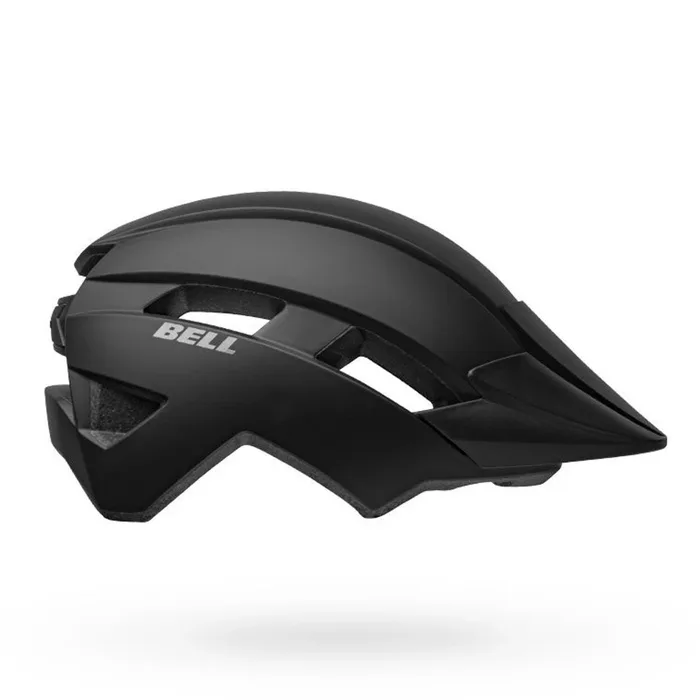
- Bell Sidetrack II Mips - Buy. The default school-age helmet: Mips Evolve, an easy one-handed dial, and two universal shell sizes for school-age kids.
- Joovy Noodle Kids Bike Helmet - Buy. A budget-tier helmet that still does the two things that matter most: extended head coverage certification and a real adjustment dial.
- Bern Nino DVRT Bike Helmet - It depends. A low-profile skate-style lid with Bern's sliding DVRT pads, right for the kid who refuses to wear anything that looks like a mushroom.
- Thousand Jr. Kids Helmet - Skip. A beautiful object that is also the heaviest, least ventilated and narrowest-fitting helmet in this group.
The verdict in 30 seconds
What mattered most
- Certification listed by maker
- Rotational-impact system
- Fit system
- Head sizes
- Listed weight
- Vents
Every bicycle helmet sold in the US has to meet the same federal floor, 16 CFR Part 1203, so the interesting differences are not whether a helmet is safe enough to sell. They are whether it fits a specific head correctly, whether it is certified for the extended head coverage that little kids need, whether it adds a rotational-impact system, and whether it is cool and light enough that a kid will actually keep it on. We stuck to helmets whose makers publish their certification wording, sizing and weight, because a spec you cannot check is not a spec. The four below cover a toddler on a balance bike through a twelve year old riding to school.
The default school-age helmet: Mips Evolve, an easy one-handed dial, and two universal shell sizes for school-age kids.
Best for: A school-age kid who rides regularly and needs a helmet that adjusts fast and survives being thrown in a garage corner.
- Bell lists Mips Evolve, which integrates the low-friction layer into the retention system instead of adding a separate liner.
- The Ergo Fit dial has a rubber overmolded knob that an adult can turn one-handed while the kid is already on the bike.
- Two universal sizes, 47 to 54 cm and 50 to 57 cm, mean one helmet can last several growth spurts.
- Bell's certification wording is for persons age 5 and older, so it is not the extended head coverage version a toddler should be in.
- Bell does not publish a vent count for this model, which makes hot-weather comfort hard to judge before you buy.
- At a listed 360 g in the youth size it is heavier than the lightest kids' helmets here.
- The all-mountain shape with its deeper rear coverage sits taller than a low-profile helmet, which some kids dislike.
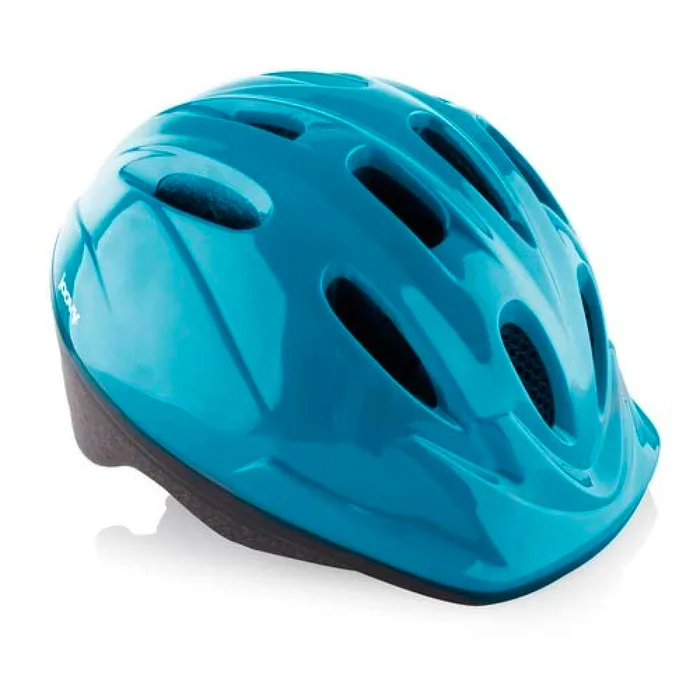
A budget-tier helmet that still does the two things that matter most: extended head coverage certification and a real adjustment dial.
Best for: Parents buying the first helmet for a one to four year old, or anyone who wants a second helmet for the grandparents' house without thinking hard about it.
- Joovy states it complies with the US CPSC standard for bicycle helmets for persons age 1 and older with extended head coverage, the category built for small children.
- The dial-adjust fit system sits low at the back of the helmet, so it is easy to reach and tighten on a wriggling toddler.
- Joovy lists 14 vents with integrated bug mesh and a weight of 7.2 oz, which is a lot of airflow for the money.
- Joovy does not list Mips or any other rotational-impact system for the Noodle.
- Joovy publishes the size ranges in inches only, 18.5 to 20.5 in and 20.5 to 22 in, so you have to convert to compare with cm-based brands.
- Joovy describes the visor as extended, with no removal option mentioned.
- Joovy gives sizes for roughly ages 1 to 9 only, so an older child will outgrow it.
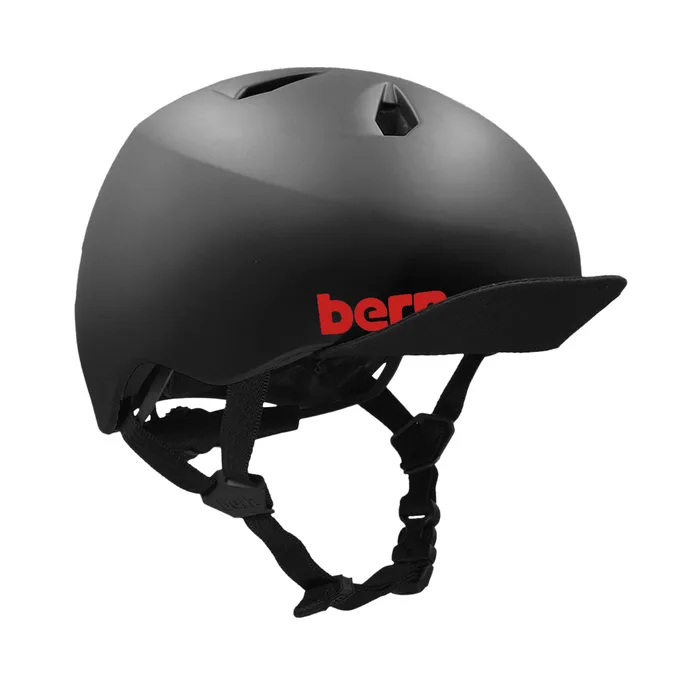
A low-profile skate-style lid with Bern's sliding DVRT pads, right for the kid who refuses to wear anything that looks like a mushroom.
Best for: A style-conscious kid in a temperate climate who would rather leave a bulky trail helmet at home than wear it.
- Bern's DVRT pads use sliding membranes designed to allow controlled movement inside the liner, which is more than plain foam padding.
- The Compass Fit dial and a listed 310 g average weight make it comfortable enough for daily around-the-neighborhood use.
- The flip visor is included rather than sold separately, and the low-profile shape is the one kids who care about looks will actually wear.
- Bern lists only 7 vents, so this is the wrong helmet for long rides in genuine heat.
- The certification wording is for persons age 5 and older, not the extended head coverage category, even though Bern's own description mentions ages 3 to 12.
- Bern sells only two sizes, XS/S and S/M, so a bigger-headed ten year old may outgrow it sooner than the Bell.
- Several S/M colors were listed as sold out on Bern's page, which limits your options.
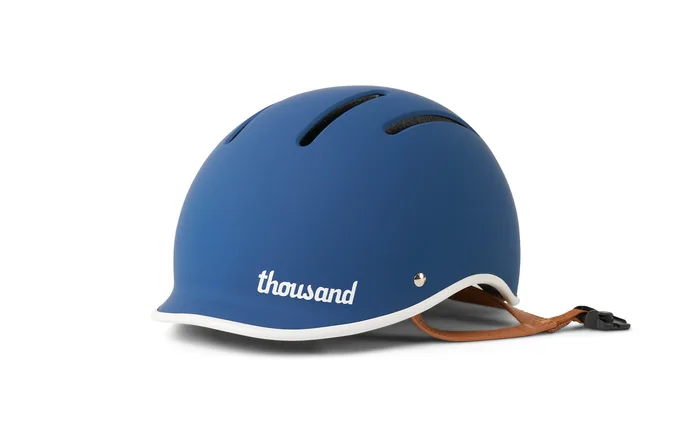
A beautiful object that is also the heaviest, least ventilated and narrowest-fitting helmet in this group.
Best for: Almost nobody on a bike, though it makes sense as a second helmet for short urban trips if the styling is genuinely what gets your kid out the door.
- Thousand lists CPSC, CE and ASTM certification for cycling, roller skating and skateboarding.
- The magnetic fastener closes one-handed and cannot pinch a chin, which removes the single most common source of helmet tears.
- The removable reflective sticker packs give a kid a reason to care about their own helmet.
- Thousand lists 390 g, the heaviest helmet here, on the smallest heads here.
- Six vents is the lowest count in this comparison, and it shows on a warm afternoon.
- One size range, 49 to 53 cm, means shorter useful life and a real chance the helmet does not fit your kid at all.
- Thousand does not list Mips or any other rotational-impact system for the Jr., which is a lot to give up at this price level.
| Criteria | Sidetrack II Mips Top pick | Noodle Kids Bike Helmet | Nino DVRT Bike Helmet | Jr. Kids Helmet |
|---|---|---|---|---|
| Verdict | Buy it | Buy it | It depends | Skip it |
| Best for | A school-age kid who rides regularly and needs a helmet that adjusts fast and survives being thrown in a garage corner. | Parents buying the first helmet for a one to four year old, or anyone who wants a second helmet for the grandparents' house without thinking hard about it. | A style-conscious kid in a temperate climate who would rather leave a bulky trail helmet at home than wear it. | Almost nobody on a bike, though it makes sense as a second helmet for short urban trips if the styling is genuinely what gets your kid out the door. |
| Price tier | $$ · mid-range | $ · budget | $$ · mid-range | $$ · mid-range |
| Certification listed by maker | CPSC, persons age 5 and older | CPSC, persons age 1 and older (extended head coverage) | CPSC, persons age 5 and older, plus EN 1078 | CPSC, plus CE and ASTM for cycling, roller skating and skateboarding (page cites both age 1 and older and age 5 and older) |
| Rotational-impact system | Mips Evolve | None listed | Bern DVRT sliding pads | None listed |
| Fit system | Ergo Fit dial, integrated with Mips | Dial-adjust fit system | Compass Fit dial | Dial fit system |
| Head sizes | 47 to 54 cm and 50 to 57 cm | 18.5 to 20.5 in and 20.5 to 22 in | XS/S and S/M (cm ranges on Bern's size chart) | 49 to 53 cm, one range |
| Listed weight | 360 g, youth size | 7.2 oz | 310 g average | 390 g |
| Vents | Not listed by Bell | 14 | 7 | 6 |
| Visor | Removable | Extended | Flip visor included | None listed |
| Maker's age guidance | Certified age 5 and older | Ages 1 to 9 | Described for ages 3 to 12, certified age 5 and older | Sold as the ages 3 and up model; CPSC age wording is inconsistent on the page |
Which one is right for you?
- A school-age kid who rides regularly and needs a helmet that adjusts fast and survives being thrown in a garage corner. Buy it Bell Sidetrack II Mips
- Parents buying the first helmet for a one to four year old, or anyone who wants a second helmet for the grandparents' house without thinking hard about it. Buy it Joovy Noodle Kids Bike Helmet
- A style-conscious kid in a temperate climate who would rather leave a bulky trail helmet at home than wear it. It depends Bern Nino DVRT Bike Helmet
- Almost nobody on a bike, though it makes sense as a second helmet for short urban trips if the styling is genuinely what gets your kid out the door. Skip it Thousand Jr. Kids Helmet
How we judged the field
Five things decide whether a kids’ helmet is worth buying. First is the certification wording printed inside it, because 16 CFR Part 1203 has two categories and only one of them, persons age 1 and older with extended head coverage, is tested to the lower impact line that small heads need. Second is the fit system: a dial that an adult can turn one-handed is what keeps a helmet level on a head that is growing three sizes over four years. Third is the size range, since a helmet that spans 47 to 57 cm across two shells outlasts one locked to a four-centimeter window. Fourth is weight and ventilation, which is not comfort trivia; a heavy, hot helmet is the one that gets left on the porch. Fifth is whether the maker adds a rotational-impact system such as Mips or Bern’s DVRT pads, which sits outside the federal test and is a bonus rather than a baseline.
The field splits cleanly into three groups. There are trail-shaped helmets from the big cycling brands, which give you the best dials, the widest size ranges and the most consistent Mips availability, but which are certified for age five and up. There are budget kids’ helmets, which is where the extended head coverage certification actually lives, usually paired with a surprising amount of ventilation and no rotational system. And there are lifestyle helmets, low-profile and handsome, that trade vents and weight for looks. We picked one of the first, one of the second, one skate-styled helmet that adds real technology to that third group, and one lifestyle helmet that does not, so you can see exactly what the style premium costs.
Bell Sidetrack II Mips
Buy itThe Sidetrack II Mips is what we would hand a school-age kid without much deliberation. Bell lists it as complying with the US CPSC standard for persons age 5 and older, and it carries Mips Evolve, which builds the low-friction layer into the retention system rather than stacking a separate liner inside the shell. The Ergo Fit dial has a rubber overmolded knob that turns easily with one hand, which matters because the person doing the adjusting is usually a parent crouched in a driveway with a kid already on the pedals. Two universal shells, 47 to 54 cm and 50 to 57 cm, cover a wide span of school-age heads, and Bell lists 360 g for the youth size, which is respectable rather than featherweight. The removable visor genuinely comes off, so a kid who has decided visors look babyish can settle that themselves. Bell does not publish a vent count, and the deeper all-mountain shape sits taller than a low-profile lid. For most school-age riders, this is the default.
Joovy Noodle Kids Bike Helmet
Buy itThe Noodle is the helmet we would buy for a one to four year old, and the one we would buy in duplicate. Joovy states plainly that it complies with the US CPSC standard for bicycle helmets for persons age 1 and older with extended head coverage, which is the category tested to the lower impact line that small children need, and that certification is far more valuable on a toddler than any rotational system. The dial sits low on the back of the shell where an adult’s hand naturally lands, and Joovy lists 14 vents with bug mesh, an extended visor and a weight of 7.2 oz. Sizing runs 18.5 to 20.5 in and 20.5 to 22 in, covering roughly ages one through nine. The trade-offs are real: Joovy does not list Mips or any equivalent, and the sizes stop at 22 in. But nothing else at this price gives you the right certification category and a working dial together.
Bern Nino DVRT Bike Helmet
It dependsThe Nino DVRT is the helmet for the kid who has opinions about how helmets look. It is a low-profile skate shape rather than a trail shape, the flip visor is included, and Bern’s DVRT pads are more interesting than they sound: sliding membranes inside the padding, developed by Shield-X, designed to allow controlled movement within the liner instead of gripping the scalp. Bern lists 310 g and a Compass Fit dial, and the certification wording covers the US CPSC standard for persons age 5 and older plus EN 1078. Two things narrow its audience. Bern lists only 7 vents, which is a genuine limitation on a hot day or a long ride, and it comes in only two sizes, so a big-headed ten year old may outgrow it before they outgrow the Bell. Note too that Bern’s copy mentions ages 3 to 12 while the certification is age 5 and older. For a style-driven kid in a temperate climate, it is the right call.
Thousand Jr. Kids Helmet
Skip itThe Thousand Jr. Kids Helmet is the best-looking helmet here and the one we would not buy. Thousand lists 390 g, which is the heaviest in this group, sitting on the smallest heads in this group; it lists 6 vents, the fewest here; and it comes in a single 49 to 53 cm size range, so there is a real chance it simply does not fit your child. Thousand does not list Mips or any other rotational-impact system for the Jr. The certification list is good, covering CPSC along with CE and ASTM for cycling, roller skating and skateboarding (though the product page cites both age 1 and older and age 5 and older for CPSC), and the magnetic fastener and free crash replacement are genuinely nice. But you are paying a design premium and receiving less helmet: heavier, hotter, narrower fitting, with nothing beyond the federal floor. If the styling is the only thing that gets your child out the door, buy it as the second helmet rather than the only one.
Sources
Specs in this review come from these pages.
- 16 CFR Part 1203, Safety Standard for Bicycle Helmets (US Government Publishing Office) (govinfo.gov)
- ASTM F1492, Standard Specification for Helmets Used in Skateboarding and Trick Roller Skating (store.astm.org)
- Bell, Sidetrack II Mips product page (bellhelmets.com)
- Joovy, Noodle Kids Toddler Bike Helmet product page (joovy.com)
- Bern, Nino DVRT Bike Helmet product page (bernhelmets.com)
- Thousand, Jr. Kids Helmet product page (explorethousand.com)
Bell Sidetrack II Mips vs Joovy Noodle Kids Bike Helmet: which should you buy?
The Bell and the Joovy are not really competing for the same child, which makes choosing between them easy once you have a tape measure. The Joovy Noodle is the one certified for persons age 1 and older with extended head coverage, so for anyone under about five it is the correct answer regardless of price, and it is priced in the budget tier. It also ventilates better on paper, with 14 listed vents against a Bell that does not publish a count, and it is the lighter of the two at a listed 7.2 oz. What it does not have is a rotational-impact system, or a size range that extends past 22 in.
The Bell Sidetrack II Mips takes over once your child’s head measurement is past about 20 in and their riding involves speed, curbs and dirt. It adds Mips Evolve, its Ergo Fit dial has a smoother action under tension, and its two shells cover 47 to 57 cm, which means one purchase can carry a child through several growth spurts. Practical rule: measure the head, and if the number falls inside both helmets’ ranges, buy the Bell if the child rides hard and the Joovy if they ride to the end of the street and back. If you are buying for two kids at different ages, buying one of each is not a compromise.
What to look for
- Read the label, not the box: every US bicycle helmet carries a durable label with one of two exact phrases, persons age 5 and older or persons age 1 and older with extended head coverage, and only the second one is tested to the lower impact line small children need.
- Measure before you shop: wrap a soft tape just above the eyebrows and ears, then buy the size where that number sits in the middle of the range rather than at the very top, so the dial has room to work in both directions.
- Insist on a dial: foam-pad-only sizing is a downgrade, because pads compress, get lost and cannot be adjusted mid-ride, while a dial lets you retighten a helmet in three seconds without unbuckling anything.
- Count the vents when the maker publishes them: a helmet that is too hot gets taken off, and the spread here runs from 6 vents to 14, which is the difference between a kid who complains and a kid who does not.
- Treat a rotational system as a tiebreaker: Mips, Bern’s DVRT pads and similar designs sit outside the federal test, so take one when two helmets fit equally well, but never accept a worse fit to get one.
- Plan for replacement: the standard itself says a helmet that has sustained an impact should be returned to the manufacturer for inspection, or be destroyed and replaced, so budget for a new helmet after any real crash and check whether the brand offers free crash replacement.
Our final take
Buy the Bell Sidetrack II Mips if your child is school-age and rides for real: it has the best dial here, the widest span of head sizes, and a Mips layer built into the retention system rather than bolted on. Buy the Joovy Noodle if your rider is one to four, or if you just need a good helmet cheaply, because it is the one certified for persons age 1 and older with extended head coverage and it still gives you a proper dial and 14 vents. Take the Bern Nino DVRT only if styling is what decides whether your kid wears anything. Skip the Thousand Jr.: heavier, hotter and narrower fitting than the alternatives, with nothing above the federal floor.
Questions, answered
Does my kid really need a helmet with MIPS?
No, and any helmet you can legally buy in the US already meets the same federal impact requirements with or without it. Mips describes its system as a low-friction layer mounted inside the helmet that is designed to move slightly in a crash and help redirect rotational motion away from the head, and it is not part of the CPSC test. The honest framing is that it is a plausible extra, not a substitute for anything. A well-fitted helmet without Mips protects a child better than a loose helmet with it. If two helmets fit equally well and one has a rotational system, take that one.
What is extended head coverage, and does my toddler need it?
The federal standard has two categories. Helmets for persons five and older are tested to the impact line in Figure 4 of 16 CFR Part 1203, while helmets labeled for persons age 1 and older carry the Figure 5 test line, which sits lower on the head and covers more of the back and sides. That extra tested area exists because small children have proportionally larger, heavier heads and fall differently. For a child under about five, buy a helmet whose label says persons age 1 and older with extended head coverage. Of the four here, only the Joovy Noodle clearly carries that wording; Thousand's page cites persons age 1 and older in one place and age 5 and older in another, and the Bell Sidetrack II Mips and Bern Nino DVRT are age 5 and older.
How do I know the helmet actually fits?
Measure your child's head with a soft tape just above the eyebrows and ears, then buy the size where that number sits in the middle of the range rather than at the top. The helmet should sit level with about two finger widths between the eyebrows and the front edge, not tipped back off the forehead. Tighten the dial until the helmet stays put when your child shakes their head with the strap undone. Then adjust the side straps so they form a V just under each ear and buckle the chin strap snug enough that one finger fits underneath. If it slides forward or back with the dial fully tightened, it is the wrong size.
Can my child wear their bike helmet for scooting and skateboarding?
For a scooter, a CPSC-certified bike helmet is a reasonable choice and is what most kids use. Skateboarding and trick roller skating have their own standard, ASTM F1492, which is written for repeated impacts and different fall patterns, and a helmet that meets it will say so on the label. Of the four here, only the Thousand Jr. lists ASTM certification alongside CPSC. If your child spends real time at a skate park, look for a helmet that lists both standards rather than assuming a bike helmet covers it.
When do I have to replace a kid's helmet?
Replace it after any impact, even one that leaves no visible mark. The federal standard requires every helmet to carry a label warning that a helmet may be damaged past the point of usefulness after an impact and that the damage may not be visible, and the same rule states that a helmet that has sustained an impact should be returned to the manufacturer for inspection, or be destroyed and replaced. Beyond crashes, replace when the dial no longer holds tension, when the straps fray, or when your child's head measurement is past the top of the size range. Some makers, including Thousand, offer a free crash replacement, which is worth knowing before you throw the old one out.
Deciding between the top two? See our head-to-head: Bell Sidetrack II Mips vs Joovy Noodle Kids Bike Helmet.
More Baby & Family reviews
 The Best Kids Cameras: 4 Compared (and One to Skip)
  The Best Kids' Luggage: 4 Compared (and One to Skip)
  The Best Kids Microscopes: 4 Compared (and One to Skip)
  The Best Kids Night Lights: 4 Compared (and One to Skip)
  The Best Kids Science Kits: 4 Compared (and One to Skip)
  The Best Kids Kick Scooters: 4 Compared (and One to Skip)