

Baby & Family
The Best Kids Kick Scooters: 4 Compared (and One to Skip)
Four current kids kick scooters compared on age fit, steering style, deck height, wheel material, and how far the handlebar adjusts.
The short version
Age fit decides this category, not brand. Under five, buy the Micro Mini LED Scooter: three-wheel lean-to-steer means no balance required, and the T-bar adjusts from about 19.25 to 27 inches so it fits for years. From roughly eight upward, buy the Razor A5 Lux, whose 200mm urethane wheels roll over cracked pavement that stops small wheels and whose 220 pound rider limit means it lasts into the teens. The Micro Maxi Foldable LED is the right bridge for a five-to-seven-year-old who is still wobbly and an expensive detour for one who is not. Skip the Razor Lil' Kick Scooter: a fixed handlebar and a 44 pound rider limit make it a one-season purchase. A helmet is required with any of them. Best for: parents who want one scooter that still fits in two years rather than the cheapest one on the shelf.
Our picks at a glance
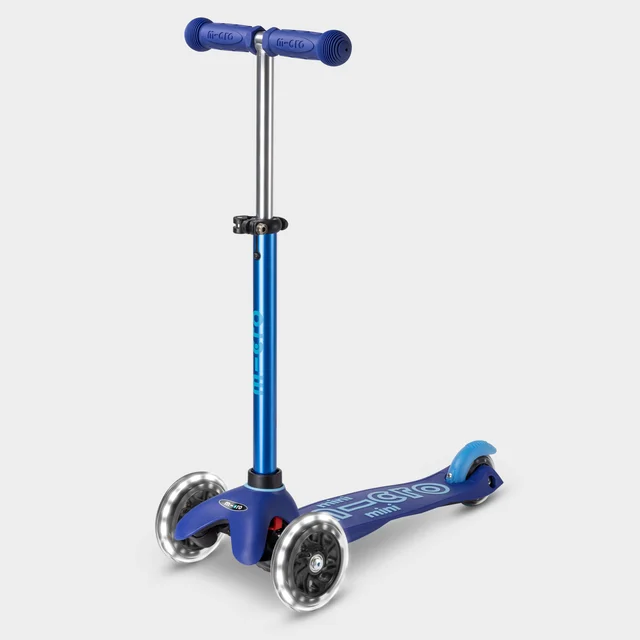
- Micro Kickboard Micro Mini LED Scooter - Buy. The three-wheel lean-to-steer scooter that a two-year-old can ride within minutes, with a T-bar that keeps fitting until school age.
- Razor A5 Lux - Buy. Eight-inch urethane wheels turn rough sidewalk into a smooth ride, and the rider weight limit means it lasts into the teens.
- Micro Kickboard Micro Maxi Foldable LED Scooter - It depends. The right bridge for a five-to-seven-year-old who is not ready for two wheels, and an expensive detour for one who is.
- Razor Lil' Kick Scooter - Skip. A fixed handlebar and a 44 pound rider limit mean you are buying one season, not a scooter.
The verdict in 30 seconds
What mattered most
- Steering style
- Maker's age guidance
- Handlebar adjustment
- Wheels
- Max rider weight
- Scooter weight
Kids kick scooters look interchangeable in a photo, but the choice comes down to one thing: age fit. Three-wheel lean-to-steer models suit under-fives because the child steers by leaning instead of balancing, while two-wheel handlebar steering suits older children who already have balance. Beyond that, deck height, wheel material, and whether the T-bar adjusts as the child grows decide whether a scooter lasts years or one season. A helmet is required regardless of which product you buy.
The three-wheel lean-to-steer scooter that a two-year-old can ride within minutes, with a T-bar that keeps fitting until school age.
Best for: Children roughly two to five taking their first rides, and families who want the scooter to survive to a younger sibling.
- Lean-to-steer geometry removes the balance problem entirely for first-time riders
- T-bar adjusts from roughly 19.25 to 27 inches, covering the full two-to-five range
- Polyurethane wheels (120mm front, 80mm rear) damp vibration on cracked pavement
- LED wheels are driven by rotation, so there are no batteries to replace
- Modular design: Micro says virtually every part is replaceable
- Premium tier, well above a supermarket three-wheeler
- Does not fold, so it takes up full length in a car trunk
- Outgrown on steering style by about age five even though the frame lasts far longer
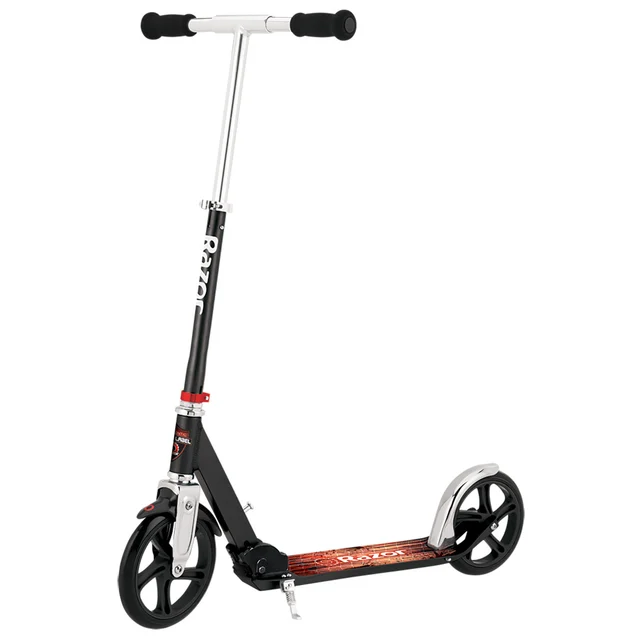
Eight-inch urethane wheels turn rough sidewalk into a smooth ride, and the rider weight limit means it lasts into the teens.
Best for: Confident riders roughly eight and up who already handle a bicycle, and anyone scootering on real neighborhood pavement.
- 200mm urethane wheels roll over cracks and gaps that stop small-wheel scooters
- Anodized aluminum frame with a 20.6 inch deck feels solid rather than toy-like
- Folds with a lever and includes a retractable kickstand
- 220 pound rider limit means an adult can ride it and a teenager will not outgrow it
- Arrives assembled with adjustable handlebar height
- At about 8.4 pounds it is heavy for a small child to carry upstairs
- Scaled for ages eight and up, so buying it early for a five-year-old backfires
- Rear fender brake is the only brake, so it wears with heavy use
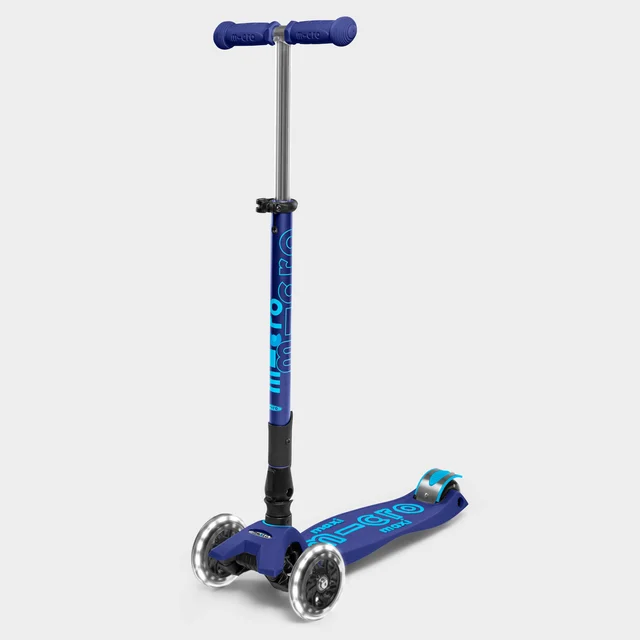
The right bridge for a five-to-seven-year-old who is not ready for two wheels, and an expensive detour for one who is.
Best for: Children roughly five to seven who are still visibly wobbly, or riders who want lean-to-steer stability at higher speed.
- T-bar range of 26.5 to 35.75 inches genuinely covers ages five to twelve
- T-bar folds against the deck, which the non-folding Micro models cannot do
- Larger 13 by 5.5 inch deck gives an older child room for a two-footed stance
- Same polyurethane wheels, battery-free LEDs, and replacement parts catalogue as the Mini
- Premium tier, priced above the two-wheel Razor A5 Lux
- Three wheels can hold back a child who already has the balance for two
- 110 pound rider limit is close for a taller ten- or eleven-year-old
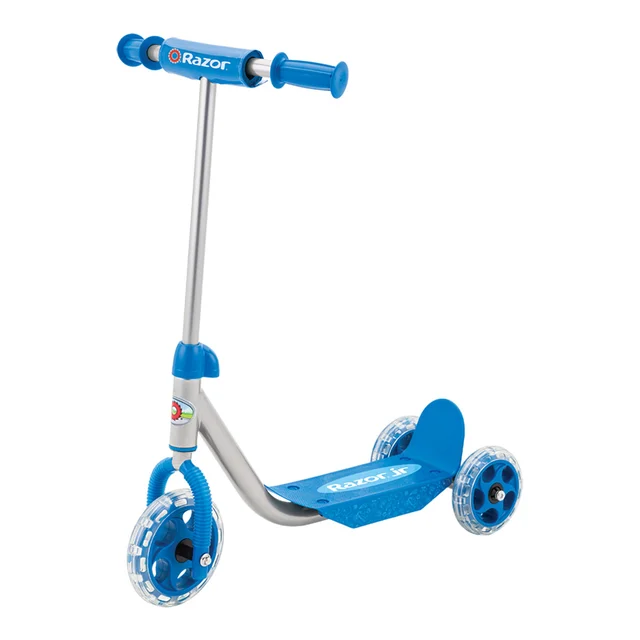
A fixed handlebar and a 44 pound rider limit mean you are buying one season, not a scooter.
Best for: A three-year-old riding indoors or on a smooth driveway where the budget is fixed at the low end.
- Extra-wide slip-resistant deck gives a toddler a stable place to stand
- Light at about 5.2 pounds, easy for a parent or child to carry
- Steel frame, per Razor
- Razor lists no handlebar height adjustment, so it likely fits properly for only a short window
- 44 pound maximum rider weight is reached by many four-year-olds
- Polymer wheels chatter on cracked pavement and stall on gaps
- No replacement parts range found on Razor's page for wear items
| Criteria | Micro Mini LED Scooter Top pick | Razor A5 Lux | Micro Maxi Foldable LED Scooter | Razor Lil' Kick Scooter |
|---|---|---|---|---|
| Verdict | Buy it | Buy it | It depends | Skip it |
| Best for | Children roughly two to five taking their first rides, and families who want the scooter to survive to a younger sibling. | Confident riders roughly eight and up who already handle a bicycle, and anyone scootering on real neighborhood pavement. | Children roughly five to seven who are still visibly wobbly, or riders who want lean-to-steer stability at higher speed. | A three-year-old riding indoors or on a smooth driveway where the budget is fixed at the low end. |
| Price tier | $$ · premium | $ · mid-range | $$ · premium | $ · budget |
| Steering style | Three-wheel lean-to-steer | Two-wheel handlebar steering | Three-wheel lean-to-steer | Three-wheel lean-to-steer |
| Maker's age guidance | 2 to 5 years | 8 years and up | 5 to 12 years | 3 years and up |
| Handlebar adjustment | 19.25 to 27 in from ground | Adjustable height, folding | 26.5 to 35.75 in from ground | No adjustment listed |
| Wheels | 120mm front / 80mm rear polyurethane | 200mm urethane | 120mm front / 80mm rear polyurethane | Small polymer (plastic) |
| Max rider weight | 110 lb | 220 lb | 110 lb | 44 lb |
| Scooter weight | About 4.2 lb | About 8.4 lb | About 6.2 lb | About 5.2 lb |
| Folds for transport | No | Yes | Yes, T-bar folds to deck | No |
| Price tier | $$ · premium | $ · mid-range | $$ · premium | $ · budget |
Which one is right for you?
- Children roughly two to five taking their first rides, and families who want the scooter to survive to a younger sibling. Buy it Micro Kickboard Micro Mini LED Scooter
- Confident riders roughly eight and up who already handle a bicycle, and anyone scootering on real neighborhood pavement. Buy it Razor A5 Lux
- Children roughly five to seven who are still visibly wobbly, or riders who want lean-to-steer stability at higher speed. It depends Micro Kickboard Micro Maxi Foldable LED Scooter
- A three-year-old riding indoors or on a smooth driveway where the budget is fixed at the low end. Skip it Razor Lil' Kick Scooter
How we judged the field
We do not run a lab. This comparison relies on current manufacturer specifications.
Kids scooters look interchangeable in a product photo, so we weighted the things that actually decide whether a scooter gets ridden or abandoned in the garage. First, steering geometry against age. Three-wheel scooters use lean-to-steer: the child shifts weight and the deck tilts, which matches how a two-year-old naturally moves and removes the balance problem entirely. Two-wheel scooters use handlebar steering, which is faster and more agile but demands a sense of balance most children do not have before roughly age five or six. Getting this one thing wrong is the most common reason a scooter fails.
Second, deck height and width. A low deck means less effort to push off and a shorter fall. A wide deck means a small foot can land confidently, and it also allows a two-footed stance while the child figures out balance.
Third, wheel size and material. Polyurethane wheels of the kind used on quality scooters and skateboards flex slightly and damp vibration, so cracked pavement and expansion joints feel manageable. Hard polymer wheels, the plastic kind found on cheap toy scooters, skitter over the same surface and transmit every crack up through the deck. Bigger wheels roll over gaps that stop small wheels dead. We found no durometer figure on the maker pages, so the practical test is material and diameter.
Fourth, whether the T-bar adjusts. Children grow several inches a year. A fixed handlebar means the scooter fits properly for roughly one season and then becomes either a hunched crouch or a stretch. An adjustable T-bar with a wide range is the single biggest factor in how many years you get out of the purchase.
We also looked at weight (a parent carries it home more often than you expect), folding or detaching for the car, and whether replacement parts exist. One point that applies to every product here: a helmet is required regardless of which scooter you buy. None of these products makes a helmet optional, and no feature on any of them substitutes for one.
This is the default answer for a child between two and five, and it earns that position on geometry rather than branding. The three-wheel lean-to-steer layout puts two wheels under the front of the deck and one at the back, so a toddler steers by leaning into a turn instead of twisting a handlebar. Children who have never ridden anything before can get moving quickly, which is the whole point at this age.
The deck sits low and measures about 12 by 4.5 inches, wide enough for a small foot to land without precision. Wheels are high grade polyurethane, 120mm at the front and 80mm at the rear, and the LEDs are driven by wheel rotation rather than batteries, so there is nothing to replace and nothing to leak. That matters: battery-powered light-up wheels depend on a battery that eventually needs replacing.
The T-bar adjusts from roughly 19.25 to 27 inches off the ground, which covers the full two-to-five span rather than a single year. The whole scooter weighs about 4.2 pounds, so a parent can carry it one-handed with a child on the other arm. Micro describes the design as modular, with virtually every part replaceable, and backs the scooter with a two-year manufacturer defect warranty, which makes hand-me-downs realistic.
The catch is price. This sits well above the supermarket three-wheeler, and if your child is going to ride twice and lose interest, that premium is wasted. Rated max rider weight is 110 pounds, which in practice means the scooter outlasts the age range it is sold for.
Once a child has balance, usually somewhere around six to eight, two wheels stop being a compromise and start being an upgrade. The A5 Lux is the two-wheel pick here, and the reason is the wheels: 200mm urethane, roughly eight inches across. That diameter rolls over sidewalk cracks, driveway lips, and small gravel that would stop a 100mm wheel, and the urethane compound absorbs the buzz that makes cheaper scooters unpleasant on rough concrete.
The frame is anodized aluminum with a 20.6 by 4.65 inch deck, folds with a lever for the car trunk, and includes a retractable kickstand so it does not have to be laid flat in a driveway. Braking is the standard rear fender type, which is simple and effective and the thing every rider learns first. It arrives assembled. Rated for ages eight and up with a 220 pound rider limit, which means an adult can ride it too.
At about 8.4 pounds it is heavier than the three-wheelers here, and that weight is the tradeoff for the big wheels and aluminum frame. A small child will struggle to carry it upstairs. The handlebar is adjustable, but the whole scooter is scaled for a bigger rider, so buying this for a five-year-old on the theory that they will grow into it is the classic mistake. Bought at the right age, it is the scooter that lasts into the teenage years.
This is the three-wheel scooter for children roughly five to twelve, and whether it makes sense depends entirely on where your child sits on the balance question. The deck is larger at 13 by 5.5 inches, the T-bar runs from 26.5 to 35.75 inches, the wheels are the same polyurethane 120mm front and 80mm rear as the Mini, and the T-bar folds down against the deck for transport. Build quality and parts availability match the Mini, with the same two-year defect warranty and the same modular replacement parts.
The case for it is straightforward. A child who is five or six and still visibly wobbly, or a child with coordination differences, gets a scooter they can actually ride confidently at speed, with lean-to-steer that stays stable through turns. The fold helps for school runs and car trunks, which the non-folding Micro models cannot do.
The case against is that many children of this age are ready for two wheels, and a three-wheel scooter can hold them at a stage they have already grown past. It also sits in the premium tier, above the A5 Lux, and it carries a 110 pound rider limit that a taller ten-year-old will approach. If your child is confident on a balance bike or a bicycle, skip straight to a two-wheeler and save the difference. If they are not, this is the right bridge and it is worth the money.
This is the cheap three-wheeler that shows up in gift guides for toddlers, and it fails on two of the four criteria that matter most.
The handlebar does not adjust. Razor lists no height adjustment, so the scooter likely fits a child for only a short window. The Micro models here publish T-bar ranges of 7 inches or more.
The rated maximum rider weight is 44 pounds. That is a genuinely low ceiling: many four-year-olds are already at or past it, so the usable window is narrow even for children who are still the right height. The wheels are polymer rather than polyurethane, which is the difference between rolling over a cracked sidewalk and chattering across it. On smooth indoor floors or a fresh driveway it is fine. On typical neighborhood pavement, small polymer wheels tend to feel rough and stall on gaps.
To be fair, it does some things right. The deck is extra-wide and slip-resistant, the steel frame is sturdy, and it is light at about 5.2 pounds. If your budget is genuinely fixed at the low end and you want something for a three-year-old to try on a smooth surface, it works. But as a purchase meant to last more than a season, or one that will see real sidewalks, the money is better spent on a scooter with an adjustable T-bar and polyurethane wheels.
Micro Mini LED Scooter vs Razor A5 Lux: which should you buy?
These two do not really compete. They are the two ends of the same decision, and picking between them is a question about your child, not about the products.
If the rider is under five, buy the Micro Mini LED Scooter. Handlebar steering at that age means the child spends the first month falling over rather than riding, and lean-to-steer removes that problem completely. The low deck, the wide-enough footprint, the battery-free lights, and the 19.25 to 27 inch T-bar range mean it fits from the first wobbly push through to school age.
If the rider is eight or older and already confident on a bike, buy the Razor A5 Lux. Two wheels are faster and more maneuverable, the 200mm urethane wheels handle real pavement in a way small wheels cannot, and the 220 pound limit means it stays useful for years. It also folds and weighs enough to feel solid rather than toy-like.
The genuinely awkward zone is five to seven. There is no universal answer there. Watch how your child handles a bicycle or a balance bike. Confident on two wheels means go to the A5 Lux early and accept that it will be slightly large for a year. Still wobbly means the Micro Maxi Foldable LED buys another two or three years of comfortable riding, at a higher price.
What to look for
- Match wheels to age, not to price. Three-wheel lean-to-steer for roughly two to five. Two-wheel handlebar steering from roughly six to eight upward. This is the decision that determines whether the scooter gets ridden.
- Check the T-bar adjustment range in inches, not just whether it adjusts. A range of six inches or more covers several years of growth. A fixed handlebar covers one season.
- Insist on polyurethane wheels. Hard polymer or plastic wheels chatter over cracked pavement and stop dead on gaps. Polyurethane flexes and damps vibration. Larger diameter generally rolls better over rough surfaces.
- Look at the deck. Low is easier to push off from and shorter to fall from. Wide gives a small foot somewhere confident to land.
- Weigh the maximum rider weight against your child now, not at purchase age. A 44 pound ceiling can be reached sooner than parents expect.
- Confirm replacement parts exist. Decks, wheels, T-bars, and brakes are the parts that wear. A scooter with a spares catalogue gets handed down; one without gets thrown away.
- Decide whether it needs to fold. Folding matters for car trunks and school runs and matters not at all if the scooter lives by the front door.
- Buy the helmet at the same time. A helmet is required regardless of which scooter you choose. Fit it properly, level on the head and snug under the chin, and replace it after any real impact.
Our final take
Age fit is the whole decision here. Brand loyalty and light-up wheels are marketing; steering geometry, deck height, wheel material, and handlebar adjustment are what determine whether a scooter is still being ridden in two years.
For under-fives, the Micro Mini LED Scooter is the safe purchase and the one most likely to be handed down to a sibling. For confident older children, the Razor A5 Lux gives a better ride on real pavement than anything with small wheels, and its rider weight limit means it does not get outgrown. The Micro Maxi Foldable LED is the right answer for a specific child, the five-to-seven-year-old who is not ready for two wheels, and the wrong answer for one who is. The Razor Lil’ Kick Scooter is the one to walk past: a fixed handlebar and a 44 pound rider limit mean you are buying a season, not a scooter.
Whichever you pick, buy a helmet with it and fit it before the first ride.
Questions, answered
Three wheels or two wheels: which should I buy?
Go by the child, not the age on the box. Three-wheel lean-to-steer scooters let a child steer by shifting weight, so no balance is needed, and they suit riders from about two to five. Two-wheel scooters steer from the handlebar and demand balance, which most children develop somewhere between five and eight. The practical test: if your child rides a balance bike or a bicycle confidently, they are ready for two wheels. If not, stay on three.
Does my child need a helmet on a kick scooter?
Yes. A helmet is required regardless of which scooter you buy and regardless of speed or surface. Falls on a scooter can happen forward or sideways onto pavement, and the head is unprotected. Fit it level on the head with the strap snug under the chin, check the fit as the child grows, and replace it after any real impact. Knee and elbow pads are worth adding for beginners, but the helmet is not optional.
How much do wheel size and material actually matter?
More than almost anything else once you are outdoors. Polyurethane wheels flex slightly and absorb vibration, so cracked sidewalks and expansion joints feel manageable. Hard polymer or plastic wheels transmit every crack up through the deck and can stop dead on a gap that a larger wheel rolls straight over. Larger diameter helps for the same reason. On smooth indoor floors the difference is small, but on typical neighborhood pavement it is the difference between a scooter that gets ridden and one that does not.
Will my child outgrow the scooter in a year?
That depends almost entirely on the T-bar. Look for a published adjustment range in inches rather than just the word adjustable. A range of six inches or more usually covers several years of growth. A fixed handlebar covers roughly one season. Also check maximum rider weight against your child's weight now, because a 44 pound ceiling is reached far sooner than most parents expect, and check whether replacement decks, wheels, and brakes are sold separately.
Are light-up wheels worth paying for?
They are a motivation feature rather than a safety feature, and children love them. The distinction that matters is how they are powered. Wheels lit by rotation have no batteries to replace, which is what both Micro models here use. Battery-powered light-up wheels depend on a battery that eventually needs replacing. Light-up wheels are not a substitute for reflective clothing or lights if a child is riding near dusk.
Deciding between the top two? See our head-to-head: Micro Kickboard Micro Mini LED Scooter vs Razor A5 Lux.
More Baby & Family reviews
 The Best Kids Tablets: 4 Compared (and One to Skip)
  The Best Kids Water Bottles: 4 Compared (and One to Skip)
  The Best Magnetic Tiles: 4 Compared (and One to Skip)
  The Best Nursery Blackout Curtains and Blinds: 4 Compared (and One to Skip)
  The Best Nursery Gliders and Rocking Chairs: 4 Compared (and One to Skip)
  The Best Nursery Humidifiers: 4 Compared (and One to Skip)