

Baby & Family
The Best Nursery Blackout Curtains and Blinds: 4 Compared (and One to Skip)
We compared four ways to darken a nursery on the two things that actually decide whether a baby sleeps: cord safety and how much light sneaks in around the edges, not the fabric's marketing claim.
The short version
The Sleepout Portable Blackout Curtain is our pick, because it attaches to the window glass with suction cups and velcro on every edge, which is the approach here that most deliberately attacks edge light rather than hoping fabric density covers for it. The Redi Shade Easy Lift Fabric Cellular Blackout Shade is the value pick and the sane baseline: cordless by design, trims to width at home, installs with no drill. SlumberPod is the right answer for a different problem, which is room sharing and travel, since it darkens the crib instead of the room. Skip NICETOWN's Super-heavy 100% Blackout Grommet Curtains for a nursery specifically, because the grommet top rides in front of the rod and leaves a bright halo exactly where you do not want one. Whatever you pick, it must be cordless: federal rules now treat hazardous operating cords on stock window coverings as a substantial product hazard, and custom coverings made after May 30, 2023 have to meet the same cord requirements. Best for: parents who want a dark room by 5am without a cord anywhere near the crib.
Our picks at a glance
- Sleepout Portable Blackout Curtain - Buy. A one pound blackout panel that suction cups directly onto the window glass, which is the design here built most directly around killing edge light.
- Redi Shade Easy Lift Fabric Cellular Blackout Shade - Buy. A cordless blackout honeycomb shade you trim to width at home and install with no tools, which makes it the easiest safe starting point for a nursery.
- SlumberPod - It depends. Not a window covering at all but a blackout canopy over the crib, which is the right answer when the real problem is a shared room or a hotel rather than the window.
- NICETOWN Super-heavy 100% Blackout Grommet Curtains - Skip. Genuinely dense fabric in the one header style that guarantees a bright band above the rod, which is the light that wakes a baby at dawn.
The verdict in 30 seconds
What mattered most
- Type
- Cords
- How it mounts
- Sizes
- Maker's light claim
- Edge light
Almost every nursery blackout problem is the same problem. The fabric is fine, the room is still bright, and the light is coming from a strip above the rod and two strips down the sides. Add the fact that a window covering hanging near a crib is a genuine strangulation hazard and the shopping question changes: not which fabric is darkest, but which product is cordless and which one seals the opening. We looked at a portable panel that mounts on the glass, a cordless cellular shade, a blackout tent for the crib itself, and the grommet curtain most people buy first.
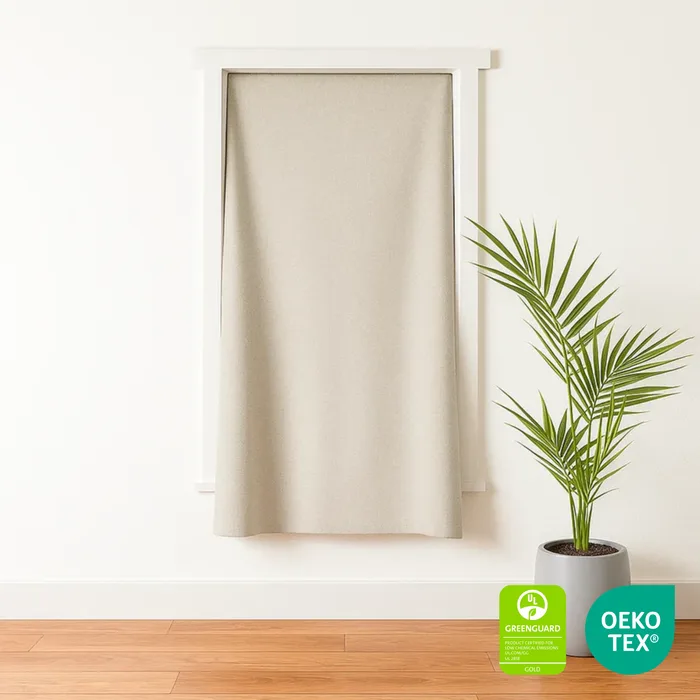
A one pound blackout panel that suction cups directly onto the window glass, which is the design here built most directly around killing edge light.
Best for: Renters, frequent travellers, and anyone whose nursery already has a blind that leaks light around all four sides.
- Two locking suction cups mount it on the glass itself, so there is no rod, no drilling and no gap above a rod to leak light.
- Velcro runs along the entire edge of the panel, so you can tuck it against the frame, hang it vertically or horizontally, and add panels for a wider window.
- Sleepout lists GREENGUARD Gold and OEKO-TEX Standard 100 certification for the fabric, and the panel is machine wash and hang dry.
- The standard panel is 60 by 40 inches, so a tall nursery window needs the XL size or two panels overlapped.
- Suction cups need clean glass and can lose grip over time, and some owners re-wet them to keep them holding.
- It looks like a panel stuck to your window, so most people run it behind existing curtains rather than instead of them.
- The 100 percent blackout claim is the maker's own, and any panel that does not lie flat against the frame will still pass light at that spot.
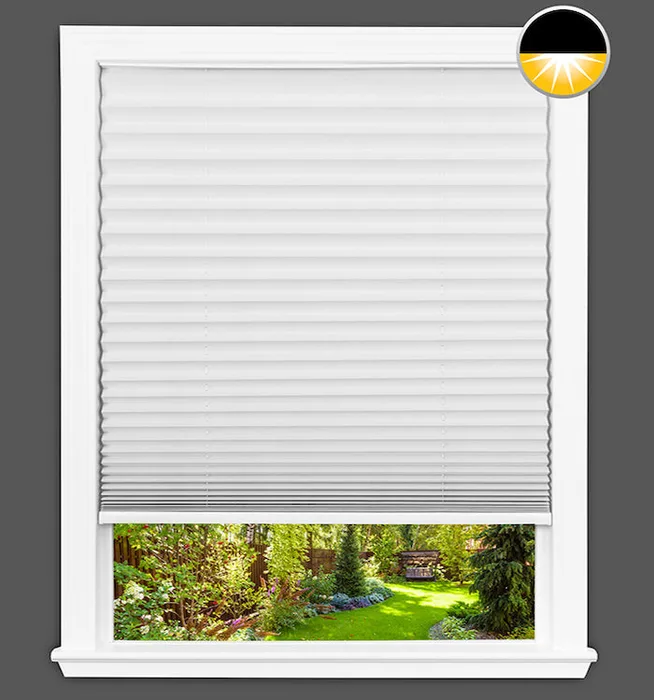
A cordless blackout honeycomb shade you trim to width at home and install with no tools, which makes it the easiest safe starting point for a nursery.
Best for: The first thing you install in a nursery when you want cordless and tool free, with a curtain added on top later.
- Cordless lift is standard on the Easy Lift line, so there is no operating cord anywhere in the room.
- It trims at home to fit a range of widths and installs with no tools, drill, screws or brackets.
- The 9/16 inch honeycomb blackout fabric also slows heat transfer at the glass, which matters in a nursery that bakes in the afternoon.
- An inside mount leaves a light gap down both sides, so plan on a curtain over it or an outside mount.
- The product page describes blackout honeycomb fabric but gives no light blocking percentage for this specific shade.
- It comes in a single 64 inch length, which is short for a tall window.
- Trimming is a one-shot operation, and a crooked cut is yours to live with.
- Inside mounting needs at least 1 and 1/4 inches of window depth, and it only sits flush at 1 and 1/2 inches.
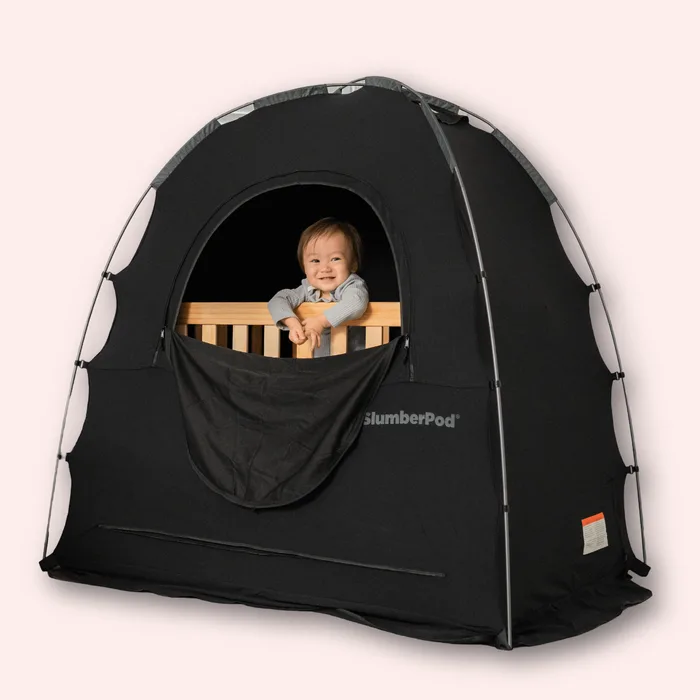
Not a window covering at all but a blackout canopy over the crib, which is the right answer when the real problem is a shared room or a hotel rather than the window.
Best for: Room sharing, travel, and grandparents' houses, where you cannot change the windows and only need the crib dark.
- SlumberPod's page cites a high light blocking figure (95 percent plus in its spec list, 99 percent in its marketing copy), and because it encloses the sleep space there is no window edge left to seal.
- It weighs 5.1 pounds and packs down to about 17 by 5 by 6 inches, so it fits in a carry on.
- Four adjustable ventilation panels, two fan pockets and a monitor pocket are built into the canopy.
- It fits over playards, mini cribs and some toddler cots, not a full size crib, and SlumberPod publishes a fit list you should check first.
- The company lists it for ages 4 months to 5 years and for indoor use only.
- It does nothing for the room, so the moment the baby is out of the pod the 5am light is back.
- Assembling and packing it every night gets old fast in a permanent nursery.
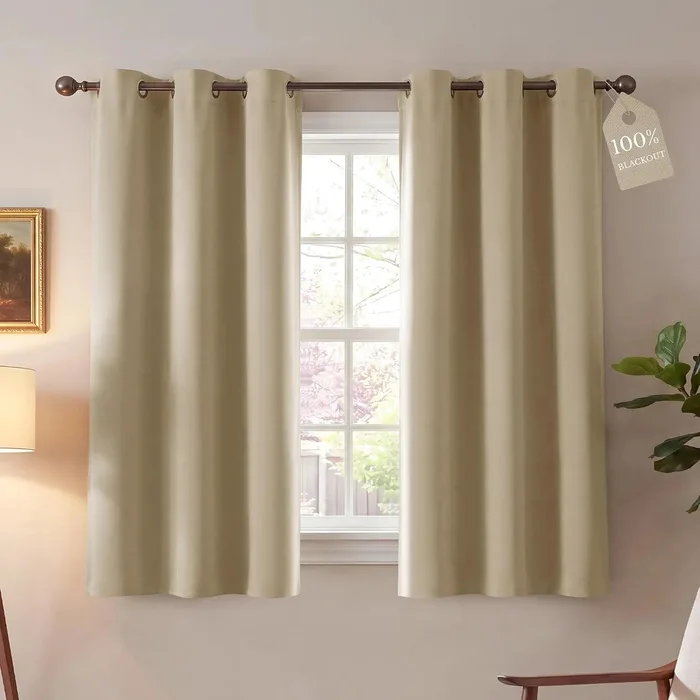
Genuinely dense fabric in the one header style that guarantees a bright band above the rod, which is the light that wakes a baby at dawn.
Best for: A living room or a guest room where you want heavy, good looking drapes and darkness is a bonus rather than the point.
- The fabric is described as dark triple weave, and the product page references OEKO-TEX certification.
- Nothing about a curtain panel involves a cord, so the crib-side safety question is easy.
- Panels come in 36, 63, 72 and 84 inch lengths, which covers short nursery windows that most curtain ranges ignore.
- A grommet header hangs in front of the rod, so light can pour over the top, where a rod pocket or back tab header would carry the fabric behind the rod.
- Each panel is 40 inches wide, so a normal nursery window takes both panels and still leaves a seam of light where they meet.
- Nothing seals the sides against the wall unless you also buy a wraparound rod, which is sold separately.
- The 100 percent blackout label describes what the fabric does, not what the window does, and the page names no test method behind it.
| Criteria | Portable Blackout Curtain Top pick | Easy Lift Fabric Cellular Blackout Shade | SlumberPod | Super-heavy 100% Blackout Grommet Curtains |
|---|---|---|---|---|
| Verdict | Buy it | Buy it | It depends | Skip it |
| Best for | Renters, frequent travellers, and anyone whose nursery already has a blind that leaks light around all four sides. | The first thing you install in a nursery when you want cordless and tool free, with a curtain added on top later. | Room sharing, travel, and grandparents' houses, where you cannot change the windows and only need the crib dark. | A living room or a guest room where you want heavy, good looking drapes and darkness is a bonus rather than the point. |
| Price tier | $$$ · premium | $ · budget | $$$ · premium | $ · budget |
| Type | Portable panel, mounts on glass | Cordless cellular shade | Blackout canopy over the crib | Grommet curtain panels, pair |
| Cords | None, suction cup mount | Cordless lift, standard on the line | None, freestanding canopy | None, but rod hardware is separate |
| How it mounts | Two locking suction cups on the glass | Inside or outside the frame, no tools | Poles over a playard or mini crib | Curtain rod, not included |
| Sizes | 60 by 40 in, XL 86 by 54 in | Trims to 19-30, 19-36, 31-48 or 43-60 in wide, 64 in long | Assembled 54 by 40 by 53 in | 40 in wide panels in 36, 63, 72, 84 in lengths |
| Maker's light claim | 100 percent blackout fabric | Blackout honeycomb, no product-specific percentage | 95 percent plus in spec list, 99 percent in marketing copy | 100 percent blackout triple weave |
| Edge light | Velcro all round, sits on the glass | Side gaps on an inside mount | No window edge to seal | Halo above the rod and down the sides |
| Travels | Yes, 1 lb plus carry bag | No | Yes, 5.1 lb, packs to 17 by 5 by 6 in | No |
| Certifications listed | GREENGUARD Gold, OEKO-TEX Standard 100 | None listed on the product page | None listed on the product page | OEKO-TEX Standard 100 |
Which one is right for you?
- Renters, frequent travellers, and anyone whose nursery already has a blind that leaks light around all four sides. Buy it Sleepout Portable Blackout Curtain
- The first thing you install in a nursery when you want cordless and tool free, with a curtain added on top later. Buy it Redi Shade Easy Lift Fabric Cellular Blackout Shade
- Room sharing, travel, and grandparents' houses, where you cannot change the windows and only need the crib dark. It depends SlumberPod
- A living room or a guest room where you want heavy, good looking drapes and darkness is a bonus rather than the point. Skip it NICETOWN Super-heavy 100% Blackout Grommet Curtains
How we judged the field
Five things decide whether a nursery window covering is worth buying. First, cords, and this one is not negotiable: a window covering cord near a crib is a strangulation hazard, and federal rules now back that up. Second, how it mounts, because mounting method determines where light gets in far more than fabric does. Third, what the fabric actually is, and whether the maker publishes anything checkable about it rather than a bare percentage. Fourth, fit range, since nursery windows are often short, wide, or awkwardly shallow, and half the products on the market only come in one length. Fifth, whether it can be cleaned, packed, or moved, because nurseries are temporary and babies are messy.
The field splits into four approaches, and we picked the best example of each rather than four versions of the same thing. Curtain panels on a rod are what most people buy first and are the worst at edge light. Shades that sit in or over the frame are the cheap, permanent, cordless baseline. Panels that mount on the glass itself skip the rod problem entirely and travel well. Canopies over the crib solve a completely different problem, which is a shared room. One product from each camp tells you more than a ranking of eight curtains would.
Sleepout Portable Blackout Curtain
Buy itSleepout’s Portable Blackout Curtain is the product here most directly designed around the actual failure mode. Two locking suction cups, each 1.5 inches tall, grip the window glass, and the panel hangs from velcro that runs along its entire edge, so you tuck the fabric against the frame instead of leaving a rod-height gap for light to pour through. The standard panel is 60 by 40 inches and weighs about a pound, and it goes up vertically or horizontally; the XL runs 86 by 54 inches, and panels can be combined for bay windows or wide openings. Sleepout lists GREENGUARD Gold and OEKO-TEX Standard 100 certification for the fabric, machine wash and hang dry care, a carry bag, and a 365 day warranty. The catch is aesthetic and practical rather than technical: it reads as a panel stuck to your window, the suction cups want clean glass and can lose grip over time, and the maker’s 100 percent blackout claim is its own. For a nursery that already has a leaky blind, it is the fastest fix there is.
Redi Shade Easy Lift Fabric Cellular Blackout Shade
Buy itRedi Shade’s Easy Lift Fabric Cellular Blackout Shade is the boring, correct baseline. Cordless lift comes standard on the line, so there is no operating cord in the room at all. It ships oversized in four widths and trims at home: the 30 inch size trims to fit 19 to 30 inches, the 36 to 19 to 36, the 48 to 31 to 48, the 60 to 43 to 60. Installation needs no tools, drill, screws or brackets. The 9/16 inch blackout honeycomb fabric also cuts heat transfer at the glass, which is real value in a west-facing nursery. Three honest limits: an inside mount needs at least 1 and 1/4 inches of depth and only sits flush at 1 and 1/2, it comes in a single 64 inch length, and the product page gives no light blocking percentage specific to this shade. Mount it outside the frame or put a curtain over it and it earns its place.
SlumberPod
It dependsSlumberPod is here because a lot of nursery light problems are not window problems. It is a blackout canopy that stands over a playard, mini crib, or some toddler cots on two support poles, and SlumberPod’s page cites a light blocking figure of 95 percent plus in its spec list and 99 percent in its marketing copy. Because it encloses the sleep space, there is no header gap or side gap to engineer around, which is why it works in hotel rooms where you control nothing. It assembles to 54 by 40 by 53 inches, weighs 5.1 pounds, packs down to about 17 by 5 by 6 inches, and includes four adjustable ventilation panels, two fan pockets and a monitor pocket. The limits are firm and published: ages 4 months to 5 years, indoor use only, and a specific compatibility list of playards and mini cribs it fits over, up to 44 by 30 by 38 inches. It does nothing for the room itself, and putting it up every night in a permanent nursery is a chore. Buy it for room sharing and travel, not as your window covering.
NICETOWN Super-heavy 100% Blackout Grommet Curtains
Skip itNICETOWN’s Super-heavy 100% Blackout Grommet Curtains are the default nursery purchase and the reason so many parents conclude blackout curtains do not work. The fabric is not the problem: it is described as dark triple weave, and the product page references OEKO-TEX certification. The header is the problem. A grommet top threads onto the rod and hangs in front of it, which leaves an open band along the top of the window that faces straight into the morning sun. A rod pocket or back tab header would carry the fabric behind the rod instead. Panels are 40 inches wide in 36, 63, 72 and 84 inch lengths, so a standard nursery window needs both, and where they meet you get a vertical seam of light. Nothing pulls the sides to the wall unless you buy a wraparound rod separately. Great drapes, wrong header for a nursery.
Sources
Specs in this review come from these pages.
- eCFR, 16 CFR Part 1260, Safety Standard for Operating Cords on Custom Window Coverings (ecfr.gov)
- eCFR, 16 CFR 1120.3, Products deemed to be substantial product hazards (ecfr.gov)
- Federal Register, CPSC final rule: Safety Standard for Operating Cords on Custom Window Coverings (federalregister.gov)
- Window Covering Manufacturers Association, Best for Kids certification program (windowcoverings.org)
- Sleepout, Portable Blackout Curtain product page (sleepoutcurtains.com)
- SlumberPod product page (slumberpod.com)
Sleepout Portable Blackout Curtain vs Redi Shade Easy Lift Fabric Cellular Blackout Shade: which should you buy?
Sleepout and Redi Shade solve the same problem from opposite ends, and the honest answer is that they are complementary rather than competing. Redi Shade gives you a permanent, cordless, good-looking shade inside the frame for very little money, and it is the thing you should install first in any nursery because it removes the cord question and handles most of the light. What it cannot do is close the two vertical strips down the sides of an inside mount, and it stops at 64 inches long. Sleepout attacks exactly those strips by putting the fabric on the glass, behind everything else, sealed by velcro on all four edges.
Choose on the shape of your problem. If the nursery has no window covering yet and a normal rectangular window with at least 1 and 1/4 inches of depth, start with Redi Shade and see whether that is enough; for a lot of babies it is. If there is already a blind or curtain in place and the room is still bright at dawn, or you travel more than a few times a year, or the window is a bay, a round, or something a shade will never fit, Sleepout is the better single purchase. If you buy both, put the shade in the frame and the Sleepout panel on the glass behind it, and the light gaps stop being a topic in your house.
What to look for
- Cordless, no exceptions: a window covering with an accessible operating cord does not belong in a room with a crib, and federal rules now treat hazardous cords on stock coverings as a substantial product hazard.
- Header style over fabric rating: rod pocket and back tab headers pass the fabric behind the rod, grommet headers hang it in front, and that one detail creates or closes the bright band across the top of the window.
- Mount outside the frame when you can: an outside mount that overshoots the opening by several inches on every side does more for darkness than any upgrade in fabric.
- Check the depth before you buy a shade: inside-mounted shades have a minimum window depth, and a shallow frame means the shade sticks out and leaks at the sides.
- Look for a published, checkable claim: GREENGUARD Gold, OEKO-TEX Standard 100, or a stated test is worth more than a bare percentage with nothing behind it.
- Buy for the room you actually have: a shared room or a hotel is a crib-darkening problem, not a window problem, and a canopy solves it in a way no curtain can.
Our final take
Get the cord question settled first, because that is the part with real consequences, and every product we recommend here is cordless by design. After that, stop shopping for fabric and start shopping for coverage. The Redi Shade Easy Lift is the cheap, permanent, cordless baseline that most nurseries should start with, and mounting it outside the frame costs nothing extra. The Sleepout Portable is the fix when the room is still bright after that, and the one to pack when you travel. SlumberPod is for room sharing rather than for windows. And if you already own grommet blackout panels, a wraparound rod will do more for your morning than another set of curtains.
Questions, answered
Are corded blinds actually illegal now, or is cordless just a recommendation?
It is stronger than a recommendation. Under 16 CFR 1120.3, a stock window covering that fails the operating cord requirements of ANSI/WCMA A100.1-2018 is deemed a substantial product hazard, which means it is subject to recall and can be refused entry into the United States. Those requirements give makers three ways to comply: a cordless operating system, a short static or access cord, or an operating cord that is inaccessible. Custom window coverings got the same treatment through 16 CFR Part 1260, a mandatory federal rule that took effect May 30, 2023 and applies to custom coverings manufactured after that date. CPSC's stated basis for that rule was that custom coverings with accessible operating cords longer than 8 inches pose an unreasonable risk of strangulation to children 8 years old and younger. None of that retroactively fixes the corded blind already hanging in the room, which is the one that matters.
Does the light blocking percentage on the box mean anything?
Less than you would hope. Blackout is a marketing word with no single industry threshold behind it, so one company's 100 percent and another's 99 percent are not measured the same way and often are not measured against any published method at all. Even where the number is honest, it describes light passing through the fabric, not light entering the room. In a normal nursery the fabric is rarely the leak. Hold a phone torch behind any decent blackout panel and you will see almost nothing, then stand in the room at 6am and the window outline is glowing. Judge the mounting method first and treat the percentage as a tiebreaker.
How do I fix the light gap at the top and sides?
Attack it in order of how much light each gap contributes. The top gap is usually the worst, so mount outside the frame with the header well above the opening, or switch from a grommet header to a rod pocket or back tab so the fabric passes behind the rod rather than in front of it. The sides come next: a wraparound rod curves back to the wall and closes most of that, and side channels or magnetic light blockers do the same job for shades. The bottom is usually the least of your problems if the panel is long enough to overshoot the sill. If you would rather not re-engineer the window, a panel that mounts on the glass, like Sleepout's, skips all three problems by sitting inside them.
Do I need something different for travel and hotels?
Usually yes, because hotel windows are not your windows and nothing you own will fit them. The two workable approaches are a portable panel that sticks to the glass with suction cups, which adapts to whatever window is in front of you, and a blackout canopy over the travel crib, which ignores the window entirely. Sleepout's panel weighs about a pound and comes with a carry bag; SlumberPod weighs 5.1 pounds and packs to roughly 17 by 5 by 6 inches. The canopy is the better choice when you are sharing one hotel room and need the baby's sleep space dark while the adults are still awake. The panel is better when the whole room needs to be dark, including for you.
Is a blackout tent over the crib safe?
It depends entirely on following the maker's limits rather than the general idea being fine. SlumberPod, for instance, states ages 4 months to 5 years, indoor use only, a bottomless design that sits over a playard or mini crib rather than enclosing a mattress, and four adjustable ventilation panels. It also publishes a compatibility list of specific playards and mini cribs, and a maximum playard size it fits over. Treat all of that as hard constraints, not suggestions, and keep the usual safe sleep rules for the crib itself unchanged. If your setup is not on the fit list, the answer is a different product rather than an improvised one, and your pediatrician is the right person to ask about anything specific to your child.
Deciding between the top two? See our head-to-head: Sleepout Portable Blackout Curtain vs Redi Shade Easy Lift Fabric Cellular Blackout Shade.
More Baby & Family reviews
 The Best Nursery Gliders and Rocking Chairs: 4 Compared (and One to Skip)
  The Best Nursery Humidifiers: 4 Compared (and One to Skip)
  The Best Nursing Pillows: 4 Compared (and One to Skip)
  The Best Pack 'n Plays: 4 Compared (and One to Skip)
  The Best Play Kitchens: 4 Compared (and One to Skip)
  The Best Sippy Cups: 4 Compared (and One to Skip)