

Baby & Family
The Best Sippy Cups: 4 Compared (and One to Skip)
We compared four toddler transition cups on drinking mechanics, real-world leak behavior, cleaning burden, and how long they last.
The short version
Buy the b.box Sippy Cup with Weighted Straw. The weighted straw means angle never matters, the seal holds through real toddler abuse, and replacement straws cost almost nothing. Buy the ezpz Mini Cup + Straw Training System alongside it if you want the cup that actually teaches the transition, with no valve and nothing to hide when you clean it. The Munchkin Miracle 360 Trainer Cup is a good budget spoutless cup for home, but it only seals upright and the valve needs scrubbing at every wash. Skip the Dr. Brown's Soft-Spout Toddler Cup: it is well made, but a spout is the habit you are trying to leave, and most clinicians want children off spouts by around two. Best for: parents who want one cup that travels well plus one cup that builds the skill.
Our picks at a glance
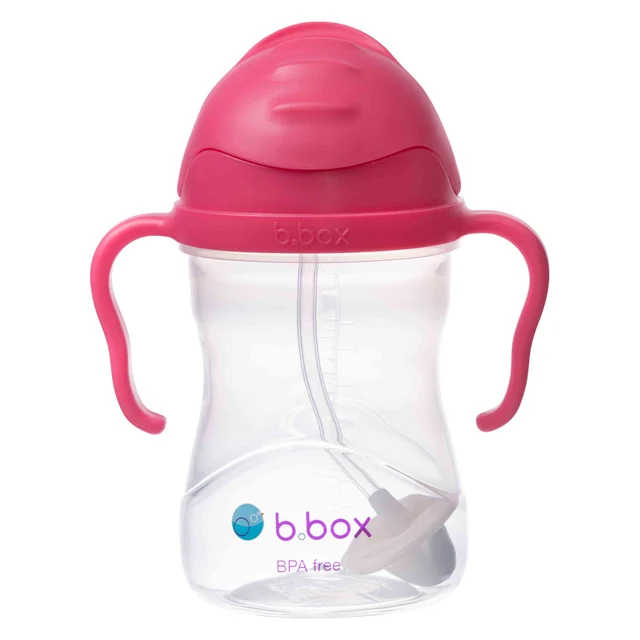
- b.box Sippy Cup with Weighted Straw - Buy. The weighted straw drinks at any angle and the seal actually survives a diaper bag, which is why it outlasts most first cups.
- ezpz Mini Cup + Straw Training System - Buy. A silicone open cup with a short straw lid, and the easiest cup on this list to keep genuinely clean.
- Munchkin Miracle 360 Trainer Cup, 7oz - It depends. A cheap spoutless cup that teaches real rim drinking, as long as you accept the valve scrubbing and never pack it sideways.
- Dr. Brown's Soft-Spout Toddler Cup, 9oz - Skip. Well made and cheap, but it buys into the exact spout habit most clinicians want children off within a few months.
The verdict in 30 seconds
What mattered most
- Drinking style
- Typical stage
- Leak resistance
- Parts to clean
- Oral development fit
- Toddler abuse tolerance
Every toddler cup claims to be spill proof, and almost none of them are once a child throws one from a high chair or packs one sideways in a bag. The bigger question is what the cup teaches: straws and open rims build mature drinking, spouts recycle the bottle habit. We compared four popular options across those two axes and landed on two clear buys, one that depends heavily on how you plan to use it, and one worth skipping entirely.
The weighted straw drinks at any angle and the seal actually survives a diaper bag, which is why it outlasts most first cups.
Best for: Parents who want one cup that goes from early solids through preschool and actually stays shut in a bag.
- Weighted silicone straw follows the liquid, so it drinks reclined, tipped, or nearly empty
- Two-way valve holds up through bag tosses and high-chair drops better than typical flip-top straw cups
- Fully disassembles for the dishwasher, and replacement straws are cheap and easy to find
- Flared base resists tipping and the soft handles suit small hands
- Fast flow can startle a baby under one until they learn to pace sips
- Sealed cold then warmed, it can squirt on the first press, so vent it before handing it over
- Chewers will eventually flatten the straw tip and need a replacement
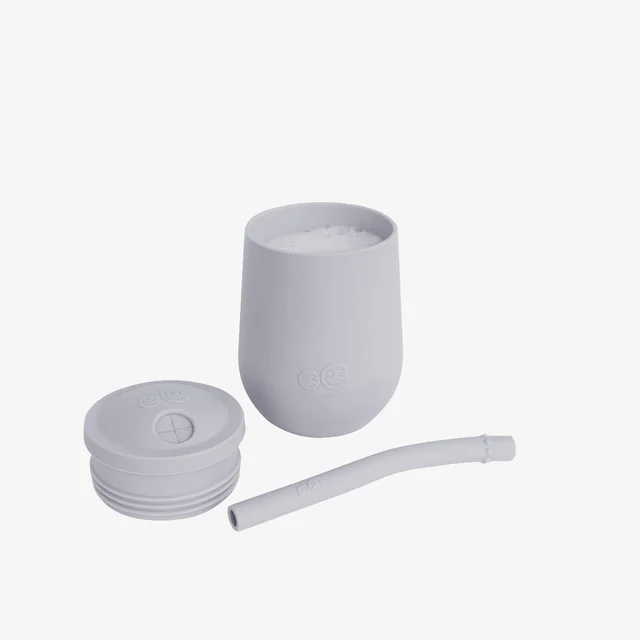
A silicone open cup with a short straw lid, and the easiest cup on this list to keep genuinely clean.
Best for: Toddlers around a year old starting the bottle-to-cup transition, and any household that wants a cup at the table with nothing to hide.
- Works as an open cup or a short-straw cup, matching what feeding specialists usually recommend
- No valve and a short straw means little hides, so mold worry largely disappears
- Made of 100% food-grade silicone with no valve, so there is little to break or lose
- Dishwasher safe and the straw scrubs clean with a small brush
- Small capacity makes it a mealtime cup rather than an all-day water bottle
- Not leak proof: the lid contains splashes but a cup on its side in a bag will seep
- Some children need a week of coaching before the soft short straw clicks
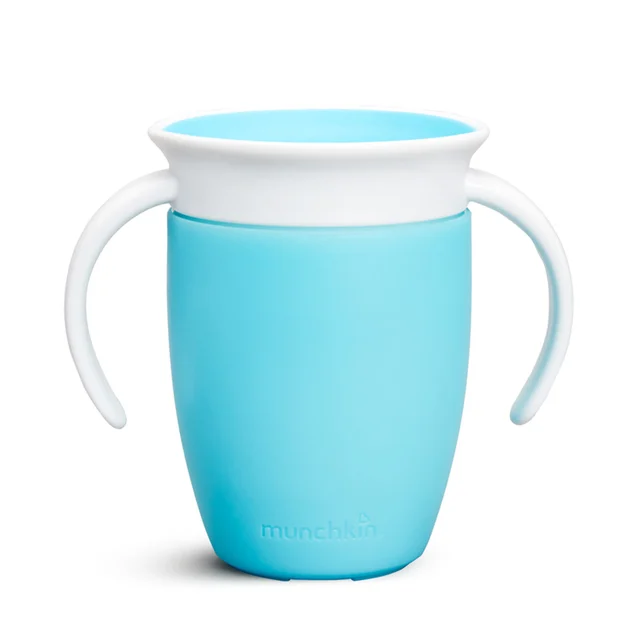
A cheap spoutless cup that teaches real rim drinking, as long as you accept the valve scrubbing and never pack it sideways.
Best for: Home use on a budget when you want spoutless drinking and do not mind taking the lid apart at every wash.
- Spoutless rim lets a child drink from any edge, closer to a real glass
- No spout parked between the teeth, which is why dentists tend to prefer this shape
- Inexpensive, widely stocked, and durable enough for daily home use
- Replacement valves and collars are sold separately
- The seal works best upright: knocked over or packed on its side it can leak
- The silicone valve is worth taking off and scrubbing regularly, and mis-seating it causes leaks
- Slow flow divides toddlers sharply, with some giving up on it entirely
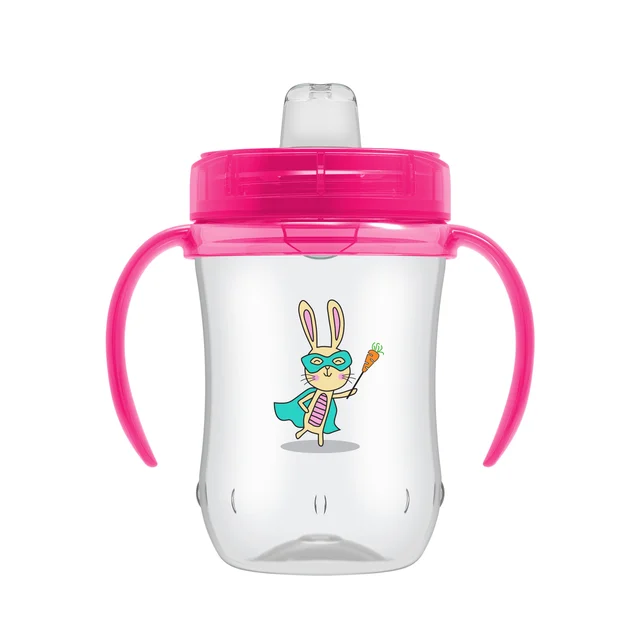
Well made and cheap, but it buys into the exact spout habit most clinicians want children off within a few months.
Best for: A short bridge for a child who has flatly refused both straws and open cups, and nothing longer than that.
- Soft silicone spout is gentler on gums than a rigid plastic spout
- Easy-hold handles and a simple lid make it approachable for babies coming off a bottle
- Inexpensive and stocked almost everywhere, with replacement spouts available
- A spout keeps the bottle-era suckle pattern going instead of building mature swallowing
- Most guidance points to leaving spouts behind by around two, so its useful window is short
- Owners report the spout invites chewing and splits, and the lid rim traps liquid
- Leak performance is unremarkable once the cup goes horizontal
| Criteria | b.box Sippy Cup with Weighted Straw Top pick | ezpz Mini Cup + Straw Training System | Munchkin Miracle 360 Trainer Cup, 7oz | Dr. Brown's Soft-Spout Toddler Cup, 9oz |
|---|---|---|---|---|
| Verdict | Buy it | Buy it | It depends | Skip it |
| Best for | Parents who want one cup that goes from early solids through preschool and actually stays shut in a bag. | Toddlers around a year old starting the bottle-to-cup transition, and any household that wants a cup at the table with nothing to hide. | Home use on a budget when you want spoutless drinking and do not mind taking the lid apart at every wash. | A short bridge for a child who has flatly refused both straws and open cups, and nothing longer than that. |
| Price tier | $$ · mid-range | $$ · mid-range | $ · budget | $ · budget |
| Drinking style | Weighted straw | Open rim or short straw | Spoutless 360 rim | Soft spout |
| Typical stage | Early solids through preschool | 12 months and up, mealtimes | 6 months and up, at home | Short bridge only |
| Leak resistance | Strong, survives bag tosses | Splash resistant only | Upright only, leaks on its side | Modest, leaks when horizontal |
| Parts to clean | Four, all dishwasher safe | Three, nothing hidden | Four including a fiddly valve ring | Four with a liquid-trapping rim |
| Oral development fit | Good, straw pattern | Best, open cup and short straw | Good, rim drinking | Poor, extends the suckle pattern |
| Toddler abuse tolerance | High, cheap spare straws | High, silicone bounces | High for the price | Moderate, spout splits from chewing |
| Everyday convenience | Best for outings and daycare | Table cup, not a travel cup | Fine at home, poor in a bag | Fine at home, short-lived |
| Price tier | $$ · mid-range | $$ · mid-range | $ · budget | $ · budget |
Which one is right for you?
- Parents who want one cup that goes from early solids through preschool and actually stays shut in a bag. Buy it b.box Sippy Cup with Weighted Straw
- Toddlers around a year old starting the bottle-to-cup transition, and any household that wants a cup at the table with nothing to hide. Buy it ezpz Mini Cup + Straw Training System
- Home use on a budget when you want spoutless drinking and do not mind taking the lid apart at every wash. It depends Munchkin Miracle 360 Trainer Cup, 7oz
- A short bridge for a child who has flatly refused both straws and open cups, and nothing longer than that. Skip it Dr. Brown's Soft-Spout Toddler Cup, 9oz
How we judged the field
We do not run a lab. What we do is read across independent testing, hands-on reviews from parenting outlets, feedback from pediatric dentists and speech-language pathologists, and the pattern of complaints buried in owner reports after six months of daily use. Marketing copy tells you a cup is spill proof. Owner reports tell you it weeps when it warms up in a car seat, or that the valve grows a black ring nobody can reach.
Four things separated the good cups from the rest.
Drinking mechanics came first. Straw cups and open cups ask a child to use the tongue-tip and lip pattern that mature swallowing and speech rely on. Spouted cups ask for the same suckle motion a bottle does, which is why most pediatric guidance treats a spout as a short bridge rather than a destination.
Leak behavior came second, and we cared about the realistic failures: a cup thrown from a high chair, a cup packed sideways in a bag, a cup filled with cold milk that slowly warms and builds pressure. Almost every cup passes a gentle shake test. Very few pass all three of those.
Cleaning came third. Count the parts, then ask whether every surface can be reached with a bottle brush or blasted clean in a dishwasher. Valves and long narrow straws are where cups go to die, and a cup that needs a soak and a pipe cleaner after every milk fill will quietly stop getting used.
Durability came last. Toddlers chew straws flat, drop cups on tile, and hurl them across rooms. We favored designs with cheap replacement straws, valves, and spouts, because the cup you can repair for pocket change beats the one you have to rebuy.
b.box Sippy Cup with Weighted Straw
Buy itThis is the cup that solves the most problems at once. The weighted ball on the end of the silicone straw sinks toward whatever corner the liquid has settled in, so a toddler can drink lying back in a stroller, tipped sideways in a car seat, or with the cup nearly empty. That single feature removes most of the frustration that makes babies give up on early straw cups.
Owners generally report good leak resistance: the two-way valve holds through bag tosses and high-chair launches far better than typical flip-top straw cups. The flared base resists tipping, and the wide soft handles are easy for a nine-month-old to grip without help. Parts come apart fully and go in the dishwasher.
The complaints are real but manageable. Flow is fast, so a baby under one may cough on the first few sips until they learn to pace themselves. Pressure changes can produce a squirt if the cup was sealed cold and then warmed, so vent it before handing it over. And children who chew will destroy the straw tip eventually. Replacement straws are cheap and widely stocked, which is exactly why this design survives toddlerhood.
Owners also flag one cleaning note: rinse soon after a milk fill. Left overnight, the straw needs a soak. Rinsed promptly, the dishwasher handles it.
ezpz Mini Cup + Straw Training System
Buy itThis is the cup for the actual transition, not the cup for the diaper bag. It is a soft silicone cup that a toddler can drink from as an open cup, plus a screw-on lid and short silicone straw when you want to convert it. That combination is what feeding therapists tend to recommend, because the short straw keeps the tongue forward and the open-cup option builds the sipping skill that spouts delay.
The silicone is the appeal. There is no valve, and the straw is short enough to scrub with a small brush. Little hides. Owners often say it is the one toddler cup they never worried about for mold. It is dishwasher safe.
The tradeoffs are obvious. Capacity is small, so it is a mealtime cup rather than an all-day water bottle. It is not leak proof: the lid keeps splashes in, but a cup on its side in a bag will seep. And because the straw is soft and short, some children need a week of coaching before it clicks.
Buy it as the cup at the table. Pair it with something sealed for travel.
Munchkin Miracle 360 Trainer Cup, 7oz
It dependsThe Miracle 360 is a widely recommended spoutless cup and it earns part of that. The silicone valve sits under the rim and opens only where lips press, so a child drinks from any point on the edge, the way they eventually will from a real glass. Set upright it should not leak, and it takes a lot of abuse for the price. Dentists like it because there is no spout parked between the teeth.
Two things keep it out of the top spot. First, the seal only works upright. Knocked over or packed on its side, it leaks, and enough owners have found it wet at the bottom of a bag that we would not call it a travel cup. Second, the valve is a thin silicone ring that is worth removing, scrubbing, and reseating correctly. Left in place with milk residue, it develops exactly the grime you would expect, and mis-seating it after cleaning causes leaks that get blamed on the cup.
Flow is also slow by design. Some toddlers take to it in a day, others get impatient and fling it. Reviewers note the divide is unusually stark for a mass-market cup.
Get it if you want an inexpensive spoutless cup for home use and you are willing to disassemble the lid every wash. Look elsewhere if it needs to survive a daycare bag.
Dr. Brown’s Soft-Spout Toddler Cup, 9oz
Skip itNothing here is defective. It is a well-made, inexpensive, widely available cup with a soft silicone spout, easy-hold handles, and a lid that keeps most drips in. If you already own one, it will not harm your child.
The reason to skip it is that the spout is the part you are trying to move past. Guidance from pediatric dentists and speech-language pathologists is consistent on this point: a spout, hard or soft, keeps the tongue in the bottle-era suckle pattern instead of building the mature swallow, and prolonged daily use is associated with delayed oral-motor progression and, with sugary drinks, with decay on the surfaces the spout bathes. Most clinicians suggest moving off spouts between eighteen and twenty-four months. Buying a spouted cup at nine months means buying a cup with a short expiry date.
The practical case is not much stronger. Owners report the spout attracts chewing and splits, the lid rim traps liquid that needs attention, and leak performance is unremarkable once the cup goes horizontal. A straw cup at a similar price does the same job, holds up better, and teaches something worth teaching.
Buy it only if your child has flatly refused straws and open cups and you need a bridge for a few months. Treat it as temporary.
b.box Sippy Cup with Weighted Straw vs ezpz Mini Cup + Straw Training System: which should you buy?
These two are not really rivals, which is why we recommend both, but if you can only buy one the choice is about where the cup will live.
The b.box wins on containment and range. It seals, it survives being thrown, it holds enough for an outing, and the weighted straw means angle never matters. It carries a child from roughly six months to preschool with nothing more than the occasional replacement straw. If you need one cup that goes everywhere, this is it.
The ezpz wins on skill building and cleanliness. Open-cup drinking is the endpoint every other cup is approximating, and this one lets a toddler practice it with a lid on standby for bad days. Silicone with a short straw and no valve is the easiest thing on this list to keep genuinely clean, which matters more than parents expect once milk enters the picture.
Households with a baby just starting solids often end up wanting both: the ezpz at the high chair, the b.box in the bag. If forced to pick one, take the b.box for practicality and add an open cup at meals later.
What to look for
- Straw or open rim over a spout. Spouts mimic a bottle. Straws and open cups build the tongue and lip control that mature drinking and clear speech depend on.
- Count the parts, then look for hiding places. Every valve, gasket, and long straw is a surface you will be scrubbing for a year. Prefer parts you can see through or turn inside out.
- A weighted straw if your child drinks in a car seat or stroller. It is the difference between a cup that works reclined and one that produces air and tears.
- Test the real failure modes. Upright and gently shaken is not a test. Fill it, tip it on its side on a paper towel for ten minutes, and see what happens.
- Check that replacement straws, valves, and spouts are actually sold. Toddlers chew. A cup with a stocked spare-parts line lasts years. One without lasts until the first bite.
- Right size for the job. Small cups build skill at the table. Larger sealed cups handle outings. One cup rarely does both well.
- Dishwasher-safe on the top rack, in practice. Check whether the lid tolerates heat, especially where a weighted straw contains a metal ball, since those often must not be microwaved.
Our final take
The category is easier than it looks once you stop shopping for “spill proof” and start shopping for the drinking action. Straws and open rims are what pediatric dentists and feeding specialists point toward, and both of our picks deliver one of those.
The b.box Sippy Cup with Weighted Straw is the cup to buy if you buy one. It drinks at any angle, it holds up to daily toddler abuse, its parts are cheap and available, and it genuinely stays shut in a bag. The ezpz Mini Cup + Straw Training System is the better tool for the transition itself, and it is the easiest cup here to keep clean, so it earns a permanent spot at the table even if it never leaves the house.
The Munchkin Miracle 360 Trainer Cup is a fine inexpensive home cup with a real cleaning tax and a seal that only works upright. Know that going in and it will not disappoint you. The Dr. Brown’s Soft-Spout Toddler Cup is the one to pass on, not because it is poorly made, but because a spout is a stage to leave rather than a stage to buy into.
Questions, answered
When should a baby move from a bottle to a cup?
Most guidance suggests introducing a cup with meals from around six months and aiming to have bottles gone by twelve to eighteen months. Starting early is about practice, not replacement: a few sips of water at the high chair builds the skill long before the cup does any real work. This is general product information, not medical advice, so check with your pediatrician or a feeding specialist about your own child's timing.
Are spouted sippy cups really worse for teeth and speech?
The concern is consistent across pediatric dentistry and speech-language pathology. A spout, hard or soft, keeps the tongue in the same suckle pattern a bottle uses, which can slow the move to a mature swallow, and constant sipping of sweetened drinks through a spout bathes specific tooth surfaces in sugar. Most clinicians treat a spout as a short bridge and suggest moving to straws or open cups by roughly eighteen to twenty-four months. Again, this is general information rather than medical advice, and a professional can assess your child directly.
Straw cup or 360 cup: which is better?
Both beat a spout. A short straw encourages tongue-tip control and is easier for a young baby to succeed with, especially when the straw is weighted so the angle stops mattering. A 360 rim is closer to an actual glass and has nothing sitting between the teeth, but flow is slower and children divide sharply over it. If you want one, start with a straw cup and add a rim cup later.
How do I stop toddler cups from getting moldy?
Buy for cleanability first. Prefer short straws you can see through, valves that pop fully out, and lids that disassemble without tools. Rinse straight after milk or juice rather than letting the cup sit, keep a thin straw brush by the sink, and pull valves and gaskets apart for every wash rather than every few washes. If a part cannot be reached by a brush or fully opened, assume it will eventually need replacing.
Is any toddler cup genuinely leak proof?
No. Owner reports suggest that every cup fails under some combination of being thrown, stored sideways, chewed, or filled cold and left to warm and build pressure. The useful question is which failures a cup resists. Sealed straw cups with a two-way valve hold up best in a bag, spoutless rim cups only seal upright, and open-cup trainers are splash resistant rather than sealed. For daycare, pick something with a real valve and pack it upright.
Deciding between the top two? See our head-to-head: b.box Sippy Cup with Weighted Straw vs ezpz Mini Cup + Straw Training System.
More Baby & Family reviews
 The Best Stroller Footmuffs: 4 Compared (and One to Skip)
  The Best Stroller Organizers: 4 Compared (and One to Skip)
  The Best Teething Toys: 4 Compared (and One to Skip)
  The Best Toddler Beds: 4 Compared (and One to Skip)
  The Best Toddler Plates: 4 Compared (and One to Skip)
  The Best Toddler and First Walker Shoes: 4 Compared (and One to Skip)