

Baby & Family
The Best Magnetic Tiles: 4 Compared (and One to Skip)
We compared the original tile, the high-count value set, a wooden magnetic block set and the budget clone you will see first, on magnet strength, plastic quality and price per piece.
The short version
Magna-Tiles Classic 32 is the pick: riveted magnets, food-grade MABS and compatibility with the whole Magna-Tiles line. PicassoTiles PT100 is the value buy: 100 compatible tiles for about forty dollars. Tegu wooden blocks are the beautiful it-depends: heirloom quality with intentionally gentler magnets. Skip the Coodoo starter set: thin plastic and weak magnets cost almost as much as the real value pick. Best for: kids three and up, and gift buyers who want one toy that lasts.
Our picks at a glance
- Magna-Tiles Classic 32-Piece - Buy. The original magnetic tile: food-grade plastic, riveted magnets and compatibility with every Magna-Tiles set ever made.
- PicassoTiles Classic 100-Piece (PT100) - Buy. The value standard: 100 compatible tiles for less than the 32-piece original costs.
- Tegu 24-Piece Magnetic Wooden Block Set - It depends. Magnetic blocks milled from Honduran hardwood: beautiful, heirloom grade, and a different kind of toy.
- Coodoo Magnetic Tiles Starter Set - Skip. The budget clone tier: a forty-piece starter box under thirty dollars that cuts corners you can feel.
The verdict in 30 seconds
What mattered most
- Piece count / price class
- Tile material
- Magnet strength
- Compatibility
- Safety engineering
- Best for
Magnetic tiles are the rare toy that survives the toddler years into grade school, which makes them one of the safest gifts on this list. The market splits into the original brand, the big-box value sets, a wooden heirloom take, and a crowd of clones that look identical in listings. We compared one of each on the things that matter: magnet strength, plastic quality and what you actually get for the money.
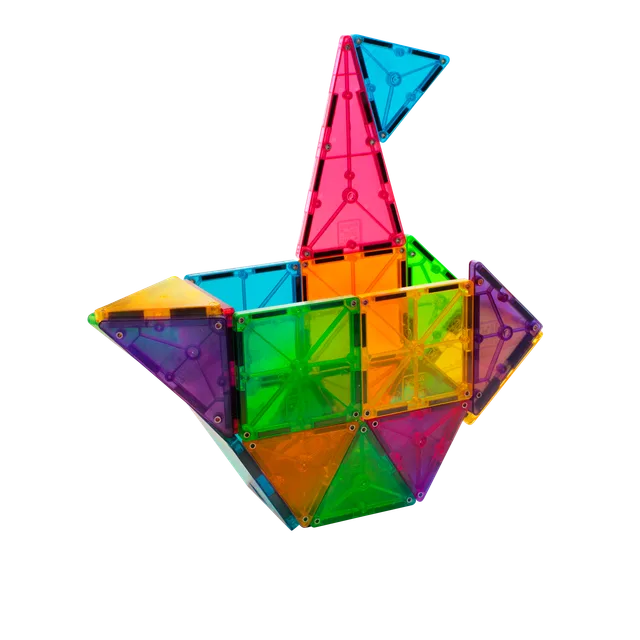
The original magnetic tile: food-grade plastic, riveted magnets and compatibility with every Magna-Tiles set ever made.
Best for: First-time buyers who want the tile that invented the category and plan to build a collection that lasts through multiple kids.
- Food-grade, non-toxic MABS plastic that is free of BPA, phthalates and latex, with a signature internal lattice that resists cracking under drops.
- Magnets are riveted in place rather than glued, the single biggest safety and durability difference between the original and clones.
- The 32-piece set (squares plus equilateral and right triangles) covers the core shapes, and every piece works with every other Magna-Tiles set including themed and microMAGS lines.
- Costs about twice as much per tile as the value brands, so a big build collection gets expensive fast.
- 32 pieces is a starter quantity; most kids exhaust it quickly and you will end up buying a second set.
- No storage container in the Classic box.
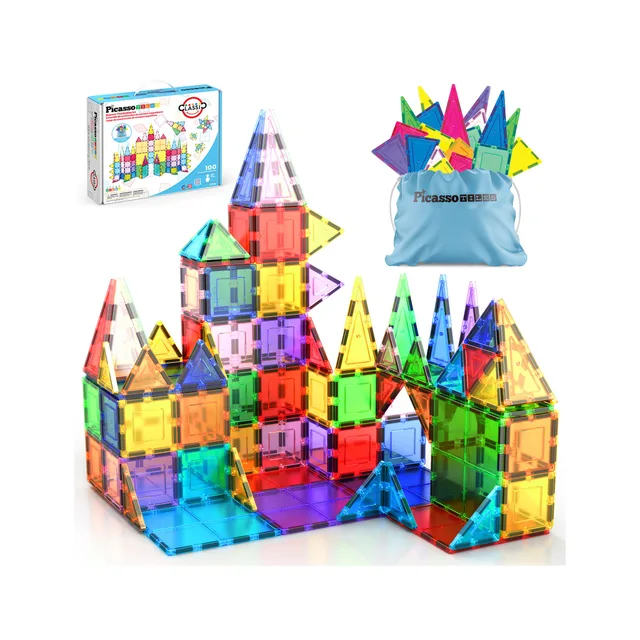
The value standard: 100 compatible tiles for less than the 32-piece original costs.
Best for: Gift buyers and grandparents who want maximum play value per dollar without rolling the dice on an unknown clone.
- 100 pieces for roughly forty dollars, about the best price per tile from any brand with a real safety record and a decade of sales history.
- Sensible shape mix for building: 8 large squares, 46 small squares, and three triangle sizes, so kids can make real walls and roofs early on.
- Same 3-inch square footprint as Magna-Tiles, so it mixes into an existing collection without problems.
- Plastic is a step below the original: thinner faces and a less refined finish that show scratches sooner.
- Magnet strength is good but not quite equal to the premium brands, which you feel on tall, cantilevered builds.
- The catalog is a tangle of similar listings; buy the PT100 or a clearly labeled set and ignore the themed bundles.
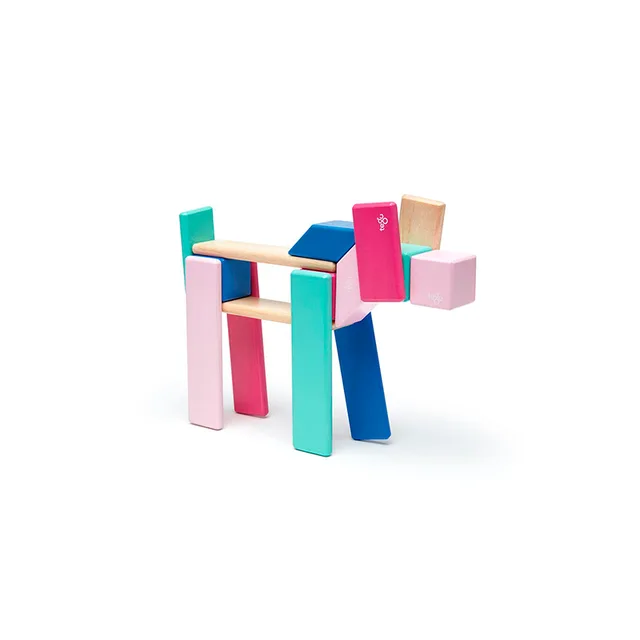
Magnetic blocks milled from Honduran hardwood: beautiful, heirloom grade, and a different kind of toy.
Best for: Buyers giving a keepsake gift, or households that want a calmer, tactile building toy for younger kids.
- Sustainably sourced hardwood with magnets sealed inside the wood; the blocks feel and look like a premium object, not a plastic toy.
- Made in Honduras under a maker-run factory model, and built to survive generations rather than seasons.
- Six block shapes across 24 pieces invite different building than flat tiles: towers, vehicles and figures instead of houses.
- The magnets are intentionally modest, so tall or wide structures slump in ways a plastic tile build would not.
- Costs two to three times the plastic competition per piece, and 24 blocks goes fast for an ambitious builder.
- Not a tile system: it does not mix with Magna-Tiles or PicassoTiles at all.
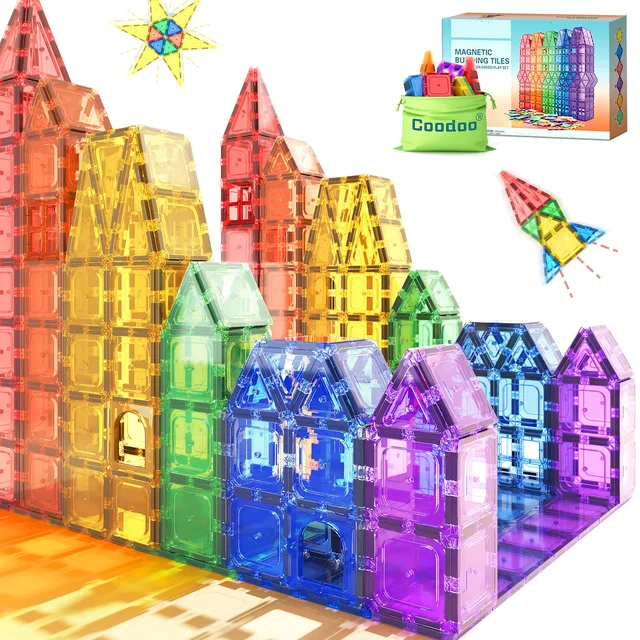
The budget clone tier: a forty-piece starter box under thirty dollars that cuts corners you can feel.
Best for: Nobody, honestly: PicassoTiles PT100 costs about ten dollars more for 2.5x the pieces and a decade-long safety record.
- Cheap enough to test whether your kid likes magnetic tiles before spending on a real set.
- Standard 3-inch sizing means the tiles technically connect with Magna-Tiles and PicassoTiles pieces.
- Widely stocked and frequently discounted, so it is never hard to find.
- Thinner plastic faces and weaker magnets than the named brands, which shows up as wobble and collapse on anything above a few tiles tall.
- Ultrasonic sealing instead of rivets is the norm at this price, and a cracked tile can expose a magnet: a genuine hazard around kids under three.
- Marketing runs on licensed-castle imagery and inflated piece counts; the actual build experience is the weakest of the four.
| Criteria | Magna-Tiles Classic 32-Piece Top pick | PicassoTiles Classic 100-Piece (PT100) | Tegu 24-Piece Magnetic Wooden Block Set | Coodoo Magnetic Tiles Starter Set |
|---|---|---|---|---|
| Verdict | Buy it | Buy it | It depends | Skip it |
| Best for | First-time buyers who want the tile that invented the category and plan to build a collection that lasts through multiple kids. | Gift buyers and grandparents who want maximum play value per dollar without rolling the dice on an unknown clone. | Buyers giving a keepsake gift, or households that want a calmer, tactile building toy for younger kids. | Nobody, honestly: PicassoTiles PT100 costs about ten dollars more for 2.5x the pieces and a decade-long safety record. |
| Price tier | $$ · mid-range | $ · budget | $$$ · premium | $ · budget |
| Piece count / price class | 32 pieces, about $50 | 100 pieces, about $40 | 24 hardwood blocks, about $80+ | 40 pieces, about $30 |
| Tile material | Food-grade MABS, riveted magnets | ABS plastic, glued-in magnets | Solid hardwood, sealed magnets | Thin ABS, ultrasonic sealing |
| Magnet strength | Strongest of the four | Good, slightly below premium | Modest by design (wood blocks) | Weak; tall builds wobble |
| Compatibility | All Magna-Tiles sets | Same footprint as Magna-Tiles | Tegu system only | Connects with standard tiles |
| Safety engineering | Rivets + anti-crack lattice | Long safety record | Magnets sealed in wood | Sealed seams; watch for cracks |
| Best for | The default first set | Maximum pieces per dollar | A keepsake wooden toy | Testing the concept cheaply |
Which one is right for you?
- First-time buyers who want the tile that invented the category and plan to build a collection that lasts through multiple kids. Buy it Magna-Tiles Classic 32-Piece
- Gift buyers and grandparents who want maximum play value per dollar without rolling the dice on an unknown clone. Buy it PicassoTiles Classic 100-Piece (PT100)
- Buyers giving a keepsake gift, or households that want a calmer, tactile building toy for younger kids. It depends Tegu 24-Piece Magnetic Wooden Block Set
- Nobody, honestly: PicassoTiles PT100 costs about ten dollars more for 2.5x the pieces and a decade-long safety record. Skip it Coodoo Magnetic Tiles Starter Set
How we judged the field
Magnetic tiles live or die on three things: magnet strength (whether tall builds stand), plastic quality (whether a dropped tile cracks near a magnet), and price per piece. Because every major brand uses the same 3-inch square footprint, sets mix, which means the decision is really about how much construction quality you want per dollar.
We picked the original tile that invented the category, the value set with the best price per piece, a wooden magnetic take that plays completely differently, and the budget clone tier you will meet first in search results.
Magna-Tiles is the original, and the engineering still justifies the premium. The tiles are food-grade MABS plastic with an internal lattice that resists cracking, and the magnets are riveted in place rather than glued or sealed by ultrasound. That rivet is the load-bearing detail in the whole category: it is why a ten-year-old Magna-Tiles tile still cannot cough up its magnet.
The 32-piece Classic set is the standard starter: squares plus two triangle shapes in bright translucent colors, sized for little hands and compatible with every set the company has ever made, including the themed and microMAGS lines. The honest knock is the price per tile, roughly double the value competition, and the fact that 32 pieces vanishes fast once a kid wants to build a castle. Buy it when the child might get more sets later and you want the foundation to be the good one.
PicassoTiles built its name on being the value answer, and the PT100 is the flagship: 100 pieces for about forty dollars, which works out to the best price per tile of any brand with a real track record. The mix is practical, heavy on squares (8 large, 46 small) with three triangle sizes, so kids can assemble walls and roofs without running out of the pieces that matter.
The plastic is a step below Magna-Tiles: the faces are thinner, the finish scratches sooner, and the magnets are a touch weaker, which you notice on cantilevers and roofs. But it is the same footprint, it clicks into a Magna-Tiles collection without complaint, and the safety record is a decade deep. For a gift, this is the set that delivers the most play per dollar.
Tegu is not a tile: it is a magnetic wooden block, milled from Honduran hardwood with magnets sealed permanently inside the wood. The 24-piece set comes in six shapes and plays differently: vehicles, figures, towers, the kind of building that favors chunky geometry over big flat walls. As an object it is the nicest thing here by a wide margin, and the company runs its own factory in Honduras.
Whether it is right for your kid is the question. The magnets are deliberately modest, so builds need balance rather than cantilevered ambition, and the price is two to three times the plastic competition per piece. It makes sense as a keepsake gift or for younger kids in the one-to-four range who want something tactile; a six-year-old who wants to build a city wants tiles.
Coodoo is the clone tier that floods the search results: a roughly 40-piece starter box under thirty dollars, dressed up in licensed-castle imagery and inflated piece counts. The tiles technically connect to standard sets, but the plastic is thinner, the magnets are weaker, and the construction relies on ultrasonic sealing rather than rivets. A cracked clone tile can expose a magnet, which is a genuine hazard for under-threes and the reason the category invented the rivet in the first place.
The fatal problem is not that it is bad; it is that PicassoTiles PT100 costs about ten dollars more and gives you 100 pieces with a decade of documented play behind it. The clone tier only wins if you count nothing but the sticker price.
Magna-Tiles vs PicassoTiles: which should you buy?
Both are buys; the difference is intent. Magna-Tiles is the better-made object: rivets, MABS, a safety lattice, and the strongest magnets in the comparison. PicassoTiles is the better value: same footprint, solid magnets, more than triple the pieces for less money.
For a first set you intend to grow into a collection, start with Magna-Tiles and add PicassoTiles volume later. For a gift where the goal is maximum wow-per-dollar on open-ended play, the PT100 delivers more pieces to play with on day one.
What to look for
- Rivets over glued or sealed magnets: the magnet retention method is the safety-critical spec in this category.
- Price per piece, not box price: count the pieces before comparing listings; clone listings inflate counts with tiny accessory bits.
- Square-heavy mixes: squares build walls and floors; sets that are triangle-heavy frustrate beginners.
- Standard 3-inch footprint: keeps your options open for mixing and expanding later.
- Ages 3+ rating: the small-magnet risk lives in cracked tiles, which is why the construction method matters.
- Real play life: tiles get used from roughly 2 to 10, so durability compounds; the cheapest set is rarely the cheapest per year of play.
Our final take
Buy Magna-Tiles Classic 32 if you want the original and plan to build a collection that outlasts a childhood. Buy PicassoTiles PT100 if the goal is a big box of tiles for the least money from a brand with a real record. Choose Tegu when the gift should feel like an heirloom rather than a toy bin staple. Skip the Coodoo tier: at this price, PicassoTiles already answered the question better.
Questions, answered
Are cheap magnetic tiles as good as Magna-Tiles?
Close, but not equal. Value brands like PicassoTiles get you 80 to 90 percent of the experience for half the money, and they connect to Magna-Tiles pieces. The real gap is in construction: Magna-Tiles rivets its magnets into a food-grade MABS frame with an internal lattice, while the cheapest clones use thinner plastic and glued or ultrasonically sealed magnets that can escape a cracked tile.
What age are magnetic tiles for?
Manufacturers rate them 3 and up, mainly for small-magnet hazard if a tile cracks. In practice, kids start stacking around 18 months with supervision, get real value from 3 to 8, and keep building into grade school, which is why tiles have the longest play life of almost any toy at the price.
Do different magnetic tile brands work together?
Mostly yes for the standard 3-inch square system: Magna-Tiles, PicassoTiles and most clones share the footprint and will connect. Tegu wooden blocks and Magna-Tiles microMAGS are their own systems and do not mix. Mixing brands works fine for casual builds, though magnet strength varies, so very tall structures are best built single-brand.
How many magnetic tiles does a kid actually need?
Thirty-two pieces is enough to prove the concept and build small houses. Around 60 to 100 pieces is where builds get ambitious: real towers, garages and castles. If siblings share, go straight to 100; tiles are the toy where the second set delivers more play than the first.
Deciding between the top two? See our head-to-head: Magna-Tiles Classic 32-Piece vs PicassoTiles Classic 100-Piece (PT100).
More Baby & Family reviews
 The Best Mechanical Model Kits: 4 Compared (and One to Skip)
  The Best Model Rocket Kits: 4 Compared (and One to Skip)
  The Best Nursery Blackout Curtains and Blinds: 4 Compared (and One to Skip)
  The Best Nursery Gliders and Rocking Chairs: 4 Compared (and One to Skip)
  The Best Nursery Humidifiers: 4 Compared (and One to Skip)
  The Best Nursing Pillows: 4 Compared (and One to Skip)