Explained
Hiking Pants, Explained
After reading, you'll understand how to read a hiking pant listing and tell a real technical claim from marketing.
In this guide
First-time buyers often assume any pant with outdoor in the name works on a trail. The listings lean on words like water resistant, stretch and breathable without numbers behind them. Fabric type, finish and cut matter more than the name on the tag. This guide explains the terms so you can compare pants on facts.
The 30-second version
- Nylon blends beat cotton, because they dry faster and stretch with your stride.
- DWR is a coating, so it helps in light rain and wears off over time.
- UPF should be a stated number, not a vague claim of sun protection.
- Zippered pockets matter more than pocket count, since open pockets drop things on scrambles.
- Convertibles trade simplicity for flexibility, and only pay off if you will use the shorts mode.
The products this guide is about
Our verdict on each, with the full reasoning on the companion review.
- Buy Arc'teryx Gamma Pant A softshell trail pant with a real DWR, a gusseted crotch and three zippered pockets.
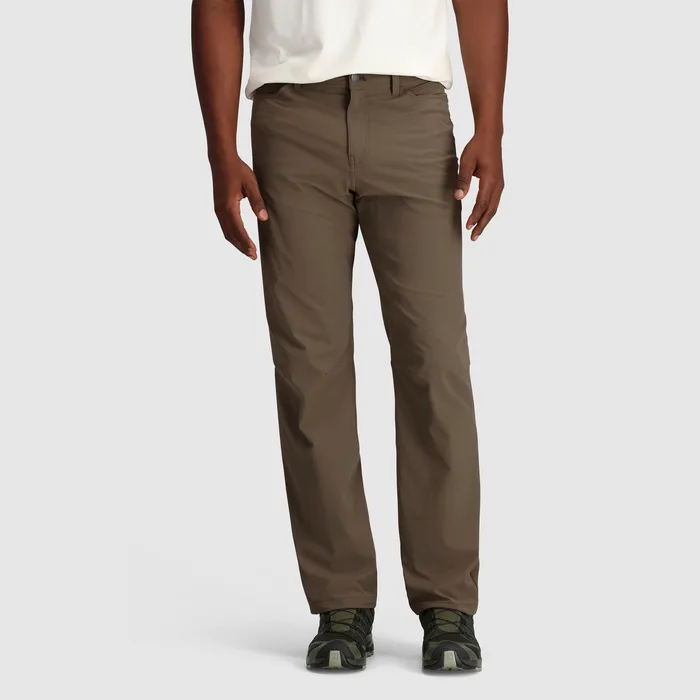
- Buy Outdoor Research Ferrosi Pant The easy default: a stretchy nylon pant with a UPF 50+ claim and a zippered security pocket.
- It depends KUHL Renegade Convertible Pant A seven-pocket convertible that zips off to 9.5 inch shorts, with a PFC free DWR and UPF 50+.
- Skip Eddie Bauer Ranger Pant A 70% cotton pant sold for trail use whose page offers few technical claims.
What actually matters
- Fabric blend - Nylon with spandex or elastane stretches and dries quickly. Cotton blends feel soft but hold water longer.
- DWR - A durable water repellent finish makes light rain bead up. It does not make a pant waterproof and needs refreshing.
- UPF rating - This rates the sun protection of the fabric. A stated 50+ is the top category.
- Pocket security - Zippered pockets keep a phone and keys in place. Drop-in pockets are open and can spill.
- Gusset - A diamond-shaped panel in the crotch gives room for high steps. It reduces strain on the seam.
- Inseam - The leg length from crotch to hem. Short, regular and tall options help avoid dragging a hem.
- Weight - Fabric weight, often in gsm or ounces, hints at warmth and durability. Heavier is warmer, lighter is cooler.
The specs, in plain English
Green flags vs red flags
Green flags
- Fiber percentages are listed on the page.
- A named DWR finish and a stated UPF number.
- Zippered pockets are named, not just counted.
- Short, regular and tall inseam options.
- A listed gusset or articulated knees.
Red flags
- The fabric is listed as cotton-heavy.
- The page says water resistant with no detail.
- No fabric weight or UPF is given.
- Pocket count is high but zips are not mentioned.
- Inseam options are missing.
Who's who: the brands
- Arc'teryx - Known for premium technical softshell and shell pants with detailed spec pages.
- Outdoor Research - Known for the Ferrosi line of lightweight stretch nylon trail pants.
- Kuhl - Known for convertible and performance blend pants with a UPF 50+ range.
- Eddie Bauer - Known for budget-friendly outdoor and travel apparel, including cotton-blend pants.
How to read a listing without getting fooled
Start with the fabric line and look for fiber percentages. Then find the finish: DWR named, or only the phrase water resistant. Check for a UPF number, a fabric weight, and a pocket list that says which pockets zip. Then read the sizing chart for inseam options and the features list for a gusset or articulated knees. Skip any pant whose page offers adjectives but no numbers, since you cannot check what the maker will not state.
How much should you spend?
Budget pants usually accept cotton blends and give thin spec pages. Mid-range pants are where stretch nylon, UPF 50+ and zippered pockets show up together, and this is the best value tier for most hikers. Premium pants add named finishes, better construction and a gusseted cut. Move up only if you hike in rough weather or scramble often.
Questions, answered
Can I hike in jeans or cotton pants?
You can on a short, dry day, but cotton soaks up sweat and rain and dries slowly, which can cause chafing and a cold, heavy feeling. Nylon blends are the safer choice for long days or changing weather. Kuhl's own guide copy says cotton is the wrong fabric for hiking.
How do I wash hiking pants with a DWR finish?
Follow the care label, since each maker gives its own rules. Many say to use no fabric softener and to tumble dry low, which can help reactivate a finish. Eddie Bauer's care note says to replenish the finish as needed. If water stops beading, a reproofing product is the usual fix.
What inseam should I pick?
Measure from your crotch to where you want the hem, usually the ankle bone or just above your boot. Regular is often 32 inches, with short and tall options at 30 and 34 for makers that offer them. If you wear gaiters or tall boots, a slightly shorter hem avoids dragging.
Are zip-off legs a weak point?
They can be a place for a seam you feel against your knee, and zippers add a little weight. Good designs shield the zipper with a garage or place it behind the knee for venting. If you rarely convert, a one-piece pant is simpler and lighter.
Or jump to the head-to-head: Outdoor Research Ferrosi Pant vs Arc'teryx Gamma Pant.