

Outdoors & Fitness
The Best Hiking Pants: 4 Compared (and One to Skip)
We compared four current trail pants, convertible and not, on fabric blend and stretch, DWR and UPF claims, pocket security, gusset and inseam options.
The short version
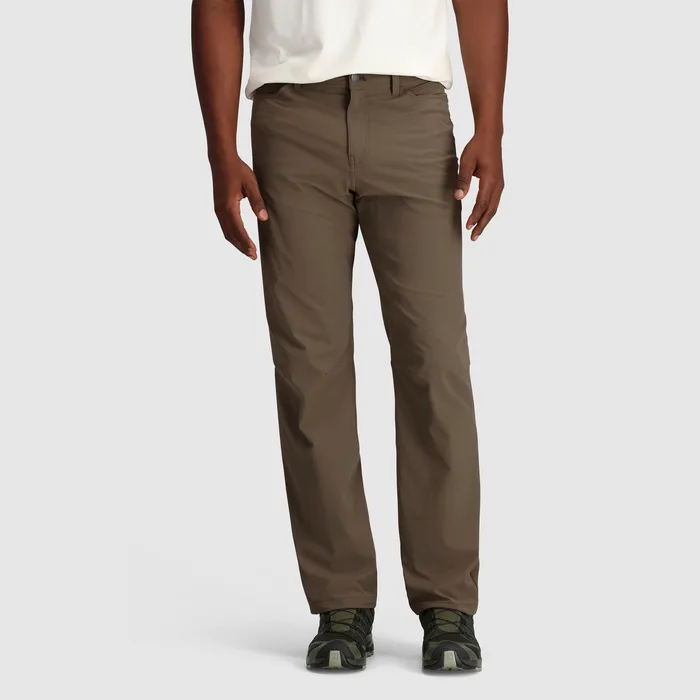
The Outdoor Research Ferrosi Pant is the best pick for most hikers: a stretchy nylon and spandex blend, a stated UPF 50+ and a zippered security pocket at a mid-range tier. The Arc'teryx Gamma Pant is the premium buy, with a named FC0 DWR, a laminated hem, a gusseted crotch and three zippered pockets, though it is warm and has no UPF claim. The KUHL Renegade Convertible depends on whether you will use the shorts mode: it states a PFC free DWR and UPF 50+ and zips off to a 9.5 inch inseam. Skip the Eddie Bauer Ranger Pant for serious trail days, since it is 70% cotton with few technical claims on its page. For wet-weather layers see our rain jackets review, and pair any of these with the right socks and gaiters. Best for: three-season hikers who want stretch, sun protection and secure pockets without a climbing-grade price.
Our picks at a glance
- Arc'teryx Gamma Pant - Buy. A softshell trail pant with a real DWR, a gusseted crotch and three zippered pockets.
- Outdoor Research Ferrosi Pant - Buy. The easy default: a stretchy nylon pant with a UPF 50+ claim and a zippered security pocket.
- KUHL Renegade Convertible Pant - It depends. A seven-pocket convertible that zips off to 9.5 inch shorts, with a PFC free DWR and UPF 50+.
- Eddie Bauer Ranger Pant - Skip. A 70% cotton pant sold for trail use whose page offers few technical claims.
The verdict in 30 seconds
What mattered most
- Fabric blend
- Stated stretch
- DWR claim
- UPF claim
- Pockets
- Zip security
A hiking pant has to stretch, shed a little rain, dry fast and keep your phone from falling out on a scramble. Marketing pages promise all of that, but the spec lists do not always back it up. We read the maker pages for four current models from Arc'teryx, Outdoor Research, Kuhl and Eddie Bauer and compared only what each one states. Two earn a clear buy, one convertible suits a particular hiker, and one cotton-heavy pant is easy to skip.
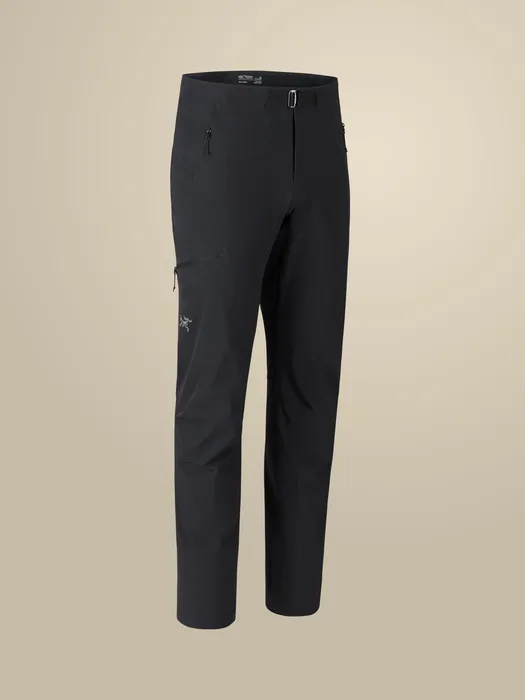
A softshell trail pant with a real DWR, a gusseted crotch and three zippered pockets.
Best for: Hikers who want one durable, weather-resistant pant for shoulder seasons, scrambling and harness use.
- The Fortius 2.0 face fabric is 88% nylon and 12% elastane, with a warp knit mesh lining listed.
- The maker lists a FC0 DWR finish, a laminated hem and a drawcord at the cuff, which helps against light rain and debris.
- Two zippered hand pockets plus a zippered thigh pocket keep a phone and keys secure, and the crotch is gusseted.
- The page gives no UPF claim, so sun protection is not something the maker promises.
- It is sold as climbing-focused, and the lining and weight (12.5 oz) make it a cool-weather pant more than a July one.
- It is the priciest pair here by a wide margin.
The easy default: a stretchy nylon pant with a UPF 50+ claim and a zippered security pocket.
Best for: Most hikers who want a single three-season trail pant with sun protection at a fair tier.
- The bluesign approved blend (46% recycled nylon, 40% nylon, 14% spandex) is listed with movement-mirroring stretch and quick-dry performance.
- UPF 50+ is stated on the spec list, which most pants in this field do not match.
- A right hip security zip mesh pocket and a back right zip pocket protect small items, with inseam options of 30, 32 and 34 inches on the sizing chart.
- The maker says water resistant but does not name a DWR finish, so treat it as a light-shower pant.
- No gusseted crotch is listed in the spec features, only articulated knees.
- It has no conversion zippers, so there is no shorts mode for hot days.
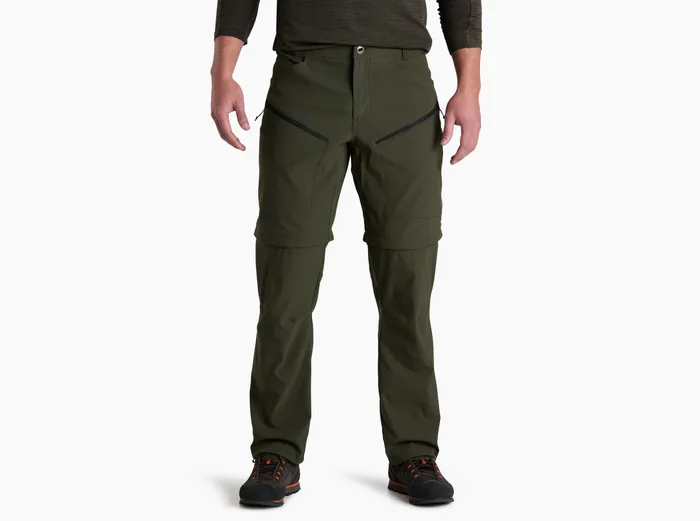
A seven-pocket convertible that zips off to 9.5 inch shorts, with a PFC free DWR and UPF 50+.
Best for: Hikers in hot or swingy conditions who will actually zip the legs off.
- The maker states a PFC free DWR and UPF 50+ on a 170 GSM nylon and spandex blend.
- Two quick zips convert the legs to shorts with a 9.5 inch inseam, and the zippers start behind the knee for venting.
- Seven pockets, with the right back pocket and both thigh pockets zipper secured and the thigh pockets gusseted.
- The page gives no fiber percentages, only nylon and spandex.
- Zips at the knee add bulk and a seam line you can feel, and the maker lists no crotch gusset.
- Pant inseam options are not spelled out in the copy, so check the size selector before buying.
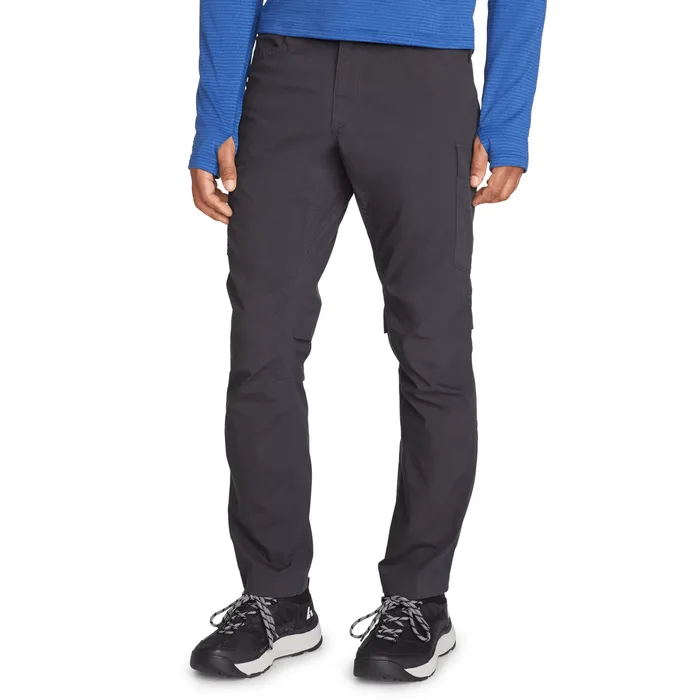
A 70% cotton pant sold for trail use whose page offers few technical claims.
Best for: Dry, mild day walks and travel where trail performance is not the point.
- The page lists a gusseted crotch, articulated knee darts and back knee venting.
- The back right pocket has a hidden zip closure.
- It is the lowest tier here and the fabric is soft.
- The blend is 70% cotton, 27% nylon, 3% spandex, so it takes up moisture and dries slower than the nylon pants above.
- The product copy makes no UPF claim and names no DWR finish; only the care note mentions replenishing a water repellent finish.
- No fabric weight is listed, and the page does not spell out inseam options.
- Only one pocket is described as zip secured, and the side cargo pockets use envelope entry.
| Criteria | Arc'teryx Gamma Pant | Outdoor Research Ferrosi Pant Top pick | KUHL Renegade Convertible Pant | Eddie Bauer Ranger Pant |
|---|---|---|---|---|
| Verdict | Buy it | Buy it | It depends | Skip it |
| Best for | Hikers who want one durable, weather-resistant pant for shoulder seasons, scrambling and harness use. | Most hikers who want a single three-season trail pant with sun protection at a fair tier. | Hikers in hot or swingy conditions who will actually zip the legs off. | Dry, mild day walks and travel where trail performance is not the point. |
| Price tier | $$$ · premium | $$ · mid-range | $$ · mid-range | $ · budget |
| Fabric blend | 88% nylon, 12% elastane | 46% recycled nylon, 40% nylon, 14% spandex | Nylon and spandex, no percentages | 70% cotton, 27% nylon, 3% spandex |
| Stated stretch | Softshell, four-way stretch category | Movement-mirroring stretch | Two-way stretch | Cotton-blend stretch |
| DWR claim | FC0 DWR named | Water resistant, DWR not named | PFC free DWR | Not described; care note mentions water repellent finish |
| UPF claim | None on page | UPF 50+ | UPF 50+ | None on page |
| Pockets | 2 hand, 1 thigh | Hand, hip, 2 back | 7, including 2 thigh | 2 back, 2 side cargo |
| Zip security | All 3 zippered | Hip and back right zip | Right back and both thigh | Back right hidden zip |
| Gusset | Gusseted crotch | Not listed | Gusseted thigh pockets | Gusseted crotch |
| Stated inseam options | Short, regular, tall (33 in regular) | 30, 32, 34 in | 9.5 in shorts; pant not spelled out | Not spelled out |
Which one is right for you?
- Hikers who want one durable, weather-resistant pant for shoulder seasons, scrambling and harness use. Buy it Arc'teryx Gamma Pant
- Most hikers who want a single three-season trail pant with sun protection at a fair tier. Buy it Outdoor Research Ferrosi Pant
- Hikers in hot or swingy conditions who will actually zip the legs off. It depends KUHL Renegade Convertible Pant
- Dry, mild day walks and travel where trail performance is not the point. Skip it Eddie Bauer Ranger Pant
How we judged the field
Five things matter in a hiking pant. The fabric blend and stretch decide comfort and drying time. A DWR finish helps with light rain, and a UPF claim matters on exposed trails. Pocket count and zip security decide whether your phone survives a scramble. A gusset and stated inseam options decide fit and freedom of movement. We scored only what each maker states on its own page, since marketing words like water resistant and stretchy mean little without a spec behind them.
The field splits into nylon-and-elastane pants, nylon-and-cotton blends and convertibles. We picked a premium softshell, a mid-range all-rounder, a convertible and a cotton-heavy pant that is sold for trail use. Ski and snow pants are a different job and are covered in our ski pants review, so they are not repeated here.
The Gamma is a softshell, and the spec sheet reads like one. The face is Fortius 2.0 in 88% nylon and 12% elastane at 186 gsm, over a warp knit mesh lining, and the maker lists a FC0 DWR finish plus a laminated hem with a drawcord to seal out drafts and debris. The crotch is gusseted and the waist uses an integrated webbing belt that sits under a hipbelt or harness. Pockets are the strongest part: two zippered hand pockets and a harness friendly zippered thigh pocket, so a phone and keys stay put on scrambles. Inseam comes in short, regular and tall, and the 32 regular is listed at 33 inches. The trade-offs are real. There is no UPF claim, the pant is described as warm and weather resistant, and it weighs 12.5 oz, so it is a cool-weather choice rather than a July one. It is built around climbing but suits hikers who want one tough pant for shoulder seasons. If you only hike in heat, one of the lighter pairs below makes more sense.
The Ferrosi is the pant most hikers should look at first. The listed fabric is 46% recycled nylon, 40% nylon and 14% spandex, bluesign approved, at 12.7 oz, with features that include movement-mirroring stretch, quick-drying, abrasion resistance and a UPF 50+ claim. Security is handled by a right hip zip mesh pocket and a back right zip pocket, with drop-in hand pockets and a back left drop-in. Articulated knees and a harness-compatible waist round it out, and the size chart shows inseams of 30 inches in short, 32 in regular and 34 in tall. The maker calls it water resistant and wind resistant but does not name a DWR finish, so expect it to shed a short shower and no more. It does not list a gusseted crotch, and it has no conversion zippers. Those gaps are small against what it does well, which is stay comfortable on the trail in most conditions. It suits the hiker who wants a single pair for three seasons without paying for a climbing-grade shell.
The Renegade Convertible is the right pant for a specific hiker and an annoying one for everyone else. The page lists a Duralux nylon and spandex blend at 170 GSM with a PFC free DWR and UPF 50+, but gives no percentages. Color-coded zippers convert the legs to shorts with a 9.5 inch inseam, start behind the knee so you can vent without removing anything, and the removed legs stow in the thigh pockets. There are seven pockets: two front, two back, two thigh and a drop-in cell pocket. The right back pocket and both thigh pockets are zipper secured, and the thigh pockets are gusseted. The page does not list a crotch gusset or spell out pant inseam options in the copy. Convertibles add seams at the knee that some people feel when kneeling or climbing, and they weigh a little more than a plain pant of the same fabric. If you hike in heat that swings from cold mornings to hot afternoons, the zips earn their keep. Otherwise a non-convertible is simpler.
The Ranger is the pair to pass on if you are buying for the trail. The listed fabric is 70% cotton, 27% nylon and 3% spandex, and the page sells it as a cotton-blend stretch pant for trail, travel and more. Cotton soaks up sweat and rain and dries slowly, and the maker’s own care note says its water repellent finish needs replenishing, but the product copy does not describe the finish and makes no UPF claim. It does list a gusseted crotch, articulated knee darts and back knee venting, which are useful. Pockets are two back hand pockets and two angled side cargo pockets, all with envelope entry, and the back right pocket has a hidden zip. No fabric weight or inseam options are given. For a dry afternoon walk or travel day, it is fine and soft. For a full day in changing weather, the nylon blends above stay drier, carry a stated UPF and come with clearer spec pages. Choose it only if budget is the whole question and conditions are mild.
Arc’teryx Gamma Pant vs Outdoor Research Ferrosi Pant: which should you buy?
The Gamma and the Ferrosi are both non-convertible nylon pants, but they serve different seasons. The Gamma is a lined softshell with a named DWR, a gusseted crotch and three zippered pockets, and no UPF claim. The Ferrosi has UPF 50+, a zip security pocket and a lighter feel, with a DWR that is described only as water resistant.
Choose the Gamma if you hike or scramble in cool, windy or damp conditions and want the stronger weather pant. Choose the Ferrosi if most of your hiking is mild to warm, you care about a stated sun rating and you do not want to pay for a climbing-grade piece.
What to look for
- Fabric blend: Look for nylon with spandex or elastane, which dries faster than cotton and stretches with you.
- Named DWR: A maker that names its finish, as Arc’teryx and Kuhl do, is making a checkable claim; plain water resistant is vaguer.
- UPF number: UPF 50+ should appear on the spec page, not just in marketing copy.
- Zippered pockets: Check which pockets zip, since a high pocket count can hide open ones.
- Gusset and knees: A gusseted crotch or articulated knees give you room to step up and scramble.
- Inseam options: Look for short, regular and tall lengths, and note that a convertible lists its shorts inseam separately.
Our final take
The Outdoor Research Ferrosi Pant is the one to buy if you want a single pair that handles most trails with a UPF claim and zippered security. The Arc’teryx Gamma is worth it for cool, windy days when you want a named DWR and a gusseted cut. The Kuhl Renegade Convertible is the call for hikers who will zip off the legs. Skip the Eddie Bauer Ranger for real trail days, because 70% cotton and a thin spec page give you less to rely on. Read the maker’s spec list before you buy any pant and trust the numbers over the adjectives.
Questions, answered
Are convertible hiking pants worth it?
They are worth it if you hike where mornings are cold and afternoons are hot and you will really unzip the legs. The trade-off is added seams at the knee and a little more weight than a plain pant in the same fabric. Many hikers find a light non-convertible pant with a UPF claim covers the same days. Check where the zips sit, since the Kuhl Renegade Convertible starts them behind the knee so you can vent without removing the legs.
Does a DWR finish make hiking pants waterproof?
No. DWR is a durable water repellent coating that makes light rain bead and roll off, but it does not stop water from soaking through in a sustained rain. It also wears off with use and washing, and Eddie Bauer's own care note says the finish needs to be replenished. For steady rain, carry a rain layer such as the ones in our rain jackets review.
What does UPF 50+ actually mean on a pant?
UPF is a sun protection rating for fabric, and 50+ is the top category. It applies to the fabric that covers your skin, not to bare legs or the open hems of a convertible once the legs are off. Only some of these makers state it: Outdoor Research and Kuhl do, while Arc'teryx and Eddie Bauer do not list it on the pages we read.
How many pockets do I need, and should they zip?
Two secure pockets matter more than a high count: one for a phone and one for a key or card. Zippered pockets stop items falling out on scrambles and when you sit. Drop-in pockets are fine for a map or snacks. Look at which pockets the maker says are zippered, as counts like seven or eight include open ones.
Do I need a gusset in hiking pants?
A gusseted crotch adds a diamond panel that gives you room to step high and scramble without the seams pulling. Stretch fabric helps, but a gusset still reduces strain on the seam. The Arc'teryx Gamma and Eddie Bauer Ranger list a gusseted crotch, while the Ferrosi lists articulated knees instead.
Deciding between the top two? See our head-to-head: Outdoor Research Ferrosi Pant vs Arc'teryx Gamma Pant.
More Outdoors & Fitness reviews
 The Best Hiking Socks: 4 Compared (and One to Skip)
  The Best Hydration Bladders: 4 Compared (and One to Skip)
  The Best Hydration Packs: 4 Compared (and One to Skip)
  The Best Ice Cleats: 4 Compared (and One to Skip)
  The Best Ice Melt Products: 4 Compared (and One to Skip)
  The Best Inflatable Kayaks: 4 Compared (and One to Skip)