Explained
Hiking Socks, Explained
After reading, you'll understand how to read a hiking sock label and choose the right blend, cushion and height for your boots.
In this guide
Most people buy hiking socks by colour and find out the difference on the trail. The labels hold the answers: fibre percentages, cushion level, cuff height and size range. The tricky part is that some brands publish all of it and others publish almost none, and phrases such as merino blend or performance cushion can mean very different things.
The 30-second version
- Merino handles odour, synthetics dry faster, and the blend percentage tells you which you are buying.
- Nylon is what makes merino last, which is why pure wool hiking socks are rare.
- Cushion changes fit, so switching to a thicker sock can make a good boot feel tight.
- The cuff should clear the boot, or the collar will rub bare skin all day.
- Guarantees vary widely, from unconditional replacement to satisfaction-only policies.
The products this guide is about
Our verdict on each, with the full reasoning on the companion review.
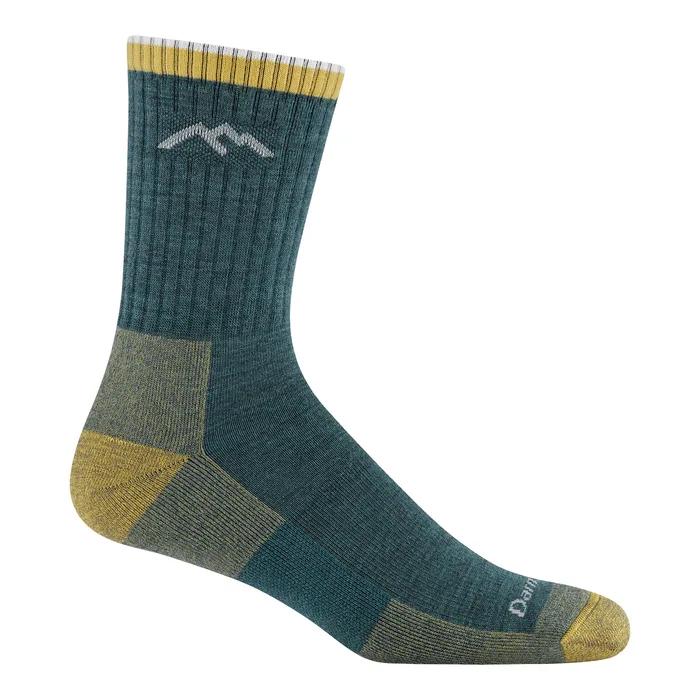
- Buy Darn Tough Men's Hiker Micro Crew Midweight Hiking Socks A 61% merino micro crew knitted in Vermont and unconditionally guaranteed for life.
- Buy Farm to Feet American Trail Damascus Light Targeted Cushion A lighter 3/4 crew knitted from US-grown 19.5 micron merino, with cushioning only where hikers usually blister.
- It depends Feetures Trail Max Cushion Mini Crew The most cushioned sock here, with no wool at all, which is either the point or the problem.
- Skip Stance Peaking Hike Crew A well-featured crew sock described as a merino blend without the one number that tells you how much merino.
What actually matters
- Fibre blend - the percentages of merino, nylon, polyester and elastane decide warmth, odour control, drying speed and durability. Brands that publish them let you compare.
- Merino fineness - measured in microns, where lower is softer. Few brands publish it, but finer merino is less itchy against the skin.
- Cushion level - from none to max, and where it sits matters as much as how much. Targeted cushioning pads the heel, ball and toe and keeps the rest thin.
- Height - no-show, quarter, mini crew, micro crew, 3/4 crew and crew. Pick the one that sits above your footwear collar.
- Fit and sizing - a close fit without bunching is what prevents blisters. A broader size range means more feet are well served.
- Toe seam - seamless or flat toe closures reduce friction across the toes. Most good hiking socks now have one.
- Guarantee - the wording decides what is covered, and some policies explicitly exclude wear.
The specs, in plain English
Green flags vs red flags
Green flags
- Exact fibre percentages published for the specific sock.
- A size chart mapped to shoe sizes, ideally with XS or XXL options.
- Cushion type and location described clearly.
- Care instructions on the product page.
- A written guarantee you can read in full.
Red flags
- Merino blend claimed without a percentage.
- Only one or two sizes offered.
- Final sale flags on products sold with a guarantee.
- Vague cushion descriptions such as performance comfort.
- No care instructions for a wool sock.
Who's who: the brands
- Darn Tough - Vermont sock mill known for merino-rich hiking socks and an unconditional lifetime guarantee.
- Farm to Feet - North Carolina-based brand using US-grown merino and publishing fibre fineness.
- Feetures - Performance sock brand focused on cushioning and targeted compression, with synthetic and merino ranges.
- Stance - Design-led sock brand that has expanded from lifestyle into performance and hiking lines.
How to read a listing without getting fooled
Start with the blend. If the listing gives exact percentages of merino, nylon and elastane, you can compare it with any other sock; if it just says merino blend, assume the merino content is lower than you would like. Next look at the cushion type and where it is placed, then the height, and check it against the collar of your boots. Use the maker's size chart rather than guessing, since sock sizing varies by brand. Finally read the guarantee on the brand's own site, and check whether the colourway you want is marked final sale.
How much should you spend?
Budget hiking socks are usually synthetic or low-merino blends, and they are fine for occasional walks. The mid-range is where the good hiking socks sit: published merino blends, targeted cushioning, broad sizing and meaningful guarantees. Premium pricing in this category rarely buys a better sock and often reflects design or brand. Because the best guarantees replace worn socks, a mid-range pair from a brand with a strong guarantee can be cheaper over time than a cheaper pair you replace often.
Questions, answered
How many pairs of hiking socks do I need?
For day hiking, two or three pairs lets you rotate while one dries. For multiday trips, many hikers carry two pairs to hike in and one dry pair kept only for camp and sleeping. Merino socks can be worn more than once between washes because they resist odour, which helps on longer trips.
Should I wear liner socks?
Some hikers do, to move friction away from the skin and onto the layer between the socks. Liners can help if you blister easily, but they add bulk and change fit, so try them with your boots before a long hike. Many people find a well-fitted single merino sock is enough.
How do I wash merino hiking socks?
Follow the maker's instructions, which usually means a cold or cool gentle wash, inside out, and a low tumble dry or line drying. Avoid fabric softener and bleach. Heat is the main enemy of merino, causing shrinkage and weakening fibres.
Can hiking socks be too thick?
Yes. A thick sock in a boot fitted for a thinner one squeezes the foot, which can cause numbness, hot spots and cold feet in winter. If you want more cushioning, check that your boots have room for it, or fit new boots while wearing the socks you plan to hike in.
Or jump to the head-to-head: Darn Tough Men's Hiker Micro Crew Midweight Hiking Socks vs Farm to Feet American Trail Damascus Light Targeted Cushion.