Explained
Ice Cleats, Explained
After reading, you'll understand how spike type, length, material and harness design decide whether ice cleats keep you upright.
In this guide
Ice cleats look similar in photos, but the traction system underneath varies a lot. Coils and spikes suit different surfaces, spike length changes how they feel on rock, and the harness decides whether they stay on in the cold. Sizing is by the boot, not your foot. Here is what to look for.
The 30-second version
- Spikes grip hard ice, while coils suit packed snow.
- Spike length is a trade-off, between bite on ice and stability on rock.
- Stainless steel resists rust, and carbon steel needs drying.
- Harness material matters in the cold, because stiff rubber is hard to put on.
- Size for your boots, not your street shoes.
The products this guide is about
Our verdict on each, with the full reasoning on the companion review.
- Buy Kahtoola MICROspikes Footwear Traction Stainless spikes, a cold-rated harness and a 4-year warranty, in six sizes.
- Buy Black Diamond Access Spike Traction Device More, shorter stainless spikes for mixed terrain, with an easy-on elastomer harness.
- It depends Hillsound Trail Crampon Longer carbon steel spikes on a plate system, with a Velcro strap for boots.
- Skip Yaktrax Pro Traction Device A coil-based cleat for packed snow in town, sold for uses coils are poorly suited to.
What actually matters
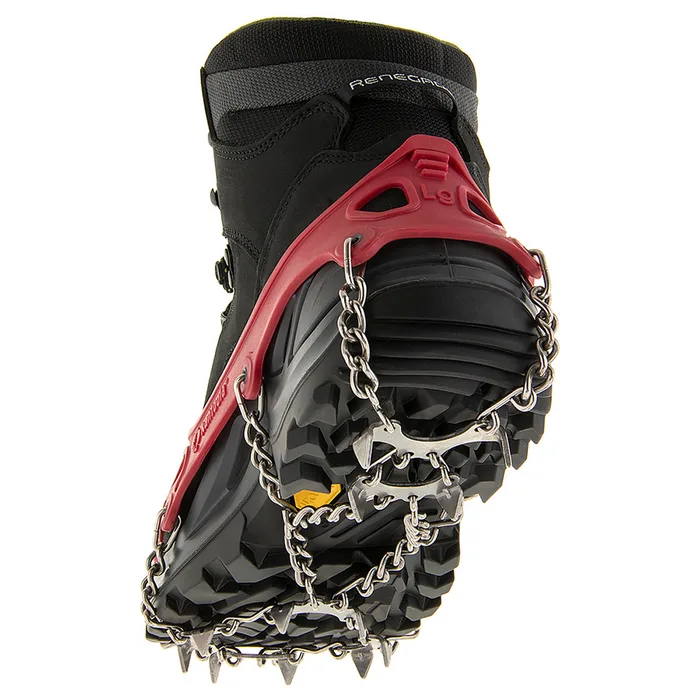
- Traction system - spikes on chains, coils on a frame or plates with spikes. Each suits different ground.
- Spike count and length - more spikes spread grip, and longer spikes bite deeper. Short spikes are steadier on rock.
- Material - stainless steel resists rust. Carbon steel is hard but needs drying.
- Harness - TPE and TPR elastomers stay stretchy in the cold. Straps add security.
- Weight - lighter cleats are easier to carry and run in. Heavier systems usually bite harder.
- Sizing - brands size by footwear. Bulky boots may need the next size up.
- Warranty - a long warranty signals durable chains and harnesses.
The specs, in plain English
Green flags vs red flags
Green flags
- Published spike count, length and material.
- A cold rating for the harness.
- Weights and sizes by footwear.
- A warranty of two years or more.
- Clear guidance on intended terrain.
Red flags
- No weight or warranty on the product page.
- Coils sold for steep trails.
- No sizing guide.
- Unnamed steel or harness materials.
- No care advice for carbon steel.
Who's who: the brands
- Kahtoola - The maker of MICROspikes, known for pull-on traction for hiking and running.
- Black Diamond - A climbing and mountain brand whose traction line includes the Access and Distance Spike.
- Hillsound - An outdoor brand known for its Trail Crampon and plate-based spike systems.
- Yaktrax - Known for coil-based ice cleats and a range of spiked traction devices.
How to read a listing without getting fooled
Start with the traction system and look for spike count, spike length and material. Then check the harness material and any cold rating, and the extras such as toe bails, heel loops or straps. Look up the size chart against the footwear you will wear. Finally, check the weight and the warranty.
How much should you spend?
Budget cleats are usually coil designs for town walking, fine on flat packed snow. Mid-range spike systems add stainless steel spikes, better harnesses and warranties, and they are the right choice for most trail users. Premium and technical options add longer spikes, plates or crampon-style frames for steep, icy terrain.
Questions, answered
Can I drive with ice cleats on?
No. Spikes and coils can catch on pedals and reduce control. Take them off before driving and store them in a bag.
Are ice cleats good for running?
Yes, lighter spike systems with shorter spikes are popular for winter trail running. Make sure the harness fits snugly so they do not shift. Coils are less secure at speed on hard ice.
Do I need ice cleats or crampons?
Ice cleats and microspikes cover sidewalks, winter trails and moderate slopes. Crampons are for steep snow and ice in the mountains, with rigid boots and an ice axe. If you are unsure, you probably need microspikes.
Will ice cleats fit over running shoes?
Most will, if you choose the right size. Soft shoes let the harness squash them a little, so check the fit. Kahtoola and Black Diamond both size by footwear.
Or jump to the head-to-head: Kahtoola MICROspikes Footwear Traction vs Black Diamond Access Spike Traction Device.