Explained
Life Jackets (PFDs), Explained
After reading, you'll understand PFD types, what 'USCG-approved' really means, and how to pick a life jacket that fits your activity, your body, and stays on.
In this guide
A life jacket (officially a personal flotation device, or PFD) only saves you if you're actually wearing it, so the whole game is picking one comfortable enough that you never take it off. The catch is that PFDs come in confusingly different types, materials, and 'approvals,' and a vest that's perfect for one person and activity can be genuinely unsafe for another. This guide decodes the labels so you can match the right device to how, where, and with whom you'll be on the water.
The 30-second version
- The best PFD is the one you'll wear. Comfort, ventilation, and low bulk matter more than any spec, because a jacket stowed under a seat can't help you in a sudden capsize.
- Match the design to the activity. Paddle-specific vests have high backs and cutaway armholes for kayaking and SUP, while simpler vests suit calm boating and inflatables suit low-bulk cruising.
- 'USCG-approved' is the floor, not the finish line. Approval means it met flotation and construction standards, but you still have to confirm its stated use and correct size fit you.
- Fit is a safety feature. A vest that's too big rides up around your face in the water; snug and correctly sized is what keeps your head above the surface.
- Inflatables trade bulk for conditions. They're cool and low-profile but not for non-swimmers, kids, or rough/high-speed use, and they need inspection and re-arming after every activation.
The products this guide is about
Our verdict on each, with the full reasoning on the companion review.
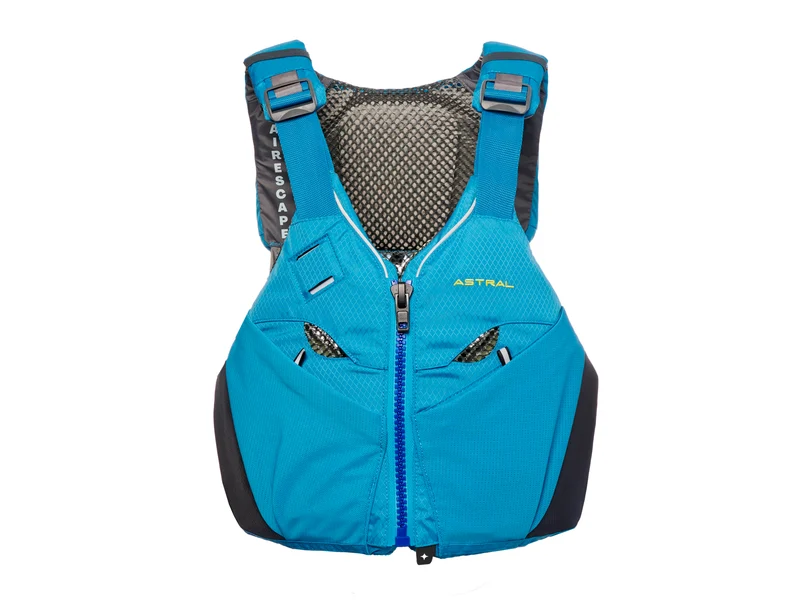
- Buy Astral V-Eight 4.0 The breathable, low-profile all-rounder that disappears on your body during long paddling days. Amazon
- Buy Onyx MoveVent Dynamic Paddle Sports Life Jacket A genuinely comfortable vented paddle vest at a price that makes buckling up an easy yes. Amazon
- It depends Mustang Survival MIT 70 Automatic Inflatable PFD Barely-there comfort for confident adult swimmers on calm inshore water, with strings attached. Amazon
- Skip Onyx Adult General Purpose Life Jacket A cheap, USCG-approved 'universal' vest that's fine as a spare but wrong for active paddling. Amazon
What actually matters
- US Coast Guard approval - confirm the printed label and that its stated use (recreational, paddlesports, not for non-swimmers) matches your activity; an uncertified 'swim vest' or foam toy is not a legal or reliable substitute.
- Correct size - adults are sized by chest circumference and smaller people and children by body weight; a too-large jacket rides up and stops working, so size before you shop on looks.
- Activity-matched design - high backs and generous armholes for kayaking and SUP, simpler vests for calm-water boating, and inflatables only for confident adult swimmers on flat water.
- Ventilation and mobility - mesh backs and vented, sculpted foam keep you cool and let you move, which is what makes you willing to keep the vest buckled all day.
- Flotation type (foam vs. inflatable) - inherent foam floats the moment you hit the water with no maintenance, while inflatables are lighter but provide no buoyancy until they inflate.
- Maintenance burden - foam vests just rinse and air-dry, but inflatables require periodic CO2 inspection and a re-arm kit after each use, which is a recurring cost and a habit you must keep.
- Who it's safe for - check the age, weight, and swimmer requirements, because the same feature that makes an inflatable comfortable for one paddler makes it unsafe for a non-swimmer or child.
The specs, in plain English
Green flags vs red flags
Green flags
- A clearly printed US Coast Guard approval with a stated use that matches your activity
- A ventilated design (mesh back or vented foam) that you'll actually want to keep on all day
- A size range based on your chest measurement, with enough strap adjustment to cinch it firmly
- A high back and open armholes if you're buying for kayaking or SUP
- Owner reports praising long-term durability and that it 'disappears' once buckled
Red flags
- No visible USCG approval, or it's sold as a vague 'swim vest' or pool float
- Bulky keyhole foam that rides up toward your face unless cinched perfectly
- Sizing that runs small or has a narrow adjustment range with no try-before-you-buy option
- An inflatable being considered for a non-swimmer, a child, or whitewater/high-speed use
- A vest that slides up over your head when someone lifts it by the shoulders after you've cinched it
Who's who: the brands
- Astral - Paddlesports-focused maker known for breathable, low-profile foam vests with PVC-free materials and a loyal recreational and touring following.
- Onyx - Broad-line PFD brand spanning value paddle vests, inflatables, and inexpensive general-purpose 'universal' jackets kept aboard as spares.
- NRS - Whitewater and river-running specialist whose rugged vests are staples for rafting, kayaking, and swiftwater use.
- Stohlquist - Long-standing paddling brand recognized for comfort-oriented fit systems and vests aimed at kayakers and canoeists.
- Mustang Survival - Marine safety brand best known for higher-end inflatables and cold-water gear used by serious boaters and professionals.
How to read a listing without getting fooled
Start with the intended-use line on the label, not the marketing name: a vest can be 'USCG-approved' and still be wrong for you if its stated use says calm-water boating and you plan to run rivers, or if it warns 'not for non-swimmers.' Next, find the sizing basis - chest circumference for adults, body weight for kids and smaller people - and match it to your actual measurement rather than the clothing size you think you are. Check the flotation type: 'inherent' means foam that works instantly and needs no upkeep, while 'inflatable' means you're taking on inspection and re-arm duties in exchange for less bulk. For paddling, look for the words 'high back' and open or cutaway armholes, and read the maintenance note so a cheap sticker price doesn't hide a recurring re-arm cost. Treat the approval as a pass/fail gate, then let comfort and activity fit make the real decision.
How much should you spend?
Spend where it keeps the jacket on your body. Entry-level foam vests are perfectly safe and satisfy legal carry rules, so a bare-bones 'universal' vest is fine as a spare or guest jacket you'll rarely wear. But for the vest you'll paddle in every trip, stepping up buys real comfort - better ventilation, a refined fit, and materials that survive many seasons - and that comfort is what makes you actually wear it, which is the whole point. Mid-range paddle vests capture most of that comfort for meaningfully less and are the value sweet spot for casual users; the premium is worth it mainly if you're on the water often or want the longest service life. Inflatables tend to sit at the higher end and add an ongoing re-arm-kit cost, so factor that recurring expense in rather than judging on the sticker alone. Above all, don't buy down to a price you won't wear: a comfortable vest you keep buckled beats a cheaper one you leave unclipped.
Questions, answered
How do I choose the right life jacket for my activity and body?
Match the design to what you'll do: paddle-specific vests with high backs and open armholes for kayaking and SUP, simpler vests for calm-water boating, and low-bulk inflatables only for confident adult swimmers on flat water. Then confirm it's USCG-approved for that use and rated for your size - adults size by chest circumference, and smaller people and children by body weight. Getting both the activity type and the size right is what makes a jacket effective and comfortable enough that you'll keep it on.
Does 'US Coast Guard approved' really matter, and how do I check?
Yes. A USCG-approved label means the device met recognized flotation and construction standards and, in the US, is what legally counts as a PFD on board. Look for that approval printed on the jacket and read its stated use - for example 'recreational,' 'paddlesports,' or 'not for non-swimmers' - to be sure it fits how you'll use it. An uncertified 'swim vest,' arm floats, or a foam pool toy is not a substitute.
How should a life jacket fit?
Snug but not restrictive. Loosen all the straps, put it on, then tighten from the bottom up until it's firm against your torso. To test it, have someone pull up on the shoulder straps (or lift them yourself) once it's buckled and cinched - if the jacket slides up toward your ears or over your head, it's too loose or too big. A properly fitted PFD stays in place and keeps your head above water instead of floating up around your face.
Are inflatable PFDs safe, and who should avoid them?
Inflatables can be USCG-approved and are wonderfully low-bulk, but they carry firm limits. They are not for non-swimmers or children, they have a minimum age and weight, and they're not rated for whitewater, personal watercraft, or high-speed use. They also provide no buoyancy until they inflate and require periodic inspection of the CO2 cylinder plus a re-arm kit after every activation. Non-swimmers, kids, and anyone in rough water or high-impact activity should choose an inherently buoyant foam PFD instead.
How many life jackets do I need on board, and do I have to wear one?
US rules generally require one wearable, correctly sized, USCG-approved PFD for every person aboard, and children typically must wear theirs while underway. State laws vary on exactly when adults must wear versus simply carry one, so check your local regulations. Practically, a jacket stowed under a seat won't help in a sudden capsize or fall overboard, which is why a comfortable vest you'll actually keep on beats a cheap one you leave unbuckled.
Do kids need special life jackets?
Yes. Children's PFDs are sized and rated by body weight rather than chest size, and many add safety features like a grab handle and a crotch strap to keep the jacket from riding up over a child's head. Always choose a USCG-approved youth or infant device in the correct weight range, and never rely on an inflatable, arm floats, or an adult vest for a child.
Or jump to the head-to-head: Astral V-Eight 4.0 vs Onyx MoveVent Dynamic Paddle Sports Life Jacket.