Explained
Hiking Boots, Explained
After reading this you will understand what actually separates one hiking boot from another, and how to match those traits to the hiking you really do.
In this guide
A hiking boot looks simple, but the spec sheet is full of trademarked names for membranes, chassis and rubber compounds that hide what matters. The traits that count are support, waterproofing, traction, weight and fit, and the right balance depends entirely on how much you carry and where you walk. Most people go wrong by buying more boot than their terrain needs, or by trusting a waterproof label that gives out after a season.
The 30-second version
- Match the boot to load and terrain first. a stiff, supportive boot is a gift under a heavy pack on rough ground and a burden on an easy day-trail loop.
- Waterproofing is a trade-off, not a free upgrade. a membrane keeps feet dry in cool, wet conditions but traps heat in summer, so it is not always the right pick.
- The outsole is where cheap boots fail. a firm rubber compound with deep lugs keeps its grip for years, while soft rubber clogs in mud and wears smooth fast.
- Fit beats brand every time. the best boot on paper is useless if it lifts at the heel or pinches the width, so try before you commit.
- Durability is part of the price. a boot that stays sealed and keeps its tread usually costs less per mile than a cheap pair you replace yearly.
The products this guide is about
Our verdict on each, with the full reasoning on the companion review.
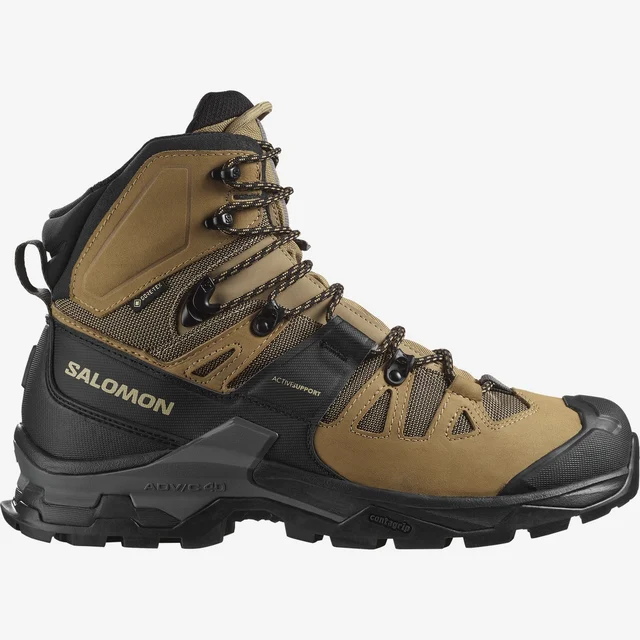
- Buy Salomon Quest 4 GTX A stiff, supportive backpacking boot that stays planted under a heavy load. Amazon
- Buy Lowa Renegade EVO GTX Mid The most comfortable all-rounder out of the box, with a choice of two widths. Amazon
- It depends Merrell Moab 3 Mid Waterproof A comfortable, widely stocked value boot that trades outright grip and support for easy miles. Amazon
- Skip Columbia Newton Ridge Plus II Waterproof Comfortable and cheap at first, but the waterproofing and outsole give out too soon. Amazon
What actually matters
- Support and stiffness decide how stable the boot feels under load; a stiffer chassis braces your foot on uneven ground with a pack, but feels like overkill on smooth trails.
- Waterproofing versus breathability is the core comfort trade-off; a membrane wins in cool and wet conditions but bakes your feet in summer heat.
- Traction (the outsole) determines grip on mud, rock and loose dirt; lug depth and rubber firmness matter more than the brand name printed on the sole.
- Weight compounds over a long day; a heavy, supportive boot pays off under a pack but tires you out on easy miles where a lighter boot would do.
- Fit and width matter as much as any spec; heel lift causes blisters and a too-narrow toe box ruins long days, so multiple width options are a real advantage.
- Durability and resole-ability define long-term value; watch whether the membrane stays sealed and whether the midsole can be rebuilt or is disposable.
- Break-in behavior affects your first hikes; some boots are comfortable out of the box while stiffer models need a short break-in before the collar stops feeling rigid.
The specs, in plain English
Green flags vs red flags
Green flags
- A recognized waterproof membrane paired with owner reports of staying dry through repeated soakings, not just a "waterproof" label.
- A firm outsole with deep, sharply angled lugs from a reputable rubber maker, which holds grip over years of use.
- A genuine choice of widths (narrow, medium, wide), a rare and valuable sign for hard-to-fit feet.
- A support level that matches your use: a stiff chassis for heavy packs, a lighter flexible build for day hikes.
- Consistent long-run praise for the upper shrugging off hard use with only cosmetic wear.
Red flags
- Reports of waterproofing failing at the tongue seam after a season, a sign the membrane is not fully sealed.
- A soft outsole whose lugs owners report flattening or wearing smooth quickly, so grip disappears fast.
- A tall, stiff, heavy boot marketed for casual day hiking, where it is more boot than the terrain needs.
- Only one width offered, which leaves buyers with narrow or wide feet without a real fit.
- A disposable midsole frame that cannot be resoled, meaning the whole boot is scrap once it softens.
Who's who: the brands
- Salomon - Known for stiff, supportive backpacking boots with aggressive traction, built to stay planted under a heavy load.
- Lowa - German maker prized for out-of-box comfort, surefooted support and a genuine range of widths.
- Merrell - The value benchmark, widely stocked and comfortable from the first wear, though its softer outsoles wear faster.
- Columbia - Accessible, budget-friendly hikers that feel good early but often trade away long-term waterproofing and tread life.
- Vibram - Not a boot brand but the outsole maker whose firmer compounds appear on many quality boots and signal durable traction.
How to read a listing without getting fooled
When you read a hiking-boot listing, translate the trademarks into the five traits that matter. A membrane name like GORE-TEX tells you it is waterproof but also warmer, so weigh it against the season you hike in. A named outsole (Contagrip, Vibram, Omni-Grip and the like) tells you little on its own; look instead at lug depth and whether owners say the rubber lasts or wears smooth. Words like "4D chassis," "Monowrap frame" or "shank" all point to stiffness and support, which is good under a pack and excessive for easy trails. Treat "waterproof" as a claim to verify against long-run owner reports, not a guarantee, and check whether the boot comes in more than one width before anything else.
How much should you spend?
Spend according to your terrain and mileage, not the top of the range. Entry-level boots often feel fine in the store but cut corners exactly where a boot cannot afford to, with waterproofing that leaks at the seams and outsoles that go smooth quickly, so the cheapest option frequently costs the most per mile. The value sweet spot is a mid-tier boot with a durable upper and a firm, deep-lugged outsole that lasts several seasons. Stepping up to premium is worth it when you regularly carry a heavy pack over rough ground and need a stiff support frame and a proven membrane; it is not worth it for casual, dry, flat day hikes, where the extra stiffness and weight simply tire you out.
Questions, answered
Are waterproof hiking boots worth it?
It depends on where you hike. For cool, wet or shoulder-season conditions, a membrane keeps your feet dry through puddles and mud and is well worth it. In hot weather the same membrane traps heat, so a breathable, non-waterproof shoe is often the smarter, more comfortable choice.
Do I need stiff, supportive boots for day hiking?
Usually not. Stiff, high-support boots shine under a heavy pack on rough ground, but on smooth day trails they feel like overkill and tire you out. For casual day hikes a lighter, more flexible boot is more comfortable and less fatiguing.
Why not just buy the cheapest hiking boot?
Because budget boots tend to fail where it counts. They can feel fine at first, then leak at the tongue seam and wear their outsole lugs down quickly. A mid-priced boot that lasts several seasons usually works out cheaper per mile.
How do I get the right fit?
Try boots on late in the day, when your feet are at their largest, wearing your hiking socks. Leave about a thumb's width past your longest toe and make sure your heel does not lift on a climb. Width matters as much as length, so favor a boot offered in your width.
How long should hiking boots last?
A well-built boot should handle several seasons of regular use before the outsole or membrane fades. Firmer rubber compounds last noticeably longer than softer ones, which wear smooth faster.
Or jump to the head-to-head: Salomon Quest 4 GTX vs Lowa Renegade EVO GTX Mid.