Explained
High Chairs, Explained
After reading, you will understand what actually separates a good high chair from a frustrating one, and how to read a listing without being fooled by features that photograph well.
In this guide
A high chair looks simple, but the details that decide whether you like it after six months are easy to miss on a product page. First-time buyers tend to fixate on looks and folding, then discover that cleanup, posture support, and harness security are what make or break daily meals. This guide explains the terms and trade-offs so you can choose with confidence.
The 30-second version
- Cleanup is the daily reality. so a fabric-free or fully removable, wipeable seat matters far more than most parents expect when they first shop.
- A footrest is not a luxury, because supported feet give a baby a stable base that improves posture, core control, and self-feeding.
- The harness is a safety feature first, so favor a secure five-point design with a buckle that stays hygienic and is easy to clean.
- Convertibility can justify a higher price, if the chair grows into a toddler or adult seat and truly replaces later purchases.
- Folding convenience is real but overrated, so do not let a fold-flat feature buy you a poor everyday seat with a permanent recline or sewn-in pad.
The products this guide is about
Our verdict on each, with the full reasoning on the companion review.
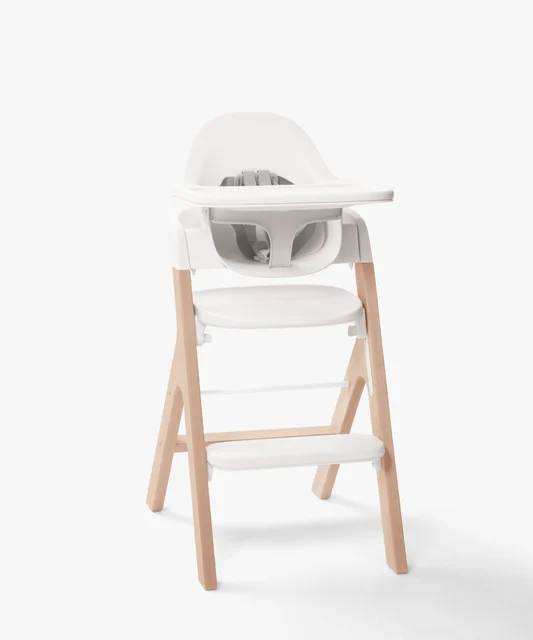
- Buy Mockingbird High Chair A seamless, fabric-free seat that wipes clean in seconds and later converts to a toddler chair.
- Buy IKEA Antilop High Chair The bare-bones plastic classic that costs little and hoses down completely.
- It depends Abiie Beyond Junior Y High Chair A beechwood chair that adjusts tool-free and keeps working long after the high-chair years. Amazon
- Skip Cosco Simple Fold High Chair A cheap folding chair whose sewn-in pad and permanent recline make it a poor daily seat. Amazon
What actually matters
- Ease of cleaning - you will clean a high chair twice a day, so seamless molded seats or fully removable, wipeable pads beat sewn-in fabric with piped seams that trap food.
- Footrest and posture - an adjustable footrest supports a stable, roughly upright feeding position, which aids core control and self-feeding; a chair without one is worth pairing with an add-on.
- Harness security - a five-point harness holds a squirmy baby better than a three-point waist strap, and an easy-clean buckle keeps the part your child touches most from getting crusty.
- Longevity and convertibility - chairs that convert to a toddler or adult seat can serve for years, while a budget shell is fine if you only need the eating-and-flinging phase.
- Footprint and storage - some chairs have wide splayed legs or do not fold at all, so measure your kitchen before committing.
- Tray design - a single-piece, dishwasher-safe tray or liner is far less work than a stiff multi-piece tray you must remove to seat the baby.
The specs, in plain English
Green flags vs red flags
Green flags
- A seamless molded seat or a pad that fully removes and wipes clean
- An adjustable footrest included in the box
- A five-point harness with a buckle that wipes down or washes
- A single-piece or dishwasher-safe tray that stays on while you seat the baby
- Clear, honest longevity claims backed by a real weight capacity
Red flags
- A sewn-in seat pad that cannot be removed to wash
- Padded seams and piped upholstery that hide crumbs in every crevice
- A permanent semi-recline sold as a newborn feature
- Only a three-point strap on a chair meant for everyday, long-term use
- A stiff multi-piece tray you must wrestle off to lift the baby in or out
- Wide splayed legs that eat more floor space than a small kitchen can spare
Who's who: the brands
- Mockingbird - Direct-to-consumer baby brand known for a fabric-free, easy-clean seat with a magnetic five-point harness and a footrest.
- IKEA - Maker of the long-running Antilop, a bare-bones plastic classic prized for its low cost and hose-clean simplicity.
- Abiie - Known for the beechwood Beyond Junior, a tool-free convertible chair that adjusts from infancy to an adult dining seat.
- Stokke - Premium Norwegian brand behind the Tripp Trapp, a wooden chair famous for adjustability and a decades-long lifespan.
- Cosco - Budget juvenile-products brand whose folding chairs are inexpensive but often use sewn-in pads and a permanent recline.
How to read a listing without getting fooled
Start by hunting for the things marketers bury. Photos sell plush padding and sleek folds, so read past them to confirm the seat pad is removable and wipeable, not sewn in, and that any recline can be set fully upright. Check the harness point count and whether the buckle is easy to clean, since that is the part your child touches most. Look for the word adjustable next to footrest, not just its presence, and treat a missing footrest as a cost you may pay later in an add-on. If a listing promises the chair grows with your child, find the actual weight capacity and the conversion steps rather than trusting the phrase. Finally, note the tray: one piece and dishwasher-safe is a quiet win, while a stiff multi-piece tray is a daily annoyance the photos never show.
How much should you spend?
Spending more mostly buys easier cleanup, a better harness, an included footrest, and materials that last. A bare-bones budget shell can clean beautifully and cover the eating-and-flinging phase perfectly well, provided you accept a basic strap and often add a footrest yourself. The value sweet spot for most families is a chair that is genuinely fast to clean and supports good posture out of the box, without paying for features you will not use. Stepping up to a premium convertible wooden chair is worth it only if you truly plan to use it for many years or across multiple children, where one purchase replaces several. Paying more does not automatically buy convenience: some pricey padded chairs are harder to clean than a cheap molded shell, so weigh what each dollar actually improves for your routine.
Questions, answered
When can my baby start using a high chair?
Most high chairs are designed for babies from around six months, once a child can sit upright with support and has good head control. If you want to feed earlier, look for a model with a dedicated infant or newborn attachment that offers a supported recline rather than forcing an older-baby seat to do the job.
Does my baby really need a footrest?
A footrest matters more than most parents expect. Supported feet give a baby a stable base, which improves posture, core control, and the ability to self-feed. If a chair lacks one, many owners add an aftermarket step or strap to fill the gap.
Which high chair is easiest to keep clean?
Chairs with no fabric win decisively. A seamless molded plastic seat wipes clean in seconds with nothing to unbutton, while fabric pads with seams, and especially sewn-in pads, trap food and slow you down. If you want padding, insist that the cushion is removable and wipeable.
Are convertible high chairs worth the higher price?
Often yes, if you will use the chair for years. A model that converts to a toddler seat or an adult dining chair can replace several purchases, which spreads the cost across a long life or multiple children. If you only need a seat for the eating-and-flinging phase, a budget chair is perfectly sensible.
How important is the harness, and is a five-point strap worth it?
The harness is the chair's primary safety feature, so it deserves attention. A five-point harness restrains a squirming baby far better than a three-point waist strap and reduces slumping and sliding as a toddler tests the exits. Always keep your child buckled and never leave them unattended in the chair. This guide offers general information only, not safety certification; always follow the manufacturer's manual and its specific harness and safe-use instructions for the chair you buy.
Or jump to the head-to-head: Mockingbird High Chair vs Abiie Beyond Junior Y High Chair.