

Baby & Family
The Best High Chairs of 2026: Easy Cleanup, Better Posture, and One to Skip
We compared four current 2026 high chairs on cleanup, posture support, and how long they actually last, including one popular model we think you should skip.
The short version
For most families the Mockingbird High Chair is the one to get: a one-piece, fabric-free seat that wipes clean fast, an adjustable footrest for good posture, and a magnetic harness that stays hygienic. Spend less and the IKEA Antilop covers the basics if you can live without a footrest. Want a wooden chair that outlasts childhood and doubles as an adult seat, the Abiie Beyond Junior delivers. Skip the Cosco Simple Fold, whose sewn-in pad and permanent recline make daily meals and cleanup harder than they should be.
Our picks at a glance
- Mockingbird High Chair - Buy. A seamless, fabric-free seat that wipes clean in seconds and later converts to a toddler chair.
- IKEA Antilop High Chair - Buy. The bare-bones plastic classic that costs little and hoses down completely.
- Abiie Beyond Junior Y High Chair - It depends. A beechwood chair that adjusts tool-free and keeps working long after the high-chair years.
- Cosco Simple Fold High Chair - Skip. A cheap folding chair whose sewn-in pad and permanent recline make it a poor daily seat.
The verdict in 30 seconds
What mattered most
- Ease of cleaning
- Footrest and posture
- Grows with child
- Harness
- Folds for storage
- Price tier
A high chair earns its keep at two moments: when your baby needs a stable, feet-supported place to eat, and when you have to clean flung food off it twice a day. We weighed independent expert assessments against long-term owner reports and focused on cleaning, posture, harness security, and years of use. Below are three chairs worth buying for different priorities, plus one widely sold model we would pass on.
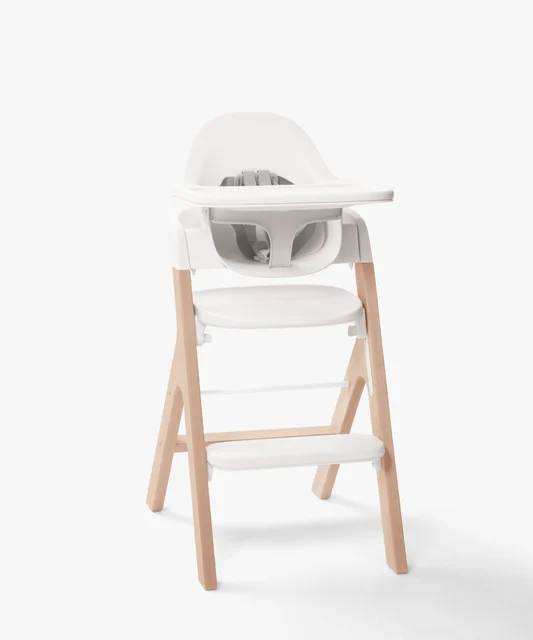
A seamless, fabric-free seat that wipes clean in seconds and later converts to a toddler chair.
Best for: Parents who want the fastest cleanup and a chair that carries through the toddler years.
- One-piece molded seat with no fabric means crumbs and spills wipe away fast
- Magnetic silicone-coated harness wipes clean and the tray liner is dishwasher-safe
- Adjustable footrest supports a stable, roughly 90-degree feeding posture
- Does not fold and has no wheels, so it stays parked in one spot
- Can slide slightly on the floor when you lift the baby out
- Sold direct only and priced at the top of this group
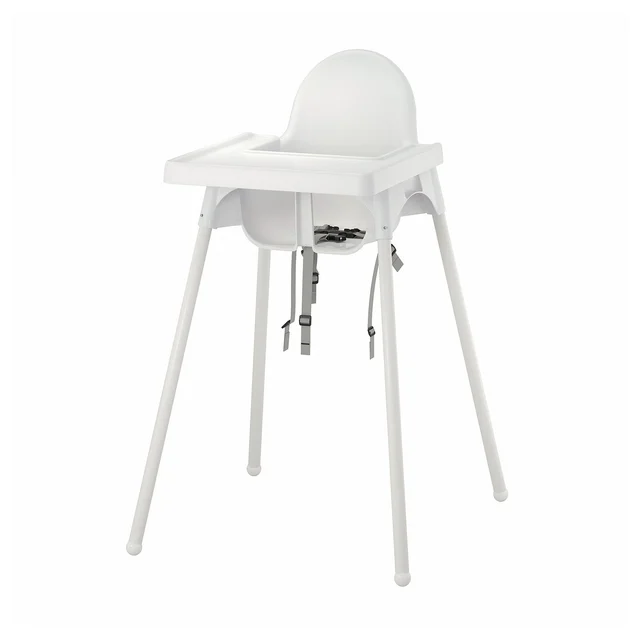
The bare-bones plastic classic that costs little and hoses down completely.
Best for: Budget-minded families, grandparents' houses, and anyone who prizes wipe-clean simplicity.
- Costs a small fraction of the others and wipes or even hoses clean
- Smooth one-piece seat has no fabric or crevices to trap food
- No footrest, which many feeding therapists say undermines posture
- Stiff snap-on tray must be removed to seat the baby, and the legs splay into a wide footprint
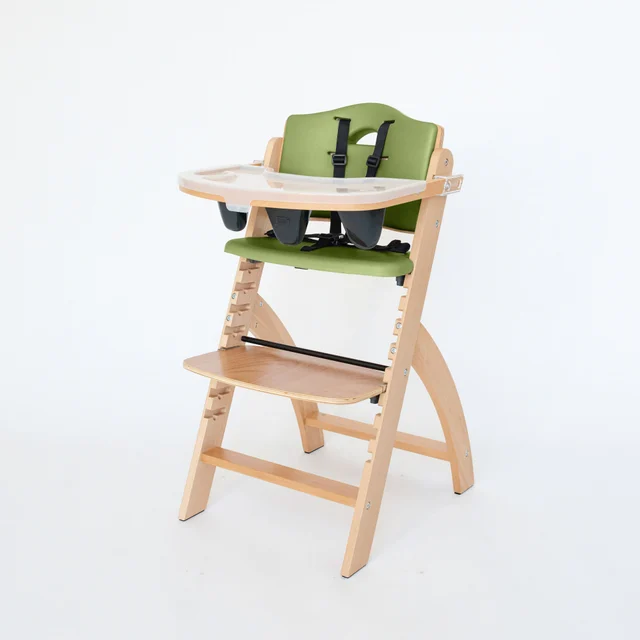
A beechwood chair that adjusts tool-free and keeps working long after the high-chair years.
Best for: Families who want one wooden chair for a decade-plus and do not mind a cushion.
- Beechwood frame adjusts tool-free and holds up to 250 pounds, converting to an adult dining chair
- Waterproof cushion and a removable dishwasher-safe tray cover wipe down easily
- The faux-leather cushion can crack or peel over years of daily use
- The two-handed tray and the initial assembly are fiddly
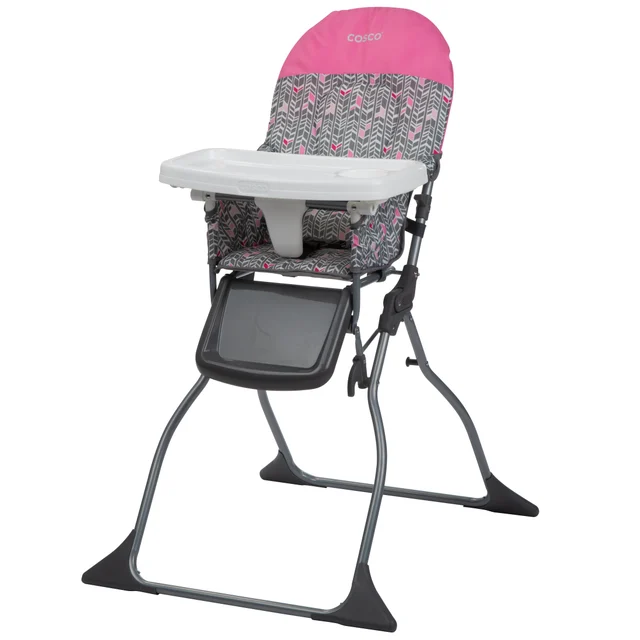
A cheap folding chair whose sewn-in pad and permanent recline make it a poor daily seat.
Best for: Occasional travel or a spare seat at a relative's house, not an everyday high chair.
- Folds flat and is inexpensive for occasional or travel use
- Wipeable seat surface for quick surface cleaning
- The seat pad does not come off, so food trapped in the seams is hard to clean
- A permanent semi-recline and only a 3-point harness lead to slumping and sliding by toddlerhood
| Criteria | Mockingbird High Chair Top pick | Antilop High Chair | Beyond Junior Y High Chair | Simple Fold High Chair |
|---|---|---|---|---|
| Verdict | Buy it | Buy it | It depends | Skip it |
| Best for | Parents who want the fastest cleanup and a chair that carries through the toddler years. | Budget-minded families, grandparents' houses, and anyone who prizes wipe-clean simplicity. | Families who want one wooden chair for a decade-plus and do not mind a cushion. | Occasional travel or a spare seat at a relative's house, not an everyday high chair. |
| Price tier | $$$ · premium | $ · budget | $$ · mid-range | $ · budget |
| Ease of cleaning | Excellent, no fabric | Excellent, wipes clean | Good, wipeable cushion | Poor, sewn-in pad |
| Footrest and posture | Adjustable footrest | None | Adjustable footrest | None, semi-reclined |
| Grows with child | To toddler chair | High-chair years only | To adult, 250 lb | High-chair years only |
| Harness | 5-point magnetic | 3-point waist strap | 3- or 5-point | 3-point |
| Folds for storage | No | No, wide legs | No | Folds flat |
| Price tier | Premium | Budget | Mid-range | Budget |
Which one is right for you?
- Parents who want the fastest cleanup and a chair that carries through the toddler years. Buy it Mockingbird High Chair
- Budget-minded families, grandparents' houses, and anyone who prizes wipe-clean simplicity. Buy it IKEA Antilop High Chair
- Families who want one wooden chair for a decade-plus and do not mind a cushion. It depends Abiie Beyond Junior Y High Chair
- Occasional travel or a spare seat at a relative's house, not an everyday high chair. Skip it Cosco Simple Fold High Chair
How we judged the field
Real Buyer Experiences does not run a testing lab. We synthesize independent expert assessments and long-term owner reports, then weight them toward the things that actually decide whether you like a high chair after six months: how quickly you can clean it once a bowl of yogurt hits the floor, whether it puts your baby in a stable, feet-supported position, how secure and hygienic the harness is, and how many years you get before the chair becomes clutter.
We deliberately downrank features that photograph well but frustrate parents daily. Padded seats with piped seams look plush and hide crumbs in every crevice. Multi-piece trays add dishwashing. Deep recline modes marketed for newborns often leave older babies slumping. The four chairs below span the realistic range: a fabric-free everyday workhorse, a bare-bones budget staple, a wooden chair built to outlast childhood, and one widely sold model we would not buy.
Mockingbird High Chair
Buy itThis is the chair we would hand most new parents. The seat is a single molded piece with no fabric, so the usual disaster zones, the crotch post, the seat back, the harness slots, all wipe clean in seconds. The harness is the clever part: silicone-coated straps with a magnetic buckle that you can wipe down or throw in the wash, instead of the crusty webbing most chairs come with. An adjustable footrest brings a stable base under your baby’s feet, and later the whole thing converts into a simple child chair, so it keeps earning its place past the high-chair phase.
It is not perfect. It does not fold and has no wheels, so it lives in one spot. Owners note it can slide a little on hard floors when you lift the baby out, enough that you learn to steady it with a foot. It is sold direct only and sits at the top of this group on price. What we liked more than anything is the cleanup, which is genuinely faster than any fabric chair. What we liked less is the lack of an infant recline, so it suits babies who already sit up well rather than the earliest weeks of solids.
IKEA Antilop
Buy itThe Antilop earns its long-running reputation by doing very little, very well. The seat is one smooth plastic shell on removable metal legs, with nothing to unbutton and nowhere for food to hide. You can wipe it at the table or rinse the whole seat under a tap, which is why so many feeding-focused parents keep recommending it over chairs that cost many times more.
The compromises are real, though. There is no footrest, and supported feet matter for posture and self-feeding, so many owners add an aftermarket step or strap. The snap-on tray is stiff to remove and has to come off before you can lift the baby in or out, which is the opposite of how most chairs work. The splayed legs also take up more floor than you expect. What we liked more is the price-to-cleanliness ratio, which nothing here beats. What we liked less is the barebones posture support straight out of the box.
Abiie Beyond Junior Y
It dependsIf you would rather buy once, the Abiie makes the case. Its European beechwood frame adjusts without tools: slide the seat and footrest to fit a six-month-old, then keep moving them as your child grows, all the way to an adult dining chair rated to a substantial weight. A waterproof cushion and a removable, dishwasher-safe tray cover keep cleanup reasonable for a chair with padding.
The reasons it is a depends rather than a flat buy come down to the cushion and the tray. The faux-leather cushion is easy to wipe now but can crack or peel after a few years, and replacements are an added cost over a chair’s long life. The redesigned tray needs two hands, and first assembly takes patience. What we liked more is the honest longevity, this really can serve from infancy into the school years and beyond. What we liked less is that the very feature that makes it comfortable, the cushion, is also the part most likely to wear out.
Cosco Simple Fold
Skip itThe Simple Fold gets one thing right: it folds flat and costs little, which makes it tempting for travel or a grandparent’s kitchen. As an everyday chair, though, it works against you. The seat pad is sewn in and cannot be removed to wash, so food that works into the seams stays there. The seat sits in a permanent semi-recline, which is awkward for upright eating, and it uses only a three-point harness. Owners consistently report that by around a year, toddlers slouch and slide down in it.
What we liked more is the fold-flat convenience for occasional use. What we liked less is nearly everything about daily meals: the trapped-food pad, the reclined posture, and the flimsier feel under an active toddler. For a primary high chair, the small savings are not worth the daily friction.
Mockingbird vs Abiie Beyond Junior: which should you buy?
These two answer the same question in different ways. The Mockingbird is the modern, fuss-free choice: nothing to unbutton, the quickest cleanup here, and a smart harness, with a conversion to a toddler chair that covers the years most families need. The Abiie is the long-game choice: a wooden chair that keeps adjusting until it is simply a dining chair an adult can sit in, which can make it the better value across multiple children or a very long haul.
Choose the Mockingbird if cleaning speed and simplicity top your list and you are happy for the chair to retire once your child outgrows a kid seat. Choose the Abiie if you want maximum lifespan and like the look and feel of wood, and you accept that the cushion is a wear item you may replace once. Both support good posture with an adjustable footrest, so you are deciding on materials, cleanup, and how many years you want out of it, not on whether your baby will sit well.
What to look for
Start with the footrest. A stable base under the feet supports posture and self-feeding, so a chair with an adjustable footrest is worth prioritizing, and a chair without one is worth pairing with an add-on.
Then think about cleaning honestly. If wiping fabric and unbuttoning pads sounds exhausting, a fabric-free seat like the Mockingbird or Antilop will make you happier every single day. If you want padding for comfort, insist that the cushion is removable and wipeable, and treat sewn-in pads as a red flag.
Weigh space and storage next. None of our top three fold, and the Antilop’s legs are wide, so measure your kitchen. A folding chair is genuinely useful for small apartments and travel, but do not let folding convenience buy you a poor daily seat.
Finally, match longevity to budget. A convertible wooden chair can replace several purchases if you will use it for years, while a budget shell is perfectly sensible if you only need to cover the eating-and-flinging phase. Check the harness too: five points and an easy-clean buckle beat a basic three-point strap once a toddler starts testing the exits.
Our final take
For most families, the Mockingbird High Chair is the one to buy, because it removes the daily chore that makes people resent their high chair, and it still supports good posture and grows into the toddler years. If money is tight, the IKEA Antilop covers the essentials and cleans beautifully, provided you can add a footrest. If you want a single wooden chair to last well past childhood, the Abiie Beyond Junior is the smart long-term pick, with the caveat that its cushion is a wear item. And whatever you do, skip the Cosco Simple Fold as a primary chair; its sewn-in pad and permanent recline turn every meal and every cleanup into more work than you signed up for.
Questions, answered
Does my baby really need a footrest on a high chair?
A footrest matters more than most parents expect. Supported feet give a baby a stable base, which improves posture, core control, and self-feeding. The Mockingbird and Abiie have adjustable footrests; the IKEA Antilop does not, though owners often add an aftermarket one.
What high chair is easiest to keep clean?
Chairs with no fabric win. The Mockingbird's seamless molded seat and the IKEA Antilop's one-piece plastic shell both wipe clean in seconds with no pads to unbutton. Fabric pads with seams, and especially sewn-in pads like the Cosco's, trap food and slow you down.
When can my baby start using a high chair?
Most high chairs, including all four here, start around six months, once a baby can sit upright with support and has good head control. If you want to feed earlier or need a recline for a newborn, look for a model with a dedicated infant or newborn attachment instead.
Are convertible high chairs worth the higher price?
Often, yes, if you plan to use it for years. The Mockingbird becomes a toddler chair and the Abiie converts to an adult seat holding up to 250 pounds, so one purchase can replace several. If you only need a chair for the eating-and-flinging phase, a budget model is fine.
Deciding between the top two? See our head-to-head: Mockingbird High Chair vs Abiie Beyond Junior Y High Chair.
More Baby & Family reviews
 The Best Kids Audio Players: 4 Compared (and One to Skip)
  The Best Kids' Bike Helmets: 4 Compared (and One to Skip)
  The Best Kids Cameras: 4 Compared (and One to Skip)
  The Best Kids' Luggage: 4 Compared (and One to Skip)
  The Best Kids Microscopes: 4 Compared (and One to Skip)
  The Best Kids Night Lights: 4 Compared (and One to Skip)