Explained
Heated Vests, Explained
After reading, you'll understand how heat zones, battery energy, runtime claims and warranties decide whether a heated vest keeps you warm all day.
In this guide
Heated vests are sold on runtime, and runtime is the number most often stretched. It depends on the battery's energy, the setting you use and how cold it is, and many listings give only the best case. Zone layout, shell fabric and warranty terms are just as important and easier to overlook. Here is what the listings mean.
The 30-second version
- Compare watt hours, not mAh, because batteries run at different voltages.
- Runtime claims use the lowest setting, and high can be a quarter of that.
- More zones in the right places feel warmer than more heat in one spot.
- Most vests are machine washable, but only with the battery removed.
- Warranties often split, with separate terms for heating elements and batteries.
The products this guide is about
Our verdict on each, with the full reasoning on the companion review.
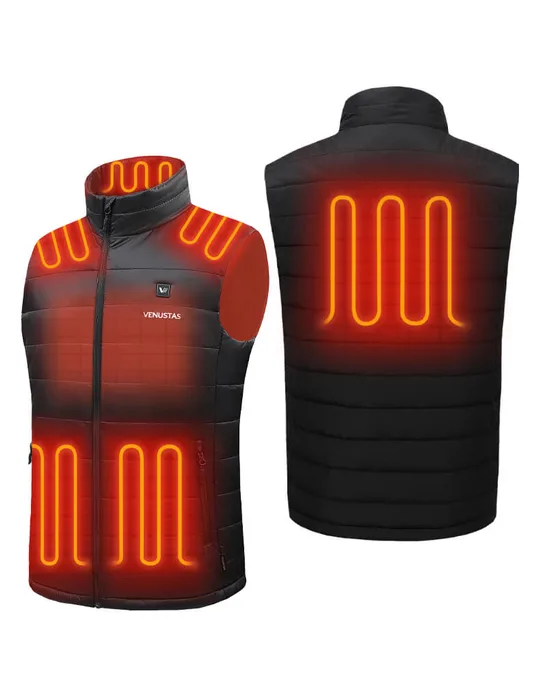
- Buy Venustas Men's Classic Heated Vest 7.4V Six heat zones, a 37Wh battery and a 3-year heating element warranty in a washable insulated vest.
- Buy Gobi Heat Dune Men's Heated Vest A light, wind and water resistant nylon vest with conductive thread heating and three heat settings.
- It depends Gerbing Torrid Softshell Heated Vest 2.0 A fleece-backed softshell with a neck zone and a lifetime warranty, and an honest but short runtime chart.
- Skip Mobile Warming Peak BT Heated Vest A Bluetooth-controlled vest whose small included battery does not match its 9-hour claim.
What actually matters
- Heat zones - count them and check where they are. Collar and pocket zones add a lot of perceived warmth.
- Battery energy - watt hours tell you how much heat is stored. It is the fairest way to compare vests.
- Runtime by setting - a full table beats a single number. Expect high to last a fraction of low.
- Maximum temperature - the top setting matters in deep cold. Many brands publish around 135°F.
- Shell and insulation - an insulated shell keeps heat in. A thin shell is better as a mid-layer.
- Washing - check that the vest is machine washable and how. Always remove the battery first.
- Warranty - look for separate terms on heating elements and batteries. Longer element coverage is a good sign.
The specs, in plain English
Green flags vs red flags
Green flags
- A runtime table for every heat setting.
- Battery voltage and capacity, or watt hours, stated.
- Zone locations listed or shown.
- Clear machine washing instructions.
- Separate, published warranty terms for elements and battery.
Red flags
- A long runtime claim with a small battery and no setting named.
- A battery sold separately without saying so up front.
- No maximum temperature or number of settings.
- No washing instructions.
- A warranty that is not stated on the product page.
Who's who: the brands
- Venustas - A heated apparel brand with vests and jackets in 7.4V and 12V systems and long heating element warranties.
- Gobi Heat - Known for heated gloves and vests that use conductive thread heating.
- Gerbing - A long-running heated gear brand with roots in motorcycle clothing and a lifetime warranty.
- Mobile Warming - A heated apparel brand, sold through Fieldsheer, known for Bluetooth-controlled garments.
How to read a listing without getting fooled
Start with the battery: find its voltage and capacity, and multiply them to get watt hours. Then look for a runtime table by heat setting, or at least which setting the headline runtime applies to. Next check the number and location of heat zones, the maximum temperature and the shell fabric, then the washing instructions and size range. Finally, read the warranty for both the heating elements and the battery, and check whether a spare or larger battery is included or sold separately.
How much should you spend?
Budget heated vests often run from a 5V USB power bank with two or three zones and short runtimes, and they suit occasional use. Mid-range vests use dedicated 7.4V batteries, more zones and washable insulated shells, which is the best value for most people. Premium vests add lighter heating technology, softshell or down construction and longer warranties, and they are worth it for daily winter wear.
Questions, answered
Is a heated vest warm enough on its own?
In cool weather, often yes, especially an insulated vest with a collar zone. In real cold, it works best as a mid-layer under a shell, which traps the heat. Gobi Heat, for example, describes the Dune as comfortable alone in mild cold and best under a jacket in colder temperatures.
Can I use any power bank with a heated vest?
Only if the vest is designed for it. 5V USB vests work with standard power banks, but 7V and 7.4V vests need the brand's own battery. Using the wrong battery can mean no heat or a safety risk.
Why does my heated vest feel cooler than expected?
The vest may be too loose, so the heat escapes before reaching you. Wear it closer to the body over a thin layer, and put a shell on top to hold the heat in. Cold also reduces battery output, so the same setting feels weaker on a very cold day.
How long do heated vest batteries last before they need replacing?
Lithium batteries lose capacity over hundreds of charge cycles, so after a few winters you will notice shorter runtimes. Store them partly charged in a cool place over the summer. Gerbing, for example, recommends keeping at least 25% charge when a 7V battery is not in use.
Or jump to the head-to-head: Venustas Men's Classic Heated Vest 7.4V vs Gobi Heat Dune Men's Heated Vest.