Outdoors & Fitness
The Best Heated Vests: 4 Compared (and One to Skip)
We compared four battery heated vests on heat zones, battery size, runtime by setting, maximum heat, washing, sizing and warranty.
The short version
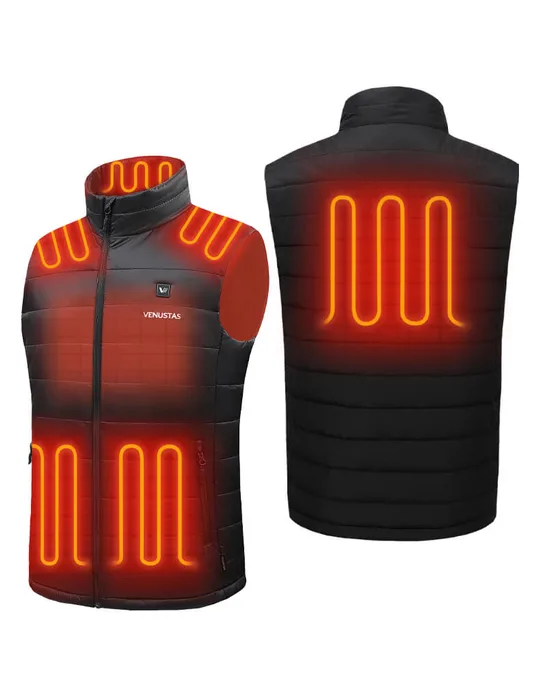
The Venustas Men's Classic Heated Vest 7.4V is the pick: six heating zones including the collar and both pockets, a 37Wh battery rated for up to 10 hours on low, a machine-washable shell, sizes up to 5XL with tall fits, and a 3-year warranty on the heating elements. The Gobi Heat Dune is the lighter active option, with conductive thread heating across the chest and back, a 5000mAh battery and charger in the box, up to 10 hours and a weight under 2 lbs with the battery. The Gerbing Torrid Softshell 2.0 suits people who want a fleece-backed softshell and a lifetime warranty, but Gerbing's own chart shows 2 hours on high. Skip the Mobile Warming Peak BT: it ships with the smallest battery here, 2250mAh at 7.4V, yet claims 9 hours or more without naming the setting, and the bigger battery costs extra. Best for: cold commutes, outdoor work, sideline weekends and cold offices.
Our picks at a glance
- Venustas Men's Classic Heated Vest 7.4V - Buy. Six heat zones, a 37Wh battery and a 3-year heating element warranty in a washable insulated vest.
- Gobi Heat Dune Men's Heated Vest - Buy. A light, wind and water resistant nylon vest with conductive thread heating and three heat settings.
- Gerbing Torrid Softshell Heated Vest 2.0 - It depends. A fleece-backed softshell with a neck zone and a lifetime warranty, and an honest but short runtime chart.
- Mobile Warming Peak BT Heated Vest - Skip. A Bluetooth-controlled vest whose small included battery does not match its 9-hour claim.
The verdict in 30 seconds
What mattered most
- Heat zones
- Battery
- Rated runtime
- Heat settings
- Maximum heat
- Shell
A heated vest puts battery-powered heating panels against your core, which keeps your whole body warmer than a heavier coat would. The spec sheets look similar, but battery size, how many zones there are and where they sit, and how honestly the runtime is stated vary a lot. Warranty terms matter too, because the heating elements and the battery wear out on different schedules. We compared four popular men's vests.
Six heat zones, a 37Wh battery and a 3-year heating element warranty in a washable insulated vest.
Best for: Most people who want the most heated coverage and the best warranty for the money.
- Six heating zones: collar, both shoulders, mid-back and both hand pockets.
- Standard 5000mAh 7.4V (37Wh) battery rated for up to 10 hours on low, with bigger batteries offered.
- 3-year limited warranty on the heating elements, 1 year on the battery, and free US return shipping.
- The 10-hour figure is for the low setting.
- The page lists the battery as 36Wh in one place and 37Wh in its table.
- No maximum temperature is published on the product page.
- A regular fit, so it is roomier than a slim active vest.
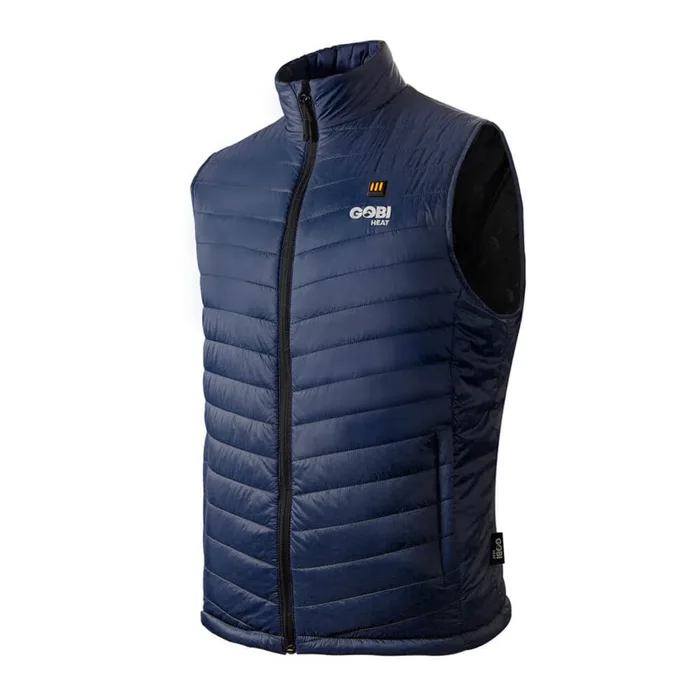
A light, wind and water resistant nylon vest with conductive thread heating and three heat settings.
Best for: Hikers, skiers and walkers who want a light heated mid-layer that moves with them.
- Three conductive thread heat zones across the chest and back, without stiff panels.
- Up to 10 hours from the included 5000mAh battery, with low, medium and high settings.
- Under 2 lbs including the battery, machine washable with the battery removed.
- Three zones, half the number on the Venustas.
- No runtime by setting and no maximum temperature are published.
- The most expensive vest here.
- Warranty is 1 year.
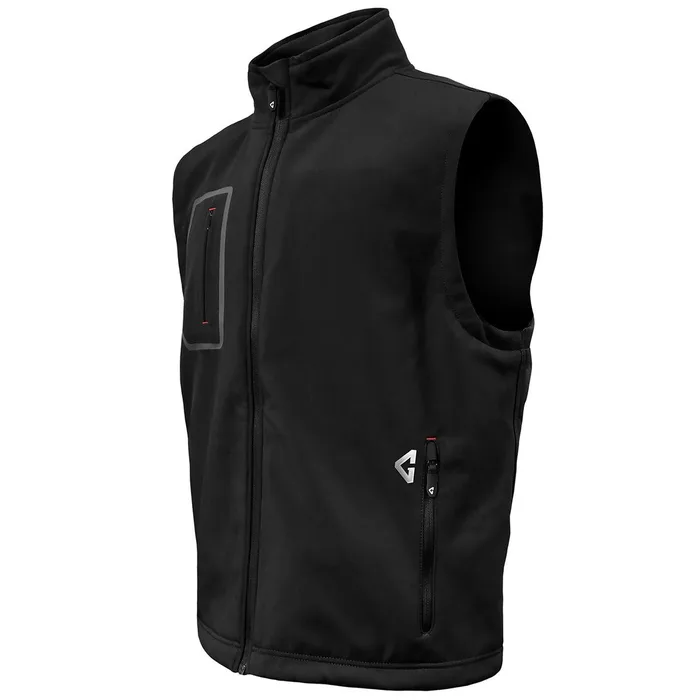
A fleece-backed softshell with a neck zone and a lifetime warranty, and an honest but short runtime chart.
Best for: People who want a softshell they can wear as outerwear and value a lifetime warranty over runtime.
- Four Microwire heating zones: two at the chest, one at the back and one at the neck, up to 135°F.
- Four-way stretch softshell bonded to fleece, with a DWR finish.
- Gerbing lifetime warranty, and a full charge takes about 3 hours.
- Gerbing's chart shows 2 hours on high, 5 hours at 50% and 8 hours on the lowest setting.
- The 7V 3400mAh (25.16Wh) battery is smaller than the Venustas battery.
- Heat is set with the button on the battery, which sits inside a pocket.
- Sizes stop at XXL.
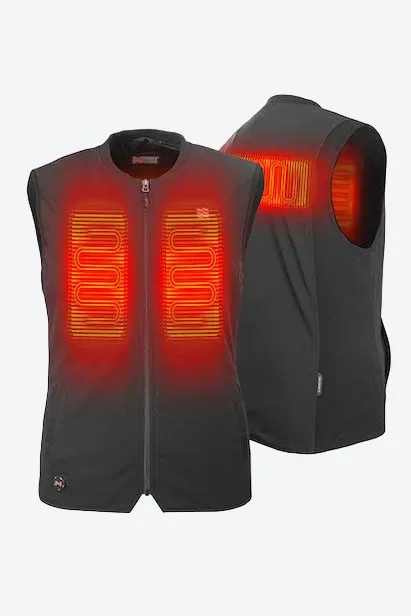
A Bluetooth-controlled vest whose small included battery does not match its 9-hour claim.
Best for: Gadget fans who want app control and will buy the larger battery anyway.
- Bluetooth control from a phone or smartwatch through the MW Connect app.
- Four heat settings from 90 to 135°, and USB-C charging.
- Moisture-wicking liner, stretch side panels and zippered hand warmer pockets.
- The included battery is 2250mAh at 7.4V, about 16.7Wh, the smallest here.
- It claims up to 9 hours or more without saying which heat setting that applies to.
- The 4000mAh battery is sold separately, and the page promotes it as an extra purchase.
- Three zones, a 4 to 5 hour charge and a 1-year warranty.
| Criteria | Men's Classic Heated Vest 7.4V Top pick | Dune Men's Heated Vest | Torrid Softshell Heated Vest 2.0 | Peak BT Heated Vest |
|---|---|---|---|---|
| Verdict | Buy it | Buy it | It depends | Skip it |
| Best for | Most people who want the most heated coverage and the best warranty for the money. | Hikers, skiers and walkers who want a light heated mid-layer that moves with them. | People who want a softshell they can wear as outerwear and value a lifetime warranty over runtime. | Gadget fans who want app control and will buy the larger battery anyway. |
| Price tier | $$ · mid-range | $$$ · premium | $$$ · premium | $$ · mid-range |
| Heat zones | 6 (collar, shoulders, mid-back, pockets) | 3 (chest and back) | 4 (chest x2, back, neck) | 3 (chest x2, back) |
| Battery | 5000mAh 7.4V (37Wh) | 5000mAh (included with charger) | 7V 3400mAh (25.16Wh) | 7.4V 2250mAh |
| Rated runtime | Up to 10 hours (low) | Up to 10 hours | 2 hours high, 8 hours low | Up to 9+ hours |
| Heat settings | Not published | 3 | 4 | 4 (90 to 135°) |
| Maximum heat | Not published | Not published | 135°F | 135° |
| Shell | Wind and water resistant, FELLEX insulation | Wind and water resistant nylon | Softshell bonded to fleece, DWR | 100% polyester |
| Sizes | S to 5XL, plus tall | S to 4XL | S to XXL | S to 3XL |
| Warranty | 3 years elements, 1 year battery | 1 year | Lifetime | 1 year |
Which one is right for you?
- Most people who want the most heated coverage and the best warranty for the money. Buy it Venustas Men's Classic Heated Vest 7.4V
- Hikers, skiers and walkers who want a light heated mid-layer that moves with them. Buy it Gobi Heat Dune Men's Heated Vest
- People who want a softshell they can wear as outerwear and value a lifetime warranty over runtime. It depends Gerbing Torrid Softshell Heated Vest 2.0
- Gadget fans who want app control and will buy the larger battery anyway. Skip it Mobile Warming Peak BT Heated Vest
How we judged the field
Five things decide whether a heated vest is worth it. Heat zones matter most: how many there are and where they sit, since a collar or pocket zone changes how warm you feel. Battery energy, in watt hours, sets how long it heats, and the runtime should be stated for a specific setting. The maximum temperature and number of settings decide whether it copes with deep cold. The shell decides whether you can wear it on its own. And the warranty matters, because heating elements and batteries fail on different schedules.
The field splits into insulated everyday vests, slim active layers and softshells meant to be worn as outerwear. We picked four popular men’s vests that cover those styles, and we held each one to its own spec sheet, especially on runtime claims.
The Venustas Men’s Classic Heated Vest 7.4V is the pick because it puts the most heat where you feel it and tells you the most about its battery. It has six heating zones: the collar, both shoulders, the mid-back and both hand pockets, which is double the coverage of the Gobi Heat or Mobile Warming vests. The standard battery is 5000mAh at 7.4V, or 37 watt hours, rated for up to 10 hours on the low setting, and Venustas publishes a table for its larger optional batteries. The shell is wind and water resistant with FELLEX insulation, and it is machine washable. Sizing runs from S to 5XL with tall fits, and Venustas gives a 3-year limited warranty on the heating elements and 1 year on the battery, with free US return shipping. The page lists the battery as 36Wh in one place and 37Wh in its table, and it does not state a maximum temperature. For most people, it is the heated vest to buy.
The Gobi Heat Dune is the heated vest for people who move. Instead of heating pads it uses conductive thread, which Gobi says avoids bulky wires and stiff panels, arranged in three zones across the chest and back. The vest comes with a 5000mAh battery and charger, and Gobi says it heats for up to 10 hours, with low, medium and high settings. The shell is abrasion-resistant, wind and water resistant nylon, and Gobi says the whole thing weighs under 2 lbs with the battery. It is machine washable once the battery is out, and it comes with 30-day returns and a 1-year warranty. The weaknesses are coverage and detail: three zones against the Venustas’s six, and no runtime by setting or maximum temperature published. It is also the most expensive vest here. For hiking, skiing and active days, it is the better layer.
The Gerbing Torrid Softshell Heated Vest 2.0 is the vest for people who want outerwear and a lifetime warranty. The shell is a four-way stretch softshell bonded to a fleece lining, with a DWR finish, so it works on its own on a cool day. Gerbing’s Microwire heating runs in four zones, two at the chest, one at the back and one at the neck, and reaches 135°F. It comes with a 7V 3400mAh battery, or 25.16 watt hours, a wall charger and Gerbing’s lifetime warranty. What makes it a depends is the runtime, and Gerbing deserves credit for publishing it clearly: 2 hours at 100%, 3 at 75%, 5 at 50% and 8 at 25%. That is the realistic picture for a battery this size. Heat is set with the button on the battery, which lives in a pocket, and sizes stop at XXL. If you mostly run it on medium for short outings, the warranty makes it worth considering.
The Mobile Warming Peak BT is a well-featured vest with a battery that undercuts it, which is why we skip it. You get Bluetooth control from a phone or smartwatch through the MW Connect app, four heat settings from 90 to 135°, USB-C charging, a moisture-wicking liner, stretch side panels and zippered hand warmer pockets. The problem is energy. The included battery is the Powersheer Mini, 2250mAh at 7.4V, which works out to about 16.7 watt hours, less than half the Venustas battery. The page still claims up to 9 hours or more without saying which setting that applies to, and it promotes a 4000mAh battery as a separate purchase. It has three zones, a 4 to 5 hour charge on a standard USB charger, and a 1-year warranty. By the time you add the bigger battery, the Venustas gives you more zones, a longer warranty and a larger battery in the box.
Venustas Men’s Classic Heated Vest 7.4V vs Gobi Heat Dune Men’s Heated Vest: which should you buy?
The Venustas Classic and the Gobi Heat Dune suit different days. The Venustas is the warmer, better-covered vest: six zones including the collar and pockets, a 37Wh battery with a published low-setting runtime, FELLEX insulation and a 3-year warranty on the heating elements. The Dune is lighter and sleeker, with conductive thread heating in three zones, three heat settings and a weight under 2 lbs with the battery in.
Choose the Venustas if you stand around in the cold, commute, work outside or want warm hands in the pockets, and if the longer warranty matters to you. Choose the Dune if you hike, ski or walk fast, where a slim layer that moves well matters more than extra zones. Either way, run it on low or medium and keep high for short bursts.
What to look for
- Watt hours: Multiply battery voltage by amp hours to compare capacity; 37Wh and 16.7Wh are very different even when both claim a long runtime.
- Runtime by setting: The best spec sheets list hours for each level; a single “up to” number is the low setting.
- Zone placement: Collar and pocket zones make a vest feel much warmer than chest and back alone.
- Maximum temperature and settings: Look for the number of levels and a stated maximum, such as 135°F.
- Washability: Machine washable vests are easier to live with; always remove the battery first.
- Warranty terms: Heating elements and batteries are often covered separately, so read both terms.
Our final take
For most people, the Venustas Men’s Classic Heated Vest 7.4V is the one to buy. Six heat zones, a 37Wh battery rated for up to 10 hours on low, a washable insulated shell, sizes to 5XL and a 3-year warranty on the heating elements make it the most complete package here. If you want a lighter layer for active days, the Gobi Heat Dune is the better fit. The Gerbing Torrid 2.0 is worth it for the softshell and lifetime warranty if you can live with its short high-heat runtime. Skip the Mobile Warming Peak BT: its small included battery does not support its 9-hour claim without an extra purchase.
Questions, answered
How long does a heated vest battery last?
Much less on high than the headline number suggests. Gerbing publishes the clearest chart: 2 hours on high, 3 at 75%, 5 at 50% and 8 on the lowest setting. Venustas says its 10 hours applies to low, while Gobi Heat and Mobile Warming give a single up-to figure. Plan on medium or low for a full day, and carry a spare battery if you need high heat.
Can you wash a heated vest?
Most can go in a washing machine once the battery is removed and the cable is tucked into its pocket. Venustas, Gobi Heat and Mobile Warming all describe their vests as machine washable, and Mobile Warming specifies a cold, gentle cycle. Air dry unless the label says otherwise, since high dryer heat can damage the heating elements. Never wash the battery.
What do the volts on a heated vest mean?
The number is the battery system voltage, and most heated vests use 7.4V or 7V packs, while cheaper USB vests run at 5V from a power bank. Higher voltage lets the same current deliver more heat. What matters for runtime is total energy, which you get by multiplying voltage by amp hours: the Venustas pack is 37 watt hours, the Gerbing 25.16, and the Mobile Warming Peak BT about 16.7. Compare watt hours, not mAh alone.
Can I take a heated vest on a plane?
The vest itself is fine, but the lithium battery must travel in carry-on luggage, not in a checked bag. The FAA allows lithium-ion batteries up to 100 watt hours in carry-on bags without airline approval, and all the standard batteries here are well under that. Some larger optional batteries approach higher capacities, so check the watt hours on the label. Disconnect the battery before you fly.
Should a heated vest fit tight or loose?
Close to the body, because the heat has to reach you through as little air as possible. A vest that hangs away from your chest feels much cooler at the same setting. Wear it over a thin base layer and under a shell for the best effect. Check the brand's size chart, since fits range from regular to slim.
Deciding between the top two? See our head-to-head: Venustas Men's Classic Heated Vest 7.4V vs Gobi Heat Dune Men's Heated Vest.