Explained
Harmonicas, Explained
After reading, you will understand what a harmonica's comb, reeds and tuning do and how to read a maker's spec page.
In this guide
Buying a first harmonica is confusing because every model looks alike and the key matters more than most beginners expect. The words on the listing, such as Richter, Country and recessed plates, are rarely explained. Some makers publish comb and reed materials and some do not. This guide covers the terms you will meet and what to check.
The 30-second version
- The key matters, so start with C unless your songbook says otherwise.
- Plastic combs are simpler, because they do not swell with moisture the way wood can.
- Reed material is a durability choice, with brass and phosphor bronze common and stainless steel sold for long life.
- Tuning names differ, so check whether it is standard Richter, country, minor or another layout.
- Spec sheets vary, and a maker that lists materials and size lets you compare before you buy.
The products this guide is about
Our verdict on each, with the full reasoning on the companion review.
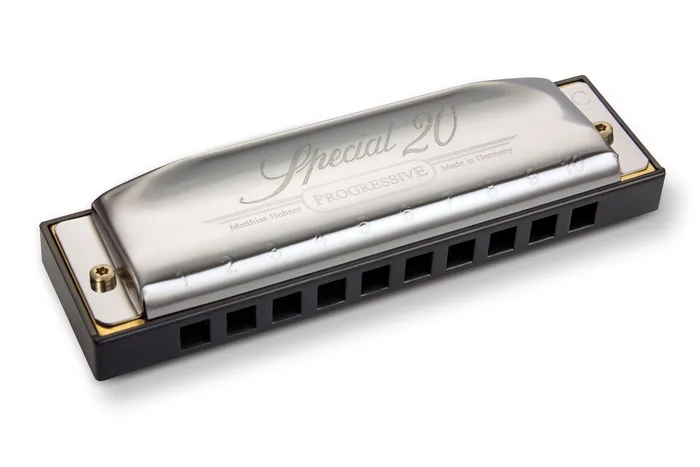
- Buy Hohner Special 20 The reference beginner harmonica, with recessed reed plates and a plastic comb that ignores humidity. Amazon
- Buy Easttop T008K 2.0 A budget 10-hole in 12 major keys that ships with a zipper case, instructions and a cloth. Amazon
- Buy Seydel Session Steel A stainless steel harmonica built to resist corrosion and keep its tuning. Amazon
- It depends Suzuki MANJI M-20 A Japan-made blues harp with a wood-fibre body, open-back covers and 18 major keys. Amazon
- It depends Lee Oskar Major Diatonic A long-running Major Diatonic line in 18 keys, built by Tombo and designed around swappable parts. Amazon
- Skip Fender Blues Deluxe A branded 10-hole with the thinnest spec sheet in this group and a no-returns policy. Amazon
What actually matters
- Key - A harmonica is built in one key, so a C harmonica plays songs in C and related keys. Check the key before you order.
- Comb - The body that separates the air channels. Plastic and ABS are common, and wood can swell with moisture.
- Reed plates - Metal plates that hold the reeds. Makers list material and thickness on some models.
- Reeds - The vibrating strips that make the notes. Brass, phosphor bronze and stainless steel appear on the pages we read.
- Tuning - The note layout across the holes. Richter is the standard, with other layouts for minor and country music.
- Cover plates - The metal shells over the reed plates. They affect volume and how the harmonica feels in the hands.
- Included case - Some come in a plastic case, and some list a cloth or instructions.
The specs, in plain English
Green flags vs red flags
Green flags
- The page names comb, reed plate and reed material.
- Key and tuning are stated clearly.
- Dimensions and weight are listed.
- A clear return or guarantee policy is stated.
- Replacement parts are available from the maker.
Red flags
- No material is named for the reeds or the comb.
- The page does not say who makes it.
- Several near-identical listings share one name.
- Returns are not accepted.
- The key is unclear or labelled in an unfamiliar way.
Who's who: the brands
- Hohner - German maker known for the Special 20 and Marine Band lines.
- Seydel - German maker known for stainless steel harmonicas such as the Session Steel.
- Suzuki - Japanese maker whose MANJI line is aimed at blues and rock players.
- Lee Oskar - A brand built with Tombo Manufacturing of Japan, known for interchangeable parts.
- Easttop - A budget maker selling 10-hole diatonics in many keys.
How to read a listing without getting fooled
Start with the key and the tuning, then look for the comb and reed materials. If the listing gives reed plate thickness and dimensions, you can compare it against other models. If it gives only a key list and marketing words, you know less about what you are buying. Check what is in the box, whether the page names the maker, and what the return terms are.
How much should you spend?
Harmonicas sit in three tiers. The budget tier gets you a working 10-hole with a plastic comb and a case. The mid-range tier adds a documented build and the major brands. The premium tier adds stainless steel or detailed craftsmanship. Because a harmonica is a single-key instrument, plan to buy a second one in another key before you spend more on the first.
Questions, answered
What is a 10-hole harmonica?
It has ten holes along the mouthpiece, and each hole gives a blow note and a draw note. That is where the 20 tones listed on many pages come from. The ten-hole diatonic is the standard for blues, folk and rock. It is different from chromatic and tremolo harmonicas.
Why are there so many keys?
A diatonic harmonica plays one key well. To play in other keys you need another harmonica. Players tend to buy C first and add G and A. Makers like Suzuki and Lee Oskar offer 18 major keys, including low ones.
How do I clean a harmonica?
Follow the maker's instructions, since materials differ. A wiping cloth is included in some boxes, such as the Easttop and Fender listings. Do not use water on a wood comb. If you are unsure, ask the maker.
Can I use any brand with the same lessons?
Mostly yes if the tuning matches. Lee Oskar notes that several manufacturers use the same note layout as its Major Diatonic, and Hohner and Seydel list Richter tuning. A beginner lesson usually assumes a C harmonica in standard layout.
Or jump to the head-to-head: Hohner Special 20 vs Easttop T008K 2.0.