

Audio & Headphones
Harmonicas: Which to Buy and Which to Skip
We compared six 10-hole diatonic harmonicas from six makers on comb and reed construction, key range and what each maker actually publishes.
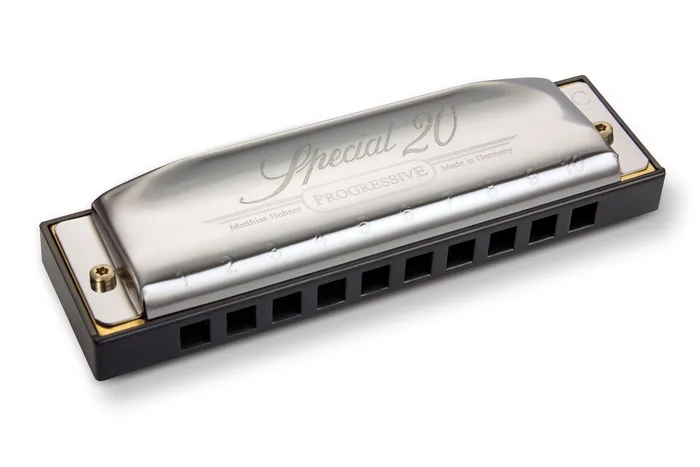
The short version
The Hohner Special 20 is the best overall pick: a plastic comb, brass reed plates and a spec sheet that tells you what you are buying. The Easttop T008K 2.0 is the value pick, with a plastic comb, phosphor bronze reeds and a 30-day money-back guarantee. The Seydel Session Steel is the long-life choice, with stainless steel reeds and covers, for someone who knows they will keep playing. The Suzuki MANJI M-20 suits a blues player who wants a wide key range and chord-friendly tuning, and the Lee Oskar Major Diatonic suits players who like replaceable parts. The Fender Blues Deluxe is the one to skip, mainly because its page publishes less than the others and says harmonicas are non-returnable. Best for: a first harmonica that will still be in your pocket in a year, the Hohner Special 20.
Our picks at a glance
- Hohner Special 20 - Buy. The reference beginner harmonica, with recessed reed plates and a plastic comb that ignores humidity.
- Easttop T008K 2.0 - Buy. A budget 10-hole in 12 major keys that ships with a zipper case, instructions and a cloth.
- Seydel Session Steel - Buy. A stainless steel harmonica built to resist corrosion and keep its tuning.
- Suzuki MANJI M-20 - It depends. A Japan-made blues harp with a wood-fibre body, open-back covers and 18 major keys.
- Lee Oskar Major Diatonic - It depends. A long-running Major Diatonic line in 18 keys, built by Tombo and designed around swappable parts.
- Fender Blues Deluxe - Skip. A branded 10-hole with the thinnest spec sheet in this group and a no-returns policy.
The verdict in 30 seconds
What mattered most
- Comb
- Reed plates
- Reeds
- Cover plates
- Keys offered
- Tuning named
A diatonic harmonica is one of the cheapest real instruments you can start on, but the spec sheets are very uneven. Some makers list comb material, reed plate thickness and size. Others give a key list and a photo. We compared six 10-hole diatonic models from Hohner, Easttop, Seydel, Suzuki, Lee Oskar and Fender using each maker's own page, and left out anything a maker does not state. If you also play strings, see our reviews of ukuleles and acoustic guitars.
The reference beginner harmonica, with recessed reed plates and a plastic comb that ignores humidity.
Best for: Almost any new player who wants one dependable, well-documented harmonica.
- Hohner says it was the first diatonic with reed plates recessed into the comb, which gives a smooth plastic mouthpiece.
- The comb is ABS and the reed plates are brass at 0.9 mm, so the maker lists a plain, durable build.
- It comes in 12 keys plus high G, with a Country tuning option in 12 of them, so one model covers most songbooks.
- Reeds are brass, not stainless, so they are not a long-life choice for players who sweat heavily.
- Hohner lists no weight for it.
- It is the mid-range pick, not the cheapest way to find out whether you like the instrument.
Own the Hohner Special 20? Tell us how it held up.
Thanks. Counted, and shown once enough owners have weighed in.
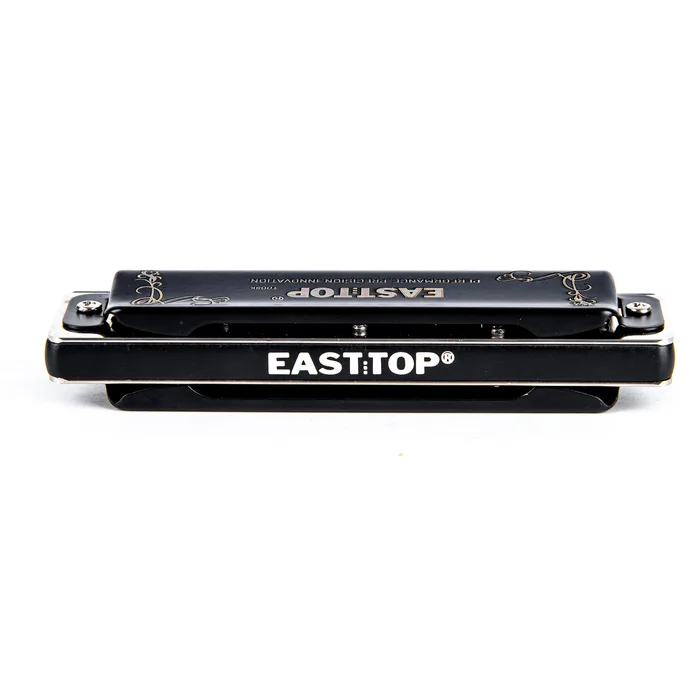
A budget 10-hole in 12 major keys that ships with a zipper case, instructions and a cloth.
Best for: A first harmonica for someone who wants to try the instrument at the lowest outlay.
- The listing states a plastic comb, phosphor bronze reeds and a 1.2 mm electroplated reed plate.
- The box contents are named: harmonica in C, zipper case, basic instructions and a wiping cloth.
- The maker lists 12 major keys and a 30-day money-back guarantee.
- The maker page does not name the cover plate material or the tuning layout.
- The store lists several overlapping T008K variants, so check you are buying the 2.0 listing you intend.
- The product text is marketing copy with few engineering details beyond materials and size.
Own the Easttop T008K 2.0? Tell us how it held up.
Thanks. Counted, and shown once enough owners have weighed in.
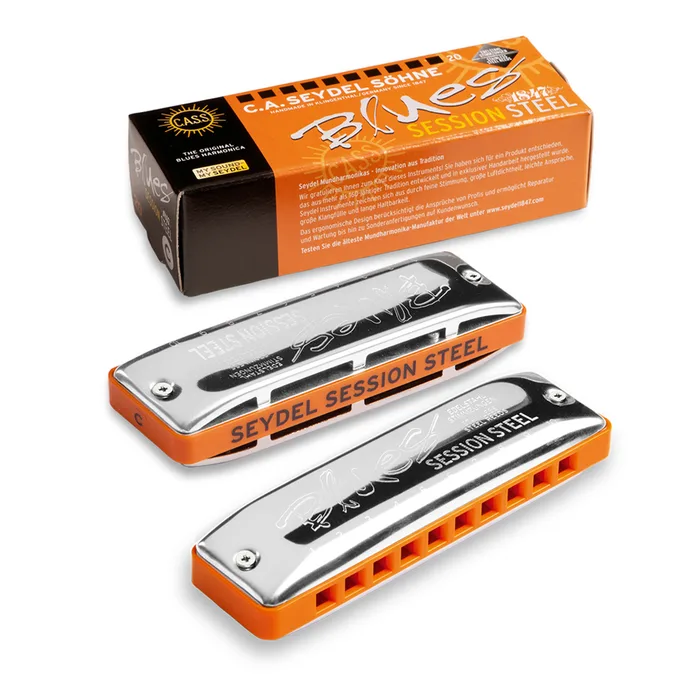
A stainless steel harmonica built to resist corrosion and keep its tuning.
Best for: A player who has settled on diatonic and wants a long-lived main harmonica.
- Seydel lists stainless steel reeds, cover plates, screws and rivets, with German silver reed plates.
- An ABS comb with recessed reed plates and a plastic lip is described as gentle on lips and beards.
- Seydel describes the reeds as tuning stable and long-lasting.
- It sits at the premium tier for a plain 10-hole harmonica.
- The page shows the C layout but does not list weight, dimensions or what is in the box.
- Stainless reeds are marketed for durability, not for a different bending feel, so a beginner pays for longevity first.
Own the Seydel Session Steel? Tell us how it held up.
Thanks. Counted, and shown once enough owners have weighed in.
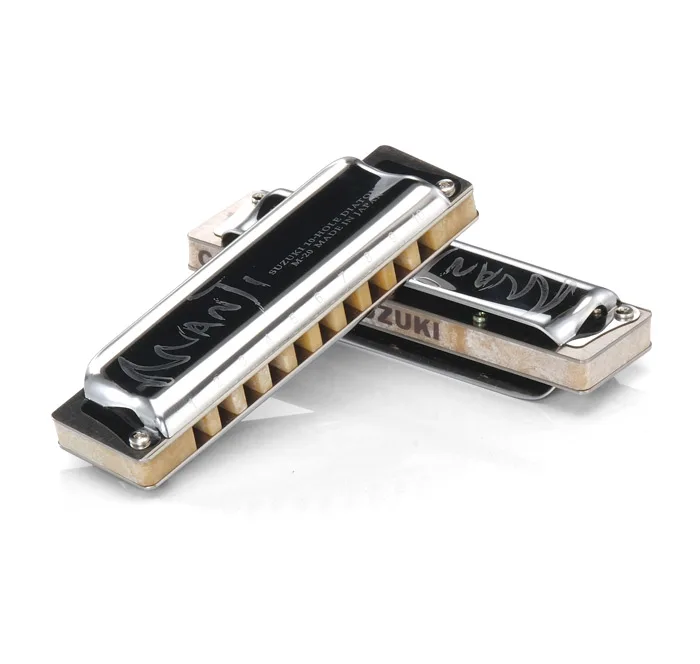
A Japan-made blues harp with a wood-fibre body, open-back covers and 18 major keys.
Best for: A blues or rock player who plays chords and wants a wide range of keys and tunings.
- The maker lists a solid body containing natural wood fibre, stainless steel covers and 65 g weight.
- Eighteen major keys including low keys, and minor, natural minor, country and 7th tunings in seven keys.
- Reed plates are screwed on, and replacement plates are sold for the M-20 line.
- The product page is in Japanese, which makes checking details harder for English readers.
- The maker says it is tuned to favour chord sound, so melody and pop players are pointed to its sister model, the Olive.
- It sits at the premium tier.
Own the Suzuki MANJI M-20? Tell us how it held up.
Thanks. Counted, and shown once enough owners have weighed in.
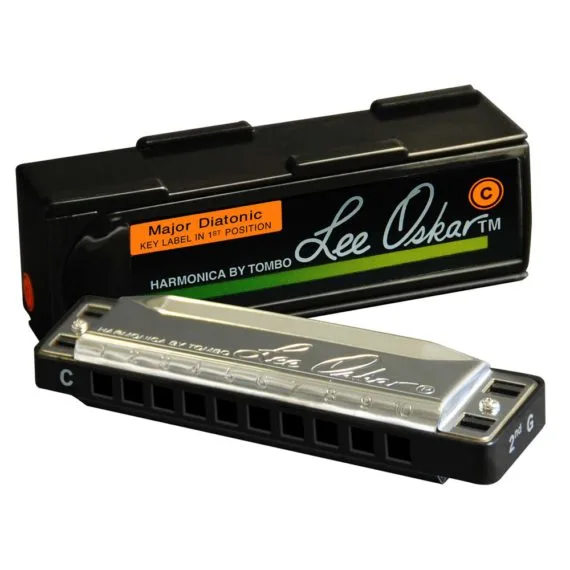
A long-running Major Diatonic line in 18 keys, built by Tombo and designed around swappable parts.
Best for: A player who wants a classic Major Diatonic and plans to swap or replace parts over time.
- The page lists model 1910 in 18 keys from low C to high G.
- The brand says it pioneered interchangeable reed plates, combs and cover plates.
- The box in the product photo reads Harmonica by Tombo, and the brand's own pages credit Tombo Manufacturing of Japan.
- The Major Diatonic page does not list comb or reed material, hole count, weight or dimensions.
- The key is labelled in first position, which can confuse beginners who expect the key letter of the music.
- It is one brand family with Tombo, so it is not an independent maker from the instrument's builder.
Own the Lee Oskar Major Diatonic? Tell us how it held up.
Thanks. Counted, and shown once enough owners have weighed in.
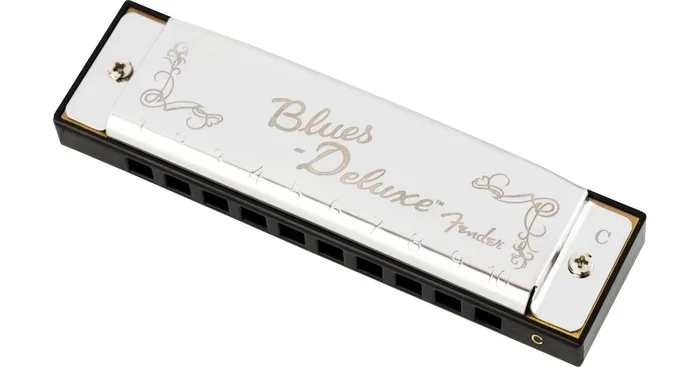
A branded 10-hole with the thinnest spec sheet in this group and a no-returns policy.
Best for: Someone who wants a Fender-branded gift and accepts a thin spec sheet.
- The page lists chromed metal covers, ABS plastic combs and a vented plastic case.
- It is offered in C, G, A, D, F, E and Bb plus a seven-key sampler.
- Fender lists a 1-year limited warranty.
- Fender's page does not name reed material, reed plate thickness, tuning layout, dimensions or weight.
- The page does not say who makes it.
- The page states that harmonicas are non-returnable items, so a dud is a warranty claim, not a return.
- Several rivals here publish more about their builds.
Own the Fender Blues Deluxe? Tell us how it held up.
Thanks. Counted, and shown once enough owners have weighed in.
| Criteria | Hohner Special 20 Top pick Buy it Buy | Easttop T008K 2.0 Buy it Buy | Seydel Session Steel Buy it Buy | Suzuki MANJI M-20 It depends Buy | Lee Oskar Major Diatonic It depends Buy | Fender Blues Deluxe Skip it Buy |
|---|---|---|---|---|---|---|
| Best for | Almost any new player who wants one dependable, well-documented harmonica. | A first harmonica for someone who wants to try the instrument at the lowest outlay. | A player who has settled on diatonic and wants a long-lived main harmonica. | A blues or rock player who plays chords and wants a wide range of keys and tunings. | A player who wants a classic Major Diatonic and plans to swap or replace parts over time. | Someone who wants a Fender-branded gift and accepts a thin spec sheet. |
| Price tier | $$ · mid-range | $ · budget | $$$ · premium | $$$ · premium | $$ · mid-range | $ · budget |
| Comb | ABS, black | Plastic | ABS with recessed reed plates | Solid body with natural wood fibre | Not published on the page | ABS, moisture-resistant |
| Reed plates | Brass, 0.9 mm | 1.2 mm, electroplated | German silver | Screwed on, replaceable | Interchangeable system, material not published | Not published |
| Reeds | 20 brass | Phosphor bronze | Stainless steel | Not published | Not published | Not published |
| Cover plates | Stainless steel | Not published | Stainless steel | Stainless steel, open back | Not published | Chromed metal |
| Keys offered | 12 keys plus high G | 12 major keys | C shown on page | 18 major keys plus other scales | 18 keys, low C to high G | C, G, A, D, F, E, Bb plus sampler |
| Tuning named | Richter, Country in 12 keys | Major | Richter | Major, tuned for chords | Major Diatonic | Diatonic, layout not stated |
| Size and weight | 10.2 cm long, no weight | 102 x 27 x 19 mm | Not published | 100 x 27 x 18 mm, 65 g | Not published | Not published |
| In the box | Plastic Snapcase | Zipper case, instructions, cloth | Not published | ABS case | Retail box, contents not listed | Vented case, blister card, cloth |
Which one is right for you?
- Almost any new player who wants one dependable, well-documented harmonica. Buy it Hohner Special 20
- A first harmonica for someone who wants to try the instrument at the lowest outlay. Buy it Easttop T008K 2.0
- A player who has settled on diatonic and wants a long-lived main harmonica. Buy it Seydel Session Steel
- A blues or rock player who plays chords and wants a wide range of keys and tunings. It depends Suzuki MANJI M-20
- A player who wants a classic Major Diatonic and plans to swap or replace parts over time. It depends Lee Oskar Major Diatonic
- Someone who wants a Fender-branded gift and accepts a thin spec sheet. Skip it Fender Blues Deluxe
How we judged the field
Five things matter on a diatonic harmonica. The comb and reed plate materials decide durability and feel on the lips. The reeds decide tuning stability and how long the instrument lasts. The key range and tuning decide whether it fits your songs. The size and what is in the box decide whether you can carry it and start immediately. Finally, whether the maker publishes these details at all tells you how much you can check before buying.
The field splits into plastic-comb workhorses (Hohner, Easttop), a stainless steel specialist (Seydel), two blues-focused lines with wide key ranges and replaceable parts (Suzuki, Lee Oskar), and a branded entry model with a thin spec sheet (Fender). We took one model from each of six makers, treated Lee Oskar and Tombo as one family, and used only each maker’s own page. All six are 10-hole diatonics where the page says so, and wood-comb models like the Marine Band 1896 are left to a separate buyer.
Hohner Special 20
Buy itThe Special 20 is the one most guides reach for first, and Hohner’s own page explains why. It says this was the first diatonic harmonica with reed plates recessed into the comb, so the plastic comb forms the mouthpiece. The ABS comb is black, the reed plates are brass at 0.9 mm, the 20 reeds are brass and the cover plates are stainless steel with a small back opening. Torx screws hold it together, and it ships in a plastic Snapcase. It is a 10-hole instrument in Richter tuning, offered in 12 keys plus high G, and Country tuning is offered in 12 of those keys. The length is listed at 10.2 cm. Hohner does not publish a weight. Brass reeds are the normal choice here, though they are not the long-life option that stainless reeds are meant to be. For most first-time buyers this is the safest place to start. It is for the new player who wants one reliable, well-documented harmonica and does not want to think about it again.
Easttop T008K 2.0
Buy itThe T008K 2.0 is the budget entry. Easttop’s listing says plastic comb, phosphor bronze reeds and a 1.2 mm reed plate that has been electroplated, and it describes an enlarged mouthpiece opening over the 1.0 version. The size is given as 102 x 27 x 19 mm. Twelve major keys are offered, and the box holds a harmonica in C, a zipper case, basic instructions and a wiping cloth. The store backs it with a 30-day money-back guarantee, which lowers the risk of trying it. The weak points are on the page too. The text does not name the cover plate material or say which tuning layout it uses beyond calling it major, and the store carries several overlapping T008K listings. It reads as marketing copy more than a spec sheet, and the maker states it is the manufacturer. This is for the person who is not sure harmonica will stick, wants a working instrument at the lowest outlay, and is willing to check the listing before ordering.
Seydel Session Steel
Buy itThe Session Steel is built around one idea: stainless steel throughout. Seydel lists stainless steel reeds, cover plates, screws and rivets, with German silver reed plates, and says the result is corrosion-free. The comb is ABS with recessed reed plates and a surrounding plastic lip, which the maker says is gentle on lips and beards. The page calls it the most popular harmonica for beginners, which is the maker’s claim, and describes the reeds as tuning stable and long-lasting, with a smooth, mellow tone from the cover design. The tone table shows the 10-hole Richter layout in C. Seydel does not list weight, dimensions or the box contents on that page. You are paying for durability and comfort rather than extra features. It is the right pick for a player who already knows they will keep playing, or a gift for someone who will, and it is overkill for a trial purchase at the premium tier.
Suzuki MANJI M-20
It dependsThe M-20 is Suzuki’s blues-oriented flagship, and the Japanese product page is detailed. The maker lists a 10-hole, 20-note instrument with stainless steel covers and a solid body that contains natural wood fibre, at 100 x 27 x 18 mm and 65 g, with an ABS case. The covers are open at the back and have large side sound holes. Eighteen major keys are offered, including low keys, and in seven keys you can also get minor, natural minor, country and 7th tunings. The reed plates are screwed on and replacement plates are sold for the M-20. Suzuki says the tuning favours chord sound, and points melody and pop players to its Olive sister model. The Sky is a lighter-playing variant. It is the right choice for a blues or rock player who plays chords, wants an unusual key such as a low one, and does not mind reading a Japanese spec page. It is less obvious for a first purchase.
Lee Oskar Major Diatonic
It dependsLee Oskar’s Major Diatonic is the traditional blues tuning in a long-standing line. The product page lists model 1910 labelled in first position, in 18 keys from low C to high G, and says that other manufacturers use the same note layout. The brand says it was founded in 1983 with Tombo Manufacturing of Japan and pioneered interchangeable reed plates, combs and cover plates, and the box in the product photo reads Harmonica by Tombo. That makes Lee Oskar and Tombo one family, which is why only one of them is counted here. The Major Diatonic page lists no comb or reed material, hole count, weight or dimensions, so we leave those out. The key label is in first position, so a C harmonica is labelled for the first-position key shown in orange. It is for a player who likes the idea of replaceable parts, wants a classic layout and is happy to rely on the brand’s wider reputation instead of a spec table.
Fender Blues Deluxe
Skip itThe Blues Deluxe is Fender’s harmonica, and the maker page is short. It lists a 10-hole diatonic with chromed metal covers, ABS plastic combs described as moisture-resistant, a vented plastic case, a blister card package and a cleaning cloth. Keys are C, G, A, D, F, E and Bb, plus a seven-key sampler. Fender gives a 1-year limited warranty and states that harmonicas are non-returnable items. What it leaves out matters: no reed material, no reed plate thickness, no tuning layout, no dimensions or weight, and no maker named. Next to the Special 20 or the Easttop, both of which publish materials and sizes, there is little here that justifies choosing it. The no-returns policy also means a harmonica with a dud reed becomes a warranty claim. It is for someone who specifically wants a Fender-branded gift. Everyone else gets more documentation from the other five.
Sources
Specs in this review come from these pages.
- Hohner, Special 20 product page (hohner.de)
- Seydel, SESSION Steel product page (seydel1847.de)
- Suzuki, MANJI M-20 product page (suzuki-music.co.jp)
- Lee Oskar Harmonicas, Major Diatonic page (leeoskarharmonicas.com)
- Easttop, T008K 2.0 product page (easttop-harmonica.com)
- Fender, Blues Deluxe Harmonicas product page (fender.com)
Hohner Special 20 vs Easttop T008K 2.0: which should you buy?
The Special 20 and the T008K 2.0 are both plastic-comb harmonicas, and both name their materials. Hohner lists brass reed plates at 0.9 mm and brass reeds, with stainless covers. Easttop lists phosphor bronze reeds and a 1.2 mm electroplated plate. Hohner offers 12 keys plus high G and a Country tuning; Easttop offers 12 major keys, a zipper case and a money-back guarantee.
Choose the Special 20 if you want a documented, widely used model you can compare against lessons and songbooks. Choose the Easttop if the lowest outlay and a return window matter more than the brand. If you are unsure, buy the Easttop first and move to a Hohner or Seydel once you know you will keep playing.
Who should buy which
- Most first-time players: the Hohner Special 20. A plain, well-documented plastic comb harmonica in 12 keys.
- Trying it at the lowest outlay: the Easttop T008K 2.0. The listing names materials and includes a 30-day money-back guarantee.
- Plays often and wants durability: the Seydel Session Steel. Seydel lists stainless steel reeds, covers and screws.
- Blues or rock chord player: the Suzuki MANJI M-20. Eighteen major keys plus minor and country tunings, tuned for chord sound.
- Likes swapping parts: the Lee Oskar Major Diatonic. The brand built its line around interchangeable plates, combs and covers.
What to look for
- Comb material: plastic or ABS combs resist moisture, while wood combs can swell, so a first harmonica is simpler with plastic.
- Reed material: brass and phosphor bronze are common, and stainless steel is sold for durability.
- Key: C is the usual first key, and you can add G or A later.
- Tuning: Richter is the standard diatonic layout, and some makers sell country, minor or other tunings.
- Published specs: if a maker will not say what the reeds and comb are made of, treat that as information.
- Return terms: harmonicas are personal instruments, so check whether the retailer or maker accepts returns.
Our final take
For most people, buy the Hohner Special 20 in C. It names its materials, comes in 12 keys, and it is the model most lessons assume you have. If you want to risk the least, the Easttop T008K 2.0 works as a first harmonica and has a money-back window. If you already play and want something durable, the Seydel Session Steel is the stainless option. Pick the Suzuki MANJI or Lee Oskar if you play blues and want a wider key range or replaceable parts. Skip the Fender Blues Deluxe unless you specifically want the name, since its page says less than the others and it cannot be returned.
Questions, answered
Which key should I buy first?
Most beginner songbooks and lessons assume a harmonica in C, so C is the usual first key. Every model here is offered in C, and the Fender page lists it too. Once you know what you play, a second harmonica in G or A is the common next step. The key letter marks the harmonica's key, and some brands label it differently, so read the product page.
Do I need a wooden comb?
No. The two budget-tier models here use plastic or ABS combs, and Hohner lists its Special 20 as having a plastic comb for reliable performance in all climates. Wood combs can swell with moisture, which is why Hohner also sells its wooden-comb Marine Band 1896 with a lacquered pearwood comb. For a first harmonica, a plastic comb is the simpler choice.
Are Lee Oskar and Tombo different brands?
Lee Oskar's own pages say the brand was founded in 1983 in collaboration with Tombo Manufacturing of Japan, and the box in its product photo reads Harmonica by Tombo. We treat them as one family. Only one is counted in this comparison.
What does stainless steel change on a harmonica?
Seydel lists stainless steel reeds and cover plates on the Session Steel and says the result is corrosion-free, with reeds that stay tuned and last. That mainly matters for durability. Other makers here list brass or phosphor bronze reeds, which are normal. Stainless is a reason to buy if you play a lot, not a requirement for learning.
Is a harmonica a good gift?
Yes, as long as you check the key and the return terms. Fender says harmonicas are non-returnable items, so a wrong key cannot be swapped back. Easttop lists a 30-day money-back guarantee. Choosing a retailer with a clear return policy matters more than the harmonica for a gift.
Deciding between the top two? See our head-to-head: Hohner Special 20 vs Easttop T008K 2.0.
More in Audio & Headphones
Harmonicas, Explained Plain-English guide → Hohner Special 20 vs Easttop T008K 2.0 Head-to-head →  The Best Turntable Headshells: 4 Compared (and One to Skip)
 Which Karaoke Machine Should You Buy? 6 Compared
 Karaoke Microphones: Which to Buy and Which to Skip
 The Best Volume-Limited Kids' Headphones: 4 Compared (and One to Skip)