

Audio & Headphones
The Best Volume-Limited Kids' Headphones: 4 Compared (and One to Skip)
We compared four current kids' headphones on volume-limiting safety, durability, comfort, and wired-vs-wireless design to find the pairs worth trusting.
The short version
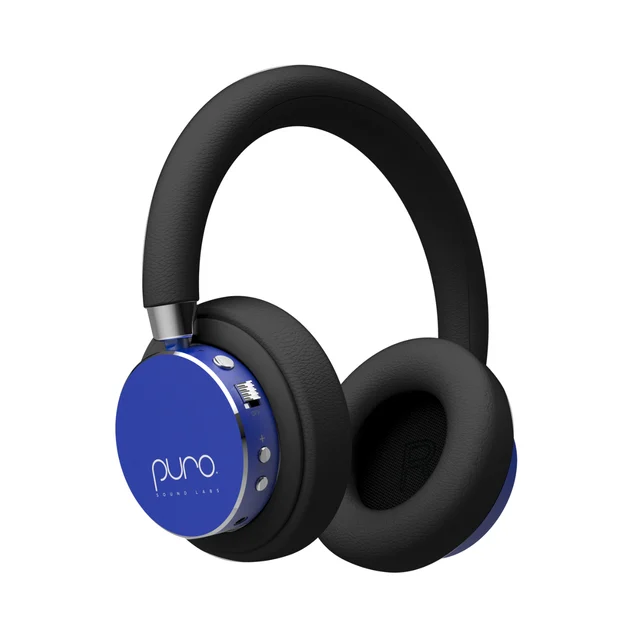
For volume-limited kids' headphones in 2026, the safest, best-made choice is the Puro Sound Labs BT2200-Plus, a sturdy pair that sounds good and limits accurately over its included cable, though it costs the most. The onanoff BuddyPhones Explore+ is the smart-value runner-up, with a hard 85dB cap that cannot be disabled and a rugged, kid-proof build, at the cost of being wired-only. The JLab JBuddies Studio 2 Wireless is a light, cheap wireless option, but its limiter can be switched to 95dB, independent testing found it does not always hold when wired, and owners report durability problems, so it depends on how you use it. Skip the Belkin SoundForm Mini: Belkin claims its 85dB limit only in Bluetooth mode, and independent testing measured more than that in both modes, which defeats the whole purpose. Match the pick to your budget and whether you need wireless. Best for: parents who want proven hearing protection first, with build quality and price sorting the rest.
Our picks at a glance
- Puro Sound Labs BT2200-Plus - Buy. The premium pick: a sturdy pair whose 85dB limiter is accurate over the included cable and that actually sounds good.
- onanoff BuddyPhones Explore+ - Buy. The value champion: a rugged wired pair with a hard 85dB cap that cannot be turned off or turned up.
- JLab JBuddies Studio 2 Wireless - It depends. Light, comfortable, and affordable wireless, but the volume limit only holds over Bluetooth and long-term durability is a question mark.
- Belkin SoundForm Mini - Skip. The safety claim is the whole point, and independent testing could not confirm the 85dB cap works in either mode.
The verdict in 30 seconds
What mattered most
- Volume-limiting reliability
- Connection
- Durability / build
- Comfort & fit
- Sound quality
- Battery life
Kids' headphones live or die on one promise: keeping the volume low enough to protect developing ears. The catch is that many models advertise an 85dB cap that independent testing struggles to confirm, especially over a wired connection. We synthesized independent lab measurements and owner reports across four popular 2026 models to separate the pairs that genuinely protect hearing from the ones that only claim to. Two earn a clear buy, one is a conditional pick, and one we cannot recommend on safety grounds.
The premium pick: a sturdy pair whose 85dB limiter is accurate over the included cable and that actually sounds good.
Best for: Parents who want the best build and sound quality and will use the supplied cable; check Puro's age guidance for younger children
- Reviewers rate its build as the sturdiest in this group
- Volume limiter measured close to the 85dB target when using the supplied analog cable
- Genuinely good, balanced sound that is rare in this category, plus strong passive noise isolation
- Works over Bluetooth or the supplied cable, so a flat battery does not end the listening
- Costs far more than any rival here
- Reviewers note the limiter can be bypassed if a third-party cable replaces the included one, and Bluetooth output has measured higher than 85dB on some test signals
- Fit can run loose on the youngest children
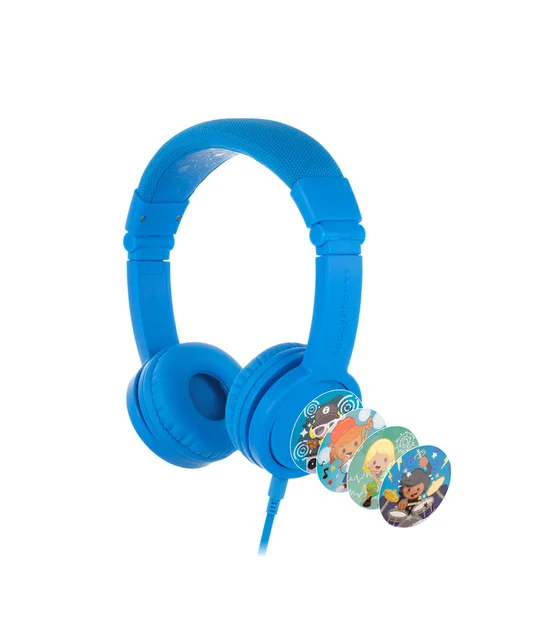
The value champion: a rugged wired pair with a hard 85dB cap that cannot be turned off or turned up.
Best for: Budget-focused parents of roughly ages 3-10 who want dependable, tamper-proof hearing protection for school and travel
- 85dB limit is fixed and cannot be lowered, raised, or disabled by the child
- Foldable, tough plastic build designed to survive being thrown in a backpack
- Built-in BuddyJack audio-sharing cable lets up to four sets daisy-chain to one device
- Simple wired connection with an in-line mic, and a low price
- Wired-only, so newer phones and tablets without a headphone jack need an adapter
- Sound quality is merely adequate and bass is modest
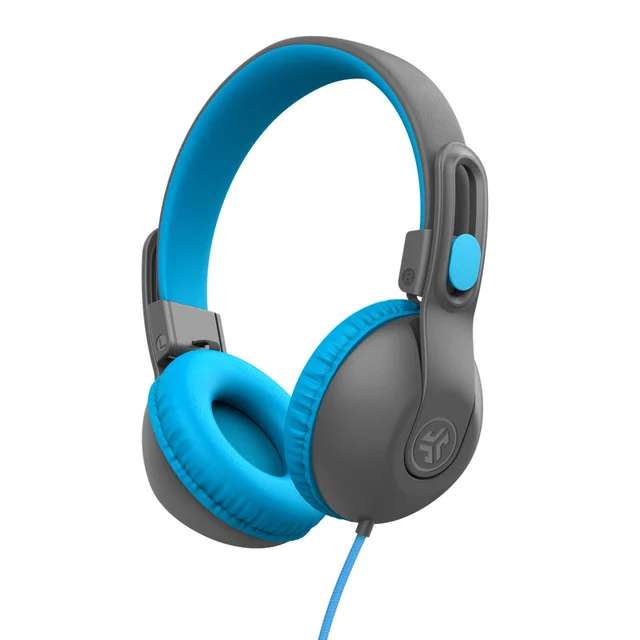
Light, comfortable, and affordable wireless, but the volume limit only holds over Bluetooth and long-term durability is a question mark.
Best for: Families who want cheap wireless and will keep kids on Bluetooth rather than the wired connection
- Very light and comfortable for long wear, with folding, adjustable earcups
- Wireless convenience at a modest price, plus wired playback over USB-C
- Decent noise isolation and clear voice for online classes
- A hearing protection switch lets the limit be set to 95dB as well as the 85dB default, so check which setting it is on
- Independent testing has found the limiter holds over Bluetooth but not always when wired, where output has gone well past 85dB
- Owner reports flag durability issues, including headband cracking
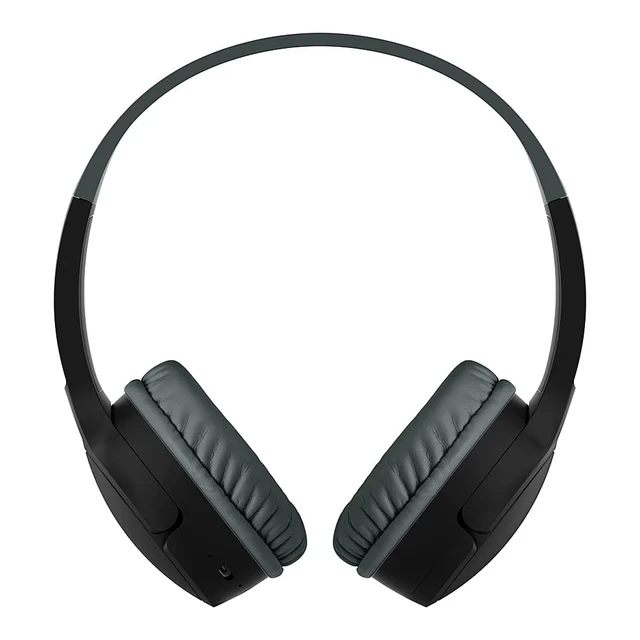
The safety claim is the whole point, and independent testing could not confirm the 85dB cap works in either mode.
Best for: Hard to recommend when hearing protection is the goal; consider it only if features other than the volume cap are what matter to you
- Comfortable, small-head fit with soft cushions
- Long battery life, rated at up to 30 hours, with both wireless and wired use
- Built-in mic and simple controls at a low price
- Belkin advertises the 85dB maximum for Bluetooth mode only, and independent testing measured output above 85dB over Bluetooth and higher still when wired
- That failure undermines the core reason to buy a volume-limited kids' headphone in the first place
| Criteria | Puro Sound Labs BT2200-Plus Top pick | onanoff BuddyPhones Explore+ | JLab JBuddies Studio 2 Wireless | Belkin SoundForm Mini |
|---|---|---|---|---|
| Verdict | Buy it | Buy it | It depends | Skip it |
| Best for | Parents who want the best build and sound quality and will use the supplied cable; check Puro's age guidance for younger children | Budget-focused parents of roughly ages 3-10 who want dependable, tamper-proof hearing protection for school and travel | Families who want cheap wireless and will keep kids on Bluetooth rather than the wired connection | Hard to recommend when hearing protection is the goal; consider it only if features other than the volume cap are what matter to you |
| Price tier | $$$ · premium | $ · budget | $$ · mid-range | $ · budget |
| Volume-limiting reliability | Accurate near 85dB with the included cable | Hard 85dB cap that cannot be disabled | Holds over Bluetooth only, not wired | Claimed for Bluetooth only; measured above 85dB in both modes |
| Connection | Wireless + wired cable | Wired only | Wireless + wired (USB-C) | Wireless + wired |
| Durability / build | Sturdiest build in this group | Rugged folding plastic, backpack-tough | Light plastic; headband cracking reported | Plastic; rated for many uses but see safety note |
| Comfort & fit | Over-ear, roomy; loose on the youngest | On-ear, sized for ages 3-10 | Light and comfortable for long wear | Soft cushions, good for small heads |
| Sound quality | Best in this group, balanced | Adequate, modest bass | Decent for the price | Basic |
| Battery life | Rechargeable, plus unlimited wired | Unlimited (wired, no battery) | Up to 70 hours rated | ~30 hours |
| Best age range | Check maker guidance | 3 to 10 (maker) | 6 and up (maker) | 3 and up (maker) |
| Price tier | $$$ · premium | $ · budget | $$ · mid-range | $ · budget |
Which one is right for you?
- Parents who want the best build and sound quality and will use the supplied cable; check Puro's age guidance for younger children Buy it Puro Sound Labs BT2200-Plus
- Budget-focused parents of roughly ages 3-10 who want dependable, tamper-proof hearing protection for school and travel Buy it onanoff BuddyPhones Explore+
- Families who want cheap wireless and will keep kids on Bluetooth rather than the wired connection It depends JLab JBuddies Studio 2 Wireless
- Hard to recommend when hearing protection is the goal; consider it only if features other than the volume cap are what matter to you Skip it Belkin SoundForm Mini
How we judged the field
We do not run our own lab. Instead, we synthesize independent testing, expert reviews, and aggregated owner reports, then weigh them against what actually matters for a child’s headphone. For this category, one criterion sits above the rest: does the volume limiter genuinely hold the output near 85dB, and does it do so on every connection the child might use? A cap that works over Bluetooth but not when wired is a real-world hazard, because kids plug into whatever is handy.
After safety, we looked at durability (metal versus plastic, and reported failure points), comfort and fit for small heads, sound quality, connection type, and price. We treated any gap between a manufacturer’s 85dB claim and what independent testing measured as a serious mark against the product, since hearing protection is the whole reason these exist.
Puro Sound Labs BT2200-Plus
Buy itThis is the pair to buy if budget allows. Reviewers consistently rate it the best-built and best-sounding kids’ headphone, with balanced audio and strong passive isolation that is unusual at any price for this age group. Independent testing found the limiter tracks close to 85dB when the supplied analog cable is used. The honest caveats: it is the most expensive option here by a wide margin, the limiter depends on that included cable rather than a third-party one, and the fit can run loose on very young children.
onanoff BuddyPhones Explore+
Buy itThe Explore+ wins on the metric that matters most. Its 85dB limit is a fixed hardware cap that a child cannot lower, raise, or switch off, and the folding plastic build is engineered to survive being tossed around. A built-in BuddyJack cable lets several sets share one device, which is handy for siblings or a classroom. It is wired-only, so a jackless phone or tablet needs an adapter, and the sound is best described as adequate rather than impressive. But for dependable, tamper-proof hearing protection at a budget price, nothing else here matches it.
JLab JBuddies Studio 2 Wireless
It dependsThe JBuddies Studio 2 is light, comfortable, and cheap for a wireless pair, with folding, adjustable earcups that suit long wear and online classes. The problem is conditional safety: JLab’s own hearing protection switch lets the limit be set to 95dB as well as the 85dB default, and independent testing found the limiter works over Bluetooth but does not always hold when the headphones are wired into a high-powered source, where output has gone well past 85dB. Owner reports also flag durability trouble, notably headband cracking. If you will keep your child on Bluetooth and accept the longevity risk, it is a reasonable value; if not, look elsewhere.
Belkin SoundForm Mini
Skip itThe SoundForm Mini is comfortable, has long battery life, and is inexpensive, and if it delivered on its headline feature it would be an easy recommendation. It does not. Belkin’s own page advertises the 85dB maximum for Bluetooth mode only, and independent testing measured output above 85dB over Bluetooth and higher still when wired. When the entire reason to buy a volume-limited headphone is the volume limit, an unverified cap is disqualifying, and that is why this pair earns a skip.
Puro BT2200-Plus vs onanoff Explore+: which should you buy?
These are the two we trust most, and they sit at opposite ends of the price scale. The Puro BT2200-Plus is the premium choice: the sturdiest build, the best sound in the group, wireless plus wired use, and a limiter that measures accurately with the included cable. You pay a lot for that, and its cap is tied to the supplied cable rather than a fixed hardware ceiling.
The onanoff Explore+ costs a fraction as much and gives you the more foolproof safety design: an 85dB cap on its wired connection that a child simply cannot defeat, wrapped in a build made to be abused. What you give up is wireless freedom and audio quality. Put simply, buy the Puro if you want the best product and will use its cable, and buy the onanoff if you want the most reliable protection per dollar and do not mind a wire.
What to look for
- A limiter that works on every connection. Confirm the 85dB cap holds both wireless and wired, not just over Bluetooth.
- A cap the child cannot disable. Fixed hardware limits beat software limits that a curious kid can defeat.
- Build quality that matches the abuse. Metal frames or purpose-built rugged plastic outlast thin plastic that cracks at stress points.
- The right connection for your devices. Wired avoids batteries and can enforce a hardware cap, but jackless phones need an adapter.
- Fit for the child’s age. On-ear pairs suit smaller heads; roomy over-ear cups suit older kids.
- Extras that earn their keep. Audio sharing, a carrying case, and a built-in mic add real value for school and travel.
Our final take
Buy the Puro Sound Labs BT2200-Plus if you can stretch the budget: it is the best-made, best-sounding pair here, and it limits accurately with its included cable. If value matters more, the onanoff BuddyPhones Explore+ delivers the most dependable safety feature in the group for a fraction of the price, provided you are fine with a wired connection. The JLab JBuddies Studio 2 Wireless is a defensible cheap-wireless pick only if you keep kids on Bluetooth and accept some durability risk. Skip the Belkin SoundForm Mini until its volume limiting can be verified, because a hearing-protection headphone that may not protect hearing is not worth the gamble.
Questions, answered
Why does the 85dB volume limit matter so much?
The World Health Organization's safe listening standard sets a weekly allowance of 80dB for 40 hours for adults and 75dB for 40 hours for children, so an 85dB cap limits the loudest a headphone can play rather than guaranteeing safe exposure over long sessions. A headphone that reliably caps output near 85dB keeps a child away from the most damaging levels, which is the reason to buy a volume-limited model rather than a standard one, and keeping volume and listening time down still matters. This is general product information, not medical advice; for concerns about a child's hearing, consult a pediatric audiologist or physician.
Do these limiters work over both wired and wireless connections?
Not always, and this is the single most important thing to verify. Independent testing repeatedly finds that some models enforce the cap over Bluetooth but let volume climb well past 85dB when plugged into a high-powered wired source, and at least one model here could not be confirmed to limit in either mode. The onanoff Explore+ uses a fixed hardware cap on its wired connection, which is why it rates so well on this point.
Are wired or wireless kids' headphones the better choice?
It depends on the device and the child. Wired pairs like the onanoff Explore+ never need charging and can enforce a hardware volume cap, but many current phones and tablets lack a headphone jack and need an adapter. Wireless pairs are more convenient and avoid dangling cables, but you must confirm the limiter still works if the child ever plugs in, and you have a battery to keep charged.
Which pair is toughest for a young or rough child?
The onanoff BuddyPhones Explore+ is purpose-built to be thrown in a backpack and survive daily abuse, and reviewers rate the Puro BT2200-Plus as the sturdiest build in this group. Be more cautious with the JLab JBuddies Studio 2, where some owners report the headband cracking near the cable exit over time.
Is the most expensive pair actually worth it?
The Puro BT2200-Plus costs noticeably more, but it is the only pair here that combines the sturdiest build here, genuinely good balanced sound, and an accurately calibrated limiter with the included cable. If your budget is tight, the onanoff Explore+ gives you the core safety benefit for far less; the premium buys build quality and audio, not extra protection.
Deciding between the top two? See our head-to-head: Puro Sound Labs BT2200-Plus vs onanoff BuddyPhones Explore+.
More Audio & Headphones reviews
 The Best Microphone Boom Arms: 4 Compared (and One to Skip)
  The Best Microphone Shock Mounts: 4 Compared (and One to Skip)
  The Best MIDI Keyboard Controllers: 4 Compared (and One to Skip)
  The Best Music Streamers: 4 Compared (and One to Skip)
  The Best Premium Noise-Cancelling Headphones: 4 Compared (and One to Skip)
  The Best Open-Back Headphones: 4 Compared (and One to Skip)