Explained
Guitar Amps, Explained
After reading, you'll understand what actually makes a home guitar amp sound good and which specs are marketing noise.
In this guide
A guitar amp is the box that turns your guitar's quiet electrical signal into the tone you actually hear, and for home use the choices have exploded. Most practice amps today are modeling amps, meaning one small box digitally recreates dozens of classic amps and effects. The trap for first-time buyers is chasing a big wattage number or a familiar brand name, when what really matters is how good the amp sounds quietly and how well it fits the way you play.
The 30-second version
- Wattage is not loudness you'll use. For home practice, how good an amp sounds at low volume matters far more than a big power rating you'll never turn up.
- Modeling amps are the smart home default. One box gives you many amp voicings, effects, headphone output, and recording, which is ideal while you're still exploring styles.
- Speaker size sets the ceiling. A bigger speaker and more headroom are what let an amp grow with you toward jamming or a small gig.
- Smart-practice tools change how you practice. Chord recognition, backing tracks, and looping turn solo practice into something closer to playing with a band.
- Decide how much you'll edit on a phone. Some amps reveal their best tones only through a companion app, which is great for tinkerers and frustrating for everyone else.
The products this guide is about
Our verdict on each, with the full reasoning on the companion review.
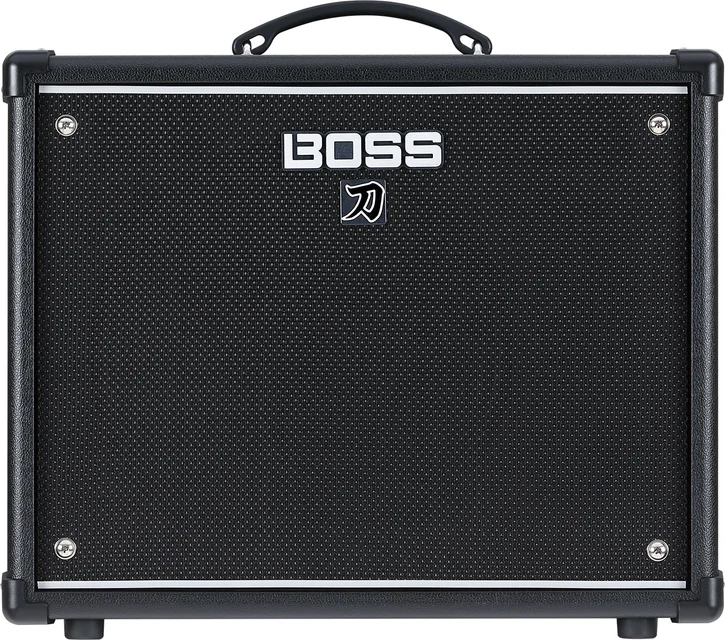
- Buy BOSS Katana-50 Gen 3 The do-everything modeling combo that sounds convincing at whisper volume and still fills a room. Amazon
- Buy Positive Grid Spark 2 A smart practice amp built around learning and jamming, with an app that does the heavy lifting. Amazon
- It depends Yamaha THR10II A gorgeous-sounding desktop amp that doubles as a hi-fi speaker, if you never need to play loud. Amazon
- Skip Fender Mustang LT25 A perfectly fine beginner amp that the competition simply outclasses for a small step up in budget. Amazon
What actually matters
- Low-volume tone because you'll spend nearly all your time at apartment-friendly levels, and the best home amps are voiced to still sound alive when turned down.
- Headroom and speaker size because a larger speaker and higher power ceiling are what let the amp follow you from the bedroom to a jam without buying a second amp.
- Amp models and effects depth because a broad, usable set of voicings and effects lets you cover many styles from one box while you figure out your sound.
- Smart-practice tools because chord detection, AI or built-in backing tracks, looping, and a metronome make solo practice more productive and less lonely.
- Connectivity because Bluetooth streaming lets you play along with songs and USB recording lets you capture ideas without extra gear.
- Panel vs app control because it decides whether you can dial in a tone by hand in seconds or have to reach for your phone every time.
- Size and portability because a desktop amp lives happily on a shelf, while a bigger combo trades convenience for the power to fill a room.
The specs, in plain English
Green flags vs red flags
Green flags
- Sounds full and musical at low, apartment-friendly volume, not just when cranked
- A speaker of about 10 to 12 inches if you might ever jam or play with others
- A broad but usable set of amp voicings and effects rather than gimmicky presets
- Both a headphone output and USB or Bluetooth for quiet practice and recording
- Reviews and owners consistently describe the tone as natural or tube-like for the price
- You can get a good sound from the front panel without needing the app
Red flags
- Marketing leans hard on a big wattage number instead of how it actually sounds
- A small 8-inch speaker on an amp you hope will grow with you
- No Bluetooth or recording output on a modern practice amp
- The best tones and features are locked behind an app with a bare-bones panel
- Owner reports repeatedly say it sounds a step behind similarly priced rivals
- Deep, hard-to-navigate menus just to make basic tone changes
Who's who: the brands
- BOSS - Maker of the Katana line, widely praised for natural, tube-like tone that scales from home to small gigs.
- Positive Grid - Best known for the Spark, a smart practice amp built around app-driven learning and jam-along tools.
- Yamaha - Makes the THR desktop amps, prized for refined tone and looks that double as a hi-fi speaker.
- Fender - An iconic guitar name whose Mustang modeling amps offer familiar presets at budget-friendly prices.
- Marshall - Legendary for its rock tone and instantly recognizable look, with practice amps that lean on that heritage.
- Blackstar - A British brand popular for practice and beginner amps that pack flexible tones into compact boxes.
How to read a listing without getting fooled
Start by ignoring the biggest number on the box. Wattage sells amps, but for home use it tells you little about tone, so look instead for language about low-volume performance, power scaling, or how the amp behaves quietly. Check the speaker size, since an 8-inch driver hints at a bedroom-only ceiling while a 10- or 12-inch speaker suggests room to grow. Count what you actually get in connectivity: a headphone jack for silent practice, Bluetooth for playing along with songs, and USB for recording. Then read carefully where the features live: a listing that raves about chord recognition, backing tracks, and endless tones is often describing the companion app, not the front panel, so if you hate editing on a phone, favor an amp you can dial in by hand. Finally, weigh owner and independent-testing consensus over any single spec, because the honest tell is whether people keep saying it sounds better or worse than its price suggests.
How much should you spend?
Guitar amps span from throwaway-cheap beginner boxes to premium desktop units, and the sweet spot for home players sits in the middle. The very cheapest amps usually cut corners on speaker size and drop Bluetooth and smart-practice tools, and owners often find they sound a step behind rivals that cost only a little more, so a rock-bottom budget frequently ends up being a false economy. Stepping up modestly is where the value lives: that's the tier where you find convincing low-volume tone, a real speaker with some headroom, deep effects, and modern connectivity. Spending into premium territory buys you refined tone and beautiful build, but sometimes at the cost of raw power or versatility, so paying more is only worth it if tone and looks matter to you more than flexibility or the ability to gig. Match your spending to your ambitions rather than the price tag: if home is your whole world, a mid-tier amp is usually all you'll ever need.
Questions, answered
Do I need a modeling amp, or will a simple combo do?
For practice and home use a modeling amp is usually the better value, because you get many amp voicings and effects in one box, plus headphone and recording outputs. A plain analog combo can sound wonderful but locks you into one flavor, which is limiting while you're still exploring styles.
How many watts do I need for home practice?
Far fewer than you'd think. A modest wattage is more than loud enough for an apartment or bedroom, and pushing for high power mainly matters if you plan to play with a drummer or band. Focus on how good the amp sounds quietly rather than the wattage number.
Can a home practice amp keep up with a band?
Only some can. It takes a larger speaker, roughly 10 to 12 inches, plus more power headroom to avoid getting buried in a loud room. Most compact desktop amps are built strictly for home volumes and will disappear behind a drum kit.
How important is the companion app?
It varies by amp. Some are fully usable from the front panel and treat the app as a bonus, while others reveal their deepest tones and best practice features only through the app. If you dislike editing on a phone, favor an amp you can dial in by hand.
Tube or modeling: which sounds better?
For home use it's less about better and more about fit. Tube amps have a warm, responsive feel players love, but they want volume and do one flavor. Modeling amps give you many tones quietly, and the best ones now feel convincingly tube-like at a fraction of the size and hassle.
What connections should I look for?
A headphone output for silent practice is essential, Bluetooth lets you stream and play along with songs, and USB lets you record ideas straight into a computer. Together they cover almost everything a home player needs without buying extra gear.
Or jump to the head-to-head: BOSS Katana-50 Gen 3 vs Positive Grid Spark 2.