Explained
Garment Steamers, Explained
After reading this, you'll know which steamer specs actually predict wrinkle-removal power - and which red flags in owner reports mean a model will spit hot water on your hands.
In this guide
A garment steamer relaxes wrinkles with hot vapor instead of pressing them out with a hot plate, which makes it faster than ironing for touch-ups and far safer for silk, wool, and anything with beads or prints. The trap is that the category is dominated by cheap, wildly popular handhelds whose spec sheets look fine but whose owners report slow heating, weak steam, and hot-water spitting. The specs that matter - wattage, heat-up time, steam time per fill, and how the unit behaves when tilted - are easy to check once you know what to look for.
The 30-second version
- Wattage is a key spec. Lower-wattage handhelds tend to humidify wrinkles rather than remove them; higher wattage generally means hotter, denser steam.
- Tilt behavior separates good designs from dangerous ones. Cheap steamers that boil water in the base often spit scalding droplets when angled - exactly the angle real steaming requires - so read owner reports for spitting and leaking.
- Handheld and standing steamers are different tools. Handhelds win for speed, storage, and travel; standing units with a hose and big reservoir win for batch steaming dresses, drapes, and linens.
- Review counts are not quality. Some of the best-selling steamers on the market are underpowered budget models with well-documented handling problems; a huge review count says little about quality.
- Steam alone can't press a crease. If you wear collared shirts and want crisp cuffs and plackets, look for a heated plate (a steamer-iron hybrid) or at least a crease attachment - plain steam only relaxes fabric.
The products this guide is about
Our verdict on each, with the full reasoning on the companion review.
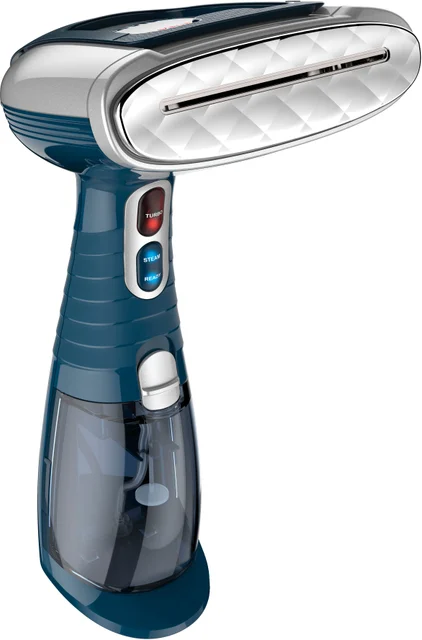
- Buy Conair Turbo ExtremeSteam GS38 A powerful mid-range handheld that is quick and versatile enough for everyday use. Amazon
- Buy Jiffy Steamer J-2000 A handcrafted American standing steamer with a die-cast brass element housing and brass fittings, built for heavy use. Amazon
- It depends Steamery Cirrus Icon Handheld Steamer Steamery's updated take on the Cirrus 3, a design-forward handheld with a heated plate that earns its keep on delicates and travel, if you accept the premium. Amazon
- Skip HiLIFE Handheld Steamer A bestseller on review counts alone, but low power, slow heat-up, and a tilt-and-spit design are hard to forgive. Amazon
What actually matters
- Wattage - a strong predictor of wrinkle-removal power. It determines how hot and how fast the element converts water to steam; underpowered models make you pass over the same spot repeatedly for mediocre results.
- Heat-up time - good handhelds are ready in under a minute or so; budget models can be slow, and big standing units vary by model. For a quick morning fix, this is the difference between using it and skipping it.
- Steam time per fill - check the maker's stated steam time; standing units with big reservoirs suit long sessions. Match this to your habits: touch-ups need little, batch steaming needs a reservoir measured in quarts.
- Spit resistance - how the steamer behaves when tilted over a shoulder or hem. Designs that boil water directly in the base can sputter unboiled hot water out of the head; this is a common failure that owners flag.
- Pressing capability - plain steam relaxes fabric but can't create a sharp edge. Hybrids with a heated ironing plate, or steamers with a crease attachment, get closer to a pressed finish on collars and cuffs.
- Build and serviceability - metal construction, brass fittings, real multi-year warranties, and available replacement parts separate decade-long appliances from disposable gadgets. Owner reports after a year of use tell you more than any spec.
- Weight and ergonomics - powerful handhelds are heavier, and you hold a steamer up at arm height. A model that tires your wrist in five minutes will quietly stop being used.
The specs, in plain English
Green flags vs red flags
Green flags
- A high-wattage handheld, or a large-reservoir standing unit with metal construction and brass fittings
- Ready in about a minute or less, with the steam time per fill stated (handhelds)
- Owner reports that specifically say it doesn't spit or drip when tilted
- Useful attachments included - fabric brush, delicate-fabric spacer, crease tool - rather than novelty extras
- A multi-year warranty plus available replacement parts, a sign the maker expects the product to be serviced, not discarded
- Long-term owner reports (a year or more) that mention consistent steam output over time
Red flags
- 700-watt-class handhelds sold on huge review counts and a rock-bottom price
- Repeated owner complaints of spitting, sputtering, or leaking hot water when the unit is tilted
- Slow heat-up on a handheld, a possible sign of an undersized element
- Impressive-sounding tank capacity paired with low wattage (a recipe for lukewarm mist, not steam)
- Marketing that leans on 'steam output in grams per minute' with no wattage listed anywhere
- No warranty details, no replacement parts, and a brand name you can't find outside one marketplace listing
Who's who: the brands
- Conair - Mass-market personal-care and garment-care brand; its Turbo ExtremeSteam handhelds are aimed at higher-wattage steaming at mid-range prices.
- Jiffy Steamer - American maker handcrafting steamers in Tennessee, made in the USA since 1940; the J-2000 has a die-cast brass element housing, brass fittings, a 3-year limited warranty, and replacement parts.
- Steamery - Swedish clothing-care brand known for design-forward handheld steamers with Dry Steam and heated plates, aimed at travelers and delicate wardrobes.
- Rowenta - Garment-care brand best known for irons; also sells steamers and steam stations.
- HiLIFE - Budget marketplace brand behind a best-selling handheld by review count; owner reports of slow heating and tilt-spitting make it a case study in popularity versus performance.
How to read a listing without getting fooled
Start with the wattage - if a listing hides it, that's usually because it's low. Then find the heat-up time and steam time per fill, and be suspicious of listings that lead with tank capacity or 'grams per minute of steam' instead, since a big tank on a weak element just means longer sessions of underwhelming mist. Photos of attachments are only meaningful if the fabric brush, spacer, and crease tool are actually included rather than sold separately. Finally, skip the five-star reviews and read the critical ones with a single question in mind: does anyone mention spitting, sputtering, or leaking when the unit is tilted? A handful of those reports is noise; a consistent pattern is the design telling you what it will do to your hands.
How much should you spend?
Cost in this category tracks heating power, build materials, and format. The cheapest handhelds save money with small, weak elements - which is exactly the corner you don't want cut, because it produces the slow heating and hot-water spitting the budget tier is notorious for. The value sweet spot for most people is a mid-range handheld with iron-class wattage, fast heat-up, and a clean owner track record on spitting; it does most of what pricier machines do for everyday touch-ups. Spending more is genuinely worth it in two cases: a standing unit with a metal element and big reservoir if you steam in volume, where the premium buys a long-lived machine, or a heated-plate hybrid if you travel and wear delicates or collared shirts. Paying premium prices for a plain handheld with no pressing ability and a small tank, though, is mostly paying for looks.
Questions, answered
Is a garment steamer better than an iron?
They solve different problems. A steamer is faster for touch-ups, needs no board, and is much safer on silk, wool, and embellished fabrics because nothing hot touches the garment. An iron still wins for sharp creases and perfectly flat cotton dress shirts. Steamer-iron hybrids with a heated plate split the difference, and plenty of households happily own one of each.
How many watts does a garment steamer need?
Higher wattage generally means hotter, denser steam that flattens thick cotton and blazers instead of just dampening them, so compare wattage across handhelds. Standing units can get by with lower wattage because their large elements and reservoirs deliver steady steam over long sessions.
Why do cheap steamers spit hot water?
Most budget handhelds boil water directly in the base. Tilt the unit and unboiled water rushes into the steam path and sputters out of the head as scalding droplets - typically when tilted, which is exactly where you end up steaming a shoulder or a hanging hem. Stronger elements and better internal designs vaporize water fully before it can escape, and that's a large part of what a mid-range price buys.
What kind of water should I use in a steamer?
Distilled or demineralized water is safest, especially in hard-water areas. Mineral scale is a common cause of weak steam, clogging, and spitting as a steamer ages. If you use tap water, descale periodically per the manual and empty the tank between sessions so deposits don't build up.
Can I steam any fabric?
Steam is safe for most fabrics and is the preferred method for delicates like silk, wool, cashmere, and anything beaded or printed. Be careful with waxed fabrics, suede, and some leathers, which heat and moisture can damage, and keep the head moving on synthetics that could glaze. When in doubt, check the care label and test a hidden spot.
Handheld or standing steamer - which should I buy?
Buy a handheld if you steam a few garments at a time, travel, or have limited storage - you want fast heat-up and enough steam per fill for a morning's outfits. Buy a standing unit if you steam in batches: the big reservoir runs for an hour or more, the hose-and-hanger setup is far less tiring, and the format has a strong durability reputation.
Or jump to the head-to-head: Conair Turbo ExtremeSteam GS38 vs Jiffy Steamer J-2000.