Explained
Handheld Vacuums, Explained
After reading, you will know which handheld vacuum specs matter for your home and which ones are just marketing noise.
In this guide
A handheld vacuum is a small, cordless grab-and-go cleaner for spot messes: crumbs on the counter, hair on the couch, grit in the car footwell. Buyers get tripped up because the headline numbers, especially suction and runtime, rarely predict how satisfying the vacuum actually feels in daily use. What decides that is quieter details: whether it has a motorized brush, how it is powered, and how easily it empties.
The 30-second version
- Match the tool to the mess. a motorized brushroll is the single feature that separates vacuums that lift embedded pet hair from ones that skate over it.
- Runtime is short by nature. most fixed-battery handhelds die in eight to twelve minutes, so plan around that rather than expecting more.
- Weight beats power for reach. the lightest, dock-ready models are the ones you will actually grab, even if their suction is modest.
- Maintenance keeps suction alive. a neglected filter is the top cause of a vacuum feeling weak within weeks, and it is fully preventable.
- Wet/dry is a niche, not a default. only buy liquid pickup if you truly deal with spills, because it adds bulk and noise you otherwise avoid.
The products this guide is about
Our verdict on each, with the full reasoning on the companion review.
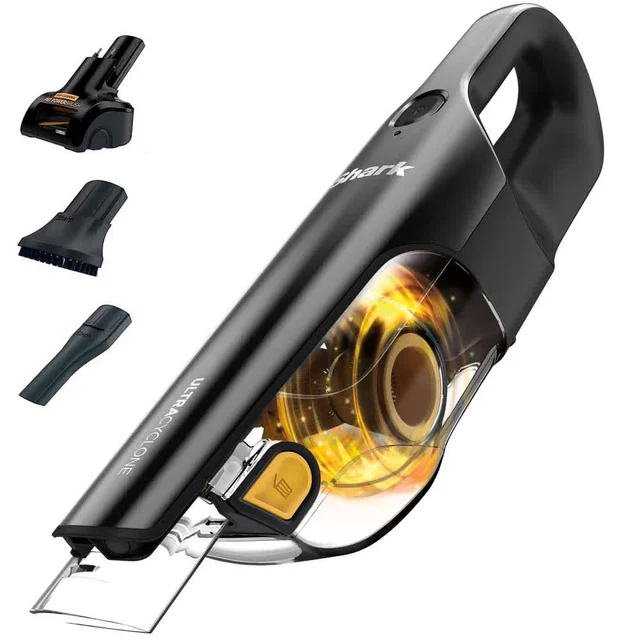
- Buy Shark UltraCyclone Pet Pro+ (CH951) The one most pet owners stop complaining about, thanks to a motorized brush that actually digs hair out. Amazon
- Buy Shark WANDVAC (WV201) A featherweight grab-and-go that lives on its dock and weighs almost nothing in the hand. Amazon
- It depends Ryobi ONE+ 18V Wet/Dry Hand Vacuum The garage and spill specialist that sidesteps the runtime problem if you already live in the ONE+ battery system. Amazon
- Skip BLACK+DECKER dustbuster AdvancedClean (CHV1410L) A likeable, tidy little vac that is underpowered for the pet-hair and upholstery jobs most people buy a handheld to do. Amazon
What actually matters
- Motorized brushroll - a spinning brush that agitates and digs debris out of fabric and carpet. Without one, a handheld only pulls up loose surface dust and struggles with anything ground in, which is why pet owners care about it most.
- Power source - a fixed built-in battery is simplest but caps how long you can run and forces a long recharge, while a swappable-battery platform lets you drop in a fresh pack and keep going indefinitely.
- Runtime versus recharge - the ratio matters more than either number alone. Ten minutes of cleaning followed by three hours of charging is a very different experience from a vacuum that docks and is always ready.
- Weight and balance - a handheld is held in one hand, often overhead, so a few ounces change how tiring it is. The lightest models get used far more often simply because they are effortless to pick up.
- Emptying and filter design - how you dump the bin and clean the filter determines whether the vacuum stays pleasant. Look for a one-touch or push-out ejector and a washable filter you can rinse.
- Bin capacity - a small dust cup fills fast and interrupts you mid-clean. Larger cups mean fewer stops, though they add size and weight to the tool.
- Wet pickup - a wet/dry model can suck up liquid spills that would ruin an ordinary vacuum. It is invaluable in a garage or workshop and unnecessary for everyday indoor tidying.
The specs, in plain English
Green flags vs red flags
Green flags
- A motorized brushroll is included if pet hair or upholstery is your reason for buying
- A dock or stand that keeps the vacuum charged and within reach, so it is always ready
- A one-touch or push-out bin ejector so you empty it without reaching into the dust cup
- Cyclonic separation, which helps suction stay steady as the bin fills
- A washable filter that rinses clean rather than needing replacement cartridges
- Honest, modest runtime claims that match how independent owner reports describe real use
Red flags
- A big suction number used to distract from the absence of any motorized brush
- A tiny dust cup paired with a very long recharge, which means constant stopping
- A sealed filter that cannot be washed or is awkward to reach and clean
- Runtime claims far above what owner reports describe, suggesting a best-case-only figure
- A budget model marketed for pet hair despite having only a passive nozzle
- Heavy, awkward balance in a tool meant to be held one-handed for several minutes
Who's who: the brands
- Shark - Known for handhelds that punch above their size, including motorized pet brushes and ultralight dock-and-go models.
- BLACK+DECKER - The dustbuster name that defined the category; strong on light, simple, affordable vacuums for quick dry pickups.
- Ryobi - Tool-brand handhelds that run on its swappable ONE+ battery platform, including wet/dry models suited to garages.
- Dyson - Premium cordless brand whose handheld and convertible stick vacuums emphasize strong suction and fine-dust filtration.
- Bissell - Focused on pet-oriented cleaning, with handhelds and portable spot cleaners aimed at hair and stains.
How to read a listing without getting fooled
When you read a handheld vacuum listing, resist anchoring on the biggest number. Start by asking what the nozzle does: is there a motorized brushroll, or just a passive opening? That one answer predicts pet-hair performance better than any suction rating. Next, find how it is powered and read the runtime and recharge figures together, treating the runtime as a best case measured on low power. Check how you empty the bin and clean the filter, since a fiddly design quietly kills the habit of using it. Finally, weigh the weight: a tool you dread lifting is one you will leave on the shelf. Cross-check the marketing against independent testing and owner reports, which tend to expose fading suction and optimistic runtime long before the spec sheet admits them.
How much should you spend?
Spending is mostly about buying capability, not prestige. The cheapest handhelds do light, dry, hard-surface pickups well and little else, so if fur or upholstery is your reason for shopping, the entry tier is a false economy that disappoints and gets replaced. The value sweet spot sits with a mid-range vacuum that includes a motorized brush and a design that empties cleanly, which is where most households stop complaining. Paying up beyond that buys refinements: featherweight builds, docks, stronger filtration, or a swappable-battery platform that removes the runtime ceiling. Those upgrades are worth it only if the specific benefit matches your use, and a wet/dry model in particular is worth the premium solely when you genuinely deal with spills. Match the spend to the job, and do not pay for convenience features you will never actually lean on.
Questions, answered
Are handheld vacuums good enough for pet hair?
Some are, but only the ones with a motorized brushroll. That spinning brush digs hair out of upholstery and stair carpet, while a passive-nozzle model, common at the budget end, skates over embedded fur and leaves owners frustrated.
Why is handheld vacuum runtime so short?
Most run on a small fixed battery, so eight to twelve minutes is normal, followed by a recharge of a couple of hours or more. The exception is a swappable-battery platform, where you drop in a charged pack and keep going without waiting.
How do I stop my handheld from losing suction?
Keep the filter clean and the bin empty. A clogged filter is the single most common reason a handheld feels weak, sometimes within a couple of weeks. Rinse or tap out a washable filter regularly, let it dry fully, and empty the dust cup after most cleans.
Do I need a wet/dry handheld vacuum?
Only if you regularly deal with liquid spills or work in a garage or workshop. Wet/dry models add bulk and noise, so for everyday dust, crumbs, and pet hair indoors a lighter dry-only vacuum is easier and more pleasant to live with.
Is higher suction always better?
No. Suction helps, but without a brushroll to loosen debris it cannot lift ground-in hair from fabric. A vacuum with a motorized brush and moderate suction usually outperforms a brushless one with an impressive suction rating.
Or jump to the head-to-head: Shark UltraCyclone Pet Pro+ (CH951) vs Shark WANDVAC (WV201).