Explained
Instant-Read Meat Thermometers, Explained
After reading, you will understand exactly which specs make an instant-read thermometer worth buying and which are just marketing noise.
In this guide
An instant-read thermometer is the fastest, cheapest way to stop overcooking meat, but the marketing throws around numbers like read speed, accuracy tolerance, and IP ratings without explaining what they mean for you. The single most important thing to grasp is that this category exists to give you a correct temperature quickly, so speed to a stable reading matters far more than any other spec. Most buyers overpay for features they will never use or, worse, save money on a model so slow it defeats the whole purpose.
The 30-second version
- Speed is the whole point. the difference between a one-second and a six-second reading is felt on every single use, so treat sluggish models as a false economy no matter how cheap they are.
- Accuracy is table stakes, not a differentiator. nearly every credible instant-read is rated within about a degree Fahrenheit, which is plenty for judging doneness, so do not pay a premium chasing decimal points.
- IP ratings tell you how much water the body survives. splash resistance handles spatter and a quick rinse, while full waterproofing lets you wash it under a running tap or cook in the rain.
- Display and handling decide whether you actually reach for it. auto-rotating backlit screens, motion-wake, and a magnet reduce daily friction more than any spec sheet suggests.
- Warranty length signals long-term confidence. a tool you use daily for years benefits from long coverage and a stable, easy-to-reach support channel.
The products this guide is about
Our verdict on each, with the full reasoning on the companion review.
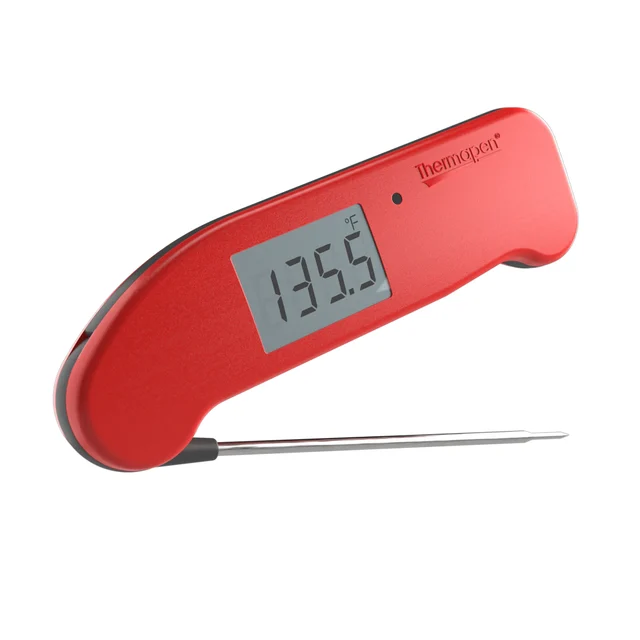
- Buy ThermoWorks Thermapen ONE The benchmark instant-read: roughly one-second reads and tight half-degree rated accuracy. Amazon
- Buy Typhur InstaProbe A sub-second, bright-LED challenger that trades blows with the category leader. Amazon
- It depends Lavatools Javelin PRO Duo The value pick that nearly keeps up with the leaders, if you can live without full waterproofing. Amazon
- Skip ThermoWorks ThermoPop 2 The entry-level ThermoWorks, with a maker-listed 2 to 4 second read and no magnet. Amazon
What actually matters
- Read speed is the defining trait of the category; a one-to-two-second reading is the biggest quality-of-life upgrade, and anything much slower undermines the reason to own an instant-read at all.
- Accuracy tolerance matters only up to a point; once a model is rated within roughly a degree Fahrenheit it is accurate enough for doneness, so large or inconsistent deviations are the real disqualifier, not tenths of a degree.
- Display readability determines whether you can read the number at a glance in a dark oven or bright sunlight; auto-rotating and backlit screens are the baseline, and always-on OLED is the premium step up.
- Water resistance (IP rating) decides how forgiving the tool is around a sink and spatter; match the rating to how you actually clean and cook rather than buying the highest number reflexively.
- Probe design and wake behavior affect handling; a thin, fast-responding probe tip and instant motion-wake mean less fumbling when your hands are full.
- Convenience extras such as a magnet, auto-off, and a stabilization alert quietly separate a tool you love from one you fight with.
- Warranty and brand stability protect a long-term purchase; longer coverage and a clear support path matter more than they seem for a device you plan to keep for years.
The specs, in plain English
Green flags vs red flags
Green flags
- Read speed quoted at roughly one to two seconds, confirmed by independent testing and owner reports rather than the box alone
- Accuracy rated within about a degree Fahrenheit, ideally described as NIST-referenced
- An auto-rotating, backlit or always-on display that wakes on motion
- A water rating (IP65 or IP67) that clearly matches how you clean and cook
- A long, clearly stated warranty from a brand with a stable name and reachable support
Red flags
- Read times measured in several seconds, or a noticeable delay just to wake up
- Vague accuracy claims with no tolerance figure or reference standard
- A fixed, dim, non-rotating screen you have to twist your wrist to read
- No stated IP rating, which usually means little to no water protection
- A product recently rebranded or sold under a shifting name, muddying warranty and support
- A price that undercuts everything else paired with reviews complaining it is slow or drifts
Who's who: the brands
- ThermoWorks - The reference maker in the category; its Thermapen line is the benchmark for speed, accuracy, and long-term durability.
- Typhur - A newer premium challenger known for sub-second reads and bright LED displays.
- Lavatools - Popular for strong value; the Javelin line delivers strong value at a mid-range price.
How to read a listing without getting fooled
When you read a product listing, anchor on read speed first and be skeptical of how it is phrased. A claim like "reads in seconds" is not the same as "about one second to a stable reading"; look for a specific number and cross-check it against independent testing and owner reports. Treat accuracy tolerance as a pass-or-fail gate rather than a ranking: once a model is rated within roughly a degree Fahrenheit, stop comparing decimals and move on. Decode the IP rating by the second digit, and ignore a high number if you will never submerge the tool. Finally, separate genuine handling features (auto-rotating display, motion-wake, magnet, stabilization alert) from filler specs, and confirm the warranty length and that the brand name is stable, since a recent rebrand can complicate support down the line.
How much should you spend?
How much to spend comes down to how often you cook. If you use a thermometer constantly, the premium tier earns its keep through faster reads, brighter always-on displays, sturdier waterproof bodies, and longer warranties that pay off over years of daily use. The mid-range is the sweet spot for most home cooks: it captures nearly all of the everyday speed and readability for far less, with the only real compromise being splash resistance instead of full waterproofing. The rock-bottom budget tier can be a false economy, because the money you save up front is spent back as time on every single reading when the model is slow to settle. Spend up if cooking is a frequent, serious part of your week; otherwise a solid mid-range pick is the smart money, and only stretch to the flagship when speed and durability genuinely matter to you.
Questions, answered
What is the real difference between a one-second and a six-second thermometer?
It is the difference between quickly spot-checking several pieces of chicken and standing over a hot grill waiting for each reading to settle. Faster tools also lose less heat through an open oven or lid and reduce the temptation to pull food before you have a trustworthy number. For a device you use constantly, that speed gap is the main thing you are paying for, since most credible models are accurate enough once they settle.
Do I need a fully waterproof (IP67) model, or is splash-resistant (IP65) enough?
For most home kitchens, splash resistance is fine; it shrugs off spatter and a quick rinse. Step up to full waterproofing only if you want to wash the thermometer under a running tap, submerge it briefly, or cook outdoors in the rain. Match the rating to your actual habits rather than paying for a number you will never use.
How accurate does an instant-read really need to be?
Once a model is rated within about a degree Fahrenheit, it is accurate enough to judge doneness, and independent testing and owner reports broadly confirm that most reputable models hit this. Chasing tighter tolerances rarely changes your results. Accuracy only helps if you insert the probe into the thickest part of the food and let the reading stabilize before trusting it. This is general product information, not food-safety advice; consult a trusted authority such as your local food-safety agency for recommended safe internal temperatures.
Is a premium instant-read worth it over a cheap one?
If you cook often, usually yes: the speed, brighter displays, sturdier waterproof bodies, and longer warranties pay off over years of daily use. If you cook occasionally, a good mid-range model delivers most of the experience for far less. The cheapest models save the most money up front but often cost you time on every reading by being slow to settle.
Why is one brand's thermometer so much cheaper, and should that worry me?
A lower price often reflects a slower sensor, a dimmer or fixed display, weaker water protection, or a shorter warranty rather than any single flaw. It is not automatically a bad buy, but read owner reports for complaints about slow reads or drift, and check whether the brand name is stable, since a recent rebrand can make warranty and support harder to track down.
Or jump to the head-to-head: ThermoWorks Thermapen ONE vs Typhur InstaProbe.