Explained
Juicers, Explained
After reading this you'll understand the difference between cold-press and centrifugal juicers and know exactly which specs actually matter for the juice you want to drink.
In this guide
The single biggest choice when buying a juicer is the technology: slow masticating ("cold press") machines that crush and squeeze produce, versus fast centrifugal machines that shred it at high speed. That one decision drives yield, foam, noise, cleanup, and price. Where most first-time buyers get tripped up is assuming a higher wattage or a faster motor means a better juicer, when for daily green juice the opposite is usually true.
The 30-second version
- Cold press beats centrifugal for daily use. Slow masticating machines extract more juice from leafy greens, foam less, and keep the juice fresher, which is why serious juicers gravitate to them.
- Slower is better, not worse. A low RPM means less heat and air whipped into the juice, so don't be swayed by a high-speed motor unless speed is all you care about.
- Match the feed style to how often you juice. Self-feeding hoppers let you load a whole recipe and walk away, which is worth it for frequent or family juicing; a manual chute is cheaper and fine for occasional use.
- Cleanup decides whether it gets used. The number of parts and how fast they rinse is the difference between a daily habit and a machine that lives in a cupboard.
- Warranty length is a durability clue. The best masticating juicers carry very long warranties, which signals the maker expects the machine to last for years of daily use.
The products this guide is about
Our verdict on each, with the full reasoning on the companion review.
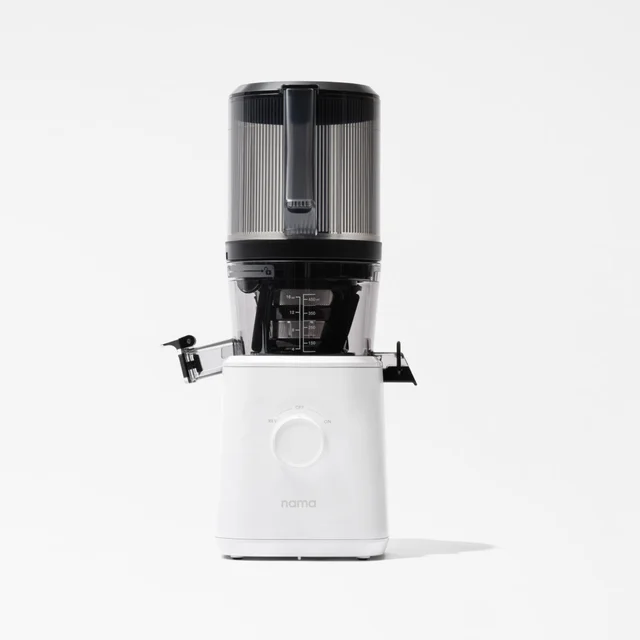
- Buy Nama J2 Cold Press Juicer A genuinely hands-free cold press that loads a whole recipe and walks away with high yield and low foam. Amazon
- Buy Omega VSJ843 Vertical Slow Masticating Juicer The durable, no-drama vertical cold press with a very slow auger and a long warranty. Amazon
- It depends Hurom H400 Easy Clean Slow Juicer An easy-clean cold press with a big self-feeding hopper, if you can stomach the flagship price. Amazon
- Skip Breville Juice Fountain Cold (BJE430) Fast and affordable, but a centrifugal machine is the wrong tool if greens and nutrient retention are the point. Amazon
What actually matters
- Juicing technology (masticating vs centrifugal) is the master decision: cold-press masticating machines win on yield, greens, foam, and noise, while centrifugal machines win on speed and price.
- Yield on greens separates good machines from marketed ones; leafy greens like kale and spinach are where cheap juicers leave wet pulp and waste produce.
- Foam and oxidation determine how fresh the juice tastes and how long it keeps; slow machines introduce less air and heat, so the juice foams less and browns slower.
- Feeding style (self-feeding hopper vs manual chute) sets how hands-on the machine is; hoppers save real time if you juice often or for several people.
- Cleanup effort (part count and rinse time) is the practical factor that decides whether you actually use the juicer every day.
- Footprint and weight matter because vertical cold-press machines are tall and heavy and really want a permanent home on the counter.
- Durability and warranty reflect long-term value, since a juicer is a multi-year purchase and longer coverage generally tracks a longer service life.
The specs, in plain English
Green flags vs red flags
Green flags
- It's a slow masticating (cold press) machine if daily green juice is your goal
- A low stated RPM, which signals low-heat, low-foam extraction
- A long warranty (many years), pointing to a machine built to last
- Automatic pulp ejection or an easy-clean design for tidy continuous juicing
- A self-feeding hopper if you juice frequently or for a family
- Owner reports of dry pulp and strong yield on greens, not just fruit
Red flags
- Marketing that leans on high wattage or high speed as the main selling point
- A centrifugal machine being sold as ideal for nutrient-dense green juice
- Complaints about wet pulp and poor yield on leafy greens
- A short warranty relative to others in the category
- Many fiddly parts that are slow to rinse, which kills daily use
- No mention of foam or oxidation, which usually means it foams a lot
Who's who: the brands
- Nama - Known for popularizing genuinely hands-free cold-press juicers with large self-feeding hoppers.
- Omega - Long-standing masticating specialist with a reputation for durability and strong greens yield.
- Hurom - Premium cold-press maker focused on easy-clean designs and quiet, convenient daily use.
- Breville - Well-known kitchen brand whose juicers are mostly fast centrifugal models built for speed and value.
How to read a listing without getting fooled
Start by finding the juicing technology, because a listing will not always say it plainly. If you see "cold press," "slow," "masticating," or an auger and a low RPM, it's the type that favors yield and greens. If you see a high wattage, a high RPM, or words like "fountain" and "fast," it's centrifugal. Don't be seduced by a big motor number: for juice quality, a slower machine is usually the better one. Next, check the feed style, since "wide feed chute" is not the same as a "self-feeding hopper", the first still needs you to stand there and push, the second lets you walk away. Read the warranty length as a rough durability score, and weigh cleanup honestly by looking for the number of parts and whether owners say they rinse fast. Finally, trust owner reports about greens yield and dry pulp over any single headline spec.
How much should you spend?
Expect to pay the most for cold-press masticating machines and the least for centrifugal ones; the technology, not the brand badge, drives most of the cost. The value sweet spot for daily juicing is a solid mid-tier cold-press machine that delivers most of the yield, low foam, and durability of the flagships without their step-up features. Spending more is worth it when you're buying convenience: a self-feeding hopper, easy cleanup, or extra functions like nut milks and sorbet earn their premium only if you'll juice several times a week. Spending more is not worth it if you juice occasionally or mostly process hard fruit, in which case an inexpensive centrifugal machine does the job. Treat a very cheap juicer that promises great greens performance with suspicion, since strong leafy-green yield is exactly where budget machines tend to fall short.
Questions, answered
What's the real difference between cold press and centrifugal juicers?
A cold-press (masticating) juicer slowly crushes and squeezes produce, giving higher yield, drier pulp, less foam, slower oxidation, and quieter operation. A centrifugal juicer shreds produce at high speed, which is faster and cheaper but adds heat and air, so the juice foams more and browns faster, and it struggles more with leafy greens. For daily green juice, cold press is the better tool; for occasional juicing of hard fruit on a budget, centrifugal is fine.
Is a higher-wattage or faster juicer better?
Not for juice quality. Cold-press machines run very slowly on purpose because low speed means less heat and less foam. A high wattage or high RPM mostly buys you speed, which matters only if getting done fast is your top priority. Judge a juicer on yield, foam, and how it handles greens rather than on motor numbers.
Is a self-feeding hopper worth paying extra for?
If you juice frequently or for several people, yes: a self-feeding hopper lets you load a whole recipe, close the lid, and walk away, which saves real time and effort. If you juice only occasionally, a standard manual feed chute costs less and still delivers excellent juice, so the hopper is a convenience upgrade rather than a necessity.
Do slow juicers really keep more nutrients?
Independent testing and owner reports consistently find that slow masticating juicers generate less heat and foam, which slows oxidation and can help the juice stay fresh a bit longer, while high-speed centrifugal machines introduce more air and heat. This is general product information, not medical or nutritional advice, so consult a professional about your specific dietary needs.
Which type is easier to clean?
It varies by model more than by type. Some cold-press machines are designed to rinse clean in under a minute or include a self-cleaning screen, while others have taller assemblies with more parts to rinse. Centrifugal machines often clean quickly but can leave foamy residue and a fine mesh basket that needs a brush. Look for owner comments on part count and rinse time before you buy.
Are juicers hard to fit on a counter?
Vertical cold-press machines in particular are tall and heavy, so they really want a permanent spot rather than being lifted in and out of a cupboard each time. Check the height and weight against your cabinet clearance, and remember that a juicer stored out of sight tends to get used far less than one left ready on the counter.
Or jump to the head-to-head: Nama J2 Cold Press Juicer vs Omega VSJ843 Vertical Slow Masticating Juicer.