Explained
Knife Sharpeners, Explained
After reading this you will understand how the main sharpener types differ, what grit and bevel angle actually mean, and how to match a sharpener to your knives and your patience.
In this guide
A knife sharpener is one of those buys where the cheapest and the most expensive options can both be wrong for you. The category splits into push-button electrics that trade a little metal and control for speed, and manual tools like whetstones that reward practice with a finer, longer-lasting edge. What trips people up is assuming sharper means better regardless of how much steel the tool grinds away, and not realizing that the right angle for their knives matters as much as the tool itself.
The 30-second version
- Sharpening removes metal. Every sharpener grinds steel off your blade to form a new edge, so the gentlest tool that gets you sharp is usually the smartest long-term choice.
- Electric means easy, stone means fine. Powered sharpeners give a consistent edge in about a minute with no skill, while a whetstone can beat them on edge quality and blade life once you learn it.
- Angle is half the game. Most Western knives are ground near 20 degrees per side and many Japanese knives near 15, and using the wrong angle undoes a good tool.
- Sharpening and honing are not the same. A honing rod just straightens a rolled edge between sharpenings; it does not grind a new edge the way a sharpener does.
- Price rarely predicts the edge. An inexpensive stone can out-sharpen a beautiful, pricey gadget, so pay for control and durability rather than for looks.
The products this guide is about
Our verdict on each, with the full reasoning on the companion review.
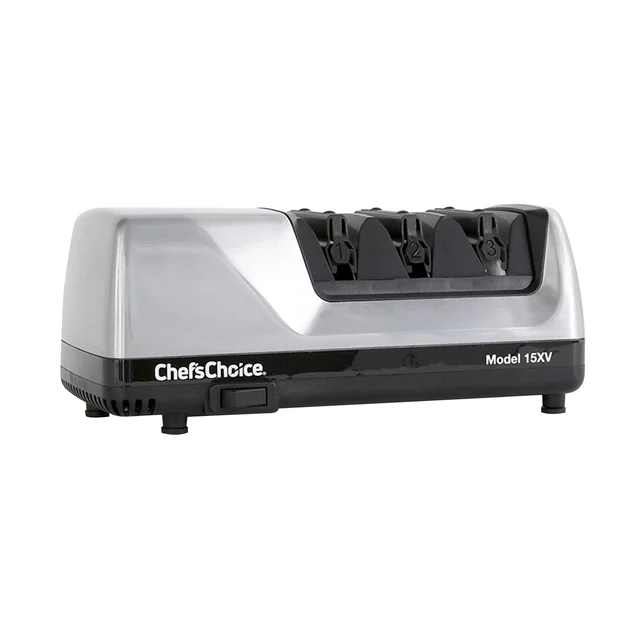
- Buy Chef'sChoice Trizor XV (Model 15XV) The most foolproof way to get a consistently sharp, durable edge in about a minute. Amazon
- Buy Tojiro Combination Whetstone #1000/#3000 The best edge quality for the money, if you are willing to learn to use it.
- It depends Work Sharp Culinary E5 Fast, flexible belt sharpening that follows the blade, but it rewards a steady hand and asks a premium price. Amazon
- Skip Horl 2 Rolling Knife Sharpener Beautiful, beginner-friendly, and wildly overpriced for what it actually does. Amazon
What actually matters
- Edge quality and consistency - how sharp the result is and whether you can repeat it every time. Guided tools help beginners stay consistent; free-hand stones reach a finer edge once your technique settles.
- Metal removal - aggressive powered abrasives shorten a blade's life over years, while a stone shaves off only a whisker. If you own knives worth keeping, gentler is better.
- Ease of use - be honest about how much skill and patience you will actually invest. A tool you find tedious is a tool you will let your knives go dull next to.
- Angle control - whether the sharpener holds a fixed bevel, offers a couple of guided settings, or leaves the angle entirely up to you determines how well it matches your specific knives.
- Knife compatibility - most sharpeners are built for standard double-bevel straight edges; serrated and traditional single-bevel Japanese knives often need different tools or a specialist.
- Upkeep and consumables - belts and discs wear out and cost money over time, while a stone needs occasional soaking and flattening but lasts for years.
The specs, in plain English
Green flags vs red flags
Green flags
- The tool lets you match or control the bevel angle your knives were built for
- It removes metal gently, or offers a fine finishing stage, so knives last for years
- Guides or a stable non-slip base help you hold a consistent angle pass to pass
- It clearly states which knife types it handles, and you understand where it fits your kitchen
- Independent testing and owner reports agree it reliably produces a keen, repeatable edge
Red flags
- Fixed carbide slots that visibly shave off large amounts of metal with each pass
- A high price justified mainly by looks or materials rather than the edge it delivers
- No angle control and no guidance, leaving beginners to guess and gouge the bevel
- Vague claims about sharpening 'any knife' with no mention of serrated or single-bevel limits
- Owner reports of the tool struggling with long, flexing blades or very narrow blades
Who's who: the brands
- Chef'sChoice - Known for foolproof multi-stage electric sharpeners that produce a consistent guided edge with no skill required.
- Work Sharp - Makes flexible-belt electric sharpeners that follow the blade and add optional angle guides for hands-on cooks.
- Tojiro - Japanese maker whose affordable combination waterstones deliver an excellent edge for the money to those willing to learn.
- Horl - German brand known for a beautiful magnet-guided rolling sharpener that is beginner-friendly but priced mostly for its design.
- Shapton - Respected for premium, fast-cutting ceramic whetstones favored by enthusiasts who sharpen frequently.
How to read a listing without getting fooled
When you read a sharpener listing, translate the marketing into the two things that matter: how much control you get over the angle, and how gently the tool treats the blade. 'Three-stage' or 'multi-stage' usually means coarse-to-fine grinding then a polishing pass, which is good; 'guided' or 'spring guides' means the tool holds the angle for you, which helps beginners. Watch for the difference between a sharpener and a honing rod, since a rod alone will not fix a truly dull knife. For stones, note the grit numbers on each side; a 1000/3000 pairing covers both reshaping and refining. Be skeptical of premium builds sold on wood and metal rather than on edge results, and always check whether the tool handles serrated or single-bevel knives before assuming it does.
How much should you spend?
You do not have to spend near the top of the category to get excellent results, and in fact one of the best edges available comes from an inexpensive double-sided whetstone. What drives cost is motorization, multiple abrasive stages, and premium materials, not necessarily a better edge. The value sweet spot is a well-made electric if you want speed and zero learning, or a quality combination stone if you are willing to practice; either can outperform gadgets that cost more. Spending more is worth it when you are buying genuine angle control, durable construction, or a finer finishing stage. It is not worth it when you are mostly paying for looks, a fixed set of angles, or a design-forward build that does not sharpen any better than a simple stone. Budget separately for consumables, since belts and discs add ongoing cost that a stone avoids.
Questions, answered
Electric sharpener or whetstone, which should I get?
Choose by temperament. An electric sharpener is the right answer if you want reliably sharp knives in about a minute with no skill, which suits busy or shared kitchens. A whetstone wins on ultimate edge quality and blade longevity for a fraction of the price, but it asks for time and practice. If you own good knives and enjoy the craft, learn a stone; if sharpening is a chore you want finished, buy the electric.
What angle should I sharpen my kitchen knives at?
Most Western knives are ground around 20 degrees per side and many Japanese knives around 15 degrees, which is why guided tools commonly offer those two settings. A lower angle cuts more keenly but is slightly more delicate. If you are unsure, match whatever angle the knife was designed for, or use a guided tool that standardizes your knives to a durable edge.
Do electric sharpeners ruin your knives?
They do not ruin knives, but powered diamond or belt sharpeners remove more metal than a stone with each use, which shortens a blade's life over many years. For everyday knives that is a fair trade for the convenience. Enthusiasts with expensive blades often prefer a whetstone precisely because it removes so little steel.
What is the difference between honing and sharpening?
Honing with a rod, sometimes called a steel, straightens an edge that has rolled over slightly during normal use; it keeps a sharp knife performing between sharpenings but does not create a new edge. Sharpening actually grinds metal away to form a fresh edge. If a knife will not bite into a tomato skin, it needs sharpening, not just honing.
Can these sharpen serrated or single-bevel Japanese knives?
Usually not well. Most kitchen sharpeners are built for standard double-bevel straight edges. Serrated bread knives generally need a dedicated tapered rod or professional service, and traditional single-bevel Japanese knives are best done on a stone by someone experienced. Check the manufacturer's guidance before sharpening specialty blades.
How often should I sharpen my knives?
It depends on how much you cook and how you treat your knives, but most home cooks fully sharpen a few times a year and hone with a rod much more often. The real test is performance: if the knife slips on a tomato or crushes rather than slices, it is time. Light, regular maintenance keeps you from ever needing an aggressive grind.
Or jump to the head-to-head: Chef'sChoice Trizor XV (Model 15XV) vs Tojiro Combination Whetstone #1000/#3000.