Explained
Ice Cream Makers, Explained
After reading, you'll understand the two main machine types, what churn quality and capacity really mean, and which features are worth paying for versus marketing fluff.
In this guide
Home ice cream makers split into two very different camps, and picking the wrong one is the most common mistake buyers make. Compressor machines cool themselves and churn on demand; frozen-bowl models are cheaper but need a bowl frozen a day ahead. A newer third type freezes a base solid and shaves it smooth. Knowing which fits your habits matters more than any single spec.
The 30-second version
- Match the machine to your rhythm. Frequent makers and entertainers want a self-cooling compressor; occasional makers often get better value from a frozen-bowl model.
- Compressor means no planning. A built-in refrigeration unit lets you pour a base and churn on a whim, plus run batches back-to-back, but it costs more and weighs more.
- Frozen-bowl means patience. You must freeze the insulated bowl ahead of time, often overnight, before each session, and one bowl equals one batch.
- The 'freeze-and-shave' type is a different animal. Machines like the Ninja CREAMi freeze a filled pint solid, then shave it creamy - great for single-serve and high-protein bases, not for churning a crowd's batch tonight.
- Texture and noise vary widely. Smoothness of the churn and how loud the machine runs differ a lot between models and are worth weighing before capacity or extra programs.
The products this guide is about
Our verdict on each, with the full reasoning on the companion review.
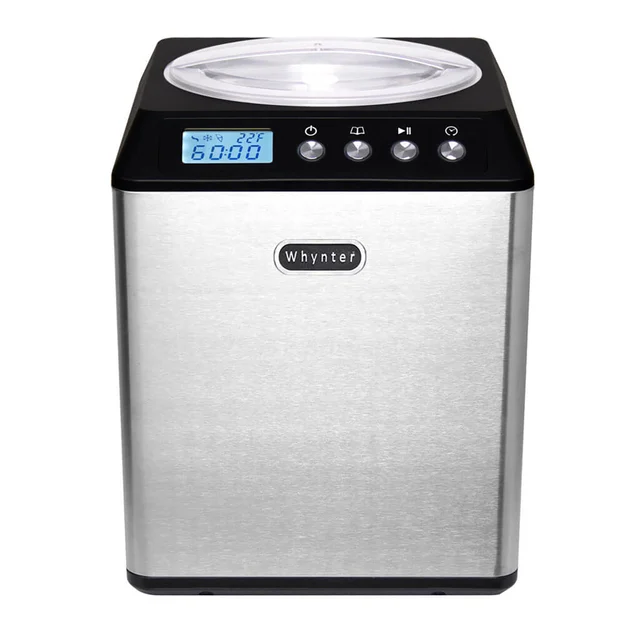
- Buy Whynter ICM-201SB Upright Automatic Compressor Ice Cream Maker A self-contained compressor machine that needs no pre-freezing, is rated at 55 dBA or less, and has a compact upright footprint. Amazon
- Buy Cuisinart ICE-21P1 Frozen Yogurt, Ice Cream & Sorbet Maker The frozen-bowl workhorse that makes good ice cream at a lower price tier than a compressor. Amazon
- It depends Ninja CREAMi 7-in-1 Ice Cream Maker (NC301) Not a churner at all - a freeze-then-shave machine that shines for single-serve and high-protein pints but works differently from everything else here. Amazon
- Skip Breville Smart Scoop Ice Cream Maker (BCI600XL) A capable, feature-rich compressor machine, just hard to justify at the top price tier next to the Whynter. Amazon
What actually matters
- Cooling method - compressor (self-cooling, churn anytime), frozen-bowl (pre-freeze required, cheapest), or freeze-and-shave (freeze a pint solid first). This single choice shapes cost, weight, and how you'll actually use the machine.
- How often you'll use it - regular use rewards a compressor's convenience; a few batches a season makes a frozen bowl the smarter spend.
- Capacity - match batch size to your household. A pint-at-a-time machine and a roughly 2-quart machine suit very different kitchens.
- Churn quality - how smooth and creamy the finished texture is, with minimal ice crystals, is the whole point; owner reports separate the smooth churners from the icy ones.
- Noise - compressor and shave machines range from a quiet hum to genuinely loud; if you'll run it near others, prioritize quiet operation.
- Footprint and weight - compressor units are heavy and tend to live on the counter; frozen-bowl machines are light and stow in a cabinet.
- Planning tolerance - be honest about whether you'll pre-freeze a bowl or pint the day before, or whether you want to churn on impulse.
The specs, in plain English
Green flags vs red flags
Green flags
- The cooling method genuinely fits your habits (compressor for spontaneity, frozen bowl for value, freeze-and-shave for single-serve).
- A long track record with a large owner base reporting reliable results.
- Owners describe the churn as smooth with minimal icy buildup.
- Simple, intuitive operation - a switch or a few clear programs rather than a fussy menu.
- A capacity that matches your household so you're not making three tiny batches or wasting a huge bowl.
Red flags
- You're buying a compressor machine's convenience but will only make ice cream a few times a year (or vice versa - a frozen bowl when you want spontaneity).
- Reviews repeatedly mention icy, grainy, or powdery results the machine can't overcome.
- It's noticeably loud and you plan to run it in an open kitchen near others.
- You're paying a flagship premium mostly for extra settings you're unlikely to use.
- The bowl or parts are awkward to clean, so it ends up sitting in the cupboard.
- Vague or inflated capacity claims that ignore the air needed for proper churning.
Who's who: the brands
- Whynter - Known for upright compressor machines; the ICM-201SB lists a noise level of 55 dBA or less.
- Cuisinart - A well-known frozen-bowl maker with a large owner base.
- Ninja - Maker of the CREAMi freeze-and-shave line, popular with macro-trackers and single-serve, high-protein, dairy-free crowds.
- Breville - Premium compressor machines loaded with fine-grained controls like hardness settings and pre-cool modes - capable but priced at the top.
How to read a listing without getting fooled
Start by finding the cooling method, because everything else follows from it: 'compressor' or 'self-refrigerating' means no pre-freezing and repeat batches, while 'frozen bowl,' 'canister,' or any mention of freezing the bowl for many hours means you plan ahead. If a listing dodges this, that's your first question. Read capacity with a grain of salt - a '2-quart' machine won't fill to the brim because air needs room during churning, so treat the number as generous. Long lists of programs and hardness settings look impressive but rarely change whether the ice cream is good; weigh them last. Instead, hunt through owner reviews for the words that matter - 'smooth,' 'creamy,' 'icy,' 'grainy,' 'loud,' 'quiet' - since real-world texture and noise tell you far more than the spec sheet. And note the difference between a churner and a freeze-and-shave machine: they solve different problems, so don't compare their pints and quarts head-to-head.
How much should you spend?
Spend based on frequency, not features. Frozen-bowl machines sit at the bottom of the range and are the smartest buy for occasional makers - they deliver excellent ice cream at a much lower price tier than a compressor, and the main cost is planning ahead. Compressor machines command a real premium, and it's worth paying when you make ice cream often or entertain, because the convenience of churning on demand and running batch after batch pays you back every time. The value sweet spot for most people is either a well-reviewed frozen bowl if you can plan, or a mid-to-upper compressor that churns smoothly and runs quietly. Where spending more stops being worth it is at the flagship tier, where much of the extra cost buys granular hardness controls and modes that a cheaper rival may match in the finished result. Freeze-and-shave machines fall in the middle and only justify their price if their single-serve, high-protein workflow is genuinely how you'll eat.
Questions, answered
Compressor or frozen-bowl - which should I buy?
It comes down to how often you make ice cream. Compressor machines have a built-in refrigeration unit, so you can churn on a whim and run batch after batch, but they cost more and are heavier. Frozen-bowl models are cheaper, lighter, and easy to store, but you must pre-freeze the bowl for many hours and get only one batch per freeze. Frequent makers lean compressor; occasional makers get the best value from a frozen bowl.
Do I really have to freeze the bowl ahead of time?
For frozen-bowl machines, yes - the insulated bowl must be completely frozen solid, which owners note takes a full day or overnight in a home freezer, and giving it a shake to confirm no liquid sloshes inside is a good check. Compressor machines skip this entirely and cool the bowl as they churn. Freeze-and-shave machines are their own case: you freeze the entire filled pint overnight, then the machine shaves it smooth.
Why does my homemade ice cream turn out icy or too hard?
Homemade ice cream has no commercial stabilizers, so iciness usually comes from too little fat or sugar, a base that wasn't fully chilled before churning, or slow freezing afterward. It also firms up harder than store-bought, so it often needs a few minutes on the counter before scooping. A tight-lidded container with plastic wrap pressed onto the surface helps limit ice crystals, and homemade is generally best within a week or two.
Is a freeze-and-shave machine like the Ninja CREAMi a 'real' ice cream maker?
It works differently. Instead of churning a liquid base while it freezes, it freezes your base solid first, then a blade shaves and re-blends it into a smooth texture. It excels at single-serve portions and protein, low-sugar, or dairy-free bases, but a first pass can come out crumbly or icy - the re-spin function is meant to deliver a softer, creamier result. Think of it as a complement to, not a direct replacement for, a traditional churner.
Are these machines loud enough to bother my household?
It varies by type and model. Some compressor machines list a low noise rating, while others - and freeze-and-shave machines during their spin - run noticeably louder. Frozen-bowl models produce a moderate motor whir. If quiet operation matters, look specifically for a published noise rating or models owners call out as quiet, since noise differs a lot between machines.
How much capacity do I actually need?
Match it to your household and habits. Around 2 quarts is generous enough for a dinner party or a big family, 1-1.5 quarts suits everyday family use, and a single pint suits solo servings or macro-tracked portions. Remember the bowl is never filled to the brim - air whipped in during churning needs room - so a listed capacity is a generous ceiling, not a guarantee.
Or jump to the head-to-head: Whynter ICM-201SB Upright Automatic Compressor Ice Cream Maker vs Cuisinart ICE-21P1 Frozen Yogurt, Ice Cream & Sorbet Maker.