Explained
Grow Lights, Explained
After reading, you'll understand how PPF, PPFD, efficiency and coverage decide whether a grow light will actually grow your plants.
In this guide
Grow lights are often sold on lumens, watts and bulb-equivalent claims, none of which tell you how well they grow plants. The useful numbers are photon output and the light reaching your plants. Hanging height and coverage matter just as much. Here is how to read the listing.
The 30-second version
- PPFD is the key number, because it measures light at the plant.
- Lumens are for people, not plants.
- Efficiency is µmol per joule, so compare it across lights.
- Height changes intensity, so hang lights to suit the plant.
- Full-spectrum white works well, and looks natural indoors.
The products this guide is about
Our verdict on each, with the full reasoning on the companion review.
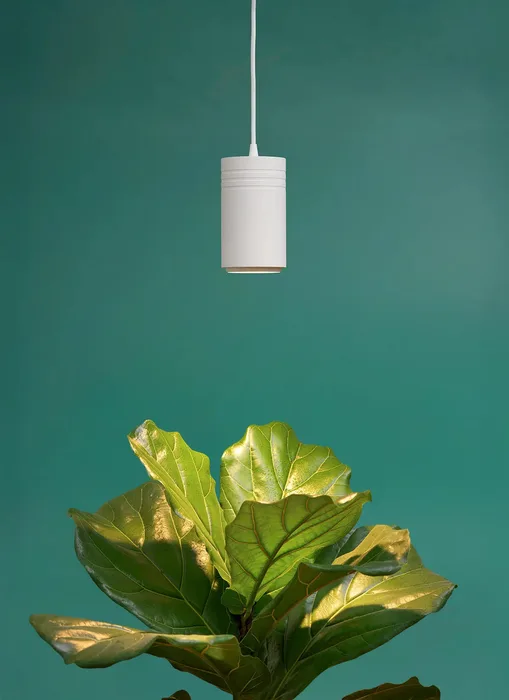
- Buy Soltech Aspect Gen 2 LED Growlight A pendant grow light for living spaces that publishes its output at real distances.
- Buy Mars Hydro TS 600 An efficient 100 W panel for grow tents and seed trays, with published PPF.
- It depends Barrina T5 10W LED Grow Lights 2FT 5000K Cheap, linkable 5000K strips for shelves and seed trays, with no plant-light figures.
- Skip Sansi 40W Adjustable 4-Head Clip-on LED Grow Light with Timer A clip-on light sold on lumens and bulb-equivalent claims instead of plant-light output.
What actually matters
- PPF - total plant-usable light from the fixture, in µmol/s. Higher means more light overall.
- PPFD - light reaching a surface, in µmol/m²/s. It depends on distance.
- Efficiency - µmol/J. It shows light per watt.
- Coverage - the footprint a light serves. Panels list it by growth stage.
- Spectrum - white, red and far red. Full spectrum suits most plants.
- Dimming and timers - control intensity and hours. They make care easier.
- Certifications - ETL or UL listings. They matter for long daily use.
The specs, in plain English
Green flags vs red flags
Green flags
- Published PPF and PPFD.
- An efficiency figure in µmol/J.
- Coverage or PPFD at stated heights.
- Dimming or a timer.
- ETL or UL certification.
Red flags
- Lumens as the only output figure.
- "Equivalent to 600 W" claims.
- Percentage energy-savings promises.
- "High PPFD" with no number.
- No certification information.
Who's who: the brands
- Soltech - Known for design-focused pendant and bar grow lights for homes.
- Mars Hydro - A grow light maker known for efficient panels for tents and indoor growing.
- Barrina - A budget maker of linkable T5 and T8 LED strips and shop lights.
- Sansi - A lighting brand known for ceramic LED bulbs and clip-on grow lights.
How to read a listing without getting fooled
Start with PPF and PPFD, and ignore lumens and wattage equivalents. Check efficiency in µmol/J, then the coverage or PPFD at your intended hanging height. Look at the spectrum, dimming and timer options, then certifications and warranty. Finally, match the style to where the plants live.
How much should you spend?
Budget grow lights include strips and clip-ons, often with little published data, fine for a few plants up close. Mid-range panels publish PPF, efficiency and coverage and suit seedlings and tents. Premium lights add design, dimming and published PPFD at real distances for living spaces.
Questions, answered
Can a regular LED bulb grow plants?
A bright white LED can help low-light plants, but it is not optimised for them and rarely lists plant figures. A dedicated grow light gives more usable light. For seedlings, use a proper grow light close to the plants.
Why are my seedlings leggy?
They are stretching for more light. Lower the light or increase intensity, and make sure it runs long enough each day. A timer helps.
Can grow lights burn plants?
Too much intensity too close can bleach or scorch leaves. Follow the maker's hanging height and use dimming. Raise the light if leaves pale.
Do I need a grow light in winter?
Many houseplants slow down in winter because days are short and light is weak. A grow light keeps them growing, especially in north-facing rooms. Herbs and seedlings benefit most.
Or jump to the head-to-head: Soltech Aspect Gen 2 LED Growlight vs Mars Hydro TS 600.