Explained
Hiking Gaiters, Explained
After reading, you'll understand which class of gaiter your hiking actually calls for, how to tell a real waterproof laminate from marketing adjectives, and why the instep strap decides how long a pair lasts.
In this guide
Gaiters are one of the few pieces of outdoor kit where the cheap thing and the expensive thing are not the same product at different quality levels. They are genuinely different tools with different jobs, and the spec sheets use enough jargon that it is easy to buy the wrong one. First-time buyers usually get caught by three things: assuming any gaiter is waterproof, not noticing that the strap under the shoe is a consumable, and discovering after delivery that a low gaiter expects a sticky hook patch on the heel of a shoe that does not have one. None of that is hard once you know what to read.
The 30-second version
- There are three classes, not one: low debris gaiters, mid and full waterproof gaiters, and heavy alpine gaiters for crampons and deep snow.
- Water resistant is not waterproof, and a coated packcloth or a DWR-treated stretch weave will wet through in sustained brush no matter how it is described.
- The instep strap is the wear part, so a gaiter with a non-replaceable strap is really a disposable gaiter with a long fuse.
- Low gaiters have an attachment problem, because many need an adhesive hook patch on the shoe heel, and some shoe makers now build the tab in instead.
- For most three-season trail hiking, gaiters are optional, and the strongest case for the low type is trail running in sandy or seedy terrain.
The products this guide is about
Our verdict on each, with the full reasoning on the companion review.
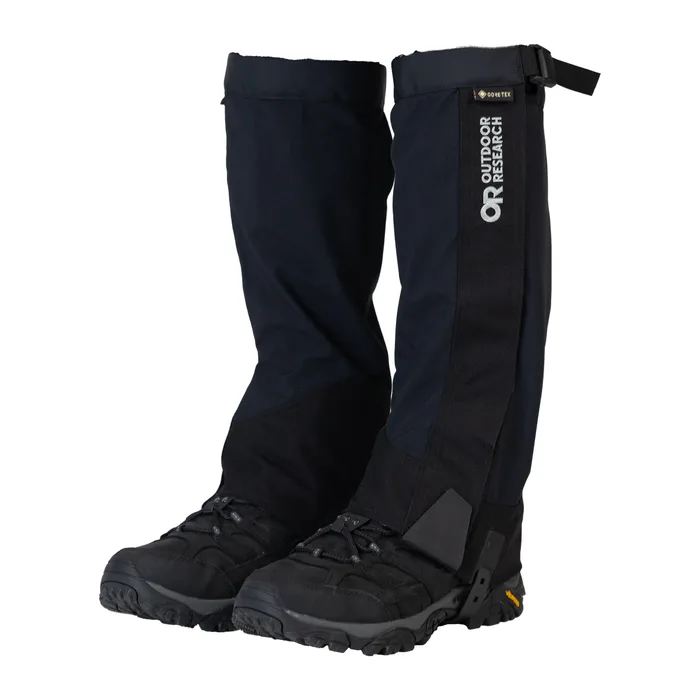
- Buy Outdoor Research Crocodile Gaiter The reference full-height alpine gaiter, rebuilt in 2025 with a camlock top and a strap the maker says is replaceable. Amazon
- Buy Kahtoola INSTAgaiter Stretch-Woven Gaiter A light stretch-woven low or mid gaiter that publishes every number and sells its wear part as a spare. Amazon
- It depends Altra Trail Gaiter A cheap strapless low gaiter that Altra says works best on its own GaiterTrap equipped shoes. Amazon
- Skip Outdoor Research Rocky Mountain High Gaiter II Looks like the sensible full-height hiking gaiter, but it is coated packcloth that weighs more than the brand's own GORE-TEX model. Amazon
What actually matters
- Class and height - This is the single decision that determines whether your gaiter is useful or dead weight. Low keeps grit out, mid adds shallow water and light snow, full height is for deep snow and sustained wet brush, and each step up costs you heat and weight on every other day.
- Named waterproof laminate - A membrane such as GORE-TEX 3L is a specific, testable construction; water resistant and PU coated are descriptions of a coating that will eventually give up. If the page does not name a laminate, treat the gaiter as a debris barrier with a head start on light rain.
- Instep strap material and replaceability - The strap drags on rock and grit every step and it is the first thing to fail. Look for the word replaceable on the product page, or find the strap listed as a spare part in the maker's own shop, which is the strongest signal you can get.
- Front attachment method - A boot lace hook that clips under your laces works with any shoe, while a strapless heel attachment usually needs an adhesive hook patch or a shoe with a built-in tab. Get this wrong and the gaiter fits fine and still slides around.
- Top closure - A camlock, buckle or drawcord at the top hem is what stops a tall gaiter creeping down your calf over a long day. A gaiter whose only listed fastening is the front closure is relying on fit alone.
- Foot panel construction - The lower panel takes the abrasion from rock, brush and any hardware on your feet, which is why alpine gaiters use heavy Cordura or ballistic nylon there and lighter gaiters use the same fabric all over. This is also where crampon damage happens.
- Entry method - A full-length hook-and-loop front lets you get a gaiter around a big mountaineering boot; an asymmetric side zip is quicker and neater on a trail shoe. Neither is better in the abstract, but one of them matches your footwear.
The specs, in plain English
Green flags vs red flags
Green flags
- The maker publishes a height in inches or centimetres, not just the word low or high.
- The instep strap is described as replaceable, and better still is sold as a standalone spare part.
- A specific waterproof-breathable laminate is named on the spec sheet rather than implied by adjectives.
- The lower or foot panel uses a heavier fabric than the leg, which means the maker knows where abrasion happens.
- A top closure is listed by name, whether that is a camlock, a buckle or an elastic drawcord.
Red flags
- The word waterproof appears in the marketing text but no membrane is named anywhere in the specs.
- No weight, height or fabric composition is published, so you cannot compare it to anything.
- The instep strap is praised as durable with no mention of replacing it, on a gaiter that is otherwise expensive.
- A strapless low gaiter with no explanation of how it attaches at the heel and no hook tape mentioned in the box.
- A full-height gaiter that weighs as much as a laminated one while being rated only water resistant.
Who's who: the brands
- Outdoor Research - Its Crocodile line is the long-running alpine reference, and the wider range runs from a 2.65 oz stretch Ferrosi Trail Gaiter up to the Expedition Crocodile Classic, whose page is the one that actually mentions crampon puncture protection.
- Kahtoola - Makes gaiters alongside footwear traction, publishes height, per-pair weight and fabric composition for every model from the strapless INSTAgaiter SL to the 17 in NAVAgaiter GTX, and sells its DuraLink instep strap as a spare part.
- Altra - Best known for its trail shoes, and its strapless Trail Gaiter is built around the GaiterTrap attachment tab that select Altra shoes carry in the heel.
- Rab - A UK mountain brand whose US site carries a gaiters category aimed at walking boots, described as durable, lightweight and waterproof protection for boggy ground.
How to read a listing without getting fooled
Start at the fabric line, not the headline. If it names a laminate such as GORE-TEX 3L, the gaiter is waterproof in a meaningful sense; if it says PU coated, DWR treated or simply water resistant, it is a debris barrier that also handles a shower. Next find the height in inches or centimetres, and if the maker does not publish one, work out the class from the pictures and treat the omission as a small warning sign. Then scan the design features list for three specific words: replaceable, next to the instep strap; a named top closure, whether camlock, buckle or drawcord; and lace hook, which tells you it will attach to any laced shoe. If you plan to use crampons or spikes, search the page text for the word crampon, because plenty of expensive gaiters never say it. Finally, compare weights only within a brand, since some makers list per pair and some do not say.
How much should you spend?
The budget tier gets you a simple low gaiter, often strapless and often tied to a particular brand of shoe, which is genuinely all a trail runner in dry terrain needs. The mid-range tier is where the useful stuff lives: low and mid stretch-woven gaiters with a side zip, a lace hook and a replaceable strap, plus full-height coated-nylon models that are tough but are not waterproof in the laminate sense. The premium tier buys you a named waterproof-breathable membrane, a heavy reinforced foot panel and a top closure built to hold on a tall gaiter, and it is worth it only if you actually meet snow, sustained wet brush or crampons. Spending up a tier does not make a gaiter better for your conditions, it makes it better for harder conditions, which is a different thing. If you are unsure, buy in the middle and put the difference toward socks.
Questions, answered
Can I wear gaiters with trail runners instead of boots?
Yes, and it is the most common modern use. Low gaiters are designed around trail shoes specifically, since a shoe with a low collar lets in far more grit than a boot does. What you need to check is the attachment: some low gaiters use a lace hook and an instep strap and work with anything laced, while strapless models want either an adhesive hook patch on the heel or a shoe with a built-in tab. Confirm which one you are getting before you order.
Will gaiters make my feet waterproof?
No, and this is the most common misunderstanding in the category. A gaiter seals the gap between your footwear and your trousers, so it stops water running down your leg into your boot and stops brush soaking your socks from above. Water that comes through the boot itself, or over the top of a low gaiter in a stream crossing, is unaffected. Think of a gaiter as extending your boot upward, not as making it more waterproof.
How do I stop the instep strap wearing through so fast?
Some wear is unavoidable, since the strap is the contact point with the ground. You can slow it by adjusting the strap so it sits in the arch of the shoe rather than under the tread, and by keeping it snug so it does not saw back and forth. Several makers reinforce the stitching where the strap meets the gaiter body for exactly this reason. Beyond that, the real answer is to buy a gaiter whose maker sells replacement straps.
Do I need different gaiters for snowshoeing and for summer scree?
Ideally yes, and that is a feature of the category rather than an upsell. Snowshoeing wants a full or mid height gaiter in a waterproof laminate because you are standing in melting snow for hours. Summer scree wants the lightest, coolest thing that keeps stones out, which is a low stretch-woven gaiter. If you only want to own one pair, a mid-height model is the least bad compromise, but it will be too hot in July and too short in February.
Or jump to the head-to-head: Outdoor Research Crocodile Gaiter vs Kahtoola INSTAgaiter Stretch-Woven Gaiter.