

Outdoors & Fitness
The Best Hiking Gaiters: 4 Compared (and One to Skip)
We compared four gaiters on class and height, whether the fabric is a named waterproof laminate, how the front attaches to the shoe, and whether the instep strap - the part that wears out first - can be replaced.
The short version
The Outdoor Research Crocodile Gaiter is the pick if you genuinely need full height: bluesign approved GORE-TEX 3L over a 1000D Cordura foot panel, a camlock that cinches above the calf, and a TPU instep strap that Outdoor Research explicitly calls replaceable. The Kahtoola INSTAgaiter is the value buy and the one most hikers should look at first, because it comes in a 4.5 inch low and a 7.5 inch mid, weighs under 3 oz a pair, and its DuraLink strap is sold on its own as a spare. The Altra Trail Gaiter is the depends pick: strapless and cheap, but Altra says the strapless design performs best with an Altra GaiterTrap equipped shoe, which makes it an accessory for people already running in Altras. We would skip the Outdoor Research Rocky Mountain High Gaiter II, which is full height and heavy but rated only water resistant, with no named laminate and no stated replaceable strap. Be honest with yourself before you buy anything: for three-season hiking on maintained trail, gaiters are optional, and the strongest case for the low type is trail running in sandy or seedy terrain. Best for: hikers and runners heading into scree, seedy grass, wet brush or snow, where the class of gaiter matters far more than the brand on it.
Our picks at a glance
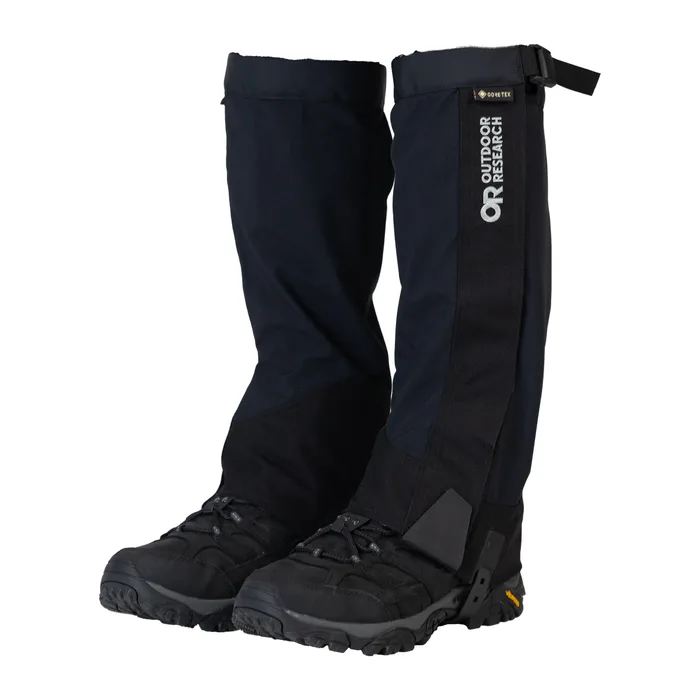
- Outdoor Research Crocodile Gaiter - Buy. The reference full-height alpine gaiter, rebuilt in 2025 with a camlock top and a strap the maker says is replaceable.
- Kahtoola INSTAgaiter Stretch-Woven Gaiter - Buy. A light stretch-woven low or mid gaiter that publishes every number and sells its wear part as a spare.
- Altra Trail Gaiter - It depends. A cheap strapless low gaiter that Altra says works best on its own GaiterTrap equipped shoes.
- Outdoor Research Rocky Mountain High Gaiter II - Skip. Looks like the sensible full-height hiking gaiter, but it is coated packcloth that weighs more than the brand's own GORE-TEX model.
The verdict in 30 seconds
What mattered most
- Class
- Maker-stated height
- Waterproof laminate
- Lower / foot panel
- Closure
- Instep strap
Gaiters look like one product and are really three. A low, ankle-height sleeve keeps grit, scree and seeds out of trail runners, and it is not meant to be waterproof. A mid or full-height gaiter in a named waterproof-breathable laminate is the one for wet brush and shallow snow, and an alpine gaiter adds a heavy reinforced foot panel to survive crampon points and deep snow. Buying the wrong class is the mistake people actually make, so we picked one good example from each, plus one popular full-height model we think most buyers should pass on.
The reference full-height alpine gaiter, rebuilt in 2025 with a camlock top and a strap the maker says is replaceable.
Best for: Mountaineering, snowshoeing and shoulder-season off-trail travel, where you want one gaiter that will outlast several pairs of boots.
- Upper leg panel is bluesign approved GORE-TEX 3L over 70D nylon, so it is a named waterproof laminate rather than a coating.
- Foot panel is 1000D Cordura in a 2L build with a PU-coated 420D packcloth lining inside the lower boot.
- Outdoor Research describes the TPU instep strap as durable and replaceable, with internal adjustment for length.
- Listed at 11.11 oz, which is a lot of gaiter to carry if you are not in snow or heavy brush.
- The product page makes no crampon compatibility claim, so you are inferring that from the Cordura panel rather than reading it.
- Priced at the premium end of the category, and the hook-and-loop front takes longer to fasten than a side zip.
- Full height is genuinely hot on a warm-weather hike.
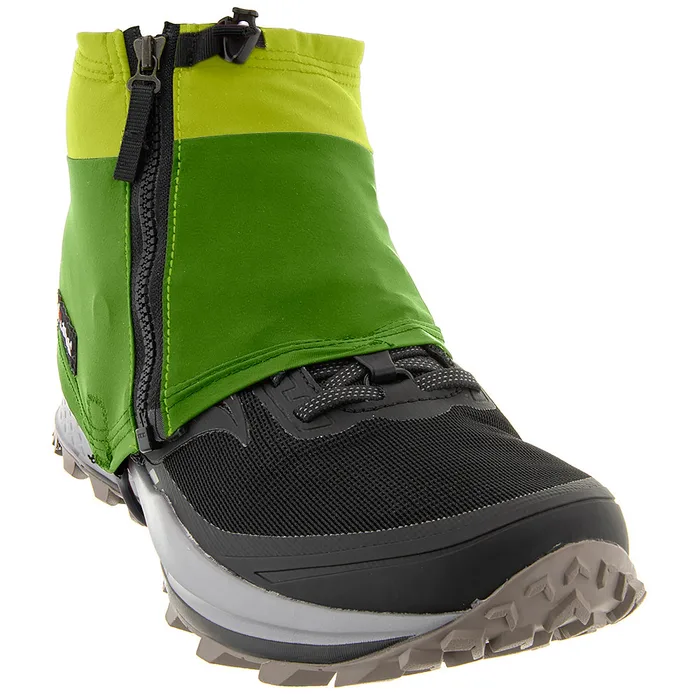
A light stretch-woven low or mid gaiter that publishes every number and sells its wear part as a spare.
Best for: Trail running, thru-hiking and any dusty, sandy or seedy terrain where the job is keeping debris out rather than keeping water off.
- Sold in a 4.5 in low and a 7.5 in mid, with per-pair weights published for every size from 1.7 oz to 2.7 oz.
- DuraLink TPU instep strap is adjustable, replaceable, carries a 1000-mile warranty and is stocked as a standalone part.
- Asymmetric YKK VISLON side zip plus an elastic top drawcord and a nylon lace hook, so it goes on without pulling your shoe off.
- Not waterproof: the fabric is a stretch-woven nylon and polyurethane blend with a PFAS-free C0 DWR, which sheds a passing shower and nothing more.
- Only three sizes (XS, S/M, L/XL), so the fit is close rather than dialled.
- Stretch woven will not stand up to thorns and rock the way a 1000D Cordura panel does.
- Even the mid height is short for deep snow or sustained wet brush.
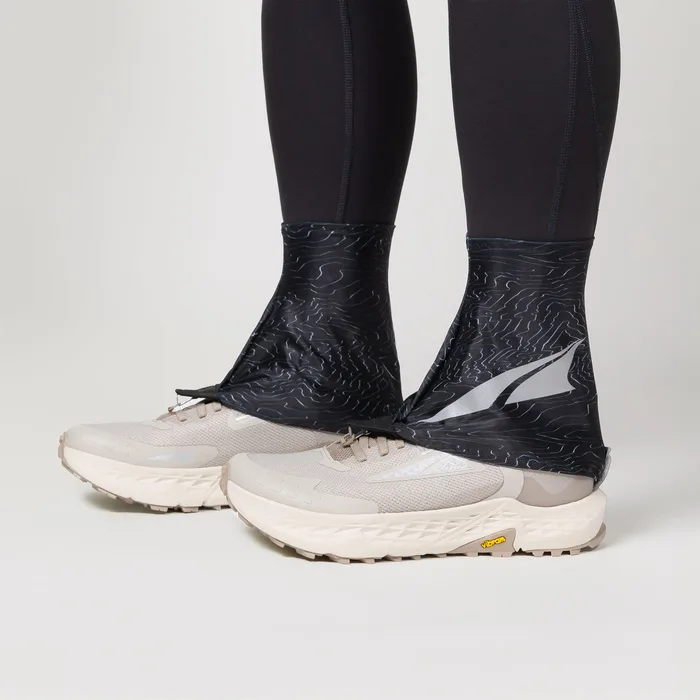
A cheap strapless low gaiter that Altra says works best on its own GaiterTrap equipped shoes.
Best for: Runners already in Altra trail shoes with the built-in heel attachment, who want debris protection and nothing else.
- Strapless, so there is no instep strap under your shoe to abrade through or catch on rock.
- An inexpensive way into a low gaiter from a named running brand.
- Altra states it is built from abrasion resistant and highly breathable material to keep mud, rocks and debris out.
- Altra says it is designed to fit select Altra trail shoes and performs best with an Altra GaiterTrap equipped shoe, so shoe compatibility is the whole story.
- Altra does not name the fabric, publish a height, or publish a weight on the product page.
- Only two sizes, S and L.
- No waterproof laminate and no claim of one, so this is a debris barrier only.
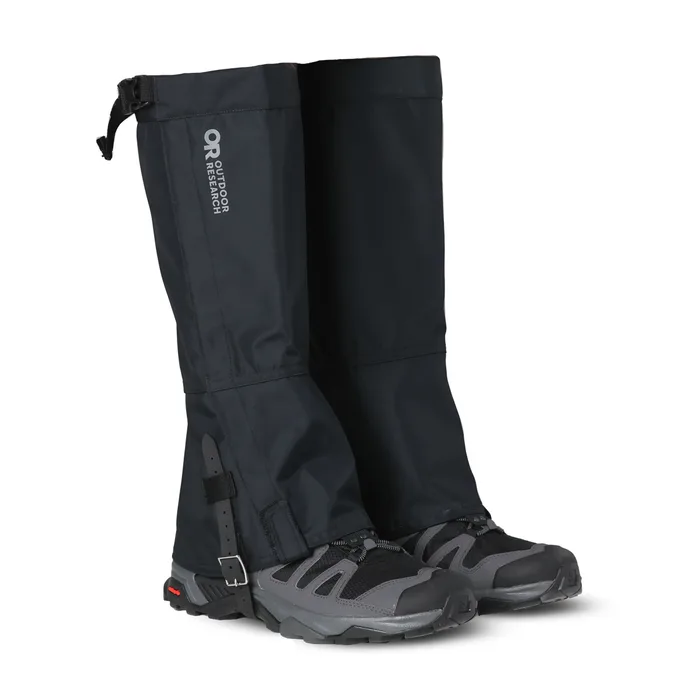
Looks like the sensible full-height hiking gaiter, but it is coated packcloth that weighs more than the brand's own GORE-TEX model.
Best for: Someone who specifically wants an abrasion shield for dry off-trail bushwhacking and has no interest in a membrane.
- 420D packcloth with a PU coating is genuinely tough against thorns, scree and rock.
- Reinforced boot lace hooks and a full-length hook-and-loop front make it quick to get on and off over boots.
- Full calf height keeps mud, gravel and light snow out better than a low gaiter.
- Outdoor Research rates the fabric water resistant, not waterproof, and there is no named waterproof-breathable laminate in it anywhere.
- Listed at 7.76 oz, heavier than Outdoor Research's own GORE-TEX Crocodile Classic at 7.51 oz, so you carry more and get less weather protection.
- The Hypalon instep strap is described as durable but not as replaceable, unlike the Crocodile where the page says so explicitly.
- The feature list runs to three items (instep strap, hook-and-loop front, lace hooks) with no top camlock or drawcord mentioned.
| Criteria | Crocodile Gaiter Top pick | INSTAgaiter Stretch-Woven Gaiter | Trail Gaiter | Rocky Mountain High Gaiter II |
|---|---|---|---|---|
| Verdict | Buy it | Buy it | It depends | Skip it |
| Best for | Mountaineering, snowshoeing and shoulder-season off-trail travel, where you want one gaiter that will outlast several pairs of boots. | Trail running, thru-hiking and any dusty, sandy or seedy terrain where the job is keeping debris out rather than keeping water off. | Runners already in Altra trail shoes with the built-in heel attachment, who want debris protection and nothing else. | Someone who specifically wants an abrasion shield for dry off-trail bushwhacking and has no interest in a membrane. |
| Price tier | $$$ · premium | $$ · mid-range | $ · budget | $$ · mid-range |
| Class | Full height, alpine | Low (4.5 in) or mid (7.5 in) | Low, strapless trail | High, full calf |
| Maker-stated height | Not published | 4.5 in / 11.4 cm low; 7.5 in / 19.0 cm mid | Not published | Not published |
| Waterproof laminate | GORE-TEX 3L, 70D nylon upper panel | None; DWR-treated stretch woven | None named | None; PU-coated 420D packcloth |
| Lower / foot panel | 1000D Cordura 2L, packcloth lined | Same stretch-woven fabric throughout | Not stated | Same 420D packcloth throughout |
| Closure | Double-stitched offset hook and loop | Asymmetric YKK VISLON side zip | Strapless pull-on, not stated | Hook-and-loop front closure |
| Instep strap | TPU, stated durable and replaceable | DuraLink TPU, replaceable, 1000-mile warranty | None (strapless) | Hypalon; replaceability not stated |
| Front attachment | Boot lace hook | Nylon lace hook | Best with Altra GaiterTrap heel tab | Reinforced boot lace hooks |
| Maker-listed weight | 11.11 oz / 315 g | 1.7 to 2.7 oz per pair by size and height | Not published | 7.76 oz / 220 g |
Which one is right for you?
- Mountaineering, snowshoeing and shoulder-season off-trail travel, where you want one gaiter that will outlast several pairs of boots. Buy it Outdoor Research Crocodile Gaiter
- Trail running, thru-hiking and any dusty, sandy or seedy terrain where the job is keeping debris out rather than keeping water off. Buy it Kahtoola INSTAgaiter Stretch-Woven Gaiter
- Runners already in Altra trail shoes with the built-in heel attachment, who want debris protection and nothing else. It depends Altra Trail Gaiter
- Someone who specifically wants an abrasion shield for dry off-trail bushwhacking and has no interest in a membrane. Skip it Outdoor Research Rocky Mountain High Gaiter II
How we judged the field
Five things decide whether a gaiter is worth owning. First, class and height, because a low debris sleeve and an alpine gaiter are not competing products and buying the wrong one is the common mistake. Second, whether the fabric is a named waterproof-breathable laminate or just a coated or DWR-treated weave, since only the first survives an hour in wet brush. Third, the instep strap: it is the part that abrades away, and a maker who says it is replaceable, or better, sells it as a spare, is telling you the gaiter is meant to outlive one strap. Fourth, how the thing attaches at the front, because low gaiters often need an adhesive hook patch on the shoe heel and that is a compatibility gotcha nobody mentions at the till. Fifth, the top closure, which is the difference between a gaiter that stays put and one that slides down your calf all day.
The field splits cleanly into three, so we took one strong example of each plus a cautionary tale. The Outdoor Research Crocodile represents the alpine class: GORE-TEX leg, Cordura foot panel, camlock top. The Kahtoola INSTAgaiter represents the low and mid stretch-woven class, which is the class most buyers actually need. The Altra Trail Gaiter represents the strapless shoe-specific approach, cheap and comfortable with one large condition attached. And the Outdoor Research Rocky Mountain High Gaiter II is the popular full-height model that reads like the sensible middle option until you look at what it is made of. One more honest note: for three-season hiking on maintained trail, gaiters are optional, and we are not going to pretend otherwise.
Outdoor Research Crocodile Gaiter
Buy itThe Crocodile is the gaiter everything else gets compared to, and the 2025 redesign keeps the parts that earned it that. The upper leg panel is bluesign approved GORE-TEX 3L over 70D plain-weave nylon, the foot panel is 1000D Cordura in a 2L build, and the inside of the lower boot is lined with PU-coated 420D packcloth. The front is a double-stitched hook-and-loop closure, offset so you can tell left from right with gloves on in the dark. An adjustable camlock secures the top hem above the calf and a boot lace hook holds the front down. The detail that matters over years is the instep strap: Outdoor Research describes it as durable and replaceable TPU, with internal adjustment for length, so the one part guaranteed to wear out is not the end of the gaiter. It is listed at 11.11 oz, which is real weight, and the page makes no crampon claim, so read that as unstated rather than confirmed. For mountaineering, snowshoeing and shoulder-season off-trail days, not for a summer stroll.
Kahtoola INSTAgaiter Stretch-Woven Gaiter
Buy itThe INSTAgaiter is the gaiter most people asking about gaiters actually want. Kahtoola sells it in a 4.5 in low and a 7.5 in mid, and publishes a per-pair weight for every size, from 1.7 oz for the small low to 2.7 oz for the large mid. The fabric is a stretch-woven blend of 86 percent recycled nylon and 14 percent polyurethane with a PFAS-free C0 DWR, and Kahtoola describes it as deflecting unexpected light moisture rather than being waterproof, which is the honest framing. What it does very well is seal out dust, gravel and scree. Entry is by an asymmetric YKK VISLON side zip that handles grit better than a coil, an elastic drawcord snugs the top cuff, and a nylon lace hook pins the front so nothing rides up. The DuraLink TPU instep strap is adjustable, replaceable, backed by a 1000-mile warranty and sold on its own. If you run trails or thru-hike, start here.
Altra Trail Gaiter
It dependsAltra’s Trail Gaiter is an inexpensive way into a low gaiter and the one with the biggest asterisk. It is strapless, so there is nothing crossing under your shoe to abrade through or snag, which is genuinely pleasant over a long run. Altra is upfront about the catch: the gaiter is designed to fit select Altra trail shoes, and the strapless design performs best paired with an Altra GaiterTrap equipped shoe, meaning the small attachment tab built into the heel. Without that tab you are improvising the attachment, which is exactly the low-gaiter surprise buyers keep running into. Altra also does not name the fabric beyond abrasion resistant and highly breathable, and does not publish a height or a weight, so you are buying on fit and colour rather than spec. It comes in two sizes, S and L. If you already run in Altras, buy it and stop thinking about it. If you do not, buy a gaiter that brings its own attachment.
Outdoor Research Rocky Mountain High Gaiter II
Skip itThe Rocky Mountain High Gaiter II looks like the sensible full-height hiking gaiter, and the spec sheet does not support that. The fabric is 100 percent nylon 420D packcloth with a PU coating, and Outdoor Research rates it abrasion resistant, breathable and water resistant. Not waterproof, and there is no named waterproof-breathable laminate anywhere in it, so an hour in wet brush or wet snow eventually gets through. That trade would be fine at a low weight, except it is listed at 7.76 oz, which is heavier than Outdoor Research’s own GORE-TEX Crocodile Classic at 7.51 oz. So you carry more and get less weather protection from the same brand. The design feature list is three items long: a Hypalon instep strap, a hook-and-loop front closure and reinforced boot lace hooks, with no top camlock or drawcord mentioned. And the strap is called durable but not replaceable, a word Outdoor Research does use on the Crocodile. As a dry-weather abrasion shield it is fine. As your one waterproof gaiter, it is the wrong buy.
Sources
Specs in this review come from these pages.
- Outdoor Research - Crocodile Gaiter product page (outdoorresearch.com)
- Outdoor Research - Rocky Mountain High Gaiter II product page (outdoorresearch.com)
- Outdoor Research - Expedition Crocodile Classic Gaiter product page (outdoorresearch.com)
- Kahtoola - INSTAgaiter Stretch-Woven Gaiter product page (kahtoola.com)
- Kahtoola - NAVAgaiter GTX product page (kahtoola.com)
- Altra - Trail Gaiter product page (altrarunning.com)
Outdoor Research Crocodile Gaiter vs Kahtoola INSTAgaiter Stretch-Woven Gaiter: which should you buy?
These two barely compete, which is the point. The Crocodile is a full-height alpine gaiter with a GORE-TEX 3L leg, a 1000D Cordura foot panel and a camlock that pulls the top hem tight above your calf, and it is listed at 11.11 oz. The INSTAgaiter is a 4.5 or 7.5 inch stretch-woven sleeve with a side zip and a drawcord that weighs under 3 oz a pair and makes no waterproof claim at all. If you put the INSTAgaiter into a knee-deep spring snowfield it will fail at the job, and if you wear the Crocodile on a July trail run you will regret it within a mile. Both are well built; they are answers to different questions.
So choose on the conditions you actually meet, not the worst day you can imagine. If your hard days involve snow, sustained wet brush, or anything where you might strap on traction, buy the Crocodile and accept the weight and the heat. If your hard days involve dust, scree, sand and grass seeds, buy the INSTAgaiter, and get the mid if you also want light rain and shallow puddle coverage. The tiebreaker if you are genuinely on the fence: both makers publish a replaceable instep strap, so either one is repairable rather than disposable, which is more than can be said for a lot of what is on the shelf. And if neither description sounds like your hiking, the correct answer is to buy nothing.
What to look for
- Pick the class before the brand: low gaiters keep debris out, mid and full gaiters in a named laminate keep water out, and alpine gaiters exist for crampons and deep snow, so decide which job you have first.
- Look for a named laminate, not adjectives: GORE-TEX 3L or a comparable named waterproof-breathable membrane means something, while water resistant, PU coated and DWR treated mean the fabric will eventually wet through.
- Check that the instep strap is replaceable: it is the wear part, and a maker who calls it replaceable or sells it as a spare, as Outdoor Research and Kahtoola both do, is telling you the gaiter is meant to be repaired.
- Work out how it attaches at the front before you buy: low gaiters often need an adhesive hook patch stuck to the shoe heel, some shoes now build that tab in, and models with a lace hook plus instep strap avoid the question entirely.
- Read the crampon language rather than assuming it: if you plan to wear points, look for an explicit statement about crampon puncture or crampon strikes, because most gaiters, including some expensive ones, do not make one.
- Check the top closure and the entry method: a camlock, buckle or drawcord keeps the hem from sliding down your calf, and a side zip is far quicker to get on over a boot than a full-length hook-and-loop front.
Our final take
Buy the class of gaiter your conditions call for and ignore the rest of the range. For most people that means a low or mid stretch-woven gaiter like the Kahtoola INSTAgaiter, which handles the real problem of grit and seeds in your shoes for very little weight and has a replaceable strap behind it. If your year includes snow, sustained wet brush or crampons, the Outdoor Research Crocodile earns its price and its 11 oz. The Altra Trail Gaiter is a fine, cheap answer if you already run in Altras and a frustrating one if you do not. And skip the full-height coated-packcloth option: it weighs more than a GORE-TEX gaiter from the same brand and keeps out less water.
Questions, answered
Do I actually need gaiters for hiking?
For most three-season hiking on maintained trail, no. Boots and trousers already handle dust and the occasional puddle, and a gaiter mostly adds heat around your calf. The clear cases are scree and sandy trails, grass that drops seeds into your shoes, wet brush where your legs soak your socks, and snow of any depth. If you are a trail runner in sandy or seedy terrain, a low gaiter is the single most useful piece of kit on this page; if you are a summer day hiker on a groomed path, you can skip the whole category.
Are these gaiters safe to wear with crampons?
Check the maker's own words rather than assuming, because a light gaiter shredded by crampon points is a predictable and expensive failure. Outdoor Research's crampon language appears on the Expedition Crocodile Classic page, which describes the Cordura shell as protection against crampon puncture and ski edges. The standard Crocodile and Crocodile Classic pages do not carry that statement even though they use the same 1000D Cordura foot panel. Kahtoola makes a comparable claim for its tall NAVAgaiter GTX, saying the ballistic nylon lower is built to stand up to crampon strikes. Nothing in the low or stretch-woven class carries any crampon claim at all, so do not put points near one.
Why does the instep strap matter so much?
It is the only part of a gaiter that drags across rock and grit on every step, so it is the part that fails. Once it is gone the gaiter rides up and stops doing its job, which means a gaiter with a non-replaceable strap is effectively disposable. This is why we weight it heavily: Outdoor Research says the Crocodile's TPU strap is replaceable, and Kahtoola sells its DuraLink strap as a standalone part, and the strap on the INSTAgaiter carries a 1000-mile warranty. On the Rocky Mountain High Gaiter II the Hypalon strap is called durable but replaceability is not stated. Look for the word replaceable, or for the strap listed as a spare part in the maker's own shop.
Do low trail gaiters need a sticky hook patch on my shoe?
Often, yes, and it surprises people. Many low gaiters attach at the heel to a patch of hook tape that you stick onto the shoe yourself, which means an adhesive step, a curing period, and a patch that can peel off in mud. Some makers now sidestep it: Altra builds a GaiterTrap tab into select trail shoes and says its strapless Trail Gaiter performs best paired with one. Kahtoola's strapless INSTAgaiter SL attaches at the heel with included Velcro or works with shoes that have a built-in attachment. The models that use an instep strap and a lace hook, like the standard INSTAgaiter, avoid the issue entirely.
How do I choose between low, mid and full height?
Match the height to what you are keeping out, not to how serious you feel. Low, roughly ankle height, is for debris: scree, sand, grit and seeds, and it is the right answer for trail running. Mid, around seven inches, adds shallow puddle and light snow coverage without cooking your calf, which is the sweet spot for wet-weather hiking. Full height exists for deep snow, sustained wet brush and mountaineering, and it costs you weight and ventilation every step you are not in those conditions. Buying up a class because it seems safer is how people end up with an expensive gaiter they never take out.
Deciding between the top two? See our head-to-head: Outdoor Research Crocodile Gaiter vs Kahtoola INSTAgaiter Stretch-Woven Gaiter.
More Outdoors & Fitness reviews
 The Best Beginner Golf Club Sets: 4 Compared (and One to Skip)
  The Best Golf Launch Monitors: 4 Compared (and One to Skip)
  The Best Golf Push Carts: 4 Compared (and One to Skip)
  The Best Golf Laser Rangefinders: 4 Compared (and One to Skip)
  The Best GPS Running Watches for 2026
  The Best Grip Socks for Pilates and Barre: 4 Compared (and One to Skip)