

Outdoors & Fitness
The Best Golf Launch Monitors: 4 Compared (and One to Skip)
We compared four home and range launch monitors on how they measure, which data needs a subscription, how much room they need and what each maker actually publishes.
The short version
The Bushnell Launch Pro is our pick: a three-camera unit with infrared that reads the ball where it sits, carries an IPX7 rating and works indoors and out, though club data needs a Foresight+ Silver or Gold membership and the software needs a gaming PC. The Rapsodo MLM2PRO is the value pick, pairing two cameras with radar and listing 8 of its 15 metrics as measured, including spin rate and club path with its RPT balls. The FlightScope Mevo Gen2 suits golfers who hate subscriptions, since all core data is free, but it needs about 8 feet behind the ball plus 8 feet of flight indoors and stickers or RCT balls for spin. Skip the Garmin Approach R10, a radar-only unit with no published accuracy figures that needs similar room and puts simulator play behind a subscription. Best for: golfers who want reliable numbers at home and the range without being surprised by fees.
Our picks at a glance
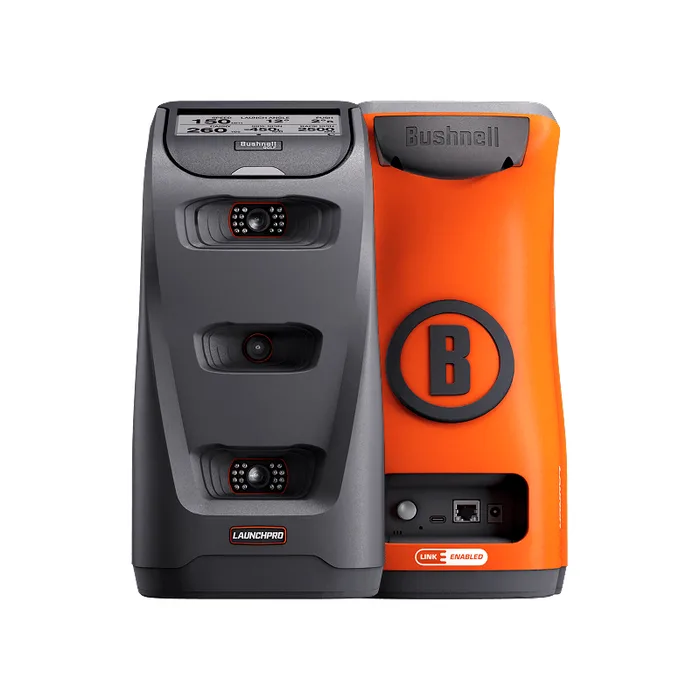
- Bushnell Launch Pro - Buy. A three-camera launch monitor built on Foresight technology, made for golfers who want consistent data indoors and outdoors.
- Rapsodo MLM2PRO - Buy. The most measured data per dollar here, from two cameras plus radar, if you accept a membership and special balls.
- FlightScope Mevo Gen2 - It depends. A subscription-free radar and camera unit that is excellent if you have the room, and frustrating if you do not.
- Garmin Approach R10 - Skip. A tiny, popular radar unit that publishes no accuracy figures and still needs a long room and a subscription for simulator play.
The verdict in 30 seconds
What mattered most
- Measurement technology
- Where it sits
- Indoor ball flight needed
- Spin measurement notes
- Club data
- Subscription
A personal launch monitor turns a net in the garage or a bucket at the range into numbers you can practise against: ball speed, launch, spin and, on better units, what the club did at impact. The catch is that the headline price rarely tells the full story, because spin, club data and course play often sit behind a subscription, and radar units need a long room to work indoors. We picked four that real buyers shortlist, from a camera-based premium unit to a pocket radar. One of them is popular for its price but asks you to take too much on trust.
A three-camera launch monitor built on Foresight technology, made for golfers who want consistent data indoors and outdoors.
Best for: Committed golfers building a home simulator or practising seriously at the range who want camera-based data and can budget for software.
- It combines high speed, high resolution cameras with infrared in an auto calibrating three-camera system, rather than tracking from behind like radar.
- Ball data covers carry, ball speed, total spin, back and side spin, spin tilt axis, vertical and horizontal launch, apex, descent angle and more.
- It has a built-in touchscreen display, an IPX7 water rating and a 5 to 7 hour battery, and connects by Wi-Fi, Ethernet or USB-C.
- Club data (club speed, smash factor, path, angle of attack) requires a Silver or Gold software membership.
- The Foresight Premier simulator software needs a gaming PC, which is not included.
- It must connect to the internet within the United States at least once every 45 days or it stops working with apps and software.
- Returns carry a 20% restocking fee and the warranty is one year.
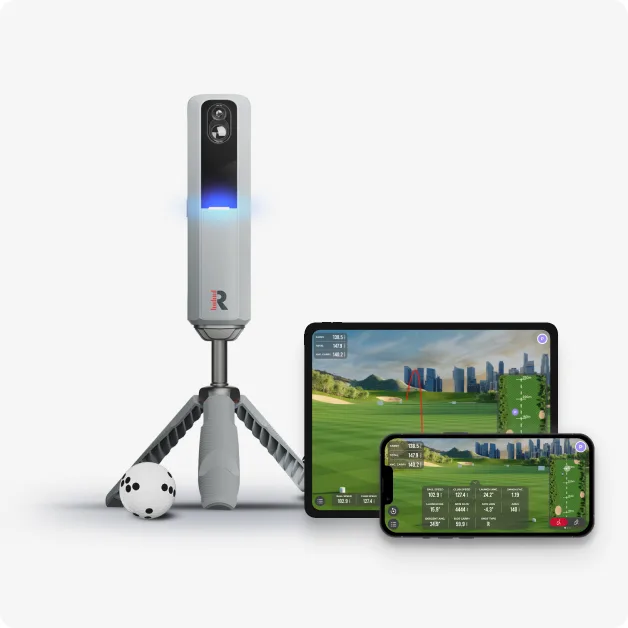
The most measured data per dollar here, from two cameras plus radar, if you accept a membership and special balls.
Best for: Golfers who want measured spin and club path on a mid-range budget and are happy to pay an annual membership.
- Rapsodo lists 8 of its 15 metrics as measured: ball speed, launch angle, launch direction, club speed, spin rate, spin axis, club path and angle of attack.
- Its Impact Vision camera captures impact at 240 frames per second, so you see strike and club contact as well as numbers.
- It works with Apple and Android phones and tablets, and comes with a tripod, carrying case and three Titleist Pro V1 RPT balls.
- Measured spin rate and spin axis need Rapsodo's RPT balls, sold separately beyond the three in the box.
- Spin, club path, angle of attack, courses and the range sit in the Premium Membership, which is a recurring cost after the trial.
- The page gives two different trial lengths, 21 days in one place and 45 in another, so confirm before you buy.
- No space requirement is published on the product page.
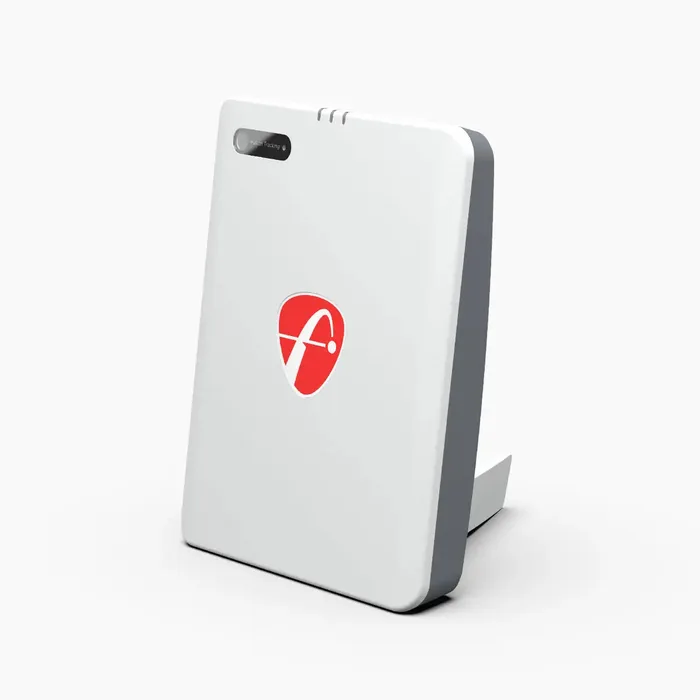
A subscription-free radar and camera unit that is excellent if you have the room, and frustrating if you do not.
Best for: Golfers with a long garage or who practise mostly outdoors and want to pay once rather than every year.
- All core data parameters, firmware updates and software fixes are free with no subscription, according to FlightScope.
- Fusion Tracking combines 3D Doppler radar with high-speed optics, and the core set includes spin rate, spin axis, spin loft, angle of attack and smash factor.
- It weighs 1.1 lb, charges by USB-C, runs up to 6 hours, makes its own Wi-Fi network and includes 8 E6 Connect courses.
- Indoors it needs 7 to 9 feet from unit to tee plus at least 8 feet of ball flight, so a short room is out.
- In limited-flight indoor use, aluminium stickers or Titleist RCT balls are required for accurate spin.
- Club path, face angle and swing plane come only with the paid Pro Package, and face impact location is another paid add-on.
- The warranty is 12 months.
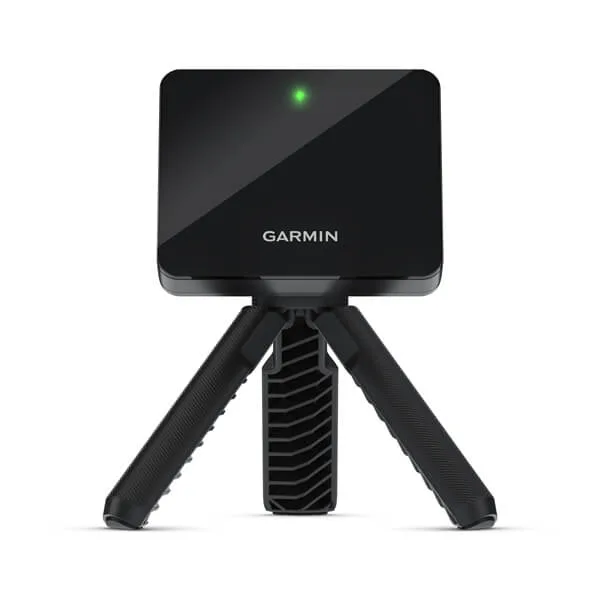
A tiny, popular radar unit that publishes no accuracy figures and still needs a long room and a subscription for simulator play.
Best for: Only range-first golfers who want a pocketable gadget and do not need trustworthy indoor spin numbers.
- It is very small and light, at 148 g without its tripod, with an IPX7 water rating.
- Battery life is up to 10 hours, the longest stated figure here.
- It lists 14 metrics including club face angle, club path and spin rate, and works with third-party simulators.
- Garmin publishes no accuracy figures for any metric, and the only measurement technology listed is radar.
- Indoors, the manual puts the unit 6 to 8 feet behind the tee and the tee at least 8 feet from the net.
- Home Tee Hero simulator play requires an active Garmin Golf subscription.
- It charges over micro USB, while the Bushnell, Rapsodo and FlightScope units here list USB-C or a mains adapter.
| Criteria | Bushnell Launch Pro Top pick | Rapsodo MLM2PRO | FlightScope Mevo Gen2 | Garmin Approach R10 |
|---|---|---|---|---|
| Verdict | Buy it | Buy it | It depends | Skip it |
| Best for | Committed golfers building a home simulator or practising seriously at the range who want camera-based data and can budget for software. | Golfers who want measured spin and club path on a mid-range budget and are happy to pay an annual membership. | Golfers with a long garage or who practise mostly outdoors and want to pay once rather than every year. | Only range-first golfers who want a pocketable gadget and do not need trustworthy indoor spin numbers. |
| Price tier | $$$ · premium | $$ · mid-range | $$$ · premium | $$ · mid-range |
| Measurement technology | Three cameras with infrared | Two cameras plus radar | 3D Doppler radar plus optics | Radar |
| Where it sits | Level with the ball, not behind you | Tripod-mounted; placement not on product page | 7 to 9 ft behind the tee | 6 to 8 ft behind the tee |
| Indoor ball flight needed | Not stated | Not stated on product page | At least 8 ft | Tee at least 8 ft from net |
| Spin measurement notes | Total, back and side spin, spin tilt axis | Measured with RPT balls | Stickers or RCT balls needed indoors | Spin rate listed, no accuracy figure |
| Club data | Needs Silver or Gold membership | Club path and AoA in Premium Membership | Core set free; path and face in paid Pro Package | Club speed, face, path, AoA listed |
| Subscription | Foresight+ Silver or Gold for club data and features | Premium Membership after trial | None for core data | Garmin Golf for Home Tee Hero |
| Battery life | 5 to 7 hours | Not stated on product page | Up to 6 hours | Up to 10 hours |
| Weight | 5 lb | Not stated on product page | 1.1 lb | 148 g without tripod |
Which one is right for you?
- Committed golfers building a home simulator or practising seriously at the range who want camera-based data and can budget for software. Buy it Bushnell Launch Pro
- Golfers who want measured spin and club path on a mid-range budget and are happy to pay an annual membership. Buy it Rapsodo MLM2PRO
- Golfers with a long garage or who practise mostly outdoors and want to pay once rather than every year. It depends FlightScope Mevo Gen2
- Only range-first golfers who want a pocketable gadget and do not need trustworthy indoor spin numbers. Skip it Garmin Approach R10
How we judged the field
Five things decide whether a launch monitor is worth owning. First is how it measures: cameras read the ball and club at impact, radar follows the ball in flight, and the method decides where it works well. Second is what it measures directly rather than calculates, especially spin and club path. Third is space, because radar units need a long room indoors. Fourth is the real cost, which includes memberships, software, a PC and special balls. Fifth is what the maker publishes, from battery life to warranty to accuracy claims.
The field splits into premium camera units for home simulators, mid-range hybrids that pair a camera with radar, subscription-free radar units and small budget radar gadgets. We picked one strong example of each. If you are still building the rest of your setup, our putting mats and beginner golf clubs reviews cover the basics, and our golf rangefinders review covers the Bushnell rangefinders that link to the Launch Pro.
The Bushnell Launch Pro measures the way premium simulators do: three auto calibrating high speed cameras with infrared that watch the ball and, with club markers, the club at impact. Bushnell contrasts this with radar units that sit behind the golfer, and the practical upshot is that you do not need a long run of ball flight indoors. Ball data includes carry, ball speed, total, back and side spin, spin tilt axis, vertical and horizontal launch, apex and descent angle. It has its own touchscreen, an IPX7 rating, a 5 to 7 hour battery and Wi-Fi, Ethernet or USB-C connections. The costs pile up, though. Club data requires a Silver or Gold Foresight+ membership, the Premier simulator software needs a gaming PC, it must check in online from the United States every 45 days, and returns carry a 20% restocking fee. For a committed golfer building a simulator, it is the one to buy.
The Rapsodo MLM2PRO packs the most measured data per dollar into a small tripod unit. It combines two cameras with radar, and Rapsodo is unusually clear about what is measured: 8 of its 15 metrics, including ball speed, launch angle, club speed, spin rate, spin axis, club path and angle of attack. The Impact Vision camera captures impact at 240 frames per second, which shows you strike quality, not just numbers. It pairs with Apple or Android devices and includes a tripod, case and three Titleist Pro V1 RPT balls. The trade-off is the business model. Measured spin needs RPT balls, and spin, club path, courses and the range sit in the Premium Membership after a free trial, which the page lists as 21 days in one place and 45 in another. Space needs are not on the product page. For mid-range budgets that can carry a yearly fee, it is the value pick.
The FlightScope Mevo Gen2 is the answer for golfers tired of subscriptions. FlightScope says all core data, firmware and software updates are free, and the box includes 8 E6 Connect courses. Its Fusion Tracking pairs 3D Doppler radar with high-speed optics, and the core set includes spin rate, spin axis, spin loft, angle of attack and smash factor. At 1.1 lb with USB-C charging, a 6-hour battery and its own Wi-Fi network, it travels well to the range. The catch is room. Indoors it wants 7 to 9 feet from unit to tee and at least 8 feet of ball flight, and in that limited-flight mode it needs aluminium stickers or Titleist RCT balls for accurate spin. Club path and face angle are in the paid Pro Package, and face impact location is a separate upgrade. If you have a long garage or mostly hit outdoors, it is excellent. In a short spare room, look elsewhere.
The Garmin Approach R10 sells on size and price. It is a 148 g radar unit with a magnetic tripod, an IPX7 rating, up to 10 hours of battery and a long list of metrics, including club face angle, club path and spin rate, and it works with third-party simulators. The problem is what you cannot check. Garmin publishes no accuracy figures for any of those metrics, and radar is the only measurement technology listed, with no camera at impact. It also needs a long room: the manual puts it 6 to 8 feet behind the tee with the tee at least 8 feet from the net, about the same as the Mevo Gen2. Home Tee Hero simulator rounds need an active Garmin Golf subscription, and it charges by micro USB. For a little more, the Rapsodo gives you camera-measured spin and club path, and for no subscription the FlightScope gives you a fuller published spec. Most buyers should skip it.
Bushnell Launch Pro vs Rapsodo MLM2PRO: which should you buy?
The Bushnell Launch Pro and the Rapsodo MLM2PRO both use cameras, but at very different levels. The Bushnell’s three-camera infrared system reads the ball at impact from level with it, needs no special balls and has its own screen, which makes it the stronger base for a dedicated simulator. The Rapsodo uses two cameras plus radar, reads spin from its own RPT balls and runs from your phone or tablet, which keeps the upfront cost in the mid-range.
Choose the Bushnell if you are building a home simulator with a gaming PC, practise year-round and can budget for a Silver or Gold membership on top of a premium price. Choose the Rapsodo if you mainly want practice data and the occasional virtual round, use a phone or tablet rather than a PC, and would rather pay a yearly membership than a premium upfront. Either way, add the membership to the price before you compare.
What to look for
- Measured versus calculated: look for a maker that says which metrics are measured, the way Rapsodo labels 8 of its 15.
- Space requirement: radar units need roughly 7 to 9 feet behind the ball plus 8 feet or more of flight indoors, so measure your room first.
- Subscription costs: check which features sit behind a membership, especially spin, club data and course play.
- Spin method: some units need marked balls or stickers for spin indoors, which is an ongoing cost.
- Device and software needs: some simulator software runs only on a PC, while others work from a phone or tablet.
- Warranty and returns: a one-year warranty and restocking fees are common, so read the terms before you open the box.
Our final take
For a serious home simulator, the Bushnell Launch Pro is the launch monitor to buy, because its three-camera system works in a short room and reads the ball without special balls, as long as you budget for the membership and a gaming PC. The Rapsodo MLM2PRO is the value pick for measured spin and club path from a phone. The FlightScope Mevo Gen2 is the choice for golfers who refuse subscriptions and have room to spare. Skip the Garmin Approach R10, because a launch monitor with no published accuracy, a long-room requirement and a subscription for simulator play asks for too much faith.
Questions, answered
How much room do I need for a launch monitor indoors?
It depends on the technology. Radar units sit behind you and need to see the ball fly, so FlightScope asks for 7 to 9 feet from the Mevo Gen2 to the tee plus at least 8 feet of flight, and Garmin's manual puts the R10 6 to 8 feet behind the tee with the tee at least 8 feet from the net. That is roughly 14 to 17 feet of depth before you add space behind the net. Camera units like the Bushnell Launch Pro read the ball at impact rather than tracking its flight, and Bushnell publishes no ball-flight requirement. Ceiling height for a full driver swing matters for every type.
Do launch monitors need a subscription?
Many do for some features. The Bushnell Launch Pro needs a Silver or Gold Foresight+ membership for club data, and the Rapsodo MLM2PRO puts spin, club path and course play in its Premium Membership. The Garmin Approach R10 needs a Garmin Golf subscription for Home Tee Hero simulator rounds. The FlightScope Mevo Gen2 gives all core data free, but its advanced club data comes as paid one-off upgrades. Add these costs to the purchase price when you compare.
Are camera launch monitors more accurate than radar?
Not as a blanket rule, but they suit different spaces. Cameras look at the ball and club at impact, so they do not need to watch a long ball flight, which is why they work well in short rooms. Radar tracks the ball as it flies, which works well outdoors but struggles when a net stops the ball after a few feet, so some radar units need marked balls or stickers to read spin indoors. Several units, like the Rapsodo and FlightScope, now combine both.
Why do some launch monitors need special golf balls?
Spin is the hardest number to measure. Rapsodo's MLM2PRO reads a printed pattern on its RPT balls to measure spin rate and spin axis, and FlightScope asks for aluminium stickers or Titleist RCT balls for accurate indoor spin on the Mevo Gen2. Bushnell does not require special balls but recommends premium ones because they lock more reliably in its cameras. If spin numbers matter to you, budget for the balls.
Can I use a launch monitor at the driving range?
Yes, all four here are listed for outdoor use. Outdoors, radar units get the full ball flight they like, so the Mevo Gen2 and Garmin R10 are most at home there. Check the battery life for a long session: Garmin lists up to 10 hours, Bushnell 5 to 7 and FlightScope up to 6. Bushnell's Launch Pro is IPX7 rated, as is the Garmin.
Deciding between the top two? See our head-to-head: Bushnell Launch Pro vs Rapsodo MLM2PRO.
More Outdoors & Fitness reviews
 The Best Golf Push Carts: 4 Compared (and One to Skip)
  The Best Golf Laser Rangefinders: 4 Compared (and One to Skip)
  The Best GPS Running Watches for 2026
  The Best Grip Socks for Pilates and Barre: 4 Compared (and One to Skip)
  The Best Guy Lines: 4 Compared (and One to Skip)
  The Best Hammock Straps: 4 Compared (and One to Skip)