Explained
Golf Launch Monitors, Explained
After reading, you'll understand how launch monitors measure, which numbers matter and what a unit will really cost to run.
In this guide
First-time buyers often compare launch monitors on price and the length of the metrics list. Both mislead. A long list can include numbers that are calculated rather than measured, and the price often leaves out memberships, PC software and special balls. Room size trips up many buyers too, because radar units that work well outdoors need a long space indoors.
The 30-second version
- Cameras read impact, radar reads flight, which is why cameras suit short rooms and radar loves the range.
- Spin is the hardest number, and some units need marked balls or stickers to measure it indoors.
- Measure your room first, since radar units need about 14 feet or more of depth.
- Price the subscription, because club data and courses often sit behind one.
- Measured beats calculated, so favour makers who tell you which is which.
The products this guide is about
Our verdict on each, with the full reasoning on the companion review.
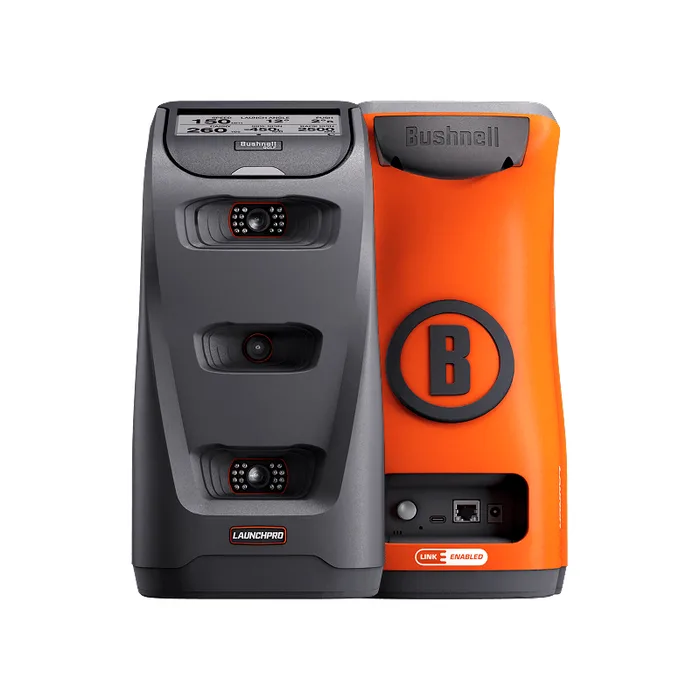
- Buy Bushnell Launch Pro A three-camera launch monitor built on Foresight technology, made for golfers who want consistent data indoors and outdoors.
- Buy Rapsodo MLM2PRO The most measured data per dollar here, from two cameras plus radar, if you accept a membership and special balls.
- It depends FlightScope Mevo Gen2 A subscription-free radar and camera unit that is excellent if you have the room, and frustrating if you do not.
- Skip Garmin Approach R10 A tiny, popular radar unit that publishes no accuracy figures and still needs a long room and a subscription for simulator play.
What actually matters
- Measurement technology - Cameras photograph the ball and club at impact, while Doppler radar tracks the ball in flight. The method decides where the unit works best and how much room it needs.
- Spin rate and spin axis - Spin controls how far and which way the ball curves. It is the hardest thing to measure, and makers differ on whether and how they measure it directly.
- Club data - Club speed, path, face angle and angle of attack explain why a shot did what it did. Many units lock these behind a paid tier.
- Space - Radar units need room behind the ball and several feet of flight before the net. Ceiling height for a driver swing matters for every type.
- Subscriptions - Memberships can unlock club data, spin, courses and session history. Over a few years, they can cost as much as the unit.
- Software platform - Some simulator software needs a gaming PC, while others run on a phone or tablet. Check that your devices are supported.
- Published accuracy - A maker that publishes accuracy claims or third-party testing gives you something to hold it to. Silence on accuracy is a warning sign.
The specs, in plain English
Green flags vs red flags
Green flags
- The maker labels which metrics are measured
- Space requirements are published for indoor use
- Subscription tiers and what they unlock are listed clearly
- Battery life, weight and connections are stated
- Indoor spin requirements, such as marked balls, are disclosed up front
Red flags
- No accuracy information of any kind
- Simulator play only with a subscription that is not priced on the page
- Indoor use promised without room dimensions
- Conflicting trial or feature details on the same page
- Key club data listed but locked behind an unmentioned paid tier
Who's who: the brands
- Bushnell - Known for golf rangefinders, it sells the camera-based Launch Pro, which runs Foresight Sports software.
- Rapsodo - Known for compact camera and radar launch monitors that run from a phone, with a paid premium membership.
- FlightScope - A radar specialist whose Mevo line pairs Doppler radar with optics and offers core data without a subscription.
- Garmin - A GPS and wearables giant whose Approach line spans golf watches, rangefinders and the R10 radar launch monitor.
- SkyTrak - A camera-based home simulator brand whose ST+ the maker now lists as no longer available.
How to read a listing without getting fooled
Start with the measurement technology, because it tells you where the unit works and how much room it needs. Then find the metrics list and look for words like measured or calculated, and for footnotes saying a metric needs special balls or a subscription. Read the space requirements as minimums, and add room for the net and a safe swing. Next, open the membership page and write down what each tier unlocks and costs per year. Finally, check the box contents, battery life, connections and warranty, since a missing cable or a short warranty is easy to overlook.
How much should you spend?
Mid-range units now offer real measured data, but they usually lean on a yearly membership for spin, club data and course play, so the true cost grows over time. Premium radar units can skip the subscription for core data and charge once for upgrades instead, which works out cheaper over several years if you have the room. Premium camera units cost the most upfront and often need a membership and a gaming PC as well, which only makes sense if you are building a simulator you will use most of the year.
Questions, answered
Do I need a hitting net or a full simulator?
A net and a hitting mat are enough for practice with numbers on a phone or tablet. A full simulator adds an impact screen, an enclosure and usually a projector and PC for course play. Start with a net if you are unsure, since every unit here works for practice sessions.
Will a launch monitor work for left-handed golfers?
Most units support both, but setup can differ, so check the maker's setup guide before you buy. If golfers of different handedness will share a simulator, plan for extra room width, as SkyTrak's own studio guidance points out.
How often do launch monitors get updated?
Makers push firmware and app updates regularly, and some add new metrics or fix indoor spin readings this way. FlightScope says Mevo Gen2 firmware and software updates are free, and Garmin offers R10 updates through Garmin Express. A unit that is no longer updated can lose features as apps change.
Is a launch monitor useful for beginners?
Yes, if you focus on a few numbers. Carry distance for each club, ball speed and the start direction are enough to make range sessions more productive. The deeper club data is most useful with a coach or once your swing is consistent enough for small changes to show up.
Or jump to the head-to-head: Bushnell Launch Pro vs Rapsodo MLM2PRO.