Explained
Golf Push Carts, Explained
After reading this you'll know which wheel count, fold, and features actually matter for the way you play, and how to avoid a cart that ends up in the garage.
In this guide
A golf push cart carries your bag so you can walk 18 holes without wrecking your back, but the spec sheets are full of jargon: 3-wheel versus 4-wheel, auto-open folds, electronic braking, cart-bag versus stand-bag fit. Most first-time buyers fixate on price and wheel count and ignore the two things they'll feel every single round, how fast it folds and how much it weighs. This guide decodes the terms so you can match a cart to your course and your bag instead of guessing.
The 30-second version
- Fold and weight beat features. you open, close, and lift a cart every round, so a one-motion fold and a light frame matter more day to day than any bonus gadget.
- Wheel count is a trade-off, not a ranking. three wheels are lighter and more maneuverable; four wheels are steadier on slopes and when parked, at the cost of weight and bulk.
- Match the cart to your bag. some carts are built for cart bags only and do not accept stand bags at all, so confirm your bag type fits before you buy.
- Cheap carts are often a false economy. budget models can wear at the brake and wheels sooner and often publish fewer specs, so a mid-range cart can cost less over its life.
- Electric caddies are a convenience buy. they remove the effort of pushing and shine on hilly courses, but you pay a big premium and take on battery care.
The products this guide is about
Our verdict on each, with the full reasoning on the companion review.
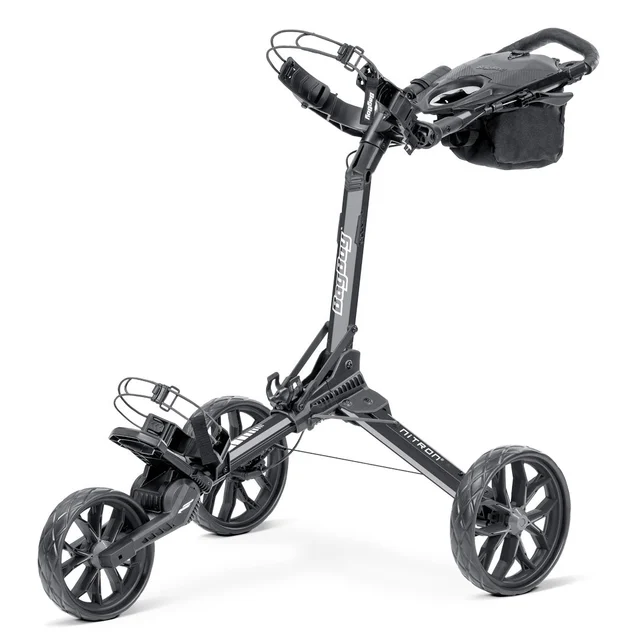
- Buy Bag Boy Nitron Auto-Open Golf Push Cart The fastest, lightest fold of the bunch - pull one strap and it springs open in a second. Amazon
- Buy Clicgear Model 8.0+ Golf Push Cart The four-wheel workhorse: rock-solid on slopes, endlessly configurable, and built to outlast your clubs. Amazon
- It depends MGI ZIP Navigator Electric Golf Caddy A twin-motor, remote-controlled caddy that drives your bag for you - brilliant, if your wallet and back both agree. Amazon
- Skip CaddyTek Explorer V8 4-Wheel Golf Push Cart Cheap and functional out of the box, but the plastics, the brake, and the bulky fold catch up with you. Amazon
What actually matters
- Fold and setup: How many motions it takes to open and close. One-pull auto-open folds are the ones you'll actually keep using; multi-stage folds get old fast.
- Weight: You lift the cart into a trunk every round. Lighter frames feel effortless one-handed; heavy carts (especially electric) become a chore to load.
- Wheel count and stability: Three wheels turn tighter and weigh less; four wheels sit flatter and stay planted on side-hills and when you step away to hit.
- Brake quality: A positive parking brake that holds on a slope is essential. Cheap foot brakes are among the first parts to loosen or wear out.
- Build materials: Metal at the wear points (hubs, joints, brake) lasts; plastic there is the classic sign of a cart that won't survive many seasons.
- Bag compatibility: Whether it cradles a stand bag, a cart bag, or both, and how securely, so your bag doesn't shift or perch loosely.
- Accessories and warranty: A deep accessory ecosystem and a multi-year frame warranty signal a cart the maker expects to last.
The specs, in plain English
Green flags vs red flags
Green flags
- Opens and closes in one or two smooth motions with no wrestling
- Feels light enough to lift into a trunk with one hand
- A firm parking brake that holds the cart still on a slope
- Metal at the hubs, joints, and brake rather than plastic
- Your bag type seats securely with snug top and base straps
- A multi-year frame warranty and a real accessory ecosystem
Red flags
- Frame flex or wobble when you lean on the handle
- Plastic wheel hubs or a foot brake that feels vague or loose
- A fold that takes many fiddly steps or pinches your fingers
- A stand bag paired with a cart the maker says is for cart bags only
- A bulky folded footprint that eats most of your trunk
- An electric caddy with vague battery range or no replacement-battery support
Who's who: the brands
- Bag Boy - Known for fast auto-open folds and light manual carts that are easy to live with.
- Clicgear - The four-wheel workhorse maker, prized for near-bombproof build and a huge accessory range.
- MGI - A leading electric-caddy brand with remote control and straight-tracking gyroscopes.
- CaddyTek - A budget-friendly four-wheel maker; functional out of the box but built to a price.
- Sun Mountain - A respected walking-golf brand offering both compact three-wheel and stable four-wheel carts.
How to read a listing without getting fooled
Start with the fold and the weight, because those are the numbers you'll feel every round. A listing that leads with 'auto-open' or 'one-motion' and a low weight is telling you it's easy to live with; one that buries a heavy figure or shows a many-step fold is warning you. Next, read the wheel count against your course: three wheels for flat-to-rolling and easy handling, four wheels for hills and parking stability. Check the bag-fit line carefully, since 'fits all bags' and 'designed for cart bags' are not the same promise. Treat marketing words like 'aircraft-grade' or 'heavy-duty' as noise unless the listing actually names metal at the hubs, joints, and brake. For electric caddies, look past the motor hype to battery range in holes, whether the battery lifts out separately, and whether replacement batteries are sold, because that's what determines long-term cost.
How much should you spend?
Spend where it buys durability and ease, not badges. A solid manual cart from a major brand sits in the mid-range to premium band, and that's the value sweet spot for most walkers: light enough, folds fast, and lasts many seasons. Rock-bottom budget carts look like a bargain but can wear at the brake and wheels sooner, so the savings may not survive a real golf calendar; a lightly used premium cart is often the smarter money than a new cheap one. Stepping up to the premium tier is worth it if you play hills, run a heavy cart bag, or want a buy-it-for-life frame with room to accessorize. Electric caddies are a flagship-tier purchase you make for convenience, not value, so only stretch there if you genuinely want to stop pushing.
Questions, answered
Is a 3-wheel or 4-wheel push cart better?
Neither wins outright, it depends on how you play. A 3-wheel cart is lighter, turns tighter, and is easier to maneuver one-handed, which suits flat-to-rolling courses and stand bags. A 4-wheel cart sits flatter and feels more planted on slopes and when you park to hit a shot, at the cost of more weight and a bulkier fold. Play hills or carry a heavy cart bag, lean four-wheel; want the lightest, easiest cart, three wheels wins.
Are electric push carts worth it?
For the right golfer, yes. A remote or motorized caddy removes the physical effort of pushing, which is a real benefit if you have a bad back or walk a hilly course. But you pay several times the price of a manual cart, it's heavier to load, and there's a battery to charge, care for, and eventually replace. If you're happy pushing, the money is better spent on a great manual cart.
Can I use a push cart with a stand bag?
Many carts hold both stand bags and cart bags, but some four-wheel carts are built for cart bags only; Clicgear, for example, says its Model 8.0+ is not compatible with stand bags. If you use a stand bag, check that the cart's upper strap and base cradle grip it firmly before you buy.
How much should I spend on a golf push cart?
A solid manual cart that lasts years sits in the mid-range to premium tier, and that's the sweet spot for most walkers. Rock-bottom budget carts save money up front but can wear at the brake and wheels sooner, so the savings may not hold up. Electric caddies are a flagship-tier purchase you make for convenience, not value.
How long should a good push cart last, and are they under warranty?
A well-built manual cart from a major brand should give you many seasons of regular play, with the wheels, brakes, and fabric being the usual first things to wear. Reputable makers back their frames with multi-year warranties, so register your cart and keep the receipt. Budget carts often carry shorter warranties and fewer published specs, which is the main reason buyers get steered away from the cheapest options.
How do I keep a push cart rolling well over time?
Wipe down the frame and wheels after wet rounds, keep grit out of the wheel bearings and the brake mechanism, and store it folded and dry rather than baking in a hot trunk. For electric caddies, follow the maker's charging guidance and don't leave the battery fully drained for long, since battery care is the single biggest factor in how long the caddy stays useful.
Or jump to the head-to-head: Bag Boy Nitron Auto-Open Golf Push Cart vs Clicgear Model 8.0+ Golf Push Cart.