

Outdoors & Fitness
The Best Golf Push Carts: 4 Compared (and One to Skip)
We compared four golf push carts across 3-wheel, 4-wheel, and electric designs on fold ease, weight, stability, build quality, and bag fit.
The short version
Across 3-wheel, 4-wheel, and electric designs, the Bag Boy Nitron is the best all-rounder - lightest, fastest to open, and it takes most bags. Step up to the four-wheel Clicgear Model 8.0+ if you want the most stable, most durable, most accessory-friendly cart and run a full cart bag. The MGI ZIP Navigator is a superb remote-controlled electric caddy, but only worth its flagship price if you truly want to stop pushing. Skip the CaddyTek Explorer V8: it's cheap and works, but a basic foot brake and an unpublished weight make the two buys the better spend. Best for: walking golfers who want a cart that folds fast, rolls stable, and lasts more than a season or two.
Our picks at a glance
- Bag Boy Nitron Auto-Open Golf Push Cart - Buy. The fastest, lightest fold of the bunch - pull one strap and it springs open in a second.
- Clicgear Model 8.0+ Golf Push Cart - Buy. The four-wheel workhorse: rock-solid on slopes, endlessly configurable, and built to outlast your clubs.
- MGI ZIP Navigator Electric Golf Caddy - It depends. A twin-motor, remote-controlled caddy that drives your bag for you - brilliant, if your wallet and back both agree.
- CaddyTek Explorer V8 4-Wheel Golf Push Cart - Skip. Cheap and functional out of the box, but the plastics, the brake, and the bulky fold catch up with you.
The verdict in 30 seconds
What mattered most
- Wheel setup
- Fold & setup
- Weight
- Stability on slopes
- Build & durability
- Bag compatibility
A good push cart saves your back and your energy for the back nine; a bad one wobbles, folds like a deck chair, and gets left in the garage. We weighed the fast-folding 3-wheel favorite against the tank-like 4-wheel enthusiast pick, a remote-controlled electric caddy, and a budget four-wheeler. Two are easy buys, one is worth it only for a specific golfer, and one is a false economy.
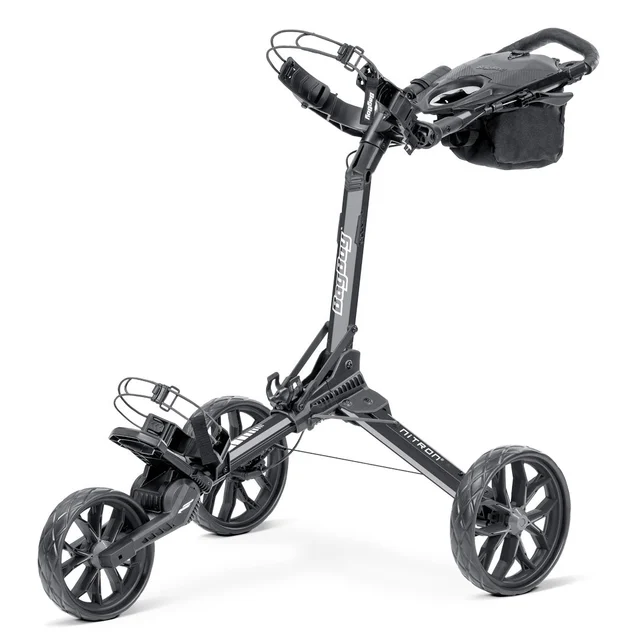
The fastest, lightest fold of the bunch - pull one strap and it springs open in a second.
Best for: Most walking golfers who want the least-fuss setup and the easiest cart to carry and store.
- Nitro-Piston auto-open pops the cart to full height in one motion; closing is nearly as quick
- Lightest manual cart here at 16.7 lb, so it lifts into a trunk one-handed
- Bag Boy says it works with most bags on the market, and it folds to 19 x 13.5 x 22 inches
- Bag Boy rates the piston for over 10,000 opens, but the manual-cart warranty is 2 years
- Premium price for a manual cart, and fewer bolt-on accessories than the Clicgear ecosystem
Own the Bag Boy Nitron Auto-Open Golf Push Cart? Tell us how it held up.
Thanks. Counted, and shown once enough owners have weighed in.
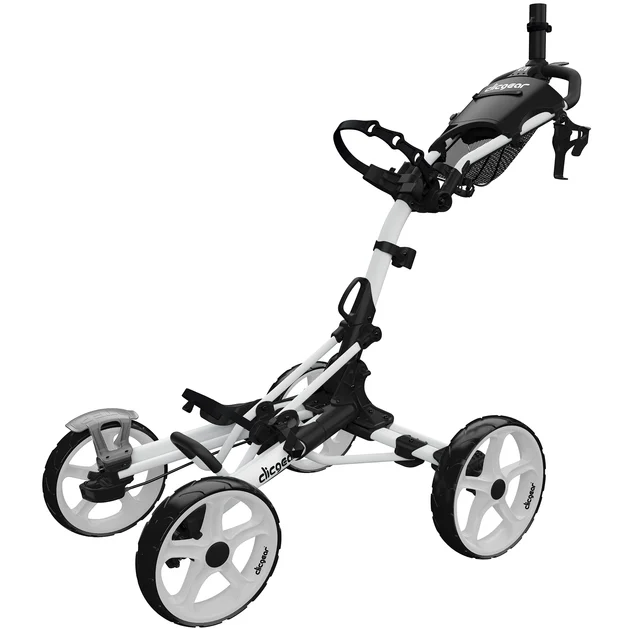
The four-wheel workhorse: rock-solid on slopes, endlessly configurable, and built to outlast your clubs.
Best for: Players who carry a full cart bag, play hilly courses, and want a buy-it-for-life cart with room to accessorize.
- Four-wheel base with a hand brake driving dual front-wheel brakes, the most planted manual cart in the group across side-hills
- Best-in-class build quality and the widest accessory ecosystem (umbrella holders, coolers, seats, mounts)
- Slide-to-close mechanism folds to a tidy, stackable block despite the extra wheel
- Heaviest manual option and a multi-step fold that takes longer than the Nitron's one-pull open
- Clicgear says it is not compatible with stand bags; it is built for cart bags only
Own the Clicgear Model 8.0+ Golf Push Cart? Tell us how it held up.
Thanks. Counted, and shown once enough owners have weighed in.
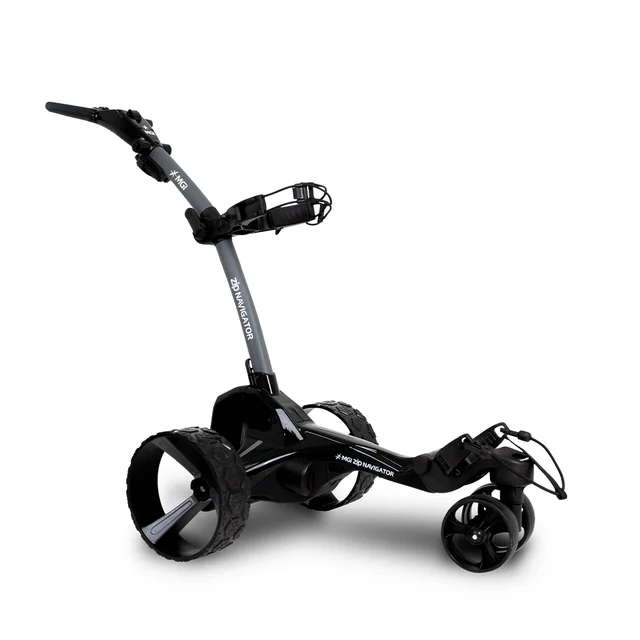
A twin-motor, remote-controlled caddy that drives your bag for you - brilliant, if your wallet and back both agree.
Best for: Golfers with a bad back or hilly home course who want to walk without pushing and will pay a premium for it.
- Full directional remote control plus a gyroscope that holds a straight line across cambered fairways
- Twin 230-watt calibrated motors and a 24V lithium battery MGI rates for up to 36 holes, depending on conditions
- Downhill speed control and a 3-year warranty make hilly walks far easier
- Flagship pricing that costs several times any manual cart here
- 15.85 kg with the battery (12.97 kg without), so most owners lift the battery and body separately, plus ongoing battery care
Own the MGI ZIP Navigator Electric Golf Caddy? Tell us how it held up.
Thanks. Counted, and shown once enough owners have weighed in.
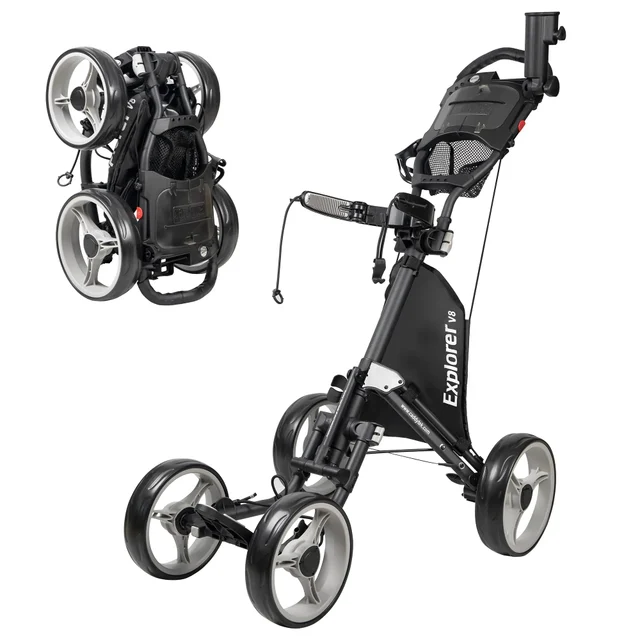
Cheap and functional out of the box, but the plastics, the brake, and the bulky fold catch up with you.
Best for: Only the occasional player who wants the cheapest cart possible and doesn't mind replacing it.
- Lowest price in the group and a wide four-wheel stance that rolls stable on flat ground
- Adjustable front-wheel width and a two-step fold that's simple to learn
- A foot brake rather than a hand brake, and CaddyTek does not publish a weight or folded size on its product page
- The 25.5-inch-wide base that makes it stable also makes it a wide cart to fold and stow
- The savings evaporate versus a used premium cart that will last far longer
Own the CaddyTek Explorer V8 4-Wheel Golf Push Cart? Tell us how it held up.
Thanks. Counted, and shown once enough owners have weighed in.
| Criteria | Bag Boy Nitron Auto-Open Golf Push Cart Top pick Buy it Buy | Clicgear Model 8.0+ Golf Push Cart Buy it Buy | MGI ZIP Navigator Electric Golf Caddy It depends Buy | CaddyTek Explorer V8 4-Wheel Golf Push Cart Skip it Buy |
|---|---|---|---|---|
| Best for | Most walking golfers who want the least-fuss setup and the easiest cart to carry and store. | Players who carry a full cart bag, play hilly courses, and want a buy-it-for-life cart with room to accessorize. | Golfers with a bad back or hilly home course who want to walk without pushing and will pay a premium for it. | Only the occasional player who wants the cheapest cart possible and doesn't mind replacing it. |
| Price tier | $$ · mid-range | $$$ · premium | $$$$ · flagship | $ · budget |
| Wheel setup | 3-wheel | 4-wheel | 3-wheel plus fold-out 4th wheel, motorized | 4-wheel |
| Fold & setup | One-motion auto-open (easiest) | Multi-step slide-to-close (compact) | Two-part fold plus battery | Two-step fold |
| Weight | Lightest manual (16.7 lb) | Heaviest manual (22 lb) | 15.85 kg with battery | Not published |
| Stability on slopes | Good | Excellent | Excellent (downhill speed control) | Good on flat ground; foot brake |
| Build & durability | Very good | Exceptional | Strong, but service-dependent | Budget build |
| Bag compatibility | Stand & cart bags | Cart bags only (not stand bags) | Cart bags (not all stand bags fit) | Carry and cart bags |
| Standout feature | Instant one-pull open | Huge accessory ecosystem | Remote control + straight-tracking | Lowest price |
| Price tier | $$ · mid-range | $$$ · premium | $$$$ · flagship | $ · budget |
Which one is right for you?
- Most walking golfers who want the least-fuss setup and the easiest cart to carry and store. Buy it Bag Boy Nitron Auto-Open Golf Push Cart
- Players who carry a full cart bag, play hilly courses, and want a buy-it-for-life cart with room to accessorize. Buy it Clicgear Model 8.0+ Golf Push Cart
- Golfers with a bad back or hilly home course who want to walk without pushing and will pay a premium for it. It depends MGI ZIP Navigator Electric Golf Caddy
- Only the occasional player who wants the cheapest cart possible and doesn't mind replacing it. Skip it CaddyTek Explorer V8 4-Wheel Golf Push Cart
How we judged the field
We don’t run our own lab. Instead we synthesized independent testing, hands-on reviews from golf-equipment editors, and aggregated owner reports to see how these carts actually hold up over full seasons rather than a single showroom fold. Five things mattered most: how fast and fuss-free the cart opens and closes, how much it weighs when you lift it into a trunk, how stable it feels on slopes and when parked, how well it holds up over time, and whether it fits the bag you actually play. Price tier sits underneath all of it - the question isn’t just what a cart costs, but whether it earns that cost over years of use.
Bag Boy Nitron Auto-Open Golf Push Cart
Buy itThe Nitron’s headline trick is real: pull one strap and a gas piston springs the cart to full standing height in a single motion, no wrestling with locks or stages. It’s the lightest cart here at 16.7 pounds, so it’s the one you’ll happily lift one-handed, and Bag Boy says it works with most bags on the market. Its setup is the easiest in this group, and the fold is what keeps people using it. The caveats: it costs more than a basic manual cart, the accessory range is narrower than Clicgear’s, and while Bag Boy says it is tested to over 10,000 opens, the warranty on manual carts is 2 years. For the majority of walking golfers, none of that outweighs how effortless it is to live with.
Clicgear Model 8.0+ Golf Push Cart
Buy itIf the Nitron is the easy one, the Model 8.0+ is the durable one. Its four-wheel base and hand-operated dual front-wheel brakes make it the most planted cart in this group - it doesn’t creep on side-hills and stays put when you step away to hit. Clicgear’s reputation for near-bombproof build quality is well earned in owner reports, and no other brand here comes close to its accessory ecosystem of umbrella mounts, coolers, seats, and holders. The slide-to-close mechanism folds it surprisingly small for a four-wheeler. The trade-offs are weight (22 lb, the heaviest manual cart here) and a fold that takes several deliberate steps rather than one pull. It’s also cart-bag only: Clicgear says it is not compatible with stand bags. Bought direct, it carries a 2-year parts and 6-year frame warranty. For hilly courses and full cart bags, it’s the definitive pick.
MGI ZIP Navigator Electric Golf Caddy
It dependsThe ZIP Navigator is the only cart here that carries your bag for you. A full directional remote lets you send it ahead or reposition it, and a built-in gyroscope keeps it tracking straight across cambered fairways instead of drifting. Twin 230-watt calibrated motors and a 24V lithium battery that MGI rates for up to 36 holes depending on conditions cover a full round, and downhill speed control makes slopes far easier. It’s genuinely excellent - the reason it’s a “depends” and not a “buy” is cost and practicality. It runs several times the price of any manual cart, at 15.85 kg with the battery it’s heavy enough that most people lift the battery and body separately, and there’s ongoing battery care plus an eventual replacement. Buy it if you want to stop pushing and will pay for the privilege; skip it if a manual cart already suits you.
CaddyTek Explorer V8 4-Wheel Golf Push Cart
Skip itThe Explorer V8 is the tempting budget four-wheeler, and to be fair it works fine on day one: wide stance, adjustable front wheels, a simple two-step fold. The problem is what it leaves out. It uses a foot brake rather than a hand brake, and CaddyTek’s product page publishes no weight or folded size, so you cannot compare it on the numbers that matter most for a cart you lift every round. The deeper issue is value: a lightly used premium cart is often the smarter money. It’s not dangerous or unusable - it’s just the classic false economy, which is why we steer buyers past it.
Sources
Specs in this review come from these pages.
Bag Boy Nitron vs Clicgear Model 8.0+: which should you buy?
This is the real decision for most walkers, and it comes down to how you play. The Bag Boy Nitron wins on the things you feel every single round: it opens in one motion, it’s the lightest to load, and Bag Boy says it works with most bags. If your golf involves flat-to-rolling courses, a stand bag, and a trunk you’d rather not fill, it’s the best all-around choice - our top pick.
The Clicgear Model 8.0+ wins on the things you feel over years: four-wheel stability that shrugs off slopes, a build that owners trust for the long haul, and an accessory range that lets you turn it into exactly the cart you want. If you carry a full cart bag (it does not take stand bags), play hills, or simply want the last cart you’ll ever buy, the extra weight and the multi-step fold are a fair price. Choose the Nitron for ease and versatility; choose the Clicgear for stability and longevity.
What to look for
- Fold and setup: Open and close it in the store. One-motion folds beat multi-stage ones for the carts you’ll actually keep using.
- Weight: You lift this into a trunk every round. Under ~18 lb feels effortless; over ~22 lb you’ll notice it.
- Wheel count: Three wheels are lighter and more maneuverable; four wheels are steadier on slopes and when parked.
- Bag fit: Confirm your bag type - stand or cart - seats securely, especially on four-wheel carts built around cart bags.
- Brakes and build: Look for a positive parking brake and metal (not plastic) at the wear points; these are the first things to fail on cheap carts.
- Accessories and warranty: A good accessory ecosystem and a multi-year frame warranty are signs a cart is built to last.
Our final take
For most walking golfers, the Bag Boy Nitron is the cart to buy: it’s the lightest, it opens in a single satisfying motion, and it fits most bags, so it’s the one that stays in rotation instead of the garage. Step up to the four-wheel Clicgear Model 8.0+ if you run a full cart bag, play hilly ground, and want maximum stability and a cart built to outlast your clubs. The MGI ZIP Navigator is a genuinely excellent electric caddy - worth its flagship price only if you truly want to stop pushing. And skip the CaddyTek Explorer V8: it’s cheap today and gone tomorrow, and the money is better spent on a cart that lasts.
Questions, answered
Is a 3-wheel or 4-wheel push cart better?
It's a trade-off. A 3-wheel cart like the Bag Boy Nitron is lighter, more maneuverable with one hand, and turns tighter. A 4-wheel cart like the Clicgear Model 8.0+ sits flatter and feels more planted on slopes and when you stop to hit a shot, at the cost of a bit more weight and a bulkier fold. If you play hills or use a heavy cart bag, lean four-wheel; if you want the lightest, easiest cart, three wheels wins.
Are electric push carts worth it?
For the right golfer, yes. A remote or motorized caddy like the MGI ZIP Navigator removes the physical effort of pushing, which is a genuine benefit if you have a bad back or walk a hilly course. But you pay several times the price of a manual cart, it's heavier to load, and there's a battery to charge, care for, and eventually replace. If you're happy pushing, the money is better spent on a great manual cart.
Can you use a push cart with a stand bag?
Most can. Bag Boy says the Nitron works with most bags, and CaddyTek's adjustable front wheels are meant to fit anything from a slim carry bag to a large cart bag. The four-wheel Clicgear Model 8.0+ is the exception, since Clicgear says it is not compatible with stand bags. If you use a stand bag, check that the cart's upper strap and base cradle grip it firmly before you buy.
How much should I spend on a golf push cart?
A solid manual cart that lasts years sits in the mid-range to premium tier; that's the sweet spot for most walkers. Rock-bottom budget carts save money up front but can wear at the brake and wheels sooner, so the savings may not hold up. Electric caddies are a flagship-tier purchase you make for convenience, not value.
How long should a good push cart last, and are they covered by warranty?
A well-built manual cart from a major brand should give you many seasons of regular play, with wheels, brakes, and fabric being the usual first things to wear. Reputable makers back their carts with multi-year warranties (Clicgear lists 6 years on the frame when bought direct), so register your cart and keep the receipt. Budget carts often publish fewer specs and shorter warranties, which is the main reason we steer buyers away from the cheapest options.
Deciding between the top two? See our head-to-head: Bag Boy Nitron Auto-Open Golf Push Cart vs Clicgear Model 8.0+ Golf Push Cart.
More in Outdoors & Fitness
Golf Push Carts, Explained Plain-English guide → Bag Boy Nitron Auto-Open Golf Push Cart vs Clicgear Model 8.0+ Golf Push Cart Head-to-head →  The Best Golf Laser Rangefinders: 4 Compared (and One to Skip)
  The Best GPS Running Watches for 2026
  The Best Grip Socks for Pilates and Barre: 4 Compared (and One to Skip)
  The Best Guy Lines: 4 Compared (and One to Skip)