Explained
Home EV Chargers, Explained
After reading, you'll understand what power your home can support, what to ask your electrician, and how to compare chargers safely.
In this guide
Home EV chargers look similar, but the right one depends on your electrical panel, your car and where you will mount it. Terms like amps, kW, NEMA 14-50, hardwired, NACS and load management all affect cost and charging speed. The most important step is often a conversation with a licensed electrician before you buy.
The 30-second version
- Amps set the speed, and plug-in chargers are often limited to 40 amps.
- Your panel sets the limit, so a load calculation comes before a purchase.
- Load management can avoid upgrades, by adjusting charging to your home's usage.
- Safety listings matter, because inspectors, insurers and rebates often require them.
- NACS is spreading, so choose a connector with your next car in mind.
The products this guide is about
Our verdict on each, with the full reasoning on the companion review.
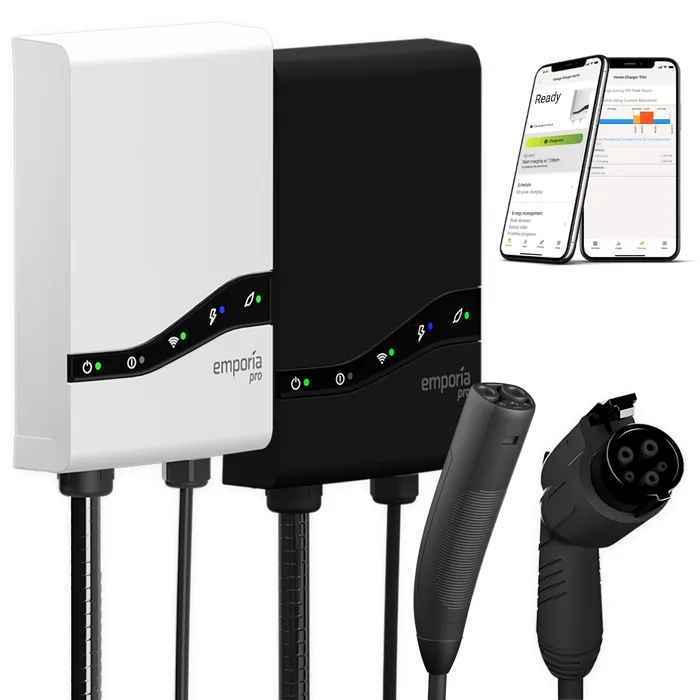
- Buy Emporia Pro Level 2 EV Charger A 48 amp smart charger with built-in load balancing that can save you a panel upgrade.
- Buy Grizzl-E Classic 40A A rugged, Canadian-made aluminium charger with no app, built to survive the weather.
- It depends Wallbox Pulsar Plus The most compact smart charger here, with OCPP and solar charging, and no published warranty term.
- Skip Autel MaxiCharger AC Elite Home 40A A capable smart charger held back by a lower power ceiling and a product page with a stale certification note.
What actually matters
- Current and power - measured in amps and kilowatts. 40 amps is about 9.6 kW at 240 volts; 48 amps is about 11.5 kW.
- Installation type - a NEMA 14-50 plug is simpler; hardwiring usually allows higher power and suits outdoor use.
- Panel capacity - your home's electrical service decides how much power is available for charging.
- Load management - adjusts charging based on household demand to stay within capacity.
- Connector - J1772 or NACS (SAE J3400), depending on your vehicle.
- Weather rating - NEMA Type 4 or similar for outdoor installations.
- Safety listing and warranty - an independent listing and a clear warranty protect you.
The specs, in plain English
Green flags vs red flags
Green flags
- A named safety listing, such as UL, on the product page or datasheet.
- Power stated for both plug-in and hardwired installations.
- A published weather rating.
- A clear warranty term.
- Load management options for limited panels.
Red flags
- Certification described as pending, or not named.
- No warranty term anywhere.
- Power claims without stating installation type.
- Outdoor use claimed without a weather rating.
- Graphics showing smart features on a charger with no connectivity.
Who's who: the brands
- Emporia - Colorado-based energy management company whose chargers integrate with its Vue home energy monitor.
- Grizzl-E - United Chargers' Canadian-made line of rugged aluminium chargers.
- Wallbox - Spanish EV charging company known for compact smart chargers and energy management features.
- Autel - Automotive diagnostics maker with a range of MaxiCharger home and commercial EV chargers.
How to read a listing without getting fooled
Start with the maximum power and check whether it applies to the plug-in or hardwired version. Look for the safety listing and the weather rating. Decide which smart features you actually need, and whether load management is necessary for your panel. Confirm the connector and cable length for your parking spot. Then check the warranty and returns, and ask your electrician to review the installation requirements.
How much should you spend?
Budget chargers are usually simpler, lower-power units with fewer features. The mid-range covers most well-built 40 to 48 amp chargers, with or without smart features, and suits most homes. Premium chargers add load management, energy monitoring and broader connectivity. Installation often costs as much as the charger, and a panel upgrade can cost far more, so a charger with load management can be the cheapest option overall for older homes. Check for utility rebates, which often require a listed charger.
Questions, answered
Can I install an EV charger myself?
It is strongly recommended to use a licensed electrician. EV chargers draw high current for hours, and installation must meet electrical code, often with a permit and inspection. An electrician can also do a load calculation to decide what size circuit your panel can support.
How long does it take to charge at home?
It depends on your car's battery and onboard charger, the charger's power and how empty the battery is. Many EVs charge from low to full overnight on a 40 or 48 amp Level 2 charger. Your car's own maximum AC charging rate may limit speed regardless of the charger.
Will a higher-amp charger always charge faster?
Only if your car can accept it. Many EVs have onboard chargers limited to around 7 to 11 kW. A 48 amp charger will not speed up a car that can only accept 32 amps, but it can future-proof for your next vehicle.
Can I charge from solar panels?
Some chargers, such as the Emporia Pro and Wallbox Pulsar Plus, can prioritise surplus solar energy. This usually requires additional monitoring hardware and configuration, and it works best if you are home during daylight hours.
Or jump to the head-to-head: Emporia Pro Level 2 EV Charger vs Grizzl-E Classic 40A.