Explained
Car Floor Mats, Explained
After reading this you'll know why fit type matters more than brand, which materials and features actually keep weather off your carpet, and how to spot a mat that stays safely put.
In this guide
Car floor mats look interchangeable in a photo, but the difference between a set that traps a winter's worth of slush and one that lets it seep into your carpet comes down to a few things almost no listing explains clearly. The two decisions that matter most are how the mat is shaped to your car and what it's made of. Get those right and everything else falls into place; get them wrong and you've bought an expensive rubber rectangle that slides toward the pedals.
The 30-second version
- Fit type beats brand. A mat cut to your exact vehicle covers the footwell walls and locks to factory anchors, while a universal trim-to-fit mat leaves gaps and can slide — that single choice decides most of the protection you get.
- Containment is the whole job. Raised edges and deep reservoirs are what actually keep water, mud, and salt off the original carpet; a flat mat just moves the mess around.
- Retention is a safety issue, not a nicety. An unsecured mat can creep forward and trap a pedal, so factory-hook compatibility or supplied clips genuinely matter.
- Material sets the tradeoffs. Smooth TPE or rubber contains spills and hoses clean; carpet-topped 'all-weather' mats look plusher but hold odor and dry slowly.
- Coverage is only what the mat physically covers. A liner that climbs the sides and wraps the console protects far more of your floor than a center-only mat, no matter how good the material is.
The products this guide is about
Our verdict on each, with the full reasoning on the companion review.
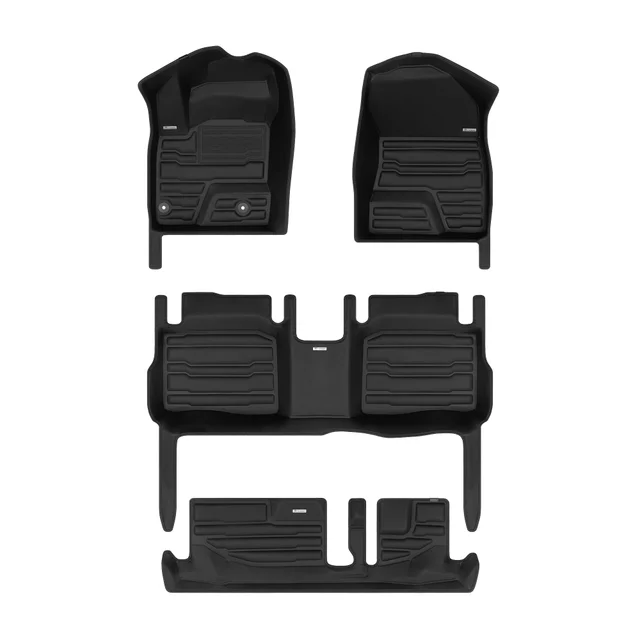
- Buy TuxMat Custom Car Floor Mats One-piece, laser-cut coverage that climbs the footwell walls and hoses clean in minutes — the most complete protection here.
- Buy 3W Thorex Custom-Fit Floor Mats Tall-walled custom TPE liners with genuinely deep containment for noticeably less than the flagship names.
- It depends LASFIT Custom-Fit TPE Floor Mats Well-fitting, affordable custom TPE mats — good everyday protection, just not the deepest coverage in the group.
- Skip FH Group ClimaProof Trimmable Rubber Floor Mats Cheap trim-to-fit rubber mats that protect the middle of the footwell but never truly lock down or contain like a custom liner.
What actually matters
- Fit type (custom vs universal): A custom, vehicle-specific mat is molded or laser-cut to your exact footwell, so it follows the contours, climbs the sides, and lines up with the factory retention points. A universal mat is a generic shape you trim down, which almost always leaves exposed carpet at the edges and no true anchor. This is the single biggest factor in real-world protection.
- Containment (raised edges and depth): Taller perimeter lips and deeper channels or reservoirs hold more liquid before it can escape. Deep, steep walls are the difference between a spill pooling in the mat and it running off onto the carpet.
- Coverage up the footwell: The best liners don't just cover the flat floor — they extend up the sides and around the center console and hump, where boots and bags actually drag mud. More vertical coverage means less exposed carpet.
- Retention and anti-slip backing: Look for compatibility with your car's built-in floor hooks, or clips supplied with the mat, plus a grippy backing. This keeps the mat from wandering toward the pedals — a safety concern, not just an annoyance.
- Material and weather rating: All-weather (TPE, TPO, thermoplastic, or rubber) mats are built to trap and shed liquids. All-season and carpet mats prioritize looks and comfort but don't contain spills the same way. Match the material to how messy your climate and life actually are.
- Cleaning: A smooth, non-carpet surface can be shaken out and rinsed with a hose in minutes; carpet-topped surfaces need vacuuming and long drying and tend to hold odor.
- Cold and odor behavior: Good all-weather materials stay flexible in the cold instead of cracking, and quality TPE is odorless out of the box, where cheaper rubber can smell for a while.
The specs, in plain English
Green flags vs red flags
Green flags
- Sold as a vehicle-specific (custom) set for your exact make, model, and year, not a generic 'fits most' shape
- Explicitly states compatibility with your factory retention hooks, or includes its own clips
- Described with tall raised edges, deep channels, or a 'wraps up the sides / around the console' design
- Made of odorless TPE/TPO and rated for cold weather without cracking
- Advertised as hose-off or wipe-clean with a smooth, non-carpet surface
- Owner reports consistently mention the mat staying put and containing spills over a full winter
Red flags
- 'Universal fit' or 'trim to fit' when you actually want all-weather protection
- No mention of any retention or anchoring system, or a note that you'll need to add your own
- A flat, shallow, or 'low-profile' design with little or no raised edge
- Carpet-topped surface marketed as 'all-weather' — it looks the part but won't contain or dry like TPE
- Complaints about chemical or rubber odor, curling in the cold, or the mat sliding forward
- The listing leans on the material name or brand but never actually says it covers the footwell sides
Who's who: the brands
- TuxMat - Known for one-piece, laser-cut custom liners with high side coverage; positioned at the premium end.
- WeatherTech - One of the most recognized names in custom-fit, high-wall all-weather liners for specific vehicles.
- 3W - Custom-molded TPE liners with deep containment walls and clip retention, aimed at strong value.
- Husky Liners - Long-running maker of heavy-duty custom all-weather floor liners with raised edges.
- LASFIT - Budget-friendly custom-fit TPE mats that get the basics right with shallower side coverage.
- FH Group - Widely available universal trim-to-fit rubber and carpet mats at low prices; a stopgap rather than true liner protection.
How to read a listing without getting fooled
Start by confirming the mat is actually cut for your exact make, model, and year — 'custom fit' should ask you to select your vehicle, while 'universal' or 'trim to fit' means a generic shape you cut down. Next, hunt for two words the good listings always include: containment (raised edges, deep channels, wraps the sides) and retention (factory hooks, clips, anti-slip backing). If a listing talks only about the material or the brand but never says how much of the footwell it covers or how it stays in place, treat that as a gap, not an oversight. Check the material — TPE/TPO for odorless, cold-tough, hose-clean protection; be wary of 'carpet-topped all-weather,' which trades real containment for looks. Finally, read owner photos and reviews for two things specifically: whether the mat actually stays put, and whether liquids stay in the mat over a real winter rather than reaching the carpet at the edges.
How much should you spend?
The price ladder tracks fit and coverage more than anything else. At the bottom sit universal trim-to-fit mats — cheap, and fine as a temporary fix for an odd-size or spare vehicle, but they leave carpet exposed and rarely lock down, so they're a poor value if genuine all-weather protection is the point. The sweet spot for most drivers is a custom-fit TPE liner: paying up from universal to a true vehicle-specific set buys accurate coverage and factory-hook retention, which is where the real protection lives. Stepping up again to the premium, one-piece laser-fit liners gets you the most complete wrap-around coverage and the fastest cleanup; that's worth it if you want to buy once and forget it or you deal with heavy snow, mud, and messy passengers, but it's more than a careful driver in a mild climate needs. The thing not worth paying for is a big brand name on a mat that doesn't actually climb the footwell sides or anchor to your car — coverage and retention justify the money, badges don't.
Questions, answered
Are custom-fit mats really worth it over cheaper universal ones?
For weather protection, usually yes. A custom mat is cut to your exact footwell, so it covers the sides, follows the console, and lines up with the factory hooks that keep it from sliding. Universal mats are a generic shape you trim, which leaves gaps at the edges and typically no real anchor. Owners consistently say the biggest difference isn't the material — it's how much of the floor gets covered and whether the mat stays put.
TPE (rubber-like) or carpet-topped all-weather mats — which should I get?
For containment and easy cleanup, smooth TPE or rubber wins: liquids pool in the raised edges and you rinse or wipe them out. Carpet-topped mats look and feel more like a factory mat and add some plushness, but the carpet surface holds odor, dries slowly, and doesn't trap a spill the way a smooth-walled liner does. If your priority is keeping water, mud, and road salt off the carpet, choose the plain TPE or rubber surface.
How do I stop a floor mat from sliding toward the pedals?
Use the vehicle's built-in retention hooks or the clips supplied with the mat, and never stack an all-weather mat on top of a carpet mat. This is a genuine safety issue — an unsecured mat can slide forward and trap a pedal. Custom-fit liners are designed to lock to those factory anchors; most universal mats aren't, which is a big reason a loose universal set is a poor choice for daily driving.
Can I lay an all-weather mat on top of my original carpet mats?
You can set an all-weather liner on the bare OEM carpet, but you should not stack it on top of the factory carpet mat. Doubling up lifts the mat off its anchor points and lets the whole stack shift, which is exactly the sliding-toward-the-pedals risk you want to avoid. Remove the carpet mat (or keep it only when the all-weather liner is out) and anchor the liner directly to the floor hooks.
How do I clean all-weather mats and keep them from smelling?
Pull them out, shake off loose grit, then rinse with a hose or wipe with mild soapy water, and let them dry fully before reinstalling — trapped moisture underneath is what causes musty odor. Avoid harsh solvents and silicone dressings, which can leave a slick, slippery surface. Smooth TPE and rubber clean up in minutes; carpet-topped mats need more drying time and are more prone to holding smells.
Will all-weather mats protect my carpet and resale value?
That's their main purpose. A well-fitting liner keeps salt, mud, coffee, and melting snow off the original carpet, which is expensive to clean or replace and matters at trade-in time. The catch is coverage: a mat only protects what it physically covers, so a universal mat that leaves the edges and footwell walls exposed does far less for resale than a custom liner that wraps the whole area.
Or jump to the head-to-head: TuxMat Custom Car Floor Mats vs 3W Thorex Custom-Fit Floor Mats.