Explained
Ice Scrapers and Snow Brushes, Explained
After reading this you will know which head material is safe on your paint, how much reach your vehicle actually needs, and which scraper blades survive a genuinely cold morning.
In this guide
Clearing a car is two jobs, not one. Pushing loose snow off large panels wants a wide head on a long pole; shearing bonded ice off glass wants a stiff blade you can lean on. Almost every bad purchase comes from buying a tool that does one of those jobs and expecting it to do both, or from buying on head width when reach was the thing that mattered.
The 30-second version
- Foam pushes, bristles drag. A closed-cell foam head moves a wall of snow off a panel without its surface sliding sideways against the clear coat, while bristles work by dragging and carry whatever grit they have collected along with them.
- Metal blades are the wrong trade. Brass is softer than automotive glass, but a metal edge holds road grit against the glass and marks paint, trim, seals and interior tint film the first time it slips.
- Reach beats head width. A wide head you cannot get to the middle of an SUV roof clears less snow than a narrow head you can, so measure to the far edge of the roof before you compare anything else.
- Cold is the real durability test. Thin molded plastic gets brittle as temperatures drop and chips at the blade corners, which is why failures cluster on the coldest mornings rather than after gradual wear.
- Every joint is a failure point. Telescoping locks and pivoting heads are the parts owners report loosening or seizing, so a simpler tool that does one job stiffly usually outlives a feature-stacked one.
The products this guide is about
Our verdict on each, with the full reasoning on the companion review.
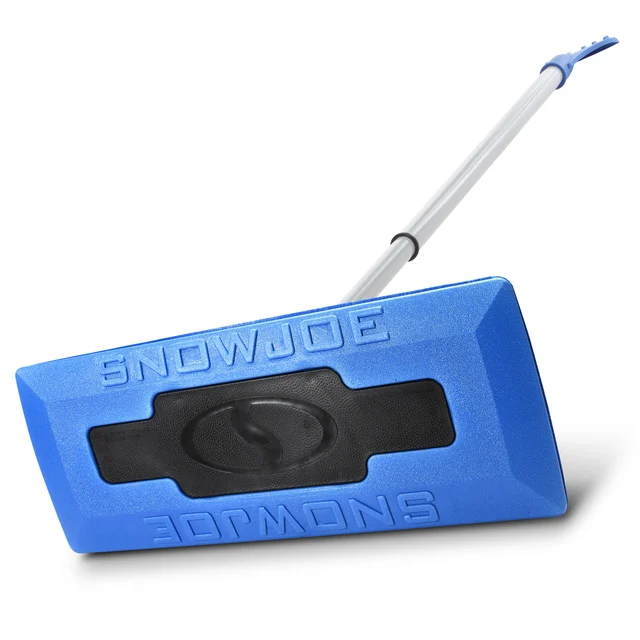
- Buy Snow Joe The Original 2-In-1 Telescoping Snow Broom + Ice Scraper (SJBLZD) An 18-inch foam head on a pole that stretches to 52 inches, which is the combination that actually clears a roof without touching it hard. Amazon
- Buy OXO Good Grips Extendable Twister Snow Brush with Ice Scraper The best-built bristle brush of the group, with a head that twists so you can push snow instead of only sweeping it. Amazon
- It depends AstroAI 47.2 Inch Ice Scraper and Extendable Snow Brush with 360 Degree Pivoting Head Lots of reach and features for very little money, as long as you accept a bristle head and a build that lives or dies on how you treat it. Amazon
- Skip Snow Joe Brass Blade Ice Scraper (SJEG01) A metal-edged pocket scraper that solves a problem a good plastic blade already solves, and adds a way to ruin trim and paint. Amazon
What actually matters
- Head material. Closed-cell foam is gentle on a finish and does not soak up meltwater, so it is less likely to come out of the trunk as a frozen brick. Bristles are lighter and cheaper but they sweep rather than push, and they hold grit. If you care about swirl marks, foam is the safe default.
- Reach and extension range. The number that matters is how far you can get from where you stand to the far edge of the roof, not the vehicle's height. Look at the maximum extended length, and check the minimum too, because a pole that will not collapse short is awkward on a windshield.
- Blade stiffness and leverage. A scraper works when you can get body weight behind it. Thick blades on a broad handle clear bonded ice; thin blades on stubby handles skate over it and chip. Handle geometry matters as much as the blade itself.
- Cold-weather plastic quality. Most scrapers are molded plastic, and the cheap grades stiffen and crack in genuine cold. Heavier cross-sections and blades that flex slightly rather than staying rigid survive better. A tool that feels flimsy in a warm store feels worse at ten degrees.
- Joint count and lock quality. Each telescoping section, detachable neck and pivot is a place the tool can go loose under load or seize when wet and frozen. Fewer, better joints beat more of them.
- Glove-friendly grip. You will use this tool with heavy gloves in the dark. Non-slip grips and buttons big enough to work with a gloved thumb are the difference between a tool you use and one you fight.
- Storage shape. Measure your trunk or hatch before you buy. A tool that does not fit lives in the garage, where it clears nothing.
The specs, in plain English
Green flags vs red flags
Green flags
- A closed-cell foam head listed with an actual width, paired with a stated extended length that clears your roof measurement
- A scraper blade described by thickness and handle leverage rather than by how many teeth it has
- Bristle tips explicitly described as feathered or flagged if the tool uses bristles at all
- A short, simple telescoping mechanism with a positive lock, and few joints overall
- Grips and buttons sized for gloved hands, called out in the listing or visible in photos
- A collapsed or broken-down length that you have checked against your own trunk
Red flags
- A metal or brass blade marketed for routine car clearing rather than for adhesive removal on flat glass
- Reach quoted only as inches added rather than a full extended length, which hides a short tool
- A long feature list of squeegee, brush, scraper and pivot on a tool that is clearly light and thin
- Photos showing a thin, flat molded blade with sharp unsupported corners, the shape that chips in cold
- Owner reports clustering around length locks slipping under load or pivot heads going stiff
- Bristle-only heads sold as the answer for heavy wet snow, which they sweep around instead of pushing off
Who's who: the brands
- Snow Joe - Winter tool specialist best known for foam-headed telescoping snow brooms, and also for cheaper glovebox scrapers that are a different proposition entirely.
- OXO Good Grips - Housewares brand whose winter tools carry over its grip and ergonomics focus, with stiff scraper blades and heads that twist to push snow.
- AstroAI - Budget car-accessory brand offering long extendable bristle brushes with pivot heads, where reach per dollar is the selling point rather than longevity.
- Hopkins / SubZero - Long-running automotive winter accessory line covering everything from pocket scrapers to extendable brooms across a wide price range.
- Mallory - Traditional snow tool maker with a long catalogue of brushes and scrapers, common in hardware stores and auto parts aisles.
- Ice Crusher and similar specialist scrapers - Small makers focused on wide, thick plastic hand blades with real handles, aimed at people whose problem is ice rather than snow depth.
How to read a listing without getting fooled
Start by ignoring the headline feature count and find three numbers. First, the extended length, and be careful here: some listings state total extended length while others state only how many inches the tool adds, which makes a short brush look competitive with a long one. Second, the head width, which only matters after reach is satisfied. Third, the collapsed or packed length, which decides whether the tool lives in your car or your garage. Next, read the head description literally. Foam and bristles are different tools, and a listing that calls a bristle brush a snow broom is stretching the term. Look for the words closed-cell on foam, and feathered or flagged on bristles. For the scraper, ignore tooth counts and look at blade thickness and how the handle lets you apply weight. Finally, count the joints in the photos: each telescoping section, detachable neck and pivot is a place the tool can loosen. In owner reports, filter for complaints from cold-climate buyers rather than mild ones, because the failures that matter, chipped blades and slipping locks, show up on the coldest mornings and not before.
How much should you spend?
Budget tools buy you reach and little else. If your only requirement is a long pole for a tall vehicle and you accept replacing the tool every couple of winters, the cheap end is a rational choice, and reach genuinely is the thing that matters most on a truck. The mid-range is where the meaningful upgrades live: a closed-cell foam head, a scraper blade thick enough to lean on, a lock that holds under load, and a grip that works with heavy gloves. That is the value sweet spot for most drivers, because each of those addresses a specific failure people actually report. Above that, extra money mostly buys features rather than durability, and a squeegee plus a pivot plus a brush on one shaft flexes more than a simple tool that does one job stiffly. A sensible split is a mid-range foam broom for the car plus an inexpensive stiff plastic hand scraper in the door pocket, which covers both jobs properly for about what a single premium multi-tool costs. Spending more is not worth it if your car is short and your winters are mild; spending less is a false economy if your only tool has to clear a large vehicle every morning.
Questions, answered
Are brass or metal ice scrapers safe on a windshield?
The blade itself will not cut the glass, because brass is softer than automotive glass. The damage comes from what the edge picks up: a metal blade holds sand and road grit against the glass and drags it, and that is the real mechanism behind fine scratches. It is also unforgiving off the glass, where one slip onto a painted pillar, a rubber seal, a plastic cowl or interior tint film leaves a mark a plastic blade would not. A stiff plastic blade gives up little on bonded ice and forgives mistakes.
Foam head or bristles: which is actually safer on paint?
Foam, by a wide margin. A closed-cell foam head pushes a wall of snow off a panel without its face ever sliding sideways across the clear coat. Bristles work by dragging, and anything caught in them, grit, salt crystals or a frozen chip of ice, rides along. If you use bristles, knock the head clean before each pass and never set it down in a slushy lot.
How much reach do I need for an SUV or a pickup?
Measure from where you will stand to the far edge of the roof, not just the roof height. A sedan is usually fine with something in the thirty to forty inch range. A crossover or midsize SUV wants a tool that gets past forty-five inches, and a full-size or lifted truck wants a pole past fifty inches or you will end up climbing on the tailgate. Reach beats head width every time.
Why do cheap plastic scrapers crack when it gets really cold?
Inexpensive scrapers are molded in plastic grades that get noticeably more brittle as temperature falls, and thin cross-sections concentrate stress at the blade corners. That combination is why chipping is the most common failure owners describe, and why it happens on the coldest mornings rather than the mild ones. Thicker blades, and blades that flex slightly rather than staying rigid, hold up better.
Can I just pour warm water on the windshield or use de-icer spray instead?
Never pour hot or even warm water on frozen glass. The thermal shock can crack it, and any existing chip can run into a full crack. A commercial de-icer spray or washer fluid rated for low temperatures is the safe way to soften bonded ice. Start the car, run the defroster for a few minutes, then scrape what is left. Every scraper works better when the ice has already released its grip.
Do I need one tool or two?
Two is usually the better answer, and often the cheaper one. A foam-headed telescoping broom handles snow on large panels without touching the finish hard, and a stiff plastic hand scraper with a real handle handles bonded ice on glass. Combination tools compromise on one job or the other, typically by mounting a small low-leverage blade on the end of a long pole where you cannot get weight behind it.
Or jump to the head-to-head: Snow Joe The Original 2-In-1 Telescoping Snow Broom + Ice Scraper (SJBLZD) vs OXO Good Grips Extendable Twister Snow Brush with Ice Scraper.