Explained
Jump Starters, Explained
After reading this you will know how to size a jump starter to your engine and which numbers to ignore, so you buy one that turns the key when the battery is dead.
In this guide
A portable jump starter is insurance you keep in the glovebox: a battery pack that can crank a dead car without another vehicle. The catch is that the headline number, peak amps, is the least trustworthy spec on the box. This guide explains what actually determines whether the pack will start your engine, and how to buy one that still works the day you finally need it.
The 30-second version
- Peak amps are marketing; look deeper. The big peak-amp figure is a brief spike, not sustained power. Engine size and cranking demand matter far more than a headline number.
- Size to your engine, not to the biggest number. A small four-cylinder needs modest output; a large diesel needs a genuinely powerful pack. Overbuying wastes money, underbuying leaves you stranded.
- Safety features protect your car and your hands. Reverse-polarity and spark protection stop an expensive mistake if you clip the clamps on backwards, which is easy to do in the dark.
- A jump starter is only useful if it's charged. Lithium packs slowly self-discharge. One that's flat in the glovebox is useless, so pick a design you'll actually keep topped up.
- The extras are genuinely handy. A built-in light, USB charging and a 12-volt inflator port turn a single-purpose tool into something you'll reach for more often.
The products this guide is about
Our verdict on each, with the full reasoning on the companion review.
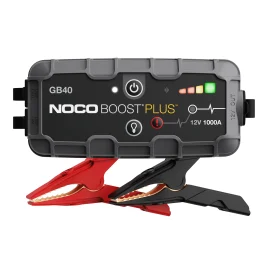
- Buy NOCO Boost Plus GB40 The default recommendation: enough cranking power for almost any car, bulletproof safety, and a fair price.
- Buy NOCO Boost X GBX55 The step-up pick for bigger engines, cold climates, and anyone who wants fast USB-C recharging.
- It depends Antigravity Batteries Antigravity XP-10-G2 Micro-Start A capable jump starter wrapped inside a full portable power supply, complete with laptop and device outputs.
- Skip Weego 44s Beautifully built and refreshingly honest about its specs, but you pay mid-range money for entry-level cranking power.
What actually matters
- Cranking power is the real spec, not peak amps. What starts an engine is sustained current under load; look for cranking-amp figures or the maker's stated engine-size rating rather than the flashy peak number.
- Engine sizing decides everything. Match the pack to your largest engine's displacement and fuel type - gas engines are easier to crank than diesels of the same size - so you buy enough power without overpaying.
- Safety protection guards against costly errors. Reverse-polarity, short-circuit and spark protection let you clip on confidently and forgive the mistake of reversed clamps.
- Battery chemistry and capacity affect both power and shelf life. Most modern packs are lithium; a higher capacity (mAh or Wh) means more jumps per charge and more device charging.
- Charge retention is what makes it reliable. A pack that holds its charge for months is one that works in an emergency; check self-discharge and whether it has a battery-level display.
- Build and clamps matter for real use. Solid, well-insulated clamps with a decent cable reach the battery on any car; flimsy ones make a hard job harder in cold and dark.
The specs, in plain English
Green flags vs red flags
Green flags
- A clear engine-size rating for both gas and diesel
- Reverse-polarity, short-circuit and spark protection listed
- A battery-level display so you know it's ready
- Sturdy, well-insulated clamps with enough cable reach
Red flags
- Only a giant peak-amp number with no cranking or engine rating
- No mention of safety protection features
- Thin, flimsy clamps or a very short cable
- No way to check the charge level before you rely on it
Who's who: the brands
- NOCO - The category benchmark; its Boost line is widely trusted for safety features and honest engine ratings.
- Antigravity - Makes the Micro-Start range, known for compact packs that punch above their size for smaller engines.
- Weego - Focuses on well-built packs with strong clamps and clear safety engineering.
- DeWalt - Offers larger hybrid units that double as portable power stations with jump-start capability.
How to read a listing without getting fooled
Ignore the peak-amp headline first. Find your engine's size and fuel type, then match it to a pack whose engine rating comfortably covers it - a little headroom helps in cold weather, which saps both your car battery and the pack. Confirm it has reverse-polarity and spark protection, check it has a charge display so you'll know it's ready, and treat capacity and extras like a light or 12-volt port as tiebreakers between suitable models.
How much should you spend?
Compact packs sized for small gas engines are the affordable entry point and fine for most cars. Mid-range packs add capacity, higher cranking power and better clamps, and cover larger engines and cold climates; this is the safe choice for most buyers who want headroom. Premium hybrid units double as power stations with inverters and inflators; worth it if you want one device for camping, outages and jump-starting, overkill if you only need occasional insurance.
A portable jump starter is a small bet against a bad morning: a lithium battery pack powerful enough to crank a dead car with nobody else around. It’s a genuinely useful thing to own. It’s also sold on the single most misleading number in the automotive aisle, so a little translation saves you from buying the wrong one.
The peak-amp trap
Open any listing and the first thing you see is a huge peak-amp figure, sometimes a couple of thousand. It’s printed big because it’s impressive, and it’s nearly meaningless. Peak amps describe a momentary spike the pack can hit for a fraction of a second, not the steady current that actually turns an engine over. Two packs with identical peak numbers can perform very differently when the key turns. What you want instead is a cranking-amp figure or, more usefully, the maker’s engine-size rating.
Size to the engine, not the number
The honest way to buy a jump starter is to size it to your car. Engines vary enormously in how hard they are to crank: a small four-cylinder gas engine asks very little, while a large diesel demands a lot more current, because diesels have high compression and no spark plugs to help. Good makers publish an engine rating, often split into gas and diesel - something like “up to a certain displacement, gas” and a smaller figure for diesel. Find your largest engine, match it to a pack that comfortably covers it, and add a little headroom for cold weather, which weakens both your car battery and the pack. Overbuying wastes money; underbuying leaves you turning a key that clicks.
Safety features are not optional
Jump-starting means clamping directly onto a battery, often in the dark, often flustered. The features that matter most are the ones that forgive mistakes. Reverse-polarity protection stops the pack from dumping current the wrong way if you clip positive to negative, which is a genuinely easy error and an expensive one without protection. Spark and short-circuit protection guard against the surges that can harm modern car electronics. A pack that lists these clearly is one you can use confidently; a pack that’s silent about them is a gamble.
The feature that makes it reliable: charge retention
Here’s the failure mode nobody warns you about. Lithium packs self-discharge slowly, so the jump starter you charged when you bought it can be dead months later - exactly when you finally need it. The best defense is a design you’ll actually keep topped up: one with a clear battery-level display, low self-discharge, and a convenient way to recharge. Set a reminder to top it up every few months. A charged pack is insurance; a flat one is a brick.
The extras worth having
Because a jump starter is really just a rugged battery with clamps, makers add useful jobs. A built-in flashlight matters more than it sounds when you’re finding the battery terminals at night. USB ports let it charge a phone, which is handy on a breakdown. Some include a 12-volt output that can power a separate tire inflator. None of these change starting power, but they turn a single-use tool into one you’ll reach for, which also means it’s more likely to be charged when the real emergency comes.
How to actually choose
Start by ignoring the peak-amp banner. Find your engine’s size and fuel type, pick a pack rated comfortably above it, and confirm it has reverse-polarity and spark protection plus a charge display. Then let capacity and extras break the tie between suitable models. Do that and you’ll own a pack that starts your car on the worst morning, not one that just had the biggest number on the shelf. To see how the leading packs compare - and which popular one we’d pass on - read our jump starter comparison.
Questions, answered
How many amps do I need to jump-start my car?
Sizing by amps alone is misleading because makers quote peak figures inconsistently. Instead, match the pack to your engine size and fuel type using the maker's engine rating. A typical small-to-mid gas car needs far less than a big truck or a diesel, which is harder to crank. Pick a pack rated comfortably above your largest engine, with a little extra headroom for cold weather.
What's the difference between peak amps and cranking amps?
Peak amps are a brief maximum spike, quoted because the number looks impressive. Cranking amps describe the sustained current the pack can actually deliver to turn your engine over, which is what starts the car. Always weigh the cranking figure or the engine rating over the peak number.
Will a jump starter damage my car's electronics?
A good one won't, provided it has safety features. Reverse-polarity protection prevents damage if you clip the clamps on backwards, and spark and short-circuit protection guard against surges. Buy a pack that lists these features, connect it in the order the manual specifies, and the risk is very low.
How often should I charge a jump starter?
Lithium packs slowly lose charge even sitting unused, so a pack you bought a year ago may be flat when you need it. Top it up every few months, and choose one with a battery-level display so you can check at a glance. A charged pack is the whole point; an uncharged one is dead weight in the glovebox.
Can a jump starter also inflate tires or charge my phone?
Many can. Packs with a USB port charge phones and tablets, and some include a 12-volt output that can run a separate tire inflator, though a dedicated inflator does that job better. These extras don't affect starting power, but they make the pack something you'll actually use rather than forget.
Or jump to the head-to-head: NOCO Boost Plus GB40 vs NOCO Boost X GBX55.