Explained
LED Headlight Bulbs, Explained
After reading this you will know why the housing matters more than the bulb, why chip placement beats big lumen numbers, and how to pick an LED that actually helps you see.
In this guide
Swapping halogen headlight bulbs for LEDs is one of the most oversold upgrades in car care, and the box never tells you the part that decides whether it works: your headlight housing. A plug-in LED can be a real improvement in a projector housing built to control light, but the same bulb dropped into a halogen reflector often scatters glare everywhere, blinds oncoming drivers, and leaves you seeing worse than before. This guide explains what the specs actually mean so you buy light you can see by, not just a bulb that looks bright in a parking lot.
The 30-second version
- Your housing decides everything. LED bulbs behave in projector housings that shape the beam through a lens; in a halogen reflector they usually scatter and glare, so check which one you have before you buy anything.
- Chip placement beats lumen numbers. A bulb whose LED chips sit exactly where a halogen filament used to glow keeps the beam focused; a huge lumen figure with badly placed chips just makes a bright, useless blur.
- Most plug-and-play bulbs are 'off-road use only.' As general information, not legal advice: the majority of conversion LEDs are sold as not street-legal in reflector housings, so know your local rules before you rely on them.
- Cooler color is not better vision. Roughly 4300K to 6000K is the usable range; bluish light above that looks modern but scatters off rain, fog, and snow, so you actually see less in bad weather.
- A fan buys sustained brightness but adds a failure point. Fan-cooled bulbs hold their output longer, but the fan is a moving part that can die, so buy from a brand with a real warranty behind it.
The products this guide is about
Our verdict on each, with the full reasoning on the companion review.
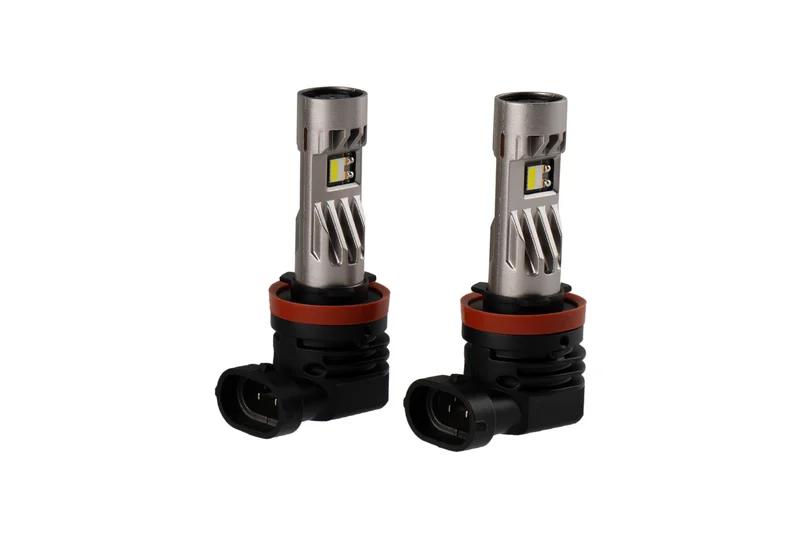
- Buy Diode Dynamics SL2 Pro LED (H11/H8/H9) The bulb to beat: honest output, filament-accurate chips, and a beam that behaves in a projector.
- Buy GTR Lighting Ultra 3 LED (H11/H9/H8) The output leader that stays surprisingly disciplined — with a lifetime warranty behind it.
- It depends Philips Ultinon Pro6000 LED (H7) A genuine name-brand LED that's actually road-legal — but only on a specific list of cars.
- Skip Diode Dynamics XP80 LED (H11) — fog/DRL bulb A strong fog and DRL bulb — and exactly the wrong kind of bulb to run as a headlight.
What actually matters
- Housing type (projector vs reflector) is the first and biggest question. A projector uses a lens to form the beam and can aim LED light properly; a reflector was shaped around a halogen filament and cannot re-aim an LED, so it throws glare. If you want true LED performance in a reflector car, a projector retrofit is the real fix, not a brighter bulb.
- Chip placement matters more than raw output. The LED chips should recreate the exact position and plane where the halogen filament glowed. Get that right and the housing can focus the light; get it wrong and no amount of brightness produces a clean, safe beam.
- Beam pattern and cutoff are what keep light on the road and out of other drivers' eyes. A good bulb produces a defined pattern with a clean horizontal cutoff; a bad one produces a shapeless wall of glare.
- Honest, sustained output beats a peak lumen claim. What you want is light that stays bright without overheating, not a five-figure number measured for a moment in a lab you'll never replicate.
- Color temperature in the 4300K to 6000K range gives usable white light. Higher, bluer color looks cool but sees worse in rain and fog because that light scatters off moisture.
- Heat management keeps output stable and the bulb alive. Fan-cooled designs sustain brightness but add a moving part; fanless designs are simpler but often dim themselves when hot. Either way, cooling quality separates good bulbs from cheap ones.
- CANbus / anti-flicker compatibility stops your car from flagging a bulb-out warning or making the LED flicker. Confirm both your exact bulb size and this compatibility before buying, or plan for an add-on decoder.
The specs, in plain English
Green flags vs red flags
Green flags
- The listing tells you it's meant for projector housings, or is honest that it's off-road use only in reflectors
- Chips described as dual-sided or positioned on the halogen filament plane for an accurate beam
- Honest, moderate output and a defined beam pattern with a clean cutoff, rather than a five-figure lumen headline
- Color temperature stated in the usable 4300K to 6000K range
- Real heat management with a named cooling approach, backed by a multi-year or lifetime warranty
- Built-in CANbus / anti-flicker compatibility, or a clearly included decoder, for your specific car
Red flags
- Giant '30000 lumen' or 'brighter than the sun' claims with no mention of beam control
- Omnidirectional or radial multi-chip bulbs sold for headlight low-beam duty, which scatter light everywhere
- No mention of housing type, beam pattern, or cutoff anywhere in the listing
- Very high color temperatures (bluish 6500K and up) marketed as a performance feature
- A cheap fan with no warranty, or vague claims of 'super cooling' with no detail
- No-name brand, no fitment list, and no way to know if it flickers or triggers errors on your car
Who's who: the brands
- Diode Dynamics - US company known for honest output ratings, filament-accurate chip placement, responsive support, and a multi-year warranty.
- GTR Lighting - Enthusiast brand pushing near the top of usable output while keeping the beam disciplined, backed by fully potted builds and long warranties.
- Philips - Major OE lighting maker; its road-approved LED line is one of the few that can be genuinely street-legal, but only on a published vehicle list in certain markets.
- OSRAM / Sylvania - Established halogen and OE lighting names that also offer LED retrofit bulbs, with some fitments carrying regional road approval.
- Morimoto - Retrofit-focused brand popular for projector conversions and bi-LED projectors, aimed at people fixing the housing rather than just the bulb.
How to read a listing without getting fooled
Start with the part the listing buries: what housing does your car have, and does this bulb suit it? Photos of a clear lens with a visible reflector bowl usually mean a reflector; a small round lens behind the glass usually means a projector. Once you know that, ignore the giant lumen banner and hunt for how the chips are positioned and whether there's a defined beam with a cutoff. Confirm the exact bulb size matches your factory bulb, check the color temperature sits in the 4300K to 6000K range, and look for a named cooling design with a warranty rather than 'super bright' filler. Finally, verify CANbus or anti-flicker compatibility for your specific car, since a bulb that works flawlessly on one model can flicker or throw errors on another.
How much should you spend?
The cheapest bulbs are where the corners get cut: sloppy chip placement, inflated lumen claims, and flimsy fans that fail, so bargain-bin conversion kits tend to cost you in glare and short life. The value sweet spot is a reputable mid-to-upper bulb with honest output, accurate chips, real cooling, and a warranty, which is where most projector owners should land. Spending more buys you higher sustained output, tougher waterproof builds, and longer warranties, worth it if you want the most light and plan to keep the car, but not a substitute for the right housing. The one place extra money is genuinely justified is a projector retrofit for a reflector car, since it fixes the actual limitation instead of paying more for a bulb the housing can't aim.
Questions, answered
How do I tell if I have projector or reflector headlights?
Look at the headlight with the lights off. A reflector housing shows a mirrored, bowl-shaped surface around the bulb, and the whole area lights up when it's on. A projector shows a distinct small round lens (often like a little magnifying glass) that focuses the beam. Projectors control LED light well; reflectors were shaped around a halogen filament and usually scatter it. If you want proper LED performance in a reflector car, the real fix is retrofitting projector housings, not just a brighter bulb.
Are plug-and-play LED headlight bulbs legal?
As general information rather than legal advice: most plug-in LED conversion bulbs are sold 'for off-road use only' and are not approved for street use in reflector housings in many places, so you should check your local rules. A small number of bulbs carry genuine road approval, but typically only for a specific published list of vehicles and only in certain markets. Outside that list, even an approved bulb reverts to off-road-only.
Do more lumens mean better headlights?
No, and this is where most buyers get burned. A bulb advertised at a huge lumen figure often produces a bright but unfocused blob that scatters everywhere except where you need it. What actually matters is chip placement that mimics the halogen filament, a controlled beam with a clean cutoff, and honest output. A well-placed, moderately bright LED out-performs a poorly-placed 'mega-lumen' bulb on the real road every time.
What color temperature should I pick?
Somewhere in the 4300K to 6000K range is the usable sweet spot. Around 5000-6000K looks bright, modern white. Going much higher into bluish 6500K and up looks cool but sees worse in rain, fog, and snow, because that light scatters off moisture. If you split your time between clear and bad weather, a neutral white around 5000-5700K is the safer all-rounder.
Fan or fanless, and do I need anti-flicker or CANbus?
Fan-cooled bulbs generally sustain higher brightness without throttling, but the fan is a moving part that can fail, so buy from a brand with a real warranty. Fanless bulbs are quieter and simpler but often dim themselves when hot. Separately, some cars read an LED as a bulb-out fault or make it flicker; a bulb with built-in anti-flicker/CANbus compatibility, or an add-on decoder, solves that. Confirm both the exact bulb size and CANbus compatibility for your car before buying.
Or jump to the head-to-head: Diode Dynamics SL2 Pro LED (H11/H8/H9) vs GTR Lighting Ultra 3 LED (H11/H9/H8).