

Automotive
The Best Home EV Chargers: 4 Compared (and One to Skip)
We compared four Level 2 home EV chargers on maximum power, plug versus hardwire limits, connector options, weather rating, safety certification, load management and warranty.
The short version
The Emporia Pro is the pick: up to 48 amps (11.5 kW) hardwired, a 25 ft cable, J1772 or NACS, a NEMA Type 4 enclosure, UL certification and built-in load balancing with an included Vue energy monitor, which can let you charge fast without upgrading an older electrical panel, backed by a 3-year warranty and 60-day returns. The Grizzl-E Classic 40A is the value buy: made in Canada in a heavy aluminium enclosure, UL Type 4 rated and Energy Star certified, rated from minus 30 to plus 50 degrees Celsius, with no app or Wi-Fi at all. The Wallbox Pulsar Plus suits people who want a compact smart charger with OCPP support and solar charging, though no warranty term is published. Skip the Autel MaxiCharger AC Elite Home 40A: it tops out at 9.6 kW, and its product page still carries a note reading Certification Pending May 2022 alongside images showing UL, CSA and Energy Star marks, so confirm the listing before you buy. Best for: EV owners with a garage or driveway. Always have a licensed electrician do the installation.
Our picks at a glance
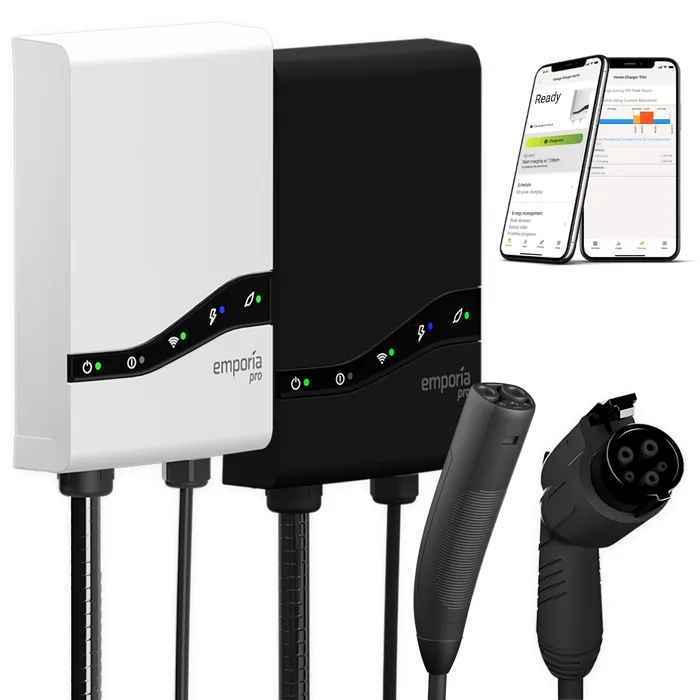
- Emporia Pro Level 2 EV Charger - Buy. A 48 amp smart charger with built-in load balancing that can save you a panel upgrade.
- Grizzl-E Classic 40A - Buy. A rugged, Canadian-made aluminium charger with no app, built to survive the weather.
- Wallbox Pulsar Plus - It depends. The most compact smart charger here, with OCPP and solar charging, and no published warranty term.
- Autel MaxiCharger AC Elite Home 40A - Skip. A capable smart charger held back by a lower power ceiling and a product page with a stale certification note.
The verdict in 30 seconds
What mattered most
- Maximum power
- Installation
- Connector and cable
- Weather rating
- Certification shown
- Smart features
A home Level 2 charger is the single most useful accessory an EV owner can buy, and the market has settled into a few clear trade-offs. Maximum power depends on whether the charger is plugged into a NEMA 14-50 outlet or hardwired. Connectors now come as J1772 or NACS. Some chargers are simple and rugged, some are smart, and a few can manage your home's electrical load so you avoid an expensive panel upgrade. Certification and warranty matter more here than almost anywhere, because this is a 240 volt appliance on your wall. We compared four popular chargers.
A 48 amp smart charger with built-in load balancing that can save you a panel upgrade.
Best for: Homes with limited electrical capacity and owners who want solar and time-of-use automation.
- Up to 48 amps (11.5 kW at 240V) hardwired, or 40 amps (9.6 kW) on a NEMA 14-50 plug, with a 25 ft cable and a J1772 or NACS connector.
- PowerSmart load balancing with the included Emporia Vue monitor adjusts charging to your panel's capacity, which Emporia says lets older 60 or 100 amp services charge without an upgrade.
- UL certified, GFCI protected, NEMA Type 4 indoor and outdoor, Energy Star certified, with a 3-year warranty and 60-day returns.
- The most expensive charger here, and load management needs the Vue monitor installed in your panel.
- Emporia warns that its built-in GFCI can cause nuisance tripping on circuits that also have a GFCI breaker.
- The NEMA 14-50 plug version is limited to 40 amps.
- Smart features depend on Wi-Fi and the Emporia app.
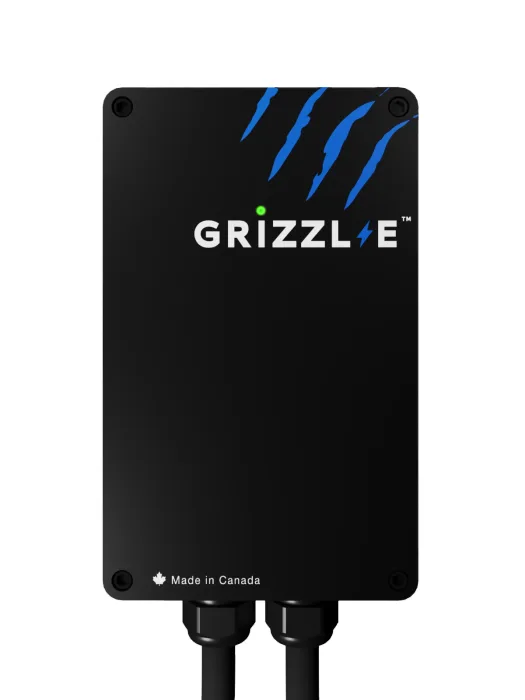
A rugged, Canadian-made aluminium charger with no app, built to survive the weather.
Best for: Owners who want a simple, tough charger and can schedule charging from the car.
- Heavy-duty aluminium enclosure, made in Canada, with a UL Type 4 indoor and outdoor rating.
- Rated to operate from minus 30 to plus 50 degrees Celsius (minus 22 to 122 Fahrenheit), with UL listing and Energy Star certification.
- 40 amps (10 kW) on a NEMA 14-50 or 6-50 plug, adjustable to 32, 24 or 16 amps, with a 25 ft cable and a 3-year warranty, or 5 years as an option.
- No internet connection: the spec table lists the smart function as none, so no scheduling or monitoring in an app.
- The same page shows scheduling and monitoring graphics, which apply to other Grizzl-E models, not this one.
- At 22 lb it is by far the heaviest charger here.
- Maximum 40 amps; there is no 48 amp version of the Classic.
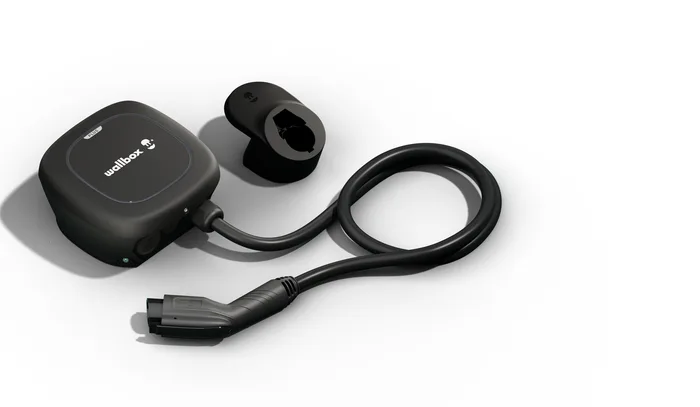
The most compact smart charger here, with OCPP and solar charging, and no published warranty term.
Best for: Tech-minded owners who want a small smart charger, OCPP compatibility or solar charging.
- Compact at 7.8 x 7.9 x 3.9 in and 4.4 lb without the cable, the smallest and lightest here.
- 9.6 kW on a NEMA 14-50 plug or hardwired, or 11.5 kW hardwired, with a 25 ft cable and J1772 or NACS connectors.
- UL 2594 and UL 2231 certified, NEMA Type 4, Energy Star, Wi-Fi and Bluetooth, OCPP 1.6j, load management and solar charging.
- No warranty term is stated on the product page or the datasheet.
- The 11.5 kW version must be hardwired.
- Wallbox states solar charging is not compatible with multiple-charger installations or OCPP.
- Operating range tops out at 104 degrees Fahrenheit, lower than the Grizzl-E.
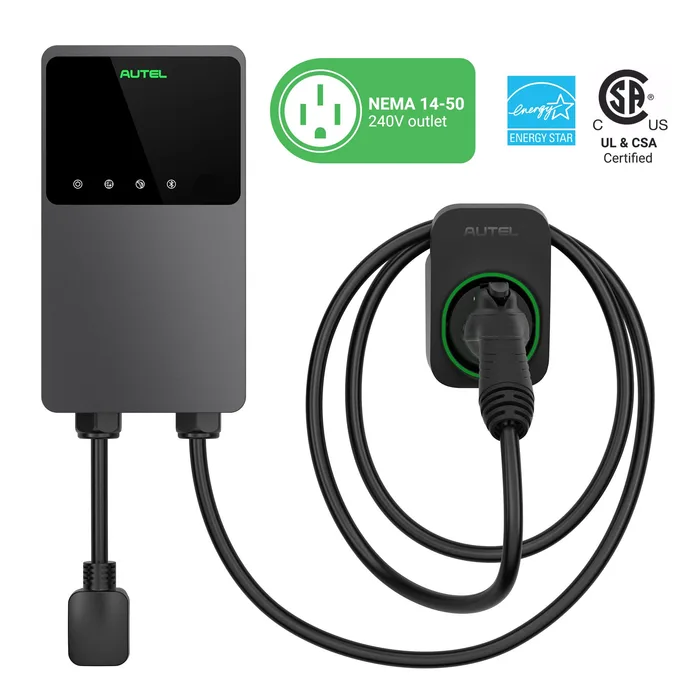
A capable smart charger held back by a lower power ceiling and a product page with a stale certification note.
Best for: Owners who specifically need Ethernet or wired networking and have confirmed the certification.
- Wi-Fi, Bluetooth, Ethernet, CAN and RS485 connectivity, the broadest here, with the Autel Charge app for remote start, stop and scheduling.
- NEMA 4 enclosure rating for indoor or outdoor use, and a 25 ft J1772 cable.
- A three-year limited warranty.
- Maximum 40 amps (9.6 kW), less than the Emporia Pro or Wallbox Pulsar Plus hardwired.
- The product page still shows a note reading Certification Pending May 2022, while its images show UL, CSA and Energy Star marks, so check the listing with the seller.
- The in-body holster NEMA 14-50 version was listed as sold out when we checked.
- Autel recommends hardwiring for outdoor installation.
| Criteria | Pro Level 2 EV Charger Top pick | Classic 40A | Pulsar Plus | MaxiCharger AC Elite Home 40A |
|---|---|---|---|---|
| Verdict | Buy it | Buy it | It depends | Skip it |
| Best for | Homes with limited electrical capacity and owners who want solar and time-of-use automation. | Owners who want a simple, tough charger and can schedule charging from the car. | Tech-minded owners who want a small smart charger, OCPP compatibility or solar charging. | Owners who specifically need Ethernet or wired networking and have confirmed the certification. |
| Price tier | $$$ · premium | $$ · mid-range | $$ · mid-range | $$$ · premium |
| Maximum power | 48A, 11.5 kW hardwired | 40A, 10 kW | 11.5 kW hardwired, 9.6 kW plug | 40A, 9.6 kW |
| Installation | NEMA 14-50 plug (40A) or hardwire | NEMA 14-50 or 6-50 plug | NEMA 14-50 or hardwire | NEMA 14-50 plug, hardwire recommended outdoors |
| Connector and cable | J1772 or NACS, 25 ft | J1772 or NACS, 25 ft | J1772 or NACS, 25 ft | J1772, 25 ft |
| Weather rating | NEMA Type 4 | UL Type 4 | NEMA Type 4 per UL 50E | NEMA 4 |
| Certification shown | UL certified, Energy Star | UL listed, Energy Star | UL 2594 and 2231, Energy Star | Page says pending May 2022, images show UL and CSA |
| Smart features | App, scheduling, solar, load balancing with Vue | None, no internet connection | App, OCPP, solar, load management | App, Wi-Fi, Bluetooth, Ethernet |
| Size and weight | Not published on the product page | 13.39 x 9.45 x 14.96 in, 22 lb | 7.8 x 7.9 x 3.9 in, 4.4 lb | 7.36 x 13.23 x 3.35 in |
| Warranty | 3 years, 60-day returns | 3 years, 5-year option | Not stated | 3-year limited |
Which one is right for you?
- Homes with limited electrical capacity and owners who want solar and time-of-use automation. Buy it Emporia Pro Level 2 EV Charger
- Owners who want a simple, tough charger and can schedule charging from the car. Buy it Grizzl-E Classic 40A
- Tech-minded owners who want a small smart charger, OCPP compatibility or solar charging. It depends Wallbox Pulsar Plus
- Owners who specifically need Ethernet or wired networking and have confirmed the certification. Skip it Autel MaxiCharger AC Elite Home 40A
How we judged the field
Five things decide which home charger is right. The first is maximum power and how installation affects it, since a plug-in version is often limited to 40 amps while hardwired versions go higher. The second is safety: a recognised certification and a weather rating suited to where the charger will hang. The third is whether you need smart features, from scheduling and app monitoring to load management that can avoid a panel upgrade. The fourth is connector choice, now that NACS is spreading. The fifth is the warranty, because a charger should last as long as your car.
The field splits between smart chargers with energy management, simple rugged chargers with no connectivity, compact networked chargers aimed at tech users and solar owners, and feature-rich chargers whose documentation needs checking. We took one of each and read their product pages and datasheets closely.
The Emporia Pro is the smartest buy here because of one feature. Its PowerSmart load balancing, working with the Emporia Vue monitor that comes in the box, adjusts charging to what the rest of your home is drawing, and Emporia says that lets homes with older 60 or 100 amp service charge at Level 2 speeds without a panel upgrade. That upgrade can cost more than the charger itself. The hardware is strong too: up to 48 amps (11.5 kW at 240 volts) when hardwired, 40 amps on a NEMA 14-50 plug, a 25 ft cable, a J1772 or NACS connector, UL certification with built-in GFCI protection, a NEMA Type 4 enclosure and Energy Star certification. It carries a 3-year warranty and 60-day returns. The caveats: it is the most expensive here, the Vue monitor must be installed in your panel, and Emporia notes its GFCI can cause nuisance tripping if the circuit also has a GFCI breaker. For most homes, it is the one to buy.
The Grizzl-E Classic 40A is the opposite philosophy: no app, no Wi-Fi, just a tough charger. Made in Canada in a heavy aluminium enclosure, it is UL Type 4 rated for indoor or outdoor use, UL listed and Energy Star certified, and rated to run from minus 30 to plus 50 degrees Celsius. It delivers 40 amps (10 kW) on a NEMA 14-50 or 6-50 plug, adjustable down to 32, 24 or 16 amps for smaller circuits, with a 25 ft cable and a J1772 or NACS connector. The warranty is 3 years, with a 5-year option offered at checkout. The spec table lists the smart function as no internet connection, which is the point for people who do not want another app, but note the product page also shows scheduling and monitoring graphics that belong to connected Grizzl-E models. At 22 lb it is heavy, and there is no 48 amp version. For a simple, rugged charger at a sensible price, it is excellent.
The Wallbox Pulsar Plus is the compact, networked choice. Its datasheet is detailed: 7.8 x 7.9 x 3.9 in and 4.4 lb without the cable, 9.6 kW on a NEMA 14-50 plug or hardwired, 11.5 kW hardwired only, a 25 ft cable with J1772 or NACS, and an operating range from minus 22 to 104 degrees Fahrenheit. It is UL 2594 and UL 2231 certified, NEMA Type 4 rated and Energy Star certified, with Wi-Fi, Bluetooth, OCPP 1.6j, dynamic load management and solar charging that uses surplus solar energy. The limitations: Wallbox does not state a warranty term on the product page or the datasheet, which is a surprising gap for a wall-mounted appliance, and it states solar charging does not work with multiple-charger installations or OCPP. The 104 degree upper limit is also lower than the Grizzl-E’s. For tech-minded owners who value a small, connected charger, it is a good fit once you confirm the warranty.
The Autel MaxiCharger AC Elite Home 40A has the broadest connectivity here, Wi-Fi, Bluetooth, Ethernet, CAN and RS485, with the Autel Charge app for remote start, stop, monitoring and scheduling, a NEMA 4 enclosure and a 25 ft J1772 cable, plus a three-year limited warranty. Two things hold it back. Maximum current is 40 amps, 9.6 kW, which is less than the hardwired Emporia or Wallbox for a similar price. And the product page still shows a note reading Certification Pending May 2022, while its product images carry UL, CSA and Energy Star marks, and the specification table does not name a listing. It may well be certified, but a charger’s certification should be clear on the maker’s own page, and electricians and rebate programmes often ask for it. The in-body holster NEMA 14-50 version was also listed as sold out when we checked. If you need Ethernet, confirm the listing first; otherwise the others are clearer choices.
Emporia Pro Level 2 EV Charger vs Grizzl-E Classic 40A: which should you buy?
The Emporia Pro and the Grizzl-E Classic are the two to choose between, and the decision starts at your electrical panel. If your electrician says you have plenty of spare capacity, the Grizzl-E gives you 40 amps of rugged, weatherproof charging with nothing to update or log into, at a lower price, and your car’s own scheduling handles off-peak charging.
If your panel is small or already heavily loaded, the Emporia Pro can pay for itself by avoiding an upgrade, and it adds 48 amp hardwired charging, solar and time-of-use automation. Ask your electrician for a load calculation before you buy: it will tell you whether you need load management, and therefore which charger makes sense.
What to look for
- Check the power at your installation type: plug-in versions are often limited to 40 amps; higher power usually needs hardwiring.
- Confirm a recognised safety listing: look for UL or an equivalent listing on the maker’s page or datasheet.
- Match the weather rating to the location: NEMA Type 4 suits outdoor installation.
- Consider load management for older homes: it can avoid an expensive panel upgrade.
- Choose the right connector: J1772 or NACS, matching your car or your next one.
- Read the warranty term: a charger should last years, and some brands do not state one clearly.
Our final take
A home charger is a long-term purchase, so power, safety and support matter more than features. The Emporia Pro is the pick for its 48 amp capability and load balancing that can avoid a panel upgrade. The Grizzl-E Classic is the rugged, no-app value buy. The Wallbox Pulsar Plus is a compact, well-documented smart charger, missing only a stated warranty. The Autel MaxiCharger may be a good charger, but at 40 amps with a product page still showing a pending certification note from 2022, it is not the one to choose without asking questions. Whichever you buy, use a licensed electrician.
Questions, answered
Do I need a Level 2 charger at home?
Most EV owners benefit from one. A standard wall outlet, Level 1, adds only a few miles of range per hour, which may be enough for short commutes. A Level 2 charger on a 240 volt circuit charges many times faster, so a car is usually full by morning. Emporia describes its Pro as up to nine times faster than a Level 1 charger.
Should I plug in or hardwire?
Hardwiring usually allows higher power and is more robust outdoors, while a NEMA 14-50 plug is easier to install and move. Emporia limits the plug version to 40 amps and the hardwired version to 48, and Wallbox's 11.5 kW version must be hardwired. Autel recommends hardwiring for outdoor use. Either way, have a licensed electrician check the circuit, the breaker and any local permit requirements.
What is load management?
It lets the charger adjust its power based on how much electricity the rest of the house is using, so the total never exceeds your panel's capacity. Emporia's PowerSmart does this with the included Vue monitor, and Wallbox offers load management too. It can avoid a panel or service upgrade, which is often expensive, especially in older homes with 100 amp service.
J1772 or NACS?
J1772 has been the standard connector for most non-Tesla EVs in North America, while NACS, also called SAE J3400, is used by Tesla and is being adopted by many other makers. Emporia, Grizzl-E and Wallbox all offer both. Choose the one that matches your car, or the one you expect your next car to use, and remember adapters exist but add another part to manage.
Why does certification matter for an EV charger?
Because it is a high-power electrical appliance, and a recognised safety listing, such as UL, shows it has been tested by an independent lab. Many electricians, inspectors, insurers and utility rebate programmes require a listed charger. Check the listing on the maker's page or datasheet, and if anything is unclear, as it is on Autel's page, ask the seller for the certificate.
Deciding between the top two? See our head-to-head: Emporia Pro Level 2 EV Charger vs Grizzl-E Classic 40A.
More Automotive reviews
 The Best Floor Jacks: 4 Compared (and One to Skip)
  The Best All-Weather Car Floor Mats: 4 Compared (and One to Skip)
  The Best Foam Cannons: 4 Compared (and One to Skip)
  The Best Fuel Injector Cleaners: 4 Compared (and One to Skip)
  The Best Garage Floor Mats: 4 Compared (and One to Skip)
  The Best Glass Towels: 4 Compared (and One to Skip)