

Automotive
The Best Foam Cannons: 4 Compared (and One to Skip)
We compared four foam cannons on fit, build, and foam control for a pressure washer, and flag one hose-end gun to skip.
The short version
A foam cannon needs a pressure washer; a hose-end foam gun is the weaker version, so match the tool to what you own. Buy the MTM Hydro PF22.2 for a brass-built cannon that fits nearly any washer and won't cross-thread, or the Adam's Standard for most of that quality at a mid-range price. The Sun Joe SPX-FC34 is a fine cheap pick if you run a compatible electric washer, but its plastic build and orifice matching make it fussier. Skip the Chemical Guys Foam Blaster 6 as a cannon substitute: it's a garden-hose gun with thin foam. Remember that thick foam is mostly for looks; dwell time and good soap do the real, safe cleaning. Best for: owners who want thick, safe pre-wash foam matched correctly to their pressure washer.
Our picks at a glance
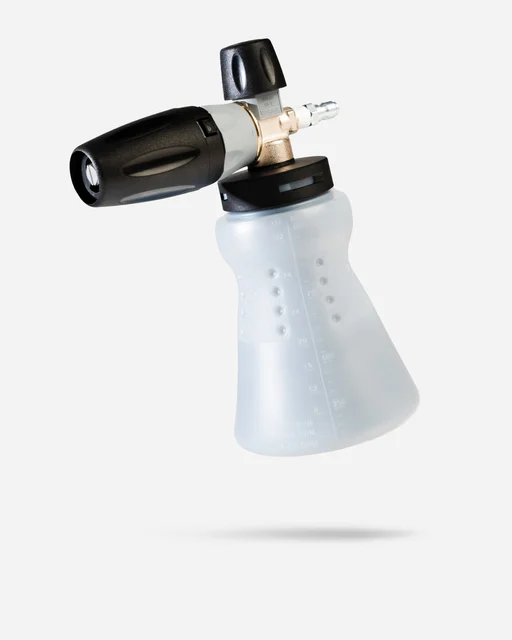
- MTM Hydro PF22.2 Foam Cannon - Buy. The enthusiast default: a brass-bodied cannon with independent foam and fan control that just works across almost any washer.
- Adam's Polishes Adam's Standard Foam Cannon - Buy. A well-built brass-fitting cannon that delivers thick, even foam for less than the premium picks.
- Sun Joe SPX-FC34 Foam Cannon - It depends. A budget cannon that shines if you already run a Sun Joe electric washer, and is fussier if you don't.
- Chemical Guys TORQ Foam Blaster 6 Foam Wash Gun - Skip. A capable garden-hose foam gun, but it is not a pressure-washer cannon and the thin foam shows it.
The verdict in 30 seconds
What mattered most
- Tool type
- Neck & fitting material
- Connection & compatibility
- Foam & fan control
- Bottle size
- Build & leak resistance
A foam cannon screws onto a pressure washer and turns car soap into thick, clinging suds. The catch most listings hide: the show-off shaving-cream look is mostly for photos. What actually protects your paint is dwell time and soap chemistry, not foam thickness, so we judged these on fit, build, and control rather than who makes the puffiest pile. Two are easy buys, one is a fine budget match if you own the right washer, and one is a garden-hose foam gun that keeps getting sold as if it were a cannon.
The enthusiast default: a brass-bodied cannon with independent foam and fan control that just works across almost any washer.
Best for: Anyone who wants one cannon that fits nearly any pressure washer and won't leak in a season.
- Brass body and stainless quick-connect resist cross-threading and leaks that plague all-plastic necks
- Separate dials for foam density and spray fan give real control instead of one compromise knob
- Owners report consistent thick foam across a wide pressure and flow range, from small electrics to gas units
- Costs noticeably more than budget cannons
- Foam output is only as good as the soap and dwell time you pair it with
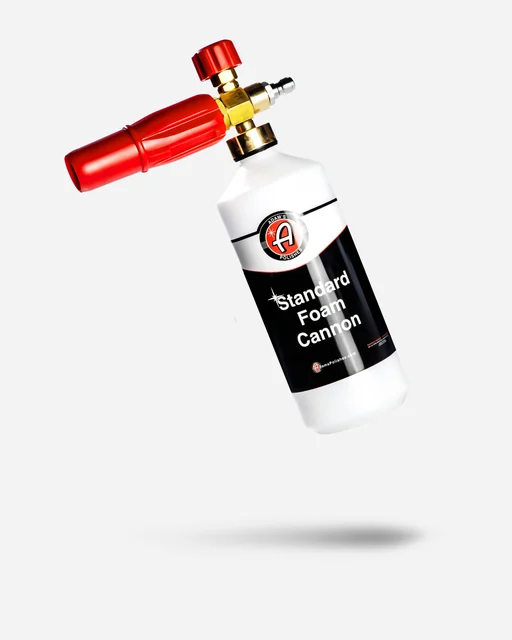
A well-built brass-fitting cannon that delivers thick, even foam for less than the premium picks.
Best for: Weekend detailers who want most of the premium experience without the premium price.
- Brass core fittings and a 1/4" quick-connect that mates with most standard pressure-washer guns
- Adjustable nozzle swings from a jet to a wide fan, and the air/soap dial controls suds
- Reliable thick foam that owners find easy to dial in for a safe pre-wash rinse
- Nozzle and knobs are plastic, so hand-tighten carefully to avoid stripping
- Needs a washer with enough flow (roughly 1.3+ GPM) to foam properly
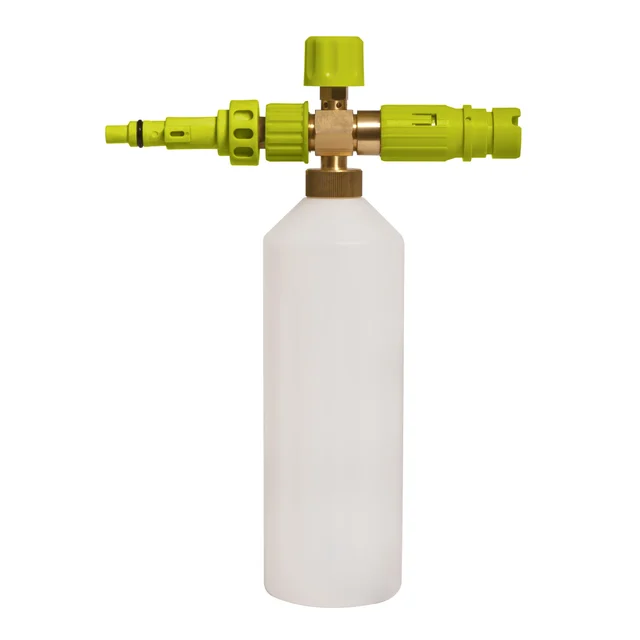
A budget cannon that shines if you already run a Sun Joe electric washer, and is fussier if you don't.
Best for: Owners of a Sun Joe or similar electric washer who want cheap, decent foam without overthinking it.
- Lowest cost of the group with a foam dial and adjustable spray nozzle
- 1/4" quick-connect fits most washers, and it's a natural match for Sun Joe SPX units
- Large bottle and easy assembly make it a friendly first cannon
- Mostly plastic construction feels less durable than brass-bodied rivals
- Foam can go thin on lower-flow electrics if the orifice isn't matched to your washer
- Threads need a gentle hand to avoid cross-threading over time
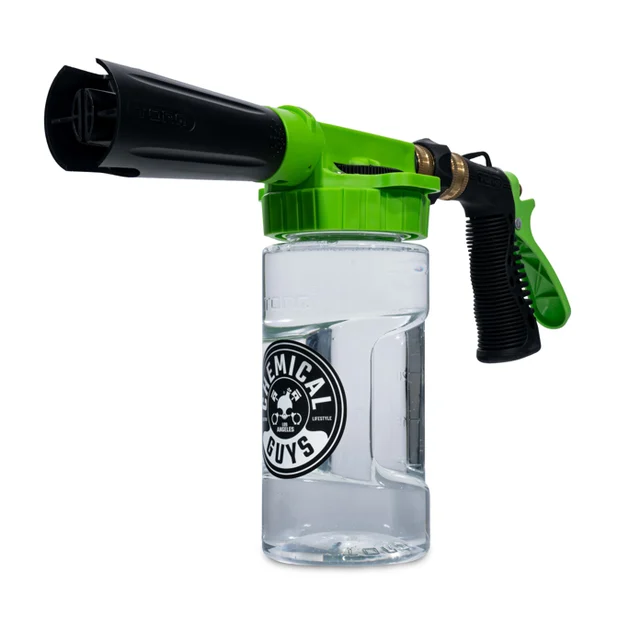
A capable garden-hose foam gun, but it is not a pressure-washer cannon and the thin foam shows it.
Best for: People with no pressure washer at all who just want more foam than a bucket and mitt.
- No pressure washer required, so it works for apartment dwellers with only a hose
- Brass and aluminum inlet with an adjustable dilution and spray nozzle
- Hose pressure can't aerate soap like a pressure washer, so foam is thin and drippy by comparison
- Often marketed alongside true cannons, which confuses buyers into the wrong tool
- If you own a pressure washer, a real cannon costs about the same and foams far better
| Criteria | MTM Hydro PF22.2 Foam Cannon Top pick | Adam's Standard Foam Cannon | Sun Joe SPX-FC34 Foam Cannon | Chemical Guys TORQ Foam Blaster 6 Foam Wash Gun |
|---|---|---|---|---|
| Verdict | Buy it | Buy it | It depends | Skip it |
| Best for | Anyone who wants one cannon that fits nearly any pressure washer and won't leak in a season. | Weekend detailers who want most of the premium experience without the premium price. | Owners of a Sun Joe or similar electric washer who want cheap, decent foam without overthinking it. | People with no pressure washer at all who just want more foam than a bucket and mitt. |
| Price tier | $$$ · premium | $$ · mid-range | $ · budget | $$ · mid-range |
| Tool type | Pressure-washer cannon | Pressure-washer cannon | Pressure-washer cannon | Garden-hose foam gun (not a cannon) |
| Neck & fitting material | Brass body, stainless quick-connect | Brass core fittings, plastic nozzle | Plastic body with brass insert | Plastic body, brass/aluminum inlet |
| Connection & compatibility | 1/4" QC; fits most gas & electric washers | 1/4" QC; most standard washer guns | 1/4" QC; best on Sun Joe SPX washers | Garden hose thread; no washer needed |
| Foam & fan control | Separate foam + fan dials | Foam dial plus jet-to-fan nozzle | Foam dial plus adjustable nozzle | Dilution + nozzle, but thin foam |
| Bottle size | About 1 liter (33 oz) | About 35 oz | About 34 oz | About 1 quart |
| Build & leak resistance | Excellent; brass resists cross-threading | Good; solid brass core | Fair; plastic threads need care | Fine for a hose gun, not a cannon |
| Price tier | $$$ · premium | $$ · mid-range | $ · budget | $$ · mid-range |
Which one is right for you?
- Anyone who wants one cannon that fits nearly any pressure washer and won't leak in a season. Buy it MTM Hydro PF22.2 Foam Cannon
- Weekend detailers who want most of the premium experience without the premium price. Buy it Adam's Polishes Adam's Standard Foam Cannon
- Owners of a Sun Joe or similar electric washer who want cheap, decent foam without overthinking it. It depends Sun Joe SPX-FC34 Foam Cannon
- People with no pressure washer at all who just want more foam than a bucket and mitt. Skip it Chemical Guys TORQ Foam Blaster 6 Foam Wash Gun
How we judged the field
We don’t run our own lab. Instead we synthesize independent testing, expert detailer write-ups, and aggregated owner reports, then weight what actually matters for a foam cannon rather than what photographs well. The single biggest source of confusion in this category is that a foam cannon needs a pressure washer, while a foam gun runs off a garden hose and makes much weaker foam. We treat those as different tools and match each to the buyer who owns the right equipment.
The criteria that separated these four were fit and build, not foam theater. We looked at the quick-connect and whether the neck is brass or plastic (plastic cross-threads and leaks), how well the orifice matches common washer flow rates, the range of foam and spray-fan adjustment, and bottle size. We deliberately down-weighted raw foam thickness, because the truth is that thick suds are mostly cosmetic. What protects paint is dwell time plus soap chemistry: letting the soap sit and do chemical work so you drag less grit across the clearcoat when you finally touch it with a mitt.
This is the cannon most experienced detailers reach for, and the reasons are unglamorous: it’s built well and it fits almost everything. The body is brass with a stainless quick-connect, so it shrugs off the repeated connect-disconnect cycles and pressure that slowly destroy all-plastic necks. Owners consistently report it makes thick, even foam across a wide span of pressure washers, from modest electrics up to gas units.
What sets it apart day to day is control. Separate adjustments for foam density and spray fan mean you can lay a wide, clinging blanket for dwell time, then switch to a tighter stream for wheel wells, instead of fighting a single do-everything knob. It costs more than the budget options, and no cannon overcomes a weak soap or a ten-second rinse, but as a buy-once tool it’s hard to argue with.
The Adam’s Standard is the value sweet spot. It uses brass core fittings and a standard 1/4” quick-connect that mates with most pressure-washer guns, and its nozzle swings from a jet to a wide fan while the air/soap dial tunes how heavy the suds get. Owners find it easy to dial in a thick, safe pre-wash rinse without much fiddling.
The compromises are honest ones. The nozzle and knobs are plastic, so you hand-tighten with a little care rather than cranking. And like every cannon, it wants a washer with enough flow (roughly 1.3 GPM and up) to foam its best. If your washer clears that bar and you’d rather not pay premium money, this gets you most of the way to the top pick.
Whether the Sun Joe is a smart buy hinges entirely on your setup. It’s the cheapest cannon here, with a foam dial and adjustable nozzle, a large bottle, and a 1/4” quick-connect. If you already own a Sun Joe SPX electric washer, it’s a natural, no-drama match and easily worth the low price.
Off that beaten path, the caveats grow. The construction is mostly plastic, which feels less durable than the brass-bodied rivals, and the threads reward a gentle hand to avoid cross-threading over months of use. On lower-flow electrics the foam can go thin unless the orifice suits your washer. It’s a genuinely fine budget tool for the right owner, and a frustrating one for the wrong one, which is exactly why it lands on “it depends.”
The Foam Blaster 6 is a well-made product that gets misused. It is a garden-hose foam gun, not a pressure-washer cannon, and it’s frequently listed right next to real cannons, which pulls buyers toward the wrong tool. It has a brass and aluminum inlet and an adjustable dilution nozzle, and for someone with no pressure washer at all it beats a bucket and mitt.
But the physics don’t lie. Ordinary hose pressure can’t aerate soap the way a pressure washer can, so the foam is thin and drippy next to any cannon on this list. The kicker: if you already own a pressure washer, a true cannon costs about the same money and foams dramatically better. Skip it as a cannon substitute; only consider it if a hose is genuinely all you have.
MTM Hydro PF22.2 vs Adam’s Standard Foam Cannon: which should you buy?
These are the two strongest picks, and they split cleanly on budget. The MTM Hydro PF22.2 wins on build and versatility: a fully brass body, a stainless quick-connect that resists cross-threading, and independent foam and fan dials that give you finer control. It’s the one to buy if you want a single cannon that fits nearly any washer and lasts for years without a hint of a leak.
The Adam’s Standard trades a little durability and control for a meaningfully lower price. Its brass core fittings are solid, the foam is thick and even, and for most weekend washes you won’t feel the ceiling. Spend up for the MTM if you plan to keep it forever, use it often, or swap between different washers. Choose the Adam’s if you want excellent foam at a mid-range price and you’ll treat the plastic nozzle with a bit of care.
What to look for
- Cannon, not gun: Confirm you’re buying a pressure-washer cannon, not a garden-hose foam gun, unless a hose is all you own.
- Brass over plastic: Brass necks and quick-connects resist the cross-threading and leaks that kill cheap all-plastic units.
- The right quick-connect: Most washers use a 1/4” quick-connect, but some brands need a proprietary adapter, so check before buying.
- Orifice matched to your washer: Match the cannon’s orifice to your washer’s GPM/PSI so the soap draw isn’t starved or overwhelmed.
- Real adjustment: Separate foam and spray-fan control beats a single compromise knob for both coverage and tight spots.
- Soap and dwell time: Budget for good car-wash soap and let it sit; that, not foam thickness, is what cleans safely.
Our final take
Buy the MTM Hydro PF22.2 if you want the cannon you’ll never think about again: brass-built, widely compatible, and leak-resistant. The Adam’s Standard is the value call, delivering most of that experience for a mid-range price as long as your washer has the flow to feed it. The Sun Joe SPX-FC34 earns its place only for budget buyers on a compatible electric washer, where its low price outweighs the plastic build. And the Chemical Guys Foam Blaster 6 is a fine hose gun but the wrong tool if you own a pressure washer, so skip it there.
Most of all, buy the foam for the right reason. The thick, shaving-cream look is a photo op; the real, paint-safe cleaning comes from letting good soap dwell and loosen grit before your mitt ever touches the finish. Pick a well-built cannon that fits your washer, pair it with a quality soap, and give it time to work.
Questions, answered
What's the difference between a foam cannon and a foam gun?
A foam cannon attaches to a pressure washer and uses its high pressure and flow to aerate soap into thick, clinging suds. A foam gun connects to a regular garden hose, which has far less pressure, so it makes thinner, drippier foam. If you own a pressure washer, buy a cannon; if you only have a hose, a foam gun is your ceiling, and you should not expect cannon-grade foam from it.
Do I need a specific pressure washer to run a foam cannon?
You need enough flow and pressure. Most cannons want roughly 1.3 GPM or more and a few hundred PSI to foam well, and many small electric washers sit right at the edge. Check that your washer meets the cannon's minimum flow, and match the cannon's orifice to your washer's GPM so it neither starves nor overwhelms the soap draw. Nearly all consumer washers and cannons use a 1/4" quick-connect.
Does thicker foam actually clean better?
Not by itself. The photogenic shaving-cream look is mostly for show. What lifts grit safely is dwell time, so the soap has minutes to soften and loosen dirt, plus the soap's own chemistry. Foam simply helps the soap cling to vertical panels longer. A medium foam with good soap and patience protects paint better than a thick foam you rinse off in ten seconds.
Will any foam cannon fit my pressure washer?
Usually, but confirm two things. First, the quick-connect: most cannons ship with a 1/4" plug that snaps into a standard washer gun, though some brands (like certain Kärcher or Ryobi models) use proprietary bayonet fittings that need an adapter. Second, the orifice size should suit your washer's flow. Buy the correct adapter up front rather than forcing a mismatched fitting, which is how leaks and cross-threading start.
Brass or plastic fittings, and how do I avoid leaks?
Brass necks and quick-connects tolerate repeated attaching and pressure far better than all-plastic ones, which is why owners report fewer leaks and stripped threads from brass-based cannons over time. If you buy a plastic-threaded cannon, always hand-tighten gently and stop at snug, never crank it. A cannon that cross-threads once tends to leak forever, so build quality here genuinely pays off.
Deciding between the top two? See our head-to-head: MTM Hydro PF22.2 Foam Cannon vs Adam's Polishes Adam's Standard Foam Cannon.
More Automotive reviews
 The Best Fuel Injector Cleaners: 4 Compared (and One to Skip)
  The Best Garage Floor Mats: 4 Compared (and One to Skip)
  The Best Glass Towels: 4 Compared (and One to Skip)
  The Best Headlight Restoration Kits: 4 Compared (and One to Skip)
  The Best Hitch Bike Racks: 4 Compared (and One to Skip)
  The Best Ice Scrapers and Snow Brushes: 4 Compared (and One to Skip)