Explained
Emergency Weather Radios, Explained
After reading, you'll understand what to look for on an emergency radio page, which claims are specific enough to trust, and which blanks to treat as a warning.
In this guide
Emergency radio pages are full of impressive-sounding words: all hazards, solar, crank, power bank, rugged. Few of those words are specs. First-time buyers tend to focus on the flashlight and the crank, while the questions that matter are whether it receives the NOAA band, whether it filters alerts to your county, and how big the battery is. A radio can look complete on the box and still leave out the battery size, the USB output and any water rating. This guide shows you how to read past that.
The 30-second version
- NOAA is the signal, and the radio needs to receive the seven weather frequencies and sound an alert on its own.
- SAME decides which alerts you hear, because it limits them to the county you set.
- Battery size is the number that counts, and it should be printed in mAh.
- Crank and solar are backup, so look for USB-C or a wall adapter to fill the battery before a storm.
- A missing spec is information, so treat a blank on the maker page as not stated, not as included.
The products this guide is about
Our verdict on each, with the full reasoning on the companion review.
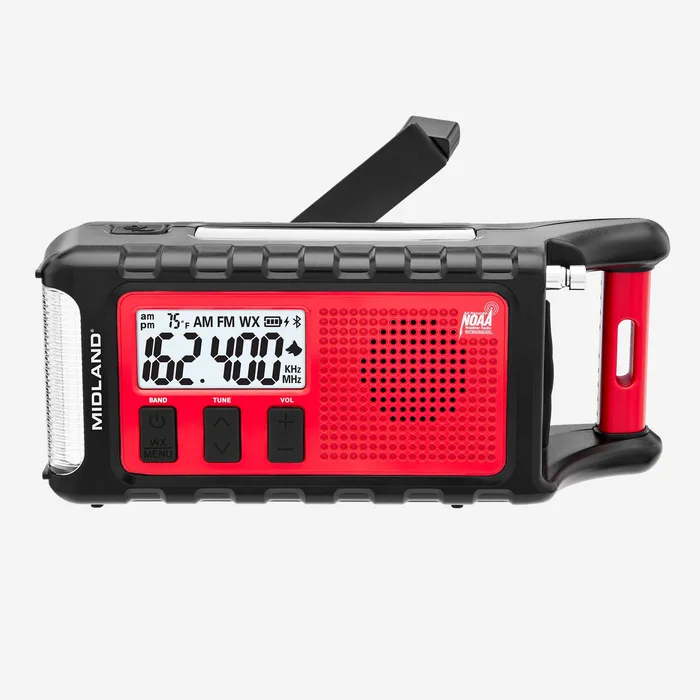
- Buy Midland ER310PRO Portable Emergency Crank Radio with Power Bank The best-documented crank radio in the field: NOAA alerts, a 10,000 mAh battery with a stated 200+ hours of radio use, and three ways to charge it.
- Buy FosPower Model D8 10,000mAh Emergency Solar Crank NOAA Weather Radio The only portable radio here that states both a 10,000 mAh battery and an IP rating, at a lower tier than the Midland.
- It depends Midland WR120B NOAA Weather and Emergency Alert Radio A plug-in bedside alert radio with SAME county programming, which none of the portable crank radios here state.
- Skip Kaito KA336 Emergency AM FM NOAA Weather Alert Radio with Solar and Crank A real, cheap crank radio, but the spec sheet is thin where it matters: 1200 mAh, no output rating, no water claim, no dimensions.
What actually matters
- NOAA band reception - The radio has to receive the weather band, not just AM and FM. The National Weather Service says NOAA Weather Radio requires a special receiver or scanner.
- Alert function - Some radios only let you tune the weather band, while others sound a tone or siren when a warning is broadcast. Look for the maker to name the alert feature.
- SAME - This limits alerts to the areas you program. The National Weather Service says SAME receivers respond only to alerts issued for the areas you have selected.
- Battery capacity (mAh) - This decides how long the radio runs and how much it can give a phone. Compare mAh figures only between radios that state them.
- Charging options - USB-C, a wall adapter, solar and crank are all useful. A page that gives charge times for each is rare and worth noticing.
- USB output - If a radio claims to charge phones, it should state voltage and current. Without them the claim is soft.
- Water resistance - An IP rating is a standard you can look up, while words like rugged are not. If the maker prints no rating, assume none.
The specs, in plain English
Green flags vs red flags
Green flags
- The maker prints battery capacity in mAh and voltage.
- The page states USB output voltage and current.
- SAME is named, with a number of programmable locations.
- An IP rating is printed rather than a vague rugged claim.
- The page gives a runtime for the radio, not just the flashlight.
Red flags
- A long feature list with no battery capacity.
- Phone charging claimed with no output rating.
- The word waterproof with no IP rating.
- The page gives two different figures for the same spec.
- Crank and solar listed as the only power, with no wall or USB-C option.
Who's who: the brands
- Midland - Sells both portable crank radios and a SAME tabletop alert radio, and its pages state battery capacity for the portables.
- FosPower - Sells a range of solar crank NOAA radios and prints battery capacity, IP rating and bands on its pages.
- Kaito - Sells low-cost crank and solar radios, and its KA336 page skips output ratings, water resistance and size.
- Eton - Known for crank and solar emergency radios, but the FRX2 and Journey pages showed as currently unavailable when we loaded them.
- Sangean - Makes pocket AM/FM/NOAA radios such as the DT-800, which runs on AA batteries and states no crank.
How to read a listing without getting fooled
Start with the maker's own spec section, not the headline. Look for four printed numbers: battery capacity, USB output, an IP rating and a stated alert function. Then look for what is missing. A page that says power bank but gives no output, or rugged but no IP rating, is telling you less than it seems. When a page contradicts itself, such as two different alert counts, treat the figure as unreliable. For SAME, a radio that supports it will almost always say so in plain words; if the page does not, assume it is not there.
How much should you spend?
The plug-in SAME radio here sits at the budget tier. Portable crank-and-solar radios span budget to premium. The premium tier mostly buys a bigger stated battery, USB-C and better-documented outputs, while the mid-range can match the capacity with fewer details. The cheapest crank radios often state a small battery and little else, so a low price is not a bargain if the page leaves out the spec you need.
Questions, answered
What is the difference between a weather radio and an emergency radio?
A weather radio receives the NOAA weather band and may sound an alert. An emergency radio usually adds crank, solar and a flashlight, and often AM/FM. Many products are both. Check that the maker page names the NOAA band, not just AM/FM, before assuming it will receive weather broadcasts.
Will a weather radio work without cell service?
NOAA Weather Radio is a broadcast, so a receiver does not need a phone network. It does need reliable signal reception from a transmitter, and the National Weather Service says coverage typically extends about 40 miles on level terrain. Mountainous areas may not have reliable reception, so check coverage for your county.
Should I keep batteries in a weather radio?
The National Weather Service says battery backup matters because power outages often occur during storms, and it recommends an AC connection for most users to preserve battery life. For a plug-in radio like the WR120B, that means a fresh set of AA batteries as backup. For a portable radio, keep the built-in battery charged.
Is a bigger mAh number always better?
It means more stored energy, but only if the maker also states the voltage and the radio is efficient. A 10,000 mAh battery is far more than a 1200 mAh one, but the page should say how long the radio runs on it. Midland states 200+ hours of radio operation for the ER310PRO, while most others state no runtime.
Or jump to the head-to-head: Midland ER310PRO Portable Emergency Crank Radio with Power Bank vs FosPower Model D8 10,000mAh Emergency Solar Crank NOAA Weather Radio.